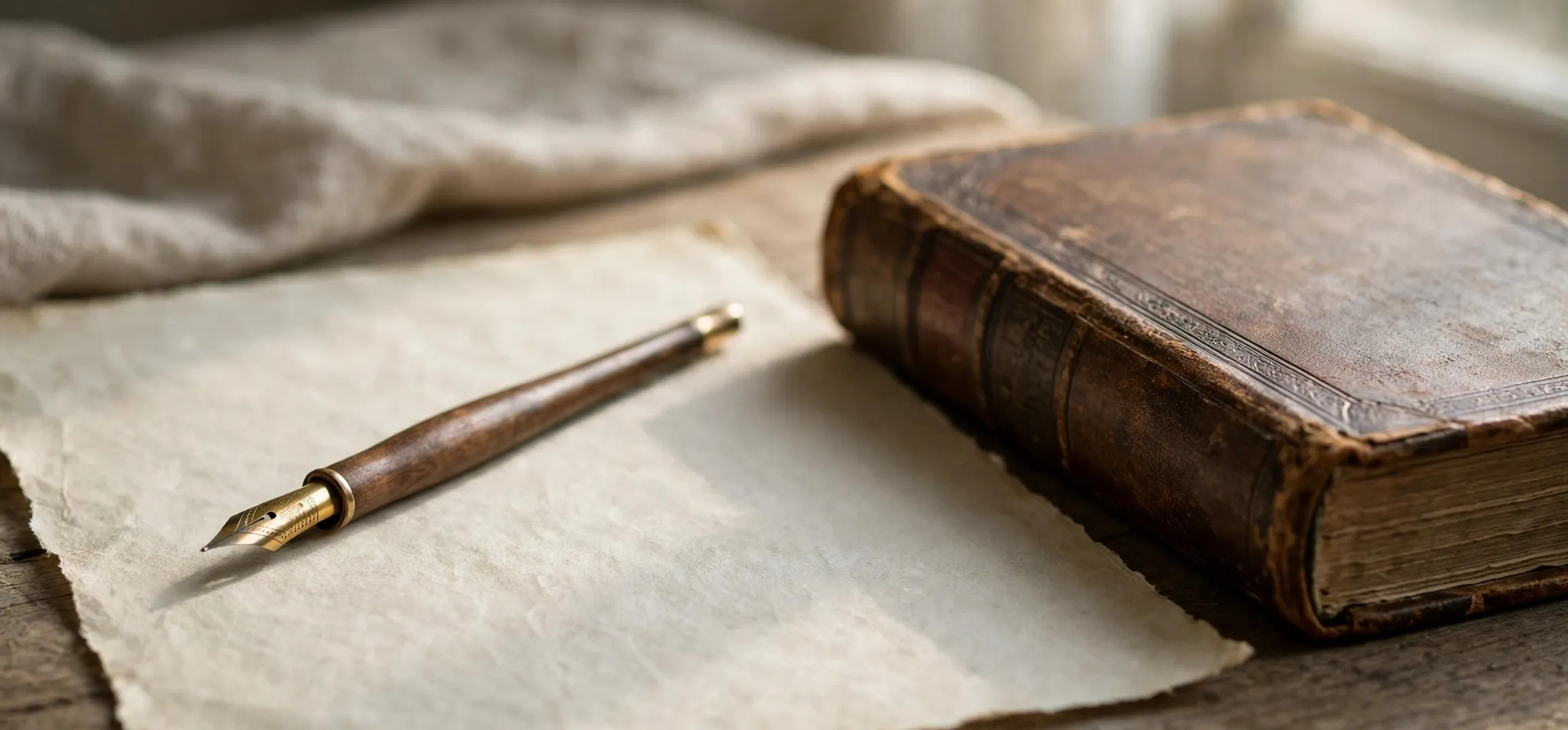
The scribe definition is simple at its core: a scribe is a person who writes, copies, or records written material by hand, or who works professionally with written documents. In ancient times, a scribe was a trained writer who copied texts, kept records, and prepared official documents in a world where few people could read or write. Today, the word is still used for professional writers and record-keepers, for people who take down speech in real time, and for skilled calligraphers and copyists. This guide explains the scribe definition in full, from its ancient roots to its modern uses, so that you can use the word with confidence in essays, at work, and in everyday conversation.
Understanding the scribe definition begins with the idea of writing as a skill. Before printing, before typewriters, and long before computers, every book, letter, contract, and tax record had to be produced by a human hand. That work was slow, careful, and highly valued. A scribe did not simply scribble notes. A trained scribe learned a particular script, followed strict rules for layout and spelling, checked work for errors, and often decorated important pages. In many societies, scribes were among the most educated people available, because literacy itself was rare and powerful.
Scribe Definition: The Core Meaning
The modern scribe definition covers three closely related senses. First, a scribe is a person who copies written work, especially by hand. Second, a scribe is a person employed to write or record for someone else, such as a clerk, secretary, or amanuensis. Third, in a looser modern sense, a scribe can be any writer, journalist, or author, often used in a slightly formal or literary way. All three senses share the same centre: a scribe puts words into written form for a purpose, whether that purpose is preservation, communication, or record-keeping.
The word scribe comes from Latin scriba, meaning a writer or clerk, which in turn comes from scribere, meaning to write. That root also gives us words such as script, scripture, describe, prescribe, and inscription. Knowing this family helps you remember the scribe definition, because every related word involves writing in some way. A script is a system of writing or a written text. An inscription is writing carved or printed on a surface. To describe something is, in its oldest sense, to write it down in detail. The scribe stands at the centre of that family as the person who does the writing.
Scribe Definition in History
In ancient Egypt, scribes were essential to government, religion, and trade. They recorded harvests, taxes, laws, and temple offerings on papyrus, and they trained for years in special schools. A young person who became a scribe gained a respected profession and a path into administration, because the state could not function without written records. Egyptian scribes used hieroglyphs for monumental and religious writing and faster cursive scripts for daily business, and their work preserved knowledge that still survives thousands of years later.
In Mesopotamia, scribes pressed wedge-shaped cuneiform marks into clay tablets. They recorded laws, business contracts, letters, astronomical observations, and epic stories. In the ancient Near East, scribes copied sacred texts with extraordinary care, counting letters and checking copies against originals, because a single error could change a law or a religious passage. In medieval Europe, monastic scribes copied books in scriptoria, working by candlelight with quills, ink, and parchment. A single large book could take months or years to complete, and the finished manuscript was often decorated with coloured initials and illustrations.
Scribes, Power, and Knowledge
Because scribes controlled written records, they often held real influence. A king could rule a large territory only if orders, laws, and tax lists were written down and carried to distant towns. A temple could maintain its rituals only if prayers and calendars were recorded accurately. A merchant could trade across long distances only if contracts and receipts were trusted. In each case, the scribe was the link between spoken decisions and permanent records. That is why the scribe definition is not only about handwriting. It is also about trust, accuracy, and memory. A society that writes things down can remember its laws, its debts, and its stories across generations. That role as keeper of memory is why the scribe definition still carries weight today.
The invention of printing changed the scribe’s role, but it did not remove it. Printed books made copying by hand less necessary for mass production, yet handwritten records, legal documents, letters, and personal notes remained important for centuries. Clerks, secretaries, and court reporters continued the scribe’s work in offices and courtrooms, taking dictation, preparing documents, and keeping minutes. Even today, when almost everyone can type, professional scribes and record-keepers still matter wherever accuracy, confidentiality, and a faithful record are essential.
Scribe Definition in Modern Life
Today, the word scribe appears in several professional contexts. In medicine, a medical scribe works alongside a doctor, recording patient visits, examination notes, and treatment plans so that the doctor can focus on the patient. In law and in courts, a scribe or reporter records proceedings and testimony. In journalism and publishing, scribe is sometimes used as a respectful or old-fashioned word for a writer or reporter. In religious communities, a scribe may still copy sacred texts by hand as a spiritual practice, following traditions that value the handwritten word.
Another modern use is the human scribe who assists a person who cannot write easily. In examinations, for example, a scribe may write down answers dictated by a student who has a disability or injury. In this sense, the scribe definition is practical and humane: the scribe is a helper who turns spoken words into a faithful written record without adding personal opinions or changing meaning. Accuracy and neutrality are the core duties, just as they were for ancient copyists.
Scribe, Writer, Author, and Copyist
People often ask how a scribe differs from a writer or an author. An author creates original ideas and arguments. A writer may create original work or produce text for many purposes. A scribe, in the strict sense, records or copies what already exists or what someone else dictates. A copyist focuses on reproducing a text exactly. A calligrapher focuses on beautiful handwriting as an art form. These roles overlap, and one person can be several at once, but the distinction is useful. If you invent the story, you are its author. If you write it down exactly as told, you are acting as its scribe.
Related words can also cause confusion. A scrivener was a professional writer of legal documents, especially in earlier centuries. An amanuensis is a person employed to write from dictation or to copy manuscripts. A stenographer uses shorthand to record speech quickly. A transcriber turns spoken or handwritten material into typed text. All of these belong to the same family as the scribe definition, and each highlights a different part of the work: legal formality, dictation, speed, or conversion from one form to another.
| Term | What the person does | Closest to a scribe? |
|---|---|---|
| Scribe | Writes, copies, or records text, often by hand | Yes, the general term |
| Copyist | Reproduces an existing text as exactly as possible | Very close |
| Amanuensis | Writes from dictation for another person | Very close |
| Calligrapher | Produces decorative, artistic handwriting | Related, with an artistic focus |
| Author | Creates original written work | Different, though an author may also scribe |
| Transcriber | Converts speech or handwriting into typed text | Close in modern work |
Scribe Definition: Examples in Sentences
Seeing a word in real sentences makes the scribe definition easier to remember. Consider these examples. The ancient scribe copied the manuscript with great care, checking each line before moving on. The court scribe recorded every word spoken during the hearing. The journalist was described as a talented scribe who could turn a complex story into clear prose. The student dictated her answers to a scribe because a broken wrist made writing painful. In each sentence, the scribe is the person who puts words into writing, and the emphasis is on faithful recording rather than invention.
In everyday speech, scribe is sometimes used playfully. A friend who takes notes for a group project might be called the group scribe. A person who writes a long, detailed message might joke that they have become the family scribe. These casual uses still follow the scribe definition, because the person is recording information for others. The playful tone does not change the meaning. It simply shows that an old word can still feel fresh when it describes a familiar job. That playful use still follows the scribe definition, because the person is recording information for others.
Scribe Definition: Frequently Asked Questions
Can scribe be used as a verb?
Yes. To scribe something means to write it down, often carefully or formally. You might scribe a note, scribe a record, or scribe the minutes of a meeting. The verb is less common in casual speech than the noun, but it is correct and widely understood, especially in formal, historical, or literary contexts.
Do scribes still exist today?
Yes, although the job has changed. Medical scribes, court reporters, transcribers, and examination scribes all continue the tradition in modern form. Calligraphers and manuscript artists keep the handwritten tradition alive as art. The tools have changed from reed pens and parchment to keyboards and software, but the central task remains the same: producing an accurate written record.
Is a scribe the same as someone who scribbles?
No. Scribble means to write quickly and untidily, often without care for legibility. A scribe, by contrast, is expected to write clearly and accurately. The two words sound similar and share a distant root in writing, but their meanings point in opposite directions. One suggests carelessness, the other suggests care.
What is the plural of scribe?
The plural is scribes. For example, a team of scribes copied the archive, or several scribes worked on different sections of the same manuscript. The word follows the regular pattern for nouns ending in a silent letter e, simply adding an s.
Conclusion
The scribe definition, in short, is a person who writes, copies, or records written material, whether in ancient Egypt, in a medieval monastery, in a modern courtroom, or in a hospital. The tools and settings have changed, but the responsibility has not. A good scribe is accurate, careful, and faithful to the original words. When you meet the word in a book, an article, or a job title, remember that central idea: a scribe turns spoken words, ideas, and records into writing that others can read, trust, and keep. For more word meanings explained in plain language, see our guide to meanings in mathematics and our overview of business definitions.



