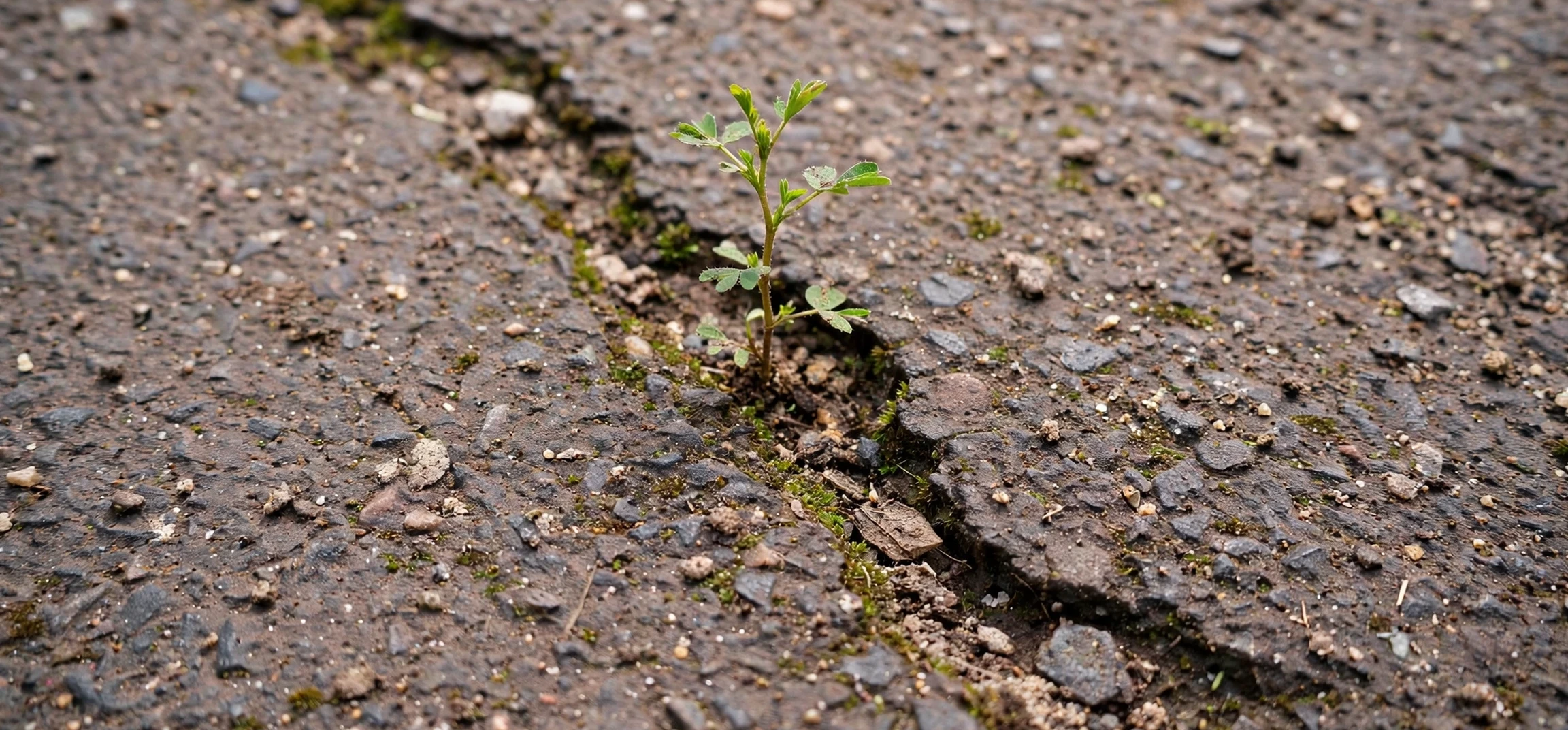
People use the word resilience in many settings, from classrooms and workplaces to sports commentary and everyday conversation, yet it is not always clear what the word actually means. Put simply, what’s the meaning of resilience? It is the capacity to adapt, recover, and keep going after difficulty, change, or stress, and to learn from those experiences in ways that support future coping. Exploring what’s the meaning of resilience in depth means looking at more than toughness: it involves habits, relationships, outlook, and the everyday skills people use to handle setbacks. This guide explains what’s the meaning of resilience in general educational terms, with examples from daily life, school, work, and sport.
A useful starting point is to separate resilience from a few nearby ideas. Resilience is not the absence of difficulty, and it is not the absence of emotion. A resilient person still feels disappointment, frustration, or grief when something goes wrong. What distinguishes resilience is what happens next: the person can acknowledge the difficulty, draw on support and strategies, and gradually return to functioning, even if the path is uneven. It is also not a fixed trait that some people simply have and others lack. Research and everyday experience both suggest that resilience involves skills and conditions that can be built over time, though people’s circumstances and starting points differ greatly.
What’s the Meaning of Resilience in Plain Language?
In plain language, what’s the meaning of resilience? Think of it as bouncing forward rather than simply bouncing back. After a setback, a person may not return to exactly how things were before, and that is normal. They may adjust their goals, learn a new approach, ask for help, or find a different route to what matters to them. A student who fails an exam and then changes how they study, a worker who loses a job and retrains for a new role, and an athlete who recovers from injury with a revised training plan are all showing resilience in action. The common thread is adaptation over time, not instant recovery.
Psychologists and educators often describe resilience as a process rather than a single quality. That process involves the person, their relationships, and their environment. Personal factors include problem-solving skills, a sense of purpose, and the ability to manage emotions. Relational factors include supportive family, friends, teachers, or colleagues. Environmental factors include access to resources, stable routines, and opportunities to practise and succeed. Because so many factors are involved, two people facing a similar setback may cope quite differently, and that difference does not reflect personal worth. This process view is central to what’s the meaning of resilience in modern psychology.
What’s the Meaning of Resilience in Psychology and Education?
In psychology and education, what’s the meaning of resilience is usually framed as positive adaptation in the face of adversity. Researchers study which protective factors help people cope, such as strong relationships, realistic optimism, self-regulation, and a sense of agency, meaning the belief that one’s actions can make a difference. Educators apply these ideas by teaching study skills, encouraging a growth mindset, and creating classroom environments where mistakes are treated as part of learning rather than as failures to be hidden.
It is important to note what this educational framing does not claim. This article is general psychology and education information only. It does not diagnose any condition, and it does not offer treatment advice. Resilience is not a substitute for professional support when someone is struggling with mental health, trauma, or a serious life crisis. If you or someone you know is finding it hard to cope, speaking to a qualified professional, a trusted clinician, or a local support service is the appropriate step. Resilience concepts can sit alongside professional help, but they do not replace it.
The Building Blocks of Resilience
Several building blocks appear again and again in discussions of resilience. The first is connection. People who can talk honestly with at least one trusted person, whether a friend, family member, mentor, or colleague, tend to cope better, because support provides both practical help and emotional steadiness. The second is realistic thinking: the ability to see a situation clearly, neither minimising real problems nor catastrophising them, and to break a large problem into smaller, manageable steps. The third is flexibility, the willingness to adjust plans when circumstances change rather than clinging to a single approach that no longer works.
Other building blocks include routine and self-care basics, such as regular sleep, movement, and meals, which support energy and mood, and a sense of purpose, which gives effort a direction even when progress is slow. Problem-solving skills matter too: defining the problem, generating options, trying one, and reviewing the result. Finally, learning from experience closes the loop. After a setback, reflecting on what helped, what did not, and what could be tried next time turns a difficult event into usable knowledge. None of these blocks needs to be perfect. Resilience grows from having enough of them, often enough, to keep moving. Each block, on its own, is only part of what’s the meaning of resilience, but together they describe it well.
| Building block | What it looks like in practice | Simple everyday example |
|---|---|---|
| Connection | Trusted relationships and willingness to ask for help | Talking through a setback with a friend or mentor |
| Realistic thinking | Seeing problems clearly and in proportion | Separating what can be changed from what cannot |
| Flexibility | Adjusting plans when circumstances change | Choosing a new study method after a poor result |
| Routine | Steady sleep, movement, and daily habits | Keeping a regular morning routine during a stressful week |
| Purpose | A reason to persist beyond the immediate difficulty | Remembering a longer-term goal while doing dull work |
| Problem-solving | Breaking problems into steps and testing solutions | Listing options before deciding on a next move |
| Reflection | Learning from what happened | Noting what helped, for use next time |
Resilience at Work and at School
At work, resilience shows up in how people handle change, criticism, and pressure. A team facing a reorganised project, a missed deadline, or a difficult client needs to regroup, clarify priorities, and share the load. Managers can support resilience by giving clear expectations, recognising effort, and allowing people to raise problems early without fear of blame. Individuals can support their own resilience by keeping notes on what works, asking for feedback, and protecting time for rest, since exhausted teams rarely adapt well.
At school, resilience is closely tied to how students understand learning itself. Students who believe ability can grow with effort are more likely to persist after a poor grade, seek help, and try a different strategy. Teachers support this by praising effort and strategy rather than only results, by normalising mistakes, and by giving feedback that points to a next step. Parents and carers help by listening without immediately fixing every problem, which gives young people room to practise coping. Across both settings, the message is consistent: setbacks are information, not verdicts. That attitude captures what’s the meaning of resilience in a classroom or workplace better than any slogan about toughness.
Resilience in Sport and Daily Life
Sport offers a vivid picture of resilience. Athletes lose matches, miss selections, and get injured, and their response often determines their longer-term path. Coaches commonly frame a loss as a source of specific lessons: what tactical choice failed, what skill needs work, what preparation could improve. That approach keeps the athlete’s attention on controllable factors rather than on blame or luck. The same logic applies in daily life, whether the setback is a failed driving test, a rejected application, or a plan disrupted by illness or weather. Asking what is controllable, what help is available, and what the next small step is can turn a large, vague difficulty into something workable.
Daily life also shows that resilience is not about doing everything alone. Communities, routines, and shared humour all help people through hard stretches. A neighbour who checks in, a regular walking group, a faith or hobby community, or a workplace colleague who shares the load can make a real difference. Recognising that support is a strength, not a weakness, is itself part of a resilient outlook, and it is a key part of what’s the meaning of resilience in everyday life. Equally, resilience includes knowing when to rest, when to scale back, and when to seek professional support, rather than pushing through at any cost.
For more plain-language word explainers, see our guide to all-encompassing meaning and our article on aloft meaning, which explain everyday vocabulary in the same accessible style.
Common Myths About Resilience
Several myths can make resilience harder to understand. The first is that resilient people never struggle. In reality, struggle is part of the process, and visible calm may hide real effort. The second is that resilience means handling everything alone. In fact, seeking support is one of the strongest resilience behaviours. The third is that resilience is only about big crises. Everyday hassles, disappointments, and changes also call for adaptation, and practising on small challenges builds capacity for larger ones. The fourth is that resilience, once gained, is permanent. Like fitness, it can strengthen with practice and weaken under prolonged strain, illness, or isolation, which is why ongoing habits and support matter. Remembering this helps anyone asking what’s the meaning of resilience to see it as something maintained, not something permanently won.
Another myth is that resilience excuses difficult circumstances. Saying that people can be resilient does not mean that hardship is acceptable, or that systems and institutions bear no responsibility. A person can cope well and still deserve better conditions, fairer treatment, or more support. Holding both ideas at once gives a fuller answer to what’s the meaning of resilience than focusing on the individual alone. Keeping both truths in view, personal coping and shared responsibility, gives a fuller and fairer picture of what’s the meaning of resilience than either view alone.
Resilience FAQ
What’s the meaning of resilience in one sentence?
Resilience is the capacity to adapt, recover, and keep moving forward after difficulty, change, or stress, learning from the experience along the way.
Is resilience something you are born with?
Partly it reflects temperament and life experience, but it also involves learnable skills, supportive relationships, and environments that give people room to practise coping. It is best understood as a process, not a fixed trait.
Does being resilient mean not feeling upset?
No. Resilient people still feel upset, disappointed, or worried. Resilience is about what happens after those feelings: acknowledging them, drawing on support and strategies, and gradually returning to functioning.
How is resilience different from toughness?
Toughness often suggests enduring without complaint, while resilience includes flexibility, help-seeking, rest, and learning. Pushing through at any cost can sometimes undermine longer-term coping rather than support it.
When should someone seek professional help?
When difficulty persists, interferes with daily life, or feels overwhelming, or when mental health or safety is a concern, professional support is the right step. General resilience ideas complement, but never replace, qualified care.
Conclusion
So, what’s the meaning of resilience? It is not invulnerability, and it is not solo endurance. It is the everyday process of adapting after difficulty, drawing on relationships, realistic thinking, flexibility, routine, purpose, and problem-solving, and learning from each experience for the next. Whether at school, at work, in sport, or in daily life, resilience grows through practice and support, and it looks different for everyone. Understanding it in those terms makes the word more useful: not a label for the strong few, but a set of habits and conditions that help ordinary people keep going, adjust, and move forward.



