Postcards are one of the simplest things you can send by post, yet the question of where to write the address trips up plenty of people — especially anyone used to letters, where the address goes on the front of the envelope. This guide explains how to put address on postcard correctly, where each part of the address belongs, and the small details that help your postcard arrive safely.
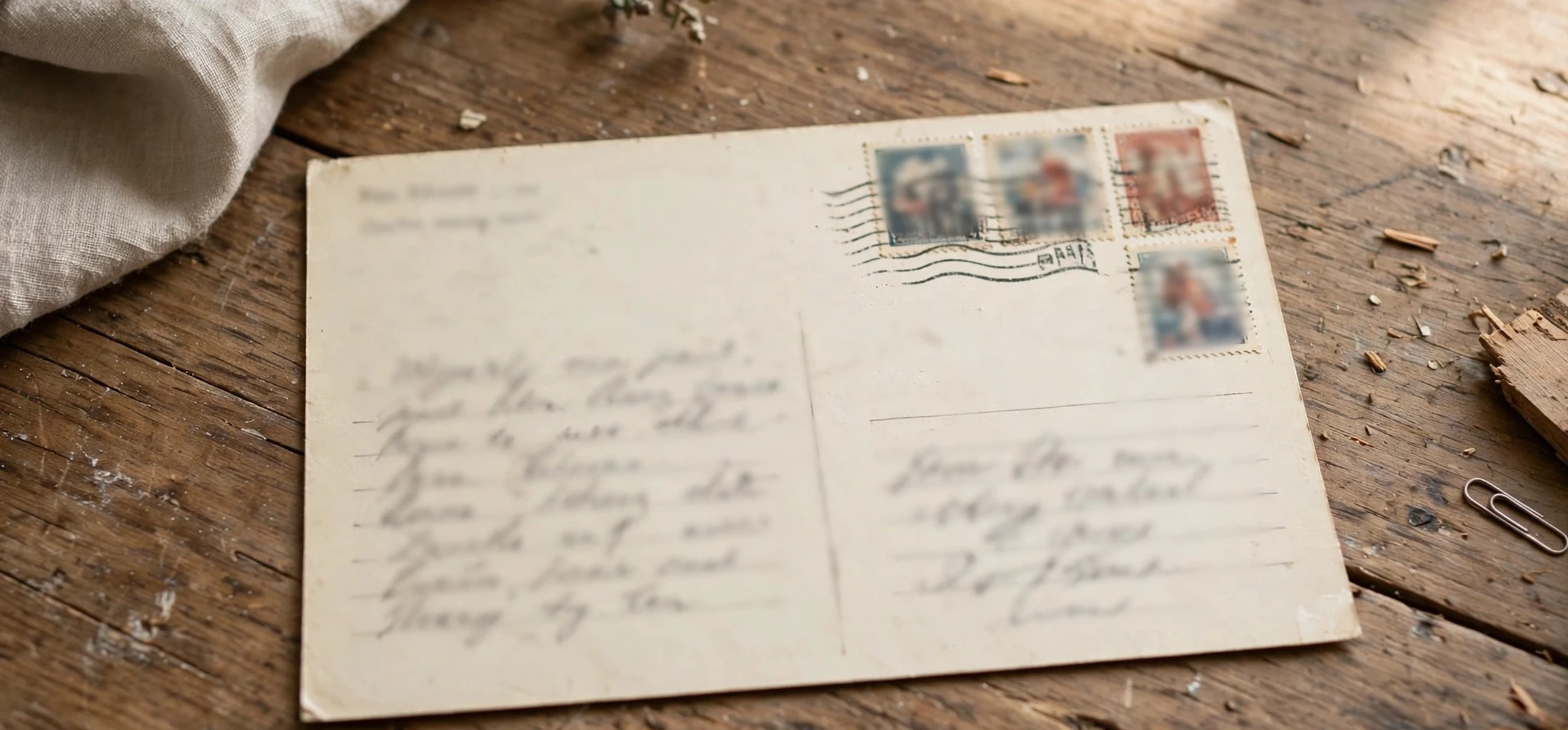
The basic rule is simple: on a postcard, the message goes on the left and the address goes on the right. The back of a standard postcard is divided by a vertical line. The left side is for your message, and the right side is for the recipient’s address and the stamp. The front carries the picture. Once you know that layout, the rest is detail.
How to Put Address on Postcard: The Layout
Learning how to put address on postcard starts with orienting the card correctly. Hold the postcard with the picture side facing away from you, so you are looking at the blank back. You should see a vertical line dividing the back into two halves, with a small box or marked area for the stamp in the top right corner. The right half is the address panel, and the left half is the message panel.
Write the recipient’s address in the right panel, starting a little below the top and keeping well clear of the stamp area. Write in straight, horizontal lines, leaving space between lines so each part of the address is distinct. The address should sit roughly in the centre of the right panel, not squeezed against the dividing line and not running off the right edge of the card.
The Order of an Address on a Postcard
Write the address in the order the postal service expects for the destination country. In most English-speaking countries, the order is: the recipient’s name on the first line, the street address on the second line, and the town or city plus postcode on the final line. For international postcards, add the country name in capital letters on the last line, which helps postal workers route the card to the right country quickly.
Use the recipient’s full name rather than a nickname, and write the street address completely, including any house or flat number. Abbreviations are acceptable if they are standard ones, but clarity matters more than brevity on a postcard, where space is limited and handwriting can be hard to read.
| Line | What to Write | Example (Fictional) |
|---|---|---|
| 1 | Recipient’s full name | Alex Morgan |
| 2 | House number and street | 14 Example Street |
| 3 | Town or city and postcode | Springfield |
| 4 (international only) | Country in capitals | UNITED KINGDOM |
What Goes on the Message Side
The left panel is yours. Write your message there, keeping it reasonably short, since postcard space is limited by design. Sign off with your name so the recipient knows who sent it, and consider adding the date and place — postcards are often kept as souvenirs, and a date and place make them more meaningful years later.
Do not write your message in the address panel, and do not write the address in the message panel. Postal sorting machines and human sorters look for the address in the right panel, and an address in the wrong place can delay or misdirect the card. Equally, keep the message out of the stamp area and away from any barcode or sorting marks printed on the card.
Stamps and Posting Your Postcard
Place the stamp in the top right corner of the address side, in the marked box if there is one. Use the correct postage for a postcard to its destination: domestic and international postcard rates differ, and a postcard with insufficient postage may be delayed, returned, or delivered with a fee for the recipient to pay. If you are unsure of the rate, ask at a post office counter rather than guessing.
Postcards need no envelope, which is part of their charm, but it also means the message and address are visible to everyone who handles the card. Bear that in mind when writing anything private. For anything sensitive, a letter in a sealed envelope is the better choice.
Tips for How to Put Address on Postcard Neatly
Write slowly and legibly. A postcard address written in a hurry is the commonest cause of delayed postcards, because sorting depends on reading it correctly. Use a pen with dark ink — black or dark blue — rather than a pencil or a pale colour, which sorting machines read poorly. Avoid decorative lettering for the address itself, however tempting it is on a holiday postcard; save the flourishes for the message side.
If you make a mistake in the address, it is better to start a new postcard than to scribble over the error. Crossings-out confuse both machines and humans, and a postcard costs little. If you are writing many postcards, write the addresses first, before the messages, so you do not run out of space or attention at the end.
Postcards Without a Dividing Line
Some novelty or handmade postcards lack the standard dividing line. In that case, follow the same convention anyway: message on the left, address on the right, stamp top right. Postal workers are used to this layout, and following it even on an undivided card maximises the chance of correct delivery. If the card is an unusual size or shape, check with the postal service whether it qualifies for postcard postage at all — oversized or oddly shaped cards may need letter postage.
International Postcards: Extra Details
For postcards going abroad, the country name on the last line is essential, and writing it in capitals helps it stand out. Write the address in the format of the destination country where you know it, since local postal workers deliver by their own conventions. If you are unsure, the format used in the recipient’s own country is the safest bet, and your post office can advise.
International postcards take longer, sometimes weeks, and delivery times vary by destination and season. If a postcard has not arrived after a generous interval, it has probably been lost rather than delayed — postcards have no tracking, which is part of their low cost. For anything time-critical, use a tracked service instead.
Frequently Asked Questions About How to Put Address on Postcard
Does the address go on the front or the back of a postcard?
On the back, in the right panel. The front carries the picture.
Where does the stamp go on a postcard?
In the top right corner of the address side, in the marked box if there is one.
Can I write the message on the same side as the address?
Yes, but only in the left panel. Keep the address panel clear for the address and the stamp.
What if I write the address in the wrong place?
The card may still arrive, but it risks delay or misdelivery. Starting a fresh card is the safest fix.
A Short History of the Postcard Address Panel
The divided-back postcard, with message on the left and address on the right, became standard in the early twentieth century. Before that, many postcards allowed writing only on the front, or restricted the message to a tiny strip, because postal regulations reserved the back for the address alone. The divided back was a practical reform: it gave senders room to write while keeping the address panel clear for sorting, and it helped postcards become one of the most popular forms of communication of their era.
That history explains why the layout feels so fixed today. The divided back was designed around the needs of postal sorting — human sorters reading addresses quickly — and those needs have not changed even as machines have joined humans in the sorting office. Modern postcards still follow the same layout, and postal services still ask senders to respect it, because a century of practice has made it the fastest layout to process.
Postcards as Collectables
Many people keep postcards they receive, and the address panel becomes part of the keepsake: the handwriting, the stamp, and the postmark together record a moment in time. Collectors value postcards with clear postmarks and interesting stamps, and a neatly written address panel adds to a card’s appeal. If you are sending a postcard you hope will be kept, take extra care with the address side: legible writing, a properly placed stamp, and a complete address make the card both deliverable and collectable.
Digital messaging has not killed the postcard. If anything, its physicality has become its charm: a postcard is a small, tangible object that travelled a real distance, unlike a message that arrives instantly. That charm depends on the card actually arriving, which brings us back to the basics: message on the left, address on the right, stamp top right.
Mastering how to put address on postcard is a small skill that makes a real difference: message on the left, address on the right, stamp top right, and legible dark ink throughout. Get those four things right and your postcard has the best possible chance of arriving. For more practical guides, see our articles on letterhead address formats and personal versus business email address formats.



