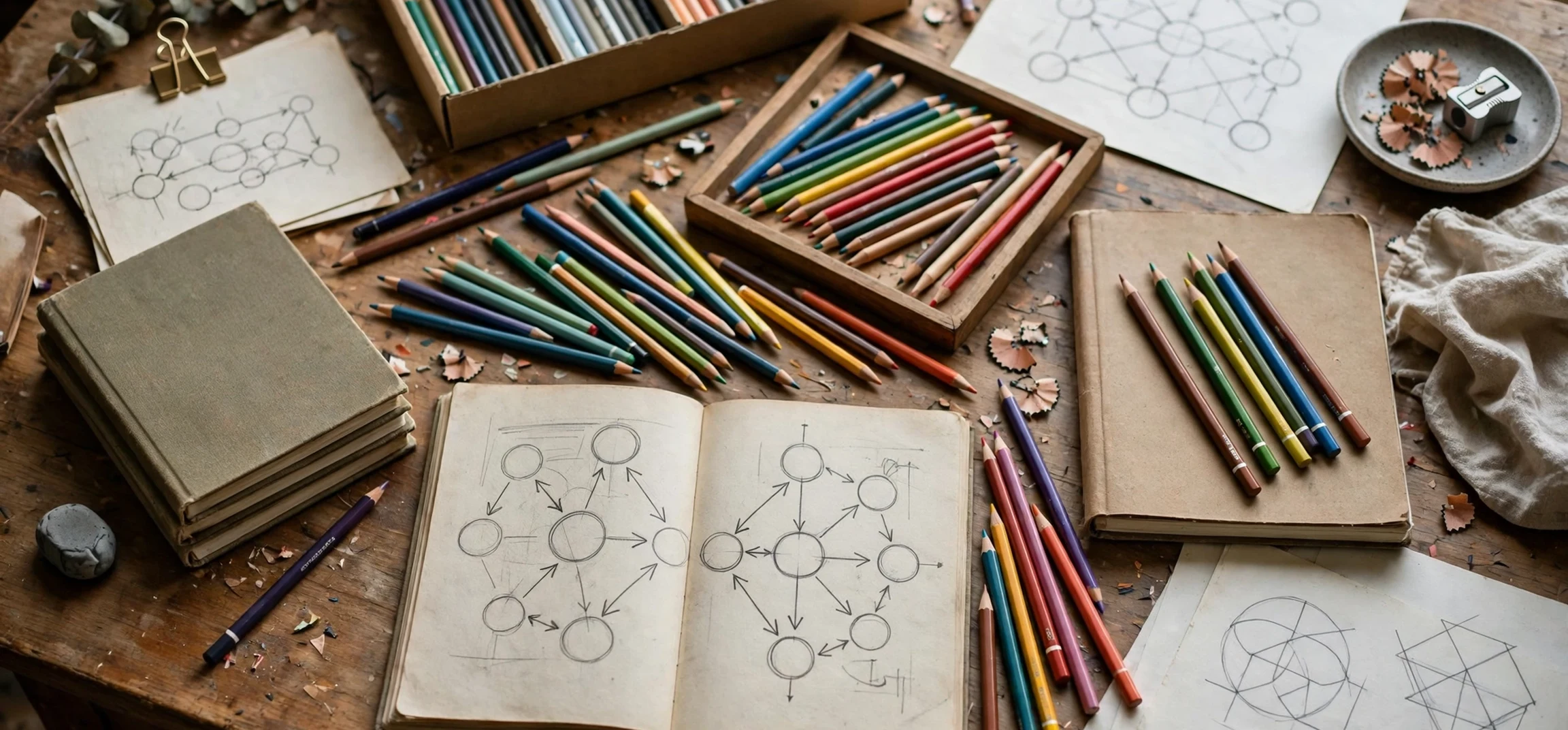
Some stories twist your mind. Others twist your eyes first, and your mind follows. Writing that works with pictures — in comics, picture books, graphic novels, illustrated stories, films, and even well-designed articles — can create a special kind of surprise. A sentence tells you one thing, an image shows you another, and the gap between them makes you think. That gap is where mind-bending storytelling lives. It is not about confusion for its own sake. It is about using words and images together to change how you see a character, a place, or an idea.
This guide explores writing picture mind bending in plain language: what it means, how writers and artists create it, and how you can try it in your own stories, whether you write, draw, teach, or simply love clever storytelling. You do not need special equipment or training to start. You need curiosity, a willingness to play with perspective, and a basic understanding of how readers move between text and image. For other creative guides, see our creative guide ideas and our story about thinking in pictures.
What Is Mind-Bending Writing With Pictures?
Mind-bending writing challenges an assumption and then rewards you for noticing the challenge. In text alone, that might mean a twist ending, an unreliable narrator, or a story told backwards. With pictures added, the possibilities grow. An image can contradict the text, complete the text, hide a clue, or reveal a truth the narrator does not know. When words and pictures disagree in a deliberate way, the reader must decide what to believe. That decision is active, engaging, and memorable.
Consider a simple example. The text says, “She was alone.” The picture shows a shadow in the doorway, or a second cup on the table, or a reflection that does not match. The reader instantly feels tension, even though no new sentence was added. The picture did the work. Now consider the reverse: the picture shows a calm room, while the text describes fear, noise, or danger. That contrast also creates meaning. The reader senses that something is hidden, remembered, or imagined, and wants to keep reading to find out which.
Words and Images Together
Words are good at time, thought, and explanation. Images are good at space, expression, and immediate feeling. A story that uses both can do things neither can do alone. Text can tell you what happened yesterday. An image can show you how a character feels right now, without a single adjective. Text can explain a rule of a fictional world. An image can show you that rule breaking in the background while the main action continues. Learning to split the work between words and pictures is the core skill of this kind of writing.
Surprise vs. Confusion
Good mind-bending stories surprise you, but they do not leave you lost. The difference is fairness. A fair twist plants clues that make sense in hindsight. An unfair twist invents a new rule at the last moment with no warning. When you create a mind-bending story, plant at least one visual clue early, even if it is small. A colour, an object, a repeated shape, or a background detail can serve as that clue. On a second reading, readers love finding it. That second-reading reward is a sign that the twist worked.
Techniques That Bend the Mind
Several techniques appear again and again in mind-bending picture stories. The first is perspective shift: showing the same scene from another character’s viewpoint, so an event you thought you understood looks completely different. The second is scale play: making something tiny feel huge, or something huge feel small, to change how important it feels. The third is repetition with a difference: repeating an image or a phrase, but changing one small detail each time, so the reader notices that something is shifting even before the characters do.
Another powerful technique is the unreliable image. Just as a narrator can be unreliable, a picture can be selective. It may show only part of a scene, crop out an important person, or present a memory rather than a fact. When the full picture is later revealed, the reader reinterprets everything that came before. This technique works best when the reveal is visual as well as textual. Show the wider view, the missing piece, or the true context, and let the reader feel the shift without a long explanation.
Time and Sequence
Pictures can play with time in ways plain text cannot easily match. A sequence of panels can move forward, jump backward, freeze a moment, or show two times at once in the same frame. A writer can use that flexibility to create loops, echoes, and parallel stories. For example, a character’s present action can mirror a childhood memory shown beside it. The reader sees both at once and understands a connection the character may not yet see. That visual parallel is a classic mind-bending move, and it is surprisingly easy to try.
Symbols and Visual Metaphors
A visual metaphor turns an idea into an image. Fear might be shown as a shadow that grows. Hope might be shown as light through a door. A difficult choice might be shown as two paths, two doors, or two versions of the same character. These images do not need to be explained. Readers understand them intuitively, especially if the symbol appears more than once. Keep symbols simple and consistent. One clear symbol used well is stronger than five complicated symbols used once each.
How to Write Your Own Mind-Bending Picture Story
Start with a simple story, not a complicated puzzle. A clear story with one twist works better than a confusing story with five twists. Write the story in plain sentences first, without pictures. Then ask: what could a picture add, contradict, or reveal? Choose one moment for the picture to carry the surprise. If every page twists, none of them feel special. If one moment twists well, readers will remember the whole story more vividly.
Next, sketch or describe the key images, even if you cannot draw well. Stick figures and notes are enough at the planning stage. For each image, write down what the reader should notice, what they should miss at first, and what they should understand later. That three-part note — notice, miss, understand — is a practical planning tool. It helps you plant clues fairly and check that your twist is surprising but not random. Share your draft with one reader and ask what they noticed. Their answer will tell you whether your clues are too obvious, too hidden, or just right.
Planning in Three Steps
Step one: write the twist in one sentence. Step two: list three clues that point to it without giving it away. Step three: decide which clues will be in words and which will be in pictures. Splitting clues across both forms is what makes picture writing special. A clue hidden in a picture feels like a discovery, because the reader found it with their eyes rather than being told it in a sentence. That sense of discovery is the heart of mind-bending storytelling.
Editing for Clarity
After your first draft, edit for clarity before adding more complexity. Remove any twist that does not serve the main idea. Shorten sentences that explain what the picture already shows. Let the picture do its job. If you find yourself writing a paragraph to explain an image, ask whether the image needs to change instead. Strong picture writing trusts the reader. It gives enough information to follow the story, and enough space for the reader to think, wonder, and reinterpret.
Where This Style Works Best
Mind-bending picture writing works in many places, not just comics. Teachers use it to help students understand perspective, because a picture story can show the same event from two sides. Children’s authors use it to encourage careful looking, because young readers love spotting a hidden detail. Advertisers and designers use it to make a message memorable, because a surprising image sticks in memory longer than a plain statement. Even a simple illustrated article can benefit from one well-chosen image that adds a second meaning to the text beside it.
It also works for personal storytelling. A diary, a travel journal, or a family story becomes richer when a drawing, a photo, or a diagram adds a layer the words do not mention. A picture of an empty chair can say more about absence than a paragraph. A map with a route that stops halfway can suggest a journey unfinished. These are not tricks. They are honest uses of the fact that we experience life through both words and images, and stories feel truer when they use both. For more inspiration, see our general guide collection.
| Technique | How It Works | Effect on Reader |
|---|---|---|
| Perspective shift | Same scene, new viewpoint | Reinterprets what seemed clear |
| Image contradicts text | Picture shows what words hide | Creates tension and curiosity |
| Repetition with a difference | Same image, one detail changed | Signals that something is shifting |
| Visual metaphor | Idea shown as an image | Makes abstract ideas feel concrete |
| Time sequence play | Panels move forward and back | Reveals connections across time |
Frequently Asked Questions
Do I need to draw well to try this?
No. Clear, simple images with a strong idea work better than detailed art with no idea. Stick figures, diagrams, and photos can all carry a mind-bending story.
How do I avoid confusing readers?
Plant fair clues, use one main twist, and test your story with a reader. If they feel surprised but can explain the twist afterwards, the balance is right.
Does this style work for children?
Yes. Children often enjoy spotting visual clues even more than adults do. Keep the twist kind, clear, and age-appropriate.
How should a beginner start?
Write a short, simple story, choose one moment for a picture twist, and plan three clues split between words and images.
Conclusion
Writing picture mind bending is about partnership: words explain, pictures reveal, and the space between them invites the reader to think. By using perspective shifts, visual metaphors, careful sequencing, and fair clues, you can create stories that surprise without confusing, and that reward a second look. Start simple, choose one twist, split your clues between text and image, and trust your reader to notice. Whether you are writing a comic, an illustrated story, a lesson, or a personal journal, that partnership between writing and picture can turn an ordinary story into one that lingers in the mind long after the last page.



