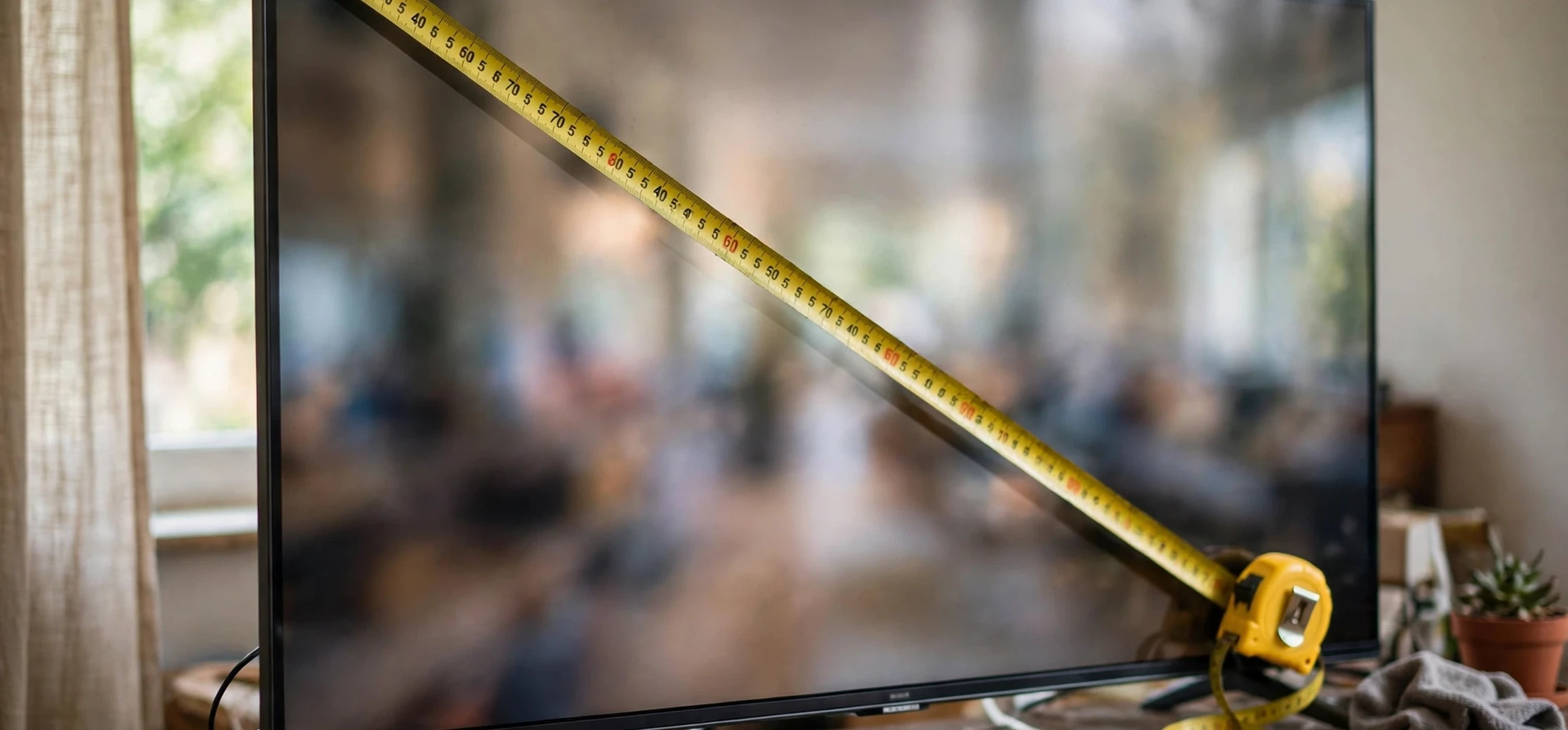
If you are choosing a small or mid-sized television, one question comes up before almost any other: how big is 32 inches when it is described as a 32-inch TV? The short answer is that the 32 inches is a diagonal screen measurement, not the width, and that single fact explains most of the confusion around TV sizes. This guide explains how big is 32 inches in real width, height, and room terms, so you can judge whether a 32-inch screen will fit your stand, your wall, and your viewing distance, without relying on guesswork.
How big is 32 inches as a diagonal measurement
Television sizes are traditionally given as the diagonal distance across the screen itself, measured from one corner to the opposite corner, excluding the frame in the strict definition, although the frame adds a little to the overall size in practice. So when you ask how big is 32 inches, the answer in diagonal terms is simply 32 inches from corner to corner. That measurement is useful for comparing models, because every manufacturer uses the same diagonal convention, but it does not by itself tell you how wide the television will be on your furniture. Width depends on the screen shape, and modern televisions are much wider than they are tall.
Almost all modern televisions use a widescreen shape with a ratio of sixteen units wide to nine units tall. Applying that ratio to a 32-inch diagonal gives a screen width of roughly 28 inches and a screen height of roughly 16 inches, before the frame and stand are added. Those figures are approximate because manufacturers round their advertised sizes and frames differ, but they are a reliable planning guide. In other words, a 32-inch TV is about 28 inches wide as a screen, and a little wider once the bezel and any side trim are included. That is the number that matters when you measure a stand or a wall space.
How big is 32 inches wide in practice
To answer how big is 32 inches wide in everyday terms, think of a television that spans a little more than two feet across. At roughly 28 inches of screen width, plus a slim frame, the full width of many 32-inch models falls in the region of 28 to 29 inches, and the height including the stand is often around 19 to 21 inches, depending on the stand design. The depth, with the stand attached, is usually several inches, while the panel alone is much slimmer. These ranges are planning estimates, not a specification for any particular model, so always check the exact dimensions listed for the model you are considering before buying furniture or a wall mount.
| Dimension | Approximate size for a 32-inch TV | Why it matters |
|---|---|---|
| Diagonal screen size | 32 inches, corner to corner | The advertised size used for comparison |
| Screen width | About 28 inches | Decides whether it fits your stand |
| Screen height | About 16 inches | Decides wall space and eye-level placement |
| Full width including frame | About 28 to 29 inches | The real figure to measure against furniture |
| Height with stand | About 19 to 21 inches | Affects shelf clearance and viewing height |
Measuring your space before you decide
Measure the width of your stand or wall space with a tape measure, and leave a small margin on each side so the television does not overhang the furniture. An overhanging television looks unbalanced and can be a stability risk, especially in a home with children or pets. Also measure the height available if the television will sit under a shelf, and check the depth of the stand so the feet sit fully on the surface. A few minutes with a tape measure prevents the most common size mistake, which is ordering a screen that is technically the right diagonal but practically too wide for the space it was bought for.
Viewing distance and room size for a 32-inch screen
Size is not only about furniture; it is also about how far away you will sit. A 32-inch screen suits smaller rooms, bedrooms, kitchens, and study spaces, where the viewer sits relatively close to the screen. As a rough guide, many viewers find a 32-inch screen comfortable at a distance of about four to six feet, although personal preference, eyesight, and the type of content all play a role. If your main seating is much further away, text and fine detail can start to feel small, and a larger screen may suit the room better. If your seating is very close, a 32-inch screen can feel generous without overwhelming the space.
The question how big is 32 inches therefore has two answers: a physical answer in inches, and a practical answer in room terms. Physically, it is a screen about 28 inches wide and 16 inches tall. Practically, it is a compact television for a smaller room, a second room, or a desk setup, rather than a large living-room centrepiece. Matching the screen to the room in this way matters more than chasing the largest size available, because a well-matched screen is easier to watch for long periods and easier to place well.
How big is 32 inches compared with other common sizes
Comparing sizes helps put 32 inches in context. A 24-inch screen is noticeably smaller, with a width of roughly 21 inches, and suits a desk or a very small room. A 32-inch screen is a clear step up, wide enough for comfortable viewing from a sofa in a small room. A 43-inch screen, by contrast, is roughly 38 inches wide, and a 55-inch screen is roughly 48 inches wide, so each step up adds a substantial amount of width. Remember that screen area grows faster than the diagonal suggests: doubling the diagonal roughly quadruples the screen area, so the jump from 32 inches to a much larger size is bigger than the numbers alone may imply.
That is why the question how big is 32 inches is worth asking carefully. Shoppers sometimes assume that a 32-inch television is small in every dimension, but at about 28 inches wide it still needs a stand or wall space of at least that width, plus a margin. Conversely, shoppers sometimes assume it will dominate a bedroom wall, when in fact it is a modest size that leaves room for other furniture. The table above, combined with your own tape measurements, gives a realistic picture that advertising images alone cannot provide. For related background, see our guide on when television was invented and our guide on when the television was made, plus our guide on a fireplace TV stand for a larger screen.
Frequently asked questions about how big is 32 inches
How wide is a 32-inch TV exactly?
The screen itself is about 28 inches wide, and the full television including the frame is usually about 28 to 29 inches wide. In short, how big is 32 inches wide is about 28 inches of screen. Exact figures vary by model, so check the listed dimensions for the model you are considering.
Does 32 inches mean the width?
No. The 32 inches is the diagonal measurement from one corner of the screen to the opposite corner. That is why asking how big is 32 inches wide gives a different number, about 28 inches, from the advertised size.
Is a 32-inch TV big enough for a living room?
It depends on the room and the seating distance. A 32-inch screen suits smaller rooms and closer seating well, while larger rooms with seating further away usually suit a larger screen better.
How big is 32 inches when you set it up at home
Setting up a television well is about more than width alone. Place the screen so that the centre of the picture is roughly at eye level from your usual seat, and avoid positioning it where bright light falls directly on the screen, because glare can make even a well-chosen size hard to enjoy. Leave space around the television for ventilation, and make sure cables can reach without stretching or pulling the set toward the edge of its stand. These practical points apply to any size, but they matter most on a smaller stand, where a few inches of space in any direction make a visible difference to stability and appearance.
It is also worth thinking about how the room will be used over time. A 32-inch television in a bedroom may sit on a dresser today and move to a wall mount later, so checking both the stand footprint and the mounting pattern in the model specifications is a useful step before purchase. If the television will be used mainly for streaming, news, and casual viewing, a compact screen often proves entirely sufficient. If it will be the main screen for films watched from across a large room, the viewing distance guidance discussed earlier becomes the deciding factor. In both cases, the question of how big is 32 inches is answered not by the diagonal alone, but by the width, the height, the stand, and the distance from the viewer.
Conclusion
So, how big is 32 inches in television terms? Asked another way, how big is 32 inches as a living-room object, the answer is a compact screen that fits a smaller space comfortably. It is a 32-inch diagonal screen, about 28 inches wide and about 16 inches tall as a screen, and a little larger once the frame and stand are included. Measure your stand, leave a margin, consider your viewing distance, and check the exact dimensions of the model you choose. With those steps, a 32-inch television becomes a straightforward, well-matched choice for a smaller room rather than a guessing game about size.