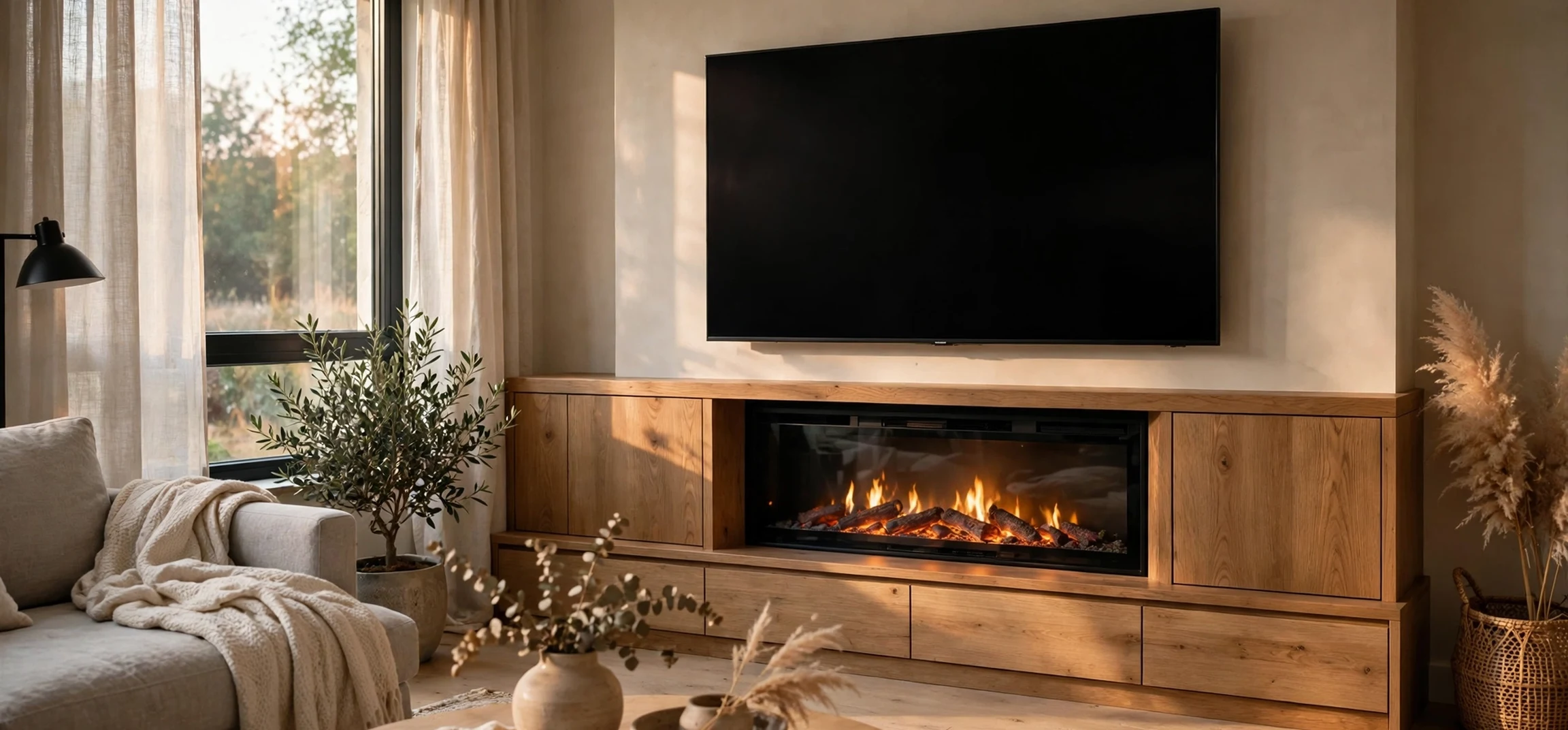
A fireplace TV stand for a 75 inch television is a popular choice for a living room that needs to feel both cosy and cinematic. It combines storage, a place for media devices, and the warm look of a fireplace, all under a large screen. When it is chosen well, it turns an ordinary evening into a cinema-style experience at home.
This guide explains what to look for in a fireplace TV stand for a 75 inch TV, how to set up cinema mode on your television, and how to arrange your room for the best picture and sound. It covers size, weight limits, safety, heat, storage, cable management, and viewing distance, in plain language, so you can buy with confidence and set up without stress.
A 75 inch TV is large, so the stand matters more than it does for a smaller screen. The wrong stand can look unbalanced, wobble, or block ventilation. The right stand supports the weight safely, leaves room for a soundbar, and keeps cables tidy. Cinema mode, meanwhile, is a picture setting that makes films look more natural, with warmer colours and less harsh processing. Together, they create a home cinema that is comfortable for long viewing sessions.
Choosing the Right Size
Start with width. A good rule is that the stand should be at least as wide as the television, and ideally a little wider. A 75 inch TV is usually about 167 centimetres wide, depending on the model and bezel. A stand that is 180 to 200 centimetres wide will look balanced and leave room for speakers or decor at the sides.
Height matters too. The centre of the screen should be roughly at eye level when you are seated. If the stand is too tall, you will crane your neck. If it is too low, you may need to look down. Measure your sofa seat height, your eye height when seated, and the height of the stand plus the TV. A little planning here prevents neck strain later.
Depth is often overlooked. A fireplace TV stand is deeper than a simple shelf because it houses the fireplace unit and storage. Check that it fits your room without blocking walkways or doors. Leave space behind the stand for cables and ventilation, and make sure the fireplace vents are not blocked by curtains, rugs, or furniture.
Weight Limits and Stability
Always check the weight limit of the stand and compare it with the weight of your television, including any soundbar or centre speaker that will sit on it. A 75 inch TV can weigh 30 to 40 kilograms or more. Choose a stand rated well above that weight, not just barely enough. A safety margin gives peace of mind.
Stability is just as important as strength. The stand should sit flat on the floor without rocking. If you have children or pets, consider anchoring the stand to the wall with the anti-tip kit that many manufacturers include. This is a simple step that prevents accidents if someone climbs or bumps the furniture.
Materials and Build Quality
Fireplace TV stands come in solid wood, engineered wood, metal frames, and combinations of these. Solid wood tends to be heavier and more durable, but also more expensive. Engineered wood can look very good and cost less, but check the thickness of panels and the quality of joints. Metal frames add strength and a modern look.
Look at the doors, drawers, and hinges. They should open smoothly and close without gaps. Check that shelves are adjustable, so you can fit a games console, a streaming box, or a tall speaker. Good build quality is easy to spot when you take time to inspect the details, rather than judging by photos alone.
Fireplace Features Explained
Most fireplace TV stands use an electric fireplace insert. This is not a real wood fire. It uses lights and, in some models, a small heater to create the look of flames without smoke, ash, or a chimney. That makes it suitable for flats, rented homes, and rooms without a chimney.
Electric fireplaces usually offer flame-only mode and heat mode. Flame-only mode gives the visual effect without warmth, which is ideal in summer or in a warm room. Heat mode adds gentle warmth, often with a thermostat and a timer. Some models let you change flame colour, brightness, and speed, so you can match the mood of the room.
Safety features matter. Look for overheat protection, a cool-touch front, and a timer that turns the unit off automatically. Keep the area in front of the fireplace clear, and never drape fabric over it. Follow the manufacturer’s guidance on clearance and ventilation, and do not use the fireplace if it is damaged.
Electric Versus Other Options
Electric inserts are the most common choice for TV stands because they are safe, easy to install, and do not need venting. Gel fuel and ethanol fireplaces exist, but they are less common in TV stands and need more care. A traditional wood or gas fireplace requires a chimney or flue and professional installation, and it is rarely built into a TV stand.
For most homes, electric is the practical choice. It plugs into a standard outlet, needs little maintenance, and can be used year-round in flame-only mode. If you want real heat as well, check the heating capacity and make sure your room size matches what the unit can handle.
Cinema Mode on a 75 Inch TV
Cinema mode, sometimes called Movie mode or Filmmaker mode, is a picture preset designed to show films as the creators intended. It usually reduces sharpness processing, lowers brightness to a more natural level, and warms the colour temperature. The result can look dimmer at first, especially if you are used to vivid shop settings, but it is often more comfortable for long films and shows more detail in dark scenes.
To use cinema mode, open your TV picture settings and look for a preset list. Choose Cinema, Movie, or Filmmaker mode. Turn off motion smoothing if you find it makes films look unnaturally smooth. This setting has different names on different brands, such as motion interpolation or soap opera effect reduction. Turning it off usually makes films look more cinematic.
Give your eyes time to adjust. Watch a full film in cinema mode before judging it. Many people find that after a few days, vivid mode looks harsh by comparison. If the room is very bright, you may need to increase brightness slightly, but keep the warm colour and natural contrast that make cinema mode special.
Room Lighting for Cinema Mode
Lighting changes how cinema mode looks. In a dark room, cinema mode shines, with deep blacks and rich colours. In a bright room with sunlight on the screen, it can look washed out. The solution is not to abandon cinema mode, but to control light. Close curtains, dim overhead lights, and use a soft lamp behind the TV or to the side.
Bias lighting, a soft light placed behind the television, can reduce eye strain and make dark scenes easier to see. It does not need to be expensive. A simple, warm LED strip or lamp behind the stand can make a noticeable difference, especially for evening viewing.
Sound to Match the Picture
A large screen deserves good sound. Built-in TV speakers are often thin, because modern TVs are slim. A soundbar placed on the stand, below the screen, is a big improvement. For a fuller cinema feel, consider a soundbar with a separate subwoofer, or a simple surround setup if your room allows it.
Place the soundbar centrally, not hidden inside a closed cabinet, because closed doors muffle sound. If the stand has an open shelf for a soundbar, use it. Keep the subwoofer on the floor, away from walls if possible, and test different positions. Small changes in placement can make a large difference to bass and clarity.
Room Layout and Viewing Distance
Viewing distance for a 75 inch TV is usually about 2.5 to 3.5 metres, depending on resolution and personal preference. Sit too close and you may see individual pixels or need to move your head to follow action. Sit too far and you lose the immersive effect. Measure your room and test with your sofa position before you buy.
Angle matters too. Try to sit directly in front of the screen, not far to the side, because viewing from a sharp angle can wash out colours. If your room layout forces side seating, look for a TV with wide viewing angles, and keep the main seats as central as possible.
Cable management completes the setup. Route power and HDMI cables through the stand’s cable holes, use ties or clips to keep them tidy, and label them if you have many devices. A tidy back panel makes future changes easier and reduces the risk of tripping or pulling a cable loose.
| Feature | What to check | Why it matters |
|---|---|---|
| Stand width | 180–200 cm for a 75 inch TV | Balanced look, room for speakers |
| Weight limit | Well above TV weight | Safety and stability |
| Fireplace type | Electric insert, flame-only mode | Safe, no chimney needed |
| Viewing distance | About 2.5–3.5 metres | Comfortable, immersive picture |
| Picture mode | Cinema or Movie mode | Natural colours, less eye strain |
For more home and tech guides, see our Harry Potter WiFi Names Immersive View post and our Ploomes Org overview.
Frequently Asked Questions
Is a fireplace TV stand safe for a 75 inch TV?
Yes, if the stand is rated for the weight and width of your TV, sits flat and stable, and is anchored where recommended. Always check the manufacturer’s weight limit and follow assembly instructions carefully.
Does the fireplace heat damage the TV?
Electric fireplace inserts are designed for use under a TV, with heat directed forward, not upward. Follow clearance guidance, use flame-only mode when you do not need heat, and never block vents.
What is cinema mode?
Cinema mode is a picture preset that shows films with natural colours, warmer tones, and less artificial processing. It is more comfortable for long viewing and closer to how films are meant to look.
How far should I sit from a 75 inch TV?
Most viewers are comfortable at about 2.5 to 3.5 metres. Adjust to your room and eyesight, and aim for the centre of the screen at seated eye level.
Conclusion
A fireplace TV stand for a 75 inch TV works best when size, weight, safety, and setup are all considered together. Choose a stand wider than the screen, rated well above its weight, with an electric fireplace that offers flame-only mode. Set your TV to cinema mode, control room lighting, and add sound that matches the picture. Measure viewing distance, keep cables tidy, and anchor the stand if needed.
Done well, the result is a living room that feels warm in winter, calm in summer, and cinematic all year round. Take your time, measure twice, and enjoy the films. For another practical guide, read our Spam Meaning In Text Fan Made explainer on messages and fan communities.



