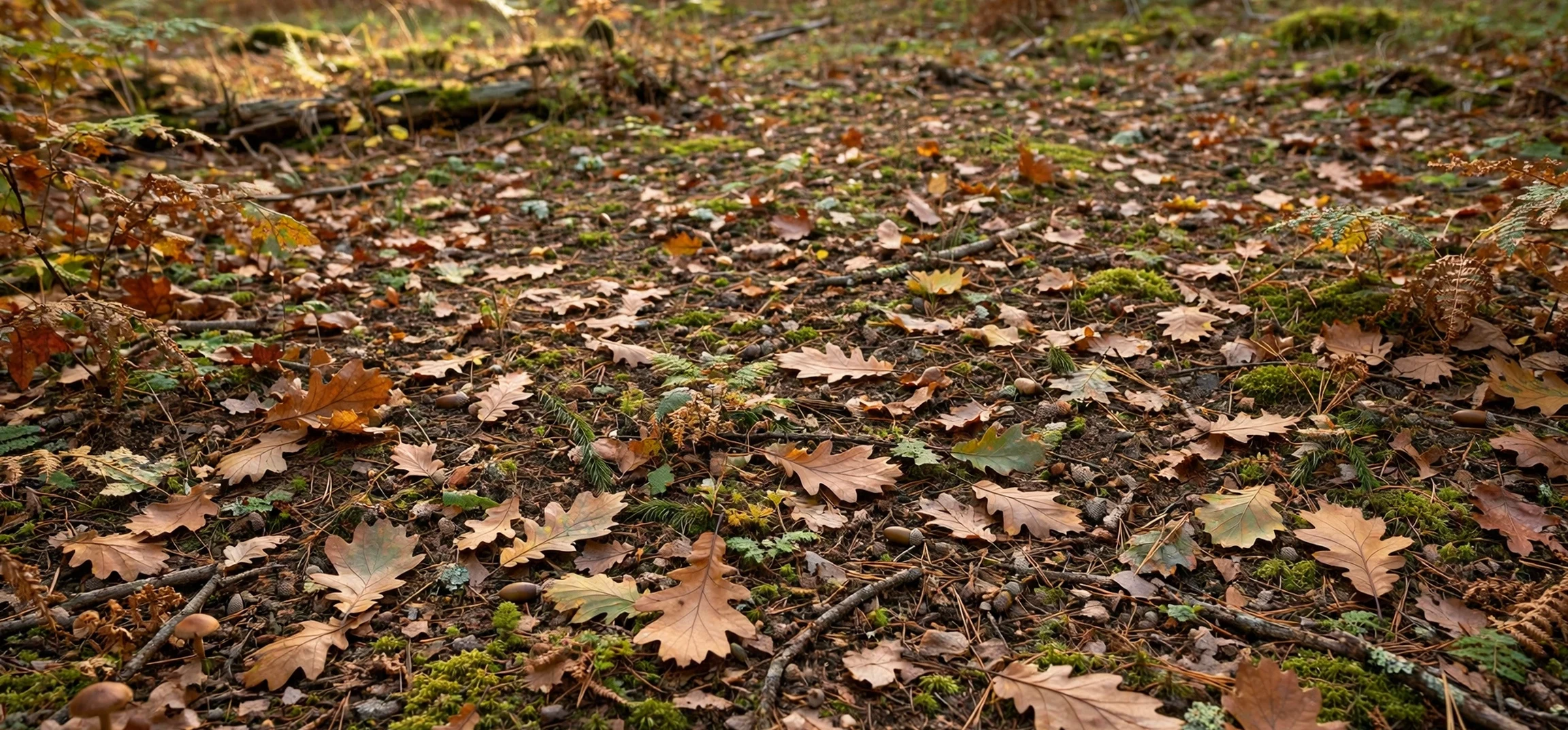
Learning how to distinguish oak trees is one of the most rewarding skills in nature identification, because oaks are widespread, long-lived, and surprisingly varied. At first glance, many oaks look alike: broad leaves, sturdy trunks, and acorns in autumn. Look closer, however, and the differences become clear. Leaf shape, bark texture, acorn cups, tree silhouette, and even the habitat where the tree grows can all help you tell one oak from another, and from trees that are not oaks at all. This guide explains how to distinguish oak trees step by step, using features you can observe without any special equipment, and it is written for walkers, gardeners, students, and anyone who enjoys spending time outdoors.
The first lesson in how to distinguish oak trees is to slow down and look at more than one feature. A single leaf can be misleading, because leaves vary within a single tree depending on whether they grew in sun or shade, and young trees sometimes produce leaves that look different from mature trees of the same species. A reliable identification uses a combination of clues: several leaves from different parts of the tree, the bark on the trunk, the shape of the crown, the acorns if any are present, and the place where the tree is growing. When several clues point in the same direction, your identification becomes much more confident. When they point in different directions, that is a sign to keep observing, to photograph the features, and to compare them with a trusted field guide.
Oak Leaf Shapes: Lobed, Toothed, and Entire
Leaves are usually the easiest starting point for how to distinguish oak trees, and oak leaves fall into a few broad patterns. Many familiar oaks have deeply lobed leaves, with rounded or pointed lobes separated by gaps called sinuses. In some species, the lobes are rounded and smooth, giving the leaf a soft, wavy outline. In others, the lobes end in sharp points or tiny bristles, giving the leaf a spikier appearance. That single difference, rounded versus pointed lobes, divides many oaks into two large groups and is one of the most useful first checks. Hold a leaf flat, look at the tips of its lobes, and note whether they are blunt or bristle-tipped before you look at anything else.
Other oaks do not have deeply lobed leaves at all. Some have leaves with shallow teeth along the edge, some have leaves that are almost smooth-edged, and some have narrow, willow-like leaves that surprise people who expect every oak leaf to look like the classic lobed shape. Evergreen oaks keep their leaves through winter in milder climates, while deciduous oaks drop theirs in autumn, often turning shades of red, orange, or brown first. Leaf size also helps: some oak leaves are small and neat, barely longer than a thumb, while others are large and bold, longer than a hand. When learning how to distinguish oak trees, record leaf length, lobe shape, and whether the underside feels smooth, hairy, or pale, because the underside often carries clues that the upper surface hides.
How to Distinguish Oak Trees by Bark and Trunk
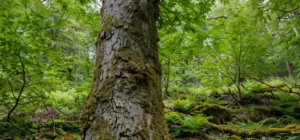
Bark is a powerful clue for how to distinguish oak trees, especially in winter when leaves have fallen. Young oaks often have smooth, greyish bark, but as the tree matures, the bark develops ridges, furrows, and plates. Some species develop deep, dark furrows with narrow ridges, giving the trunk a rugged, almost mountainous texture. Others develop lighter, flakier bark that peels in thin plates or scales. Some have bark that is broken into blocky, almost square plates, while others have long, vertical ridges that run up the trunk. Running a hand gently over the bark, and looking at the pattern from a short distance, can reveal a texture that is hard to capture in a single photograph.
Trunk shape and branching pattern also help with how to distinguish oak trees. Some oaks grow tall and straight, with a high crown suited to woodland, while others spread wide, with low, massive branches that create a broad, dome-shaped canopy in open ground. A lone oak in a field often looks very different from the same species growing crowded in a forest, because competition for light changes its shape. That is why silhouette alone should never be your only clue. Use it alongside bark and leaves, and remember that a tree shaped by wind, pruning, or damage may not match the textbook outline. Older oaks also develop character: hollow trunks, burrs, and gnarled limbs that tell the story of centuries, and that make veteran oaks especially valuable for wildlife.
How to Distinguish Oak Trees by Acorns and Cups
Acorns are the fruit of the oak, and they are a favourite clue for how to distinguish oak trees, because acorn size, shape, and cup design vary between species. Some acorns are long and slender, some are short and plump, and some are almost round. The cup that holds the acorn, called a cupule, is just as informative: some cups are shallow and saucer-like, covering only the base of the nut, while others are deep and cover half or more of the acorn. The scales on the cup may be smooth and tight, or shaggy and fringed, giving some acorns a distinctive, almost mossy cap. If you find acorns on the ground, check that they really came from the tree above, since wind and animals can move them.
Timing matters too. Some oaks produce acorns that mature in a single season, while others take two seasons, so a tree may carry both young and mature acorns at the same time. Acorn production also varies from year to year: oaks often have mast years, when they produce a huge crop, followed by quieter years. A tree with no acorns in a given autumn is not necessarily a different species; it may simply be resting. When you are learning how to distinguish oak trees, treat acorns as strong supporting evidence rather than a single decisive test, and combine them with leaf and bark clues for a balanced identification.
Red Oaks, White Oaks, and Their Close Relatives
Field guides often divide oaks into groups, and understanding those groups makes how to distinguish oak trees much easier. In general, one large group is known for pointed, bristle-tipped lobes, acorns that take two seasons to mature, and inner bark that may show a reddish tint. Another large group is known for rounded lobes, acorns that mature in one season, and bark that is often lighter in colour. These groups are commonly called red oaks and white oaks, though the names refer to wood and leaf characters rather than to the colour of the autumn leaves alone. Learning which group a tree belongs to narrows the possibilities dramatically, even if you cannot yet name the exact species.
Beyond those two groups, there are evergreen oaks, shrubby oaks, and oaks with unusual leaves that do not fit the classic picture. Cork oak, for example, is famous for its thick, spongy bark, while holm oak has small, holly-like evergreen leaves. Willow oak has narrow leaves that look nothing like a typical oak leaf. These exceptions are a good reminder that nature does not always follow simple rules, and that the most reliable approach to how to distinguish oak trees is patient comparison rather than a single rule of thumb. If a tree breaks your rule, it may be an interesting species in its own right, not a mistake in your observation.
Habitat, Season, and Common Lookalikes
Where a tree grows can be a useful hint for how to distinguish oak trees. Some oaks prefer dry, sandy soils and sunny hillsides, others thrive in damp valley bottoms or near rivers, and some are at home on chalk or limestone. A tree growing in a wet hollow is less likely to be a species that needs dry, well-drained soil, though planted trees in parks and gardens can break habitat rules, since people plant species far from their natural homes. Season also changes what you can see: spring brings fresh, soft leaves and dangling catkins, summer brings full canopies and developing acorns, autumn brings colour and falling fruit, and winter leaves you with bark, buds, and silhouette. Winter identification is a skill of its own, relying on bud shape and arrangement, twig colour, and bark texture.
Lookalikes are part of the challenge. Some maples, sweet chestnuts, and other broadleaved trees can resemble oaks at a glance, especially when only a single leaf is examined. Maples often have leaves arranged in opposite pairs along the twig, while oaks have leaves arranged alternately, which is a quick and useful check. Sweet chestnut leaves are long and toothed, but they lack the lobed oak pattern and the tree produces spiky cases rather than acorns. When learning how to distinguish oak trees, always check leaf arrangement, fruit type, and bark together, and be suspicious of any identification based on one feature alone. A photograph of the leaf, the bark, and the whole tree together will help anyone else confirm your identification later.
A Simple Field Method You Can Use Today
A practical method for how to distinguish oak trees starts with four questions. First, are the leaf lobes rounded or pointed? Second, is the bark deeply furrowed, flaky, or blocky? Third, what do the acorns and their cups look like, if any are present? Fourth, where is the tree growing, and what is its overall shape? Answer those four questions in a notebook or on your phone, and you will have a solid set of notes for comparison. Add the date, the place, and a photograph of each feature, and your notes become a personal record that improves with every tree you identify. Over time, you will start to recognise species at a glance, not because you memorised a list, but because you have built a mental library of leaf, bark, and acorn patterns.
Take care while observing: stay on paths where they are provided, do not damage bark or break branches to collect samples, and avoid tasting any part of a tree. Acorns are not a casual snack; they require special preparation and are best left for wildlife. If you are identifying trees with children, turn it into a game: who can find the roundest lobe, the deepest bark furrow, or the shaggiest acorn cup? Games like this build observation skills without needing any prior knowledge, and they make the deeper lesson of how to distinguish oak trees memorable. Nature identification is at its best when it is slow, curious, and respectful of the living tree.
Frequently Asked Questions
What is the fastest way to learn how to distinguish oak trees?
Start with one local species and learn it well: its leaf, bark, and acorns in every season. Once you can recognise that species confidently, learn a second species that grows nearby and compare the two directly. Comparing pairs is faster than trying to memorise many species at once, and it trains your eye to notice the small differences that matter for how to distinguish oak trees in the field.
Can you learn how to distinguish oak trees in winter?
Yes, though it is harder without leaves. Focus on bark texture, bud shape, twig arrangement, and the shape of the crown, and look for fallen leaves or old acorn cups on the ground beneath the tree. Winter practice is excellent training, because it forces you to use clues beyond the obvious leaf shape.
Is one leaf enough to identify an oak?
Usually not. Leaves vary within a tree, and a single unusual leaf can mislead you. Collect several leaves from different branches, compare them, and combine leaf clues with bark, acorns, and habitat before settling on an identification. That combined approach is the heart of how to distinguish oak trees reliably.
| Feature | What to look for | Why it helps |
|---|---|---|
| Leaf lobes | Rounded or pointed and bristle-tipped | Divides oaks into large groups at a glance |
| Leaf underside | Smooth, hairy, pale, or waxy | Reveals clues hidden on the upper surface |
| Bark | Furrowed, flaky, blocky, or smooth | Useful all year, including winter |
| Acorn cup | Shallow, deep, smooth, or shaggy | Strong species-level clue when present |
| Leaf arrangement | Alternate along the twig | Rules out opposite-leaved lookalikes such as maple |
For a related tree topic, see this guide to poison ivy and oak pictures, and for planting context, see the zone 9 planting guide. Both are general guides that complement field observation.
Conclusion
To sum up, how to distinguish oak trees comes down to combining clues rather than trusting any single feature. Start with leaf lobes, rounded or pointed, then add bark texture, acorn cups, tree shape, and habitat, and let several clues agree before you name a species. Expect exceptions, enjoy the lookalikes as learning opportunities, and keep notes and photographs so your skill grows with every walk. Whether you are identifying a mighty tree in a park, a young sapling on a trail, or a veteran oak that has stood for centuries, the patient method in this guide to how to distinguish oak trees will help you see oaks with fresh eyes, season after season.