If you are revising for a geography or science lesson, you may have come across the question about 2 other names for coniferous forest, and the short answer is reassuringly simple. A coniferous forest is also commonly called a boreal forest, or taiga, and it is also often described as an evergreen forest. Those two alternative names highlight different features of the same kind of woodland: the first points to where it grows and its northern character, while the second points to the trees themselves, which keep their needle-like leaves all year round. This guide explains both names clearly, describes what a coniferous forest looks like, where it is found, and how it differs from other forests, so you can answer the question with confidence and understand the science behind it.
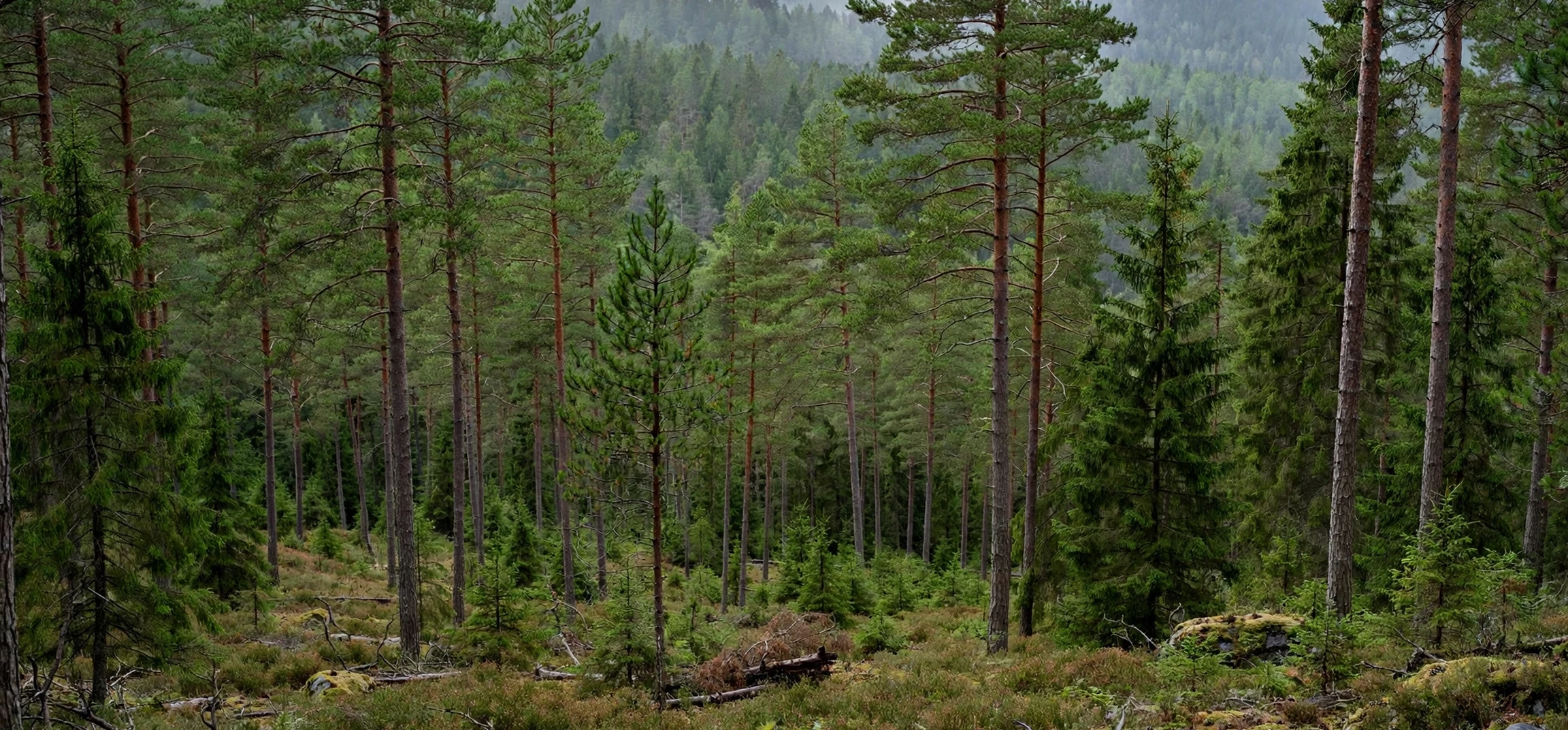
Coniferous forests are dominated by conifers, trees that produce cones and usually bear needle-shaped or scale-like leaves. Pines, spruces, firs, larches, and cedars are all conifers, although not every conifer keeps its leaves all year: the larch, for example, sheds its needles in autumn. The classic image of a coniferous forest, however, is a dense stand of tall, dark-green trees with a carpet of fallen needles below, snow in winter, and a quiet, cool atmosphere. That image comes mainly from the great northern forests of Canada, Russia, Scandinavia, and Alaska, which form one of the largest forest belts on Earth.
The word coniferous itself comes from cone-bearing, and it describes the trees rather than a single place. That is why the same forest type can have several names depending on whether a writer is emphasising its location, its climate, or its trees. School textbooks, nature guides, and exam questions may use any of these names, so learning to recognise them as descriptions of the same broad forest type, with some differences in emphasis, is more useful than memorising a single label.
2 Other Names for Coniferous Forest: Boreal Forest and Taiga
The first alternative name is the boreal forest, often used interchangeably with taiga. Boreal comes from Boreas, the Greek god of the north wind, and it signals that these forests belong to the far north. The taiga is the vast belt of coniferous forest that stretches across northern North America and northern Eurasia, just south of the treeless tundra. When a textbook says boreal forest, it usually means this northern belt in particular, with its long, cold winters, short summers, and trees adapted to snow, frost, and thin soils.
Taiga is a Russian word that originally described the swampy, forested wilderness of Siberia, and it has since been adopted by scientists around the world. In many school contexts, boreal forest and taiga are treated as synonyms, and for a general answer that is perfectly acceptable. Strictly speaking, some ecologists use taiga for the forest itself and boreal for the wider northern zone that includes the forest, lakes, wetlands, and tundra edges, but the difference is subtle and rarely matters in an introductory answer. If an exam asks for another name for a coniferous forest, boreal forest or taiga is the most expected answer.
These northern forests play an enormous role in the global environment. They store large amounts of carbon in trees and soils, they influence climate by reflecting or absorbing sunlight depending on snow cover, and they provide habitat for animals such as moose, wolves, bears, lynx, and many migratory birds. They also support forestry, recreation, and the livelihoods of northern communities. Their slow growth, however, means that damage from fire, logging, or climate change can take a long time to recover, which is why conservation of the boreal zone is a major scientific concern.
Why 2 Other Names for Coniferous Forest Exist
Different names exist because people describe forests from different angles. A geographer mapping world biomes may prefer boreal forest, because the name places the forest in a global zone defined by latitude and climate. A botanist describing trees may prefer evergreen forest, because the name describes the leaves and the year-round green canopy. A local guide in Scotland, Canada, or New Zealand may simply say pine forest or conifer plantation, depending on the dominant tree and whether the woodland was planted by people. None of these names is wrong; they simply highlight different features.
Language and history add another layer. Taiga came into English from Russian as explorers and scientists described Siberia. Boreal came from classical learning and scientific naming. Evergreen is an old, plain English word that anyone can understand without specialist knowledge. When the same forest is discussed by scientists, school pupils, foresters, and tourists, it is natural that several names survive side by side, each useful in its own setting.
There is also an important nuance: not every coniferous forest is boreal, and not every evergreen forest is coniferous. Coniferous forests also grow in mountain regions far from the far north, such as the Rocky Mountains, the Alps, and the Himalayan foothills, where altitude creates cool conditions similar to northern latitudes. Meanwhile, some evergreen forests are broadleaf forests, such as tropical rainforests or Mediterranean woodlands, where trees keep their leaves but are not conifers. The alternative names are therefore best understood as overlapping descriptions, not as perfect synonyms in every case.
The Second Alternative Name: Evergreen Forest
The second widely used alternative name is evergreen forest. This name focuses on the leaves. Most conifers are evergreen, meaning they keep their foliage through winter rather than shedding all their leaves in autumn like deciduous trees such as oak or beech. An evergreen canopy stays green all year, although individual needles do fall and are replaced gradually, so the tree is never bare. This trait is a key adaptation to cold and to short growing seasons: by keeping its needles, a conifer can begin photosynthesis as soon as temperatures allow, without waiting to grow a whole new set of leaves.
Evergreen needles are also shaped to survive harsh conditions. They are narrow, waxy, and often dark green, which reduces water loss, sheds snow, and helps the tree cope with freezing temperatures and strong winds. The conical shape of many conifers, like a Christmas tree, helps snow slide off rather than breaking branches under its weight. The dark colour absorbs what little winter sunlight is available. Together, these adaptations explain why conifers dominate in places where broadleaf trees would struggle to survive the winter.
When a guide calls a woodland an evergreen forest, it is usually describing a coniferous forest in a general, non-technical way. In a school answer, evergreen forest is a safe second name alongside boreal forest or taiga, provided you understand that the term can also be used more broadly. If you want to be precise, you can say that the forest is a coniferous evergreen forest, which combines both descriptions and leaves no doubt about the tree type.
What a Coniferous Forest Looks Like
Walking through a mature coniferous forest is a distinctive experience. The canopy is often dense, so less light reaches the forest floor than in a broadleaf woodland. The ground is usually covered with a thick layer of fallen needles, which decompose slowly in the cool climate and make the soil acidic. As a result, the undergrowth is often sparse, with mosses, lichens, ferns, and a few shade-tolerant shrubs rather than a rich layer of wildflowers. Fungi play an important role in breaking down the needles and recycling nutrients.
The trees themselves tend to grow tall and straight, competing for light in dense stands. Pines often have a more open, spreading crown, while spruces and firs have a narrow, conical shape. In a natural forest, trees of different ages grow together, with young seedlings in gaps created by fallen trees, wind, or fire. In a plantation, by contrast, trees are often planted in straight rows at the same time, giving a much more uniform appearance. Both are coniferous forests, but their ecology and appearance differ in important ways.
Animal life in these forests is adapted to cold, snow, and seasonal change. Many birds migrate south in winter, while resident species such as crossbills feed on conifer seeds. Mammals such as snowshoe hares change coat colour with the seasons, and predators such as lynx and wolves follow their prey through the forest. Insects, including bark beetles, can have a large impact on forest health, especially when warmer temperatures allow their populations to grow. Understanding these relationships helps explain why a coniferous forest is an ecosystem, not just a collection of trees.
Where Coniferous Forests Grow
The largest coniferous forests form the boreal belt across Canada, Alaska, Russia, and northern Europe. This belt is one of the largest land biomes on Earth, covering millions of square kilometres. South of the boreal belt, coniferous forests also grow in mountainous regions, where cooler temperatures at altitude mimic northern conditions. In the United States, for example, coniferous forests are common in the Rocky Mountains, the Cascades, and the Sierra Nevada. In Europe, they cover large parts of the Alps and the mountains of central and eastern Europe.
Coniferous forests also occur in the Southern Hemisphere, although on a smaller scale. Southern beeches are not conifers, but true conifers such as podocarps grow in parts of New Zealand, Australia, and South America, and introduced pines are widely planted in forestry plantations in countries such as New Zealand, Chile, and South Africa. These southern examples remind us that coniferous is a description of tree type, not a single northern location, even though the great northern belt is the most famous example.
Climate is the main factor that decides where these forests thrive. They need enough rainfall to support trees, but they tolerate long, cold winters and short growing seasons better than most broadleaf trees. Soils in coniferous forests are often acidic and low in nutrients, because needle litter decomposes slowly. Fires are a natural part of many coniferous ecosystems: some species, such as lodgepole pine, even depend on fire to open their cones and release seeds. Human management, including fire suppression, logging, and planting, has changed many of these forests, and scientists study how to manage them sustainably.
Coniferous Forests Compared With Other Forests
Comparing forest types makes the alternative names easier to remember. A deciduous forest, such as a temperate oak or beech woodland, sheds its leaves each autumn and grows a new canopy each spring. It usually has richer soils, more undergrowth, and a brighter forest floor in spring before the canopy closes. A tropical rainforest is evergreen too, but its trees are broadleaf, not coniferous, and it grows in a warm, wet climate with no cold season. A Mediterranean woodland may include both evergreen broadleaf trees and conifers, adapted to hot, dry summers.
A coniferous forest sits between these examples: it is usually evergreen, like a rainforest, but it is adapted to cold, like no tropical forest is. Its trees bear cones, unlike oaks or beeches, and its soils are often poorer and more acidic. These comparisons are useful in exams, because questions often ask pupils to explain a forest type by contrasting it with another. If you can say what a coniferous forest is, where it grows, and how it differs from a deciduous forest, you have a solid understanding, not just a memorised name.
For related science explainers, see our guides on the meaning of matter in science and a science term explained in plain language, which use the same clear-definition approach for other school topics.
| Name | What it emphasises | Best used when |
|---|---|---|
| Coniferous forest | Cone-bearing trees | Describing the tree type in general |
| Boreal forest / taiga | Northern location and climate | Describing the great northern forest belt |
| Evergreen forest | Leaves kept all year round | Describing the year-round green canopy |
| Pine forest | One dominant tree genus | Describing a woodland dominated by pines |
Frequently Asked Questions
What are the two most common alternative names?
Boreal forest, also called taiga, and evergreen forest are the two most common alternative names given in school and general guides. Together they cover location and leaf character.
Are boreal forest and taiga exactly the same?
In most school contexts, yes, they are used interchangeably for the northern coniferous belt. Some specialists draw a subtle distinction between the forest itself and the wider northern zone, but that distinction is rarely required in an introductory answer.
Is every evergreen forest a coniferous forest?
No. Some evergreen forests are broadleaf, such as tropical rainforests. A coniferous evergreen forest is the precise term when you mean a forest of cone-bearing evergreen trees.
Do all conifers keep their leaves all year?
Almost all do, but there are exceptions. The larch is a well-known conifer that sheds its needles in autumn and grows new ones in spring, which is why evergreen is a general description rather than an absolute rule.
Conclusion
A coniferous forest can be described in more than one way, and the two most useful alternative names are boreal forest, or taiga, and evergreen forest. The first name tells you where the great northern forests grow and what climate they endure, while the second tells you about the trees themselves and their year-round green needles. Together with the basic definition, cone-bearing trees adapted to cold and to poor soils, these names give you a complete picture: a vast, quiet, northern woodland that stores carbon, shelters wildlife, and shapes the climate of the far north, as well as mountain forests around the world that share the same hardy, cone-bearing character. Remembering both names, and what each one emphasises, will help you answer exam questions confidently, and it is the clearest way to answer a question about 2 other names for coniferous forest and understand nature guides more easily.