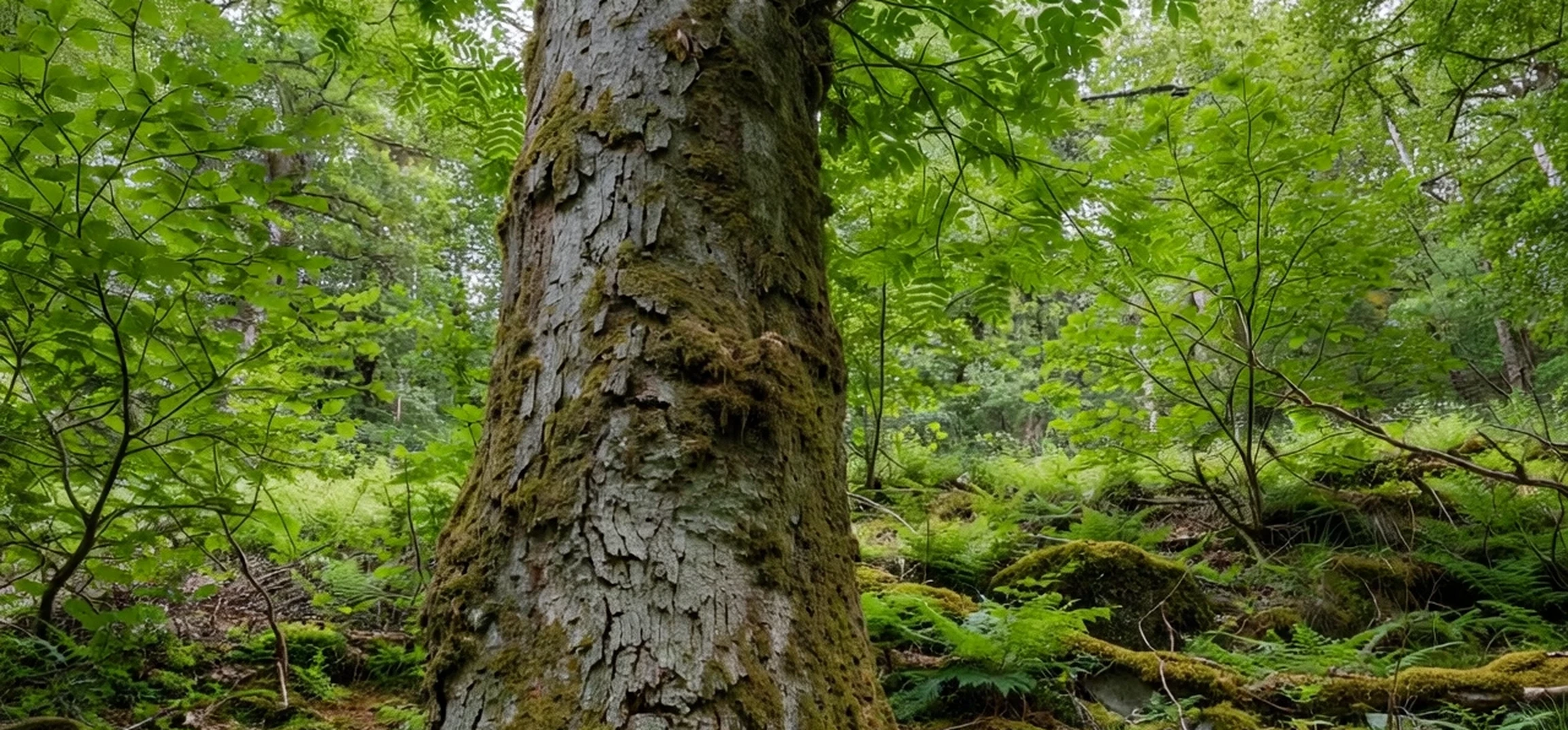
If you have ever walked past a tall, graceful tree and wondered, what does ash tree look like, this guide will help you recognise it with confidence. What does ash tree look like in simple terms? It is usually a large deciduous tree with grey bark, opposite branches, compound leaves made of several leaflets, and, in autumn, clusters of winged seeds that hang like small keys. Ash trees are common in parks, woodlands, streets, and gardens, yet they are often confused with other trees. Learning a few reliable clues, rather than relying on one feature alone, is the key to correct identification.
Ash belongs to the genus Fraxinus, which includes several species such as white ash, green ash, black ash, and European ash. They share a family resemblance, but they differ in bark texture, leaflet number, habitat, and autumn colour. A white ash in an open park may look quite different from a black ash growing in wet ground, even though both are true ash trees. That is why this guide covers bark, leaves, buds, branches, seeds, shape, and seasonal changes together. When several clues point the same way, you can be much more confident in your identification.
What Does Ash Tree Look Like at a Glance?
What does ash tree look like when you see it from a distance? A mature ash is usually tall, often reaching 20 to 30 metres, with a rounded or oval crown and an upright trunk. Young ash trees tend to be narrow and tidy, while older trees spread wider and develop a more open, airy crown. The branches grow in opposite pairs, which means two branches leave the trunk or twig at the same point, directly across from each other. This opposite branching is one of the most useful clues, because many common trees, including oak and elm, have alternate branching instead.
The trunk is generally straight, and the bark changes with age. On a young ash, the bark is smooth and greyish. As the tree matures, it develops a pattern of ridges and furrows, often described as diamond-shaped or interlacing. The bark stays grey or grey-brown, rather than turning deeply reddish or peeling in large papery sheets. If you see a tall tree with grey, furrowed bark and opposite branches, ash should be high on your list of possibilities, although you should still check the leaves and buds before deciding.
The overall shape through the year
In winter, an ash tree looks bare and architectural, with stout twigs and distinctive dark buds. In spring, fresh green leaves appear relatively late compared with some other trees, which can make a bare ash look dead to a beginner. Do not judge too quickly in early spring. By summer, the crown is full and green, with light filtering through the compound leaves. In autumn, many ash trees turn yellow, gold, or purple, depending on the species, before the leaves fall and reveal the hanging seed clusters.
What Does Ash Tree Look Like: Bark and Trunk
Bark is often the first clue you can check without reaching for leaves. What does ash tree look like in terms of bark? On mature white ash and green ash, the bark forms firm ridges with narrow furrows between them, creating a criss-cross or diamond pattern. The ridges are not soft or corky, and they do not peel away easily in long strips. European ash bark is similar, becoming more deeply fissured with age, while black ash bark is often softer and more scaly or flaky when mature.
Young ash bark is a useful contrast. A sapling may have almost smooth, pale grey bark with only faint markings. If you are trying to identify a young tree, bark alone may mislead you, so combine it with bud and leaf clues. Also remember that bark varies with growing conditions. A tree in a damp woodland may have moss or lichen on its trunk, which can hide the pattern. Brush away loose material gently, look at a clear patch, and compare the ridge pattern with photographs or a field guide rather than relying on memory alone.
Trunk shape also helps. Ash trunks are usually single and straight when grown in woodland, where trees compete for light. In open ground, an ash may fork lower and spread more widely. A very short, twisted trunk with many low branches is less typical for ash, although storm damage or pruning can change any tree. As always, use several features together. Bark plus opposite branching plus compound leaves is a strong combination that points firmly toward ash.
What Does Ash Tree Look Like: Leaves and Leaflets
Leaves provide the clearest identification clue in spring and summer. What does ash tree look like in leaf? Ash leaves are compound, which means each leaf is made up of several smaller leaflets arranged along a central stalk. Most ash species have between five and eleven leaflets per leaf, although the number varies by species and by position on the tree. The leaflets are arranged in opposite pairs along the stalk, with a single leaflet at the tip. This pattern is sometimes called pinnately compound, and it gives ash foliage a feather-like appearance.
Each leaflet is usually oval or lance-shaped, with a pointed tip and a slightly toothed or smooth edge. White ash leaflets tend to be paler underneath, which is one reason for the name white ash. Green ash leaflets are greener underneath and often a little narrower. Black ash leaflets are usually stalkless or very short-stalked, sitting close to the main stalk. European ash leaflets are also distinctive, often with a slightly darker green colour. If you can count leaflets and note whether they have stalks, you can narrow down the species considerably.
Leaf size is another clue. A full ash leaf can be 20 to 35 centimetres long, which is larger than many people expect. That size, combined with the feather-like arrangement, makes ash leaves easy to spot on the ground in autumn. Fallen ash leaves often break apart into individual leaflets, so a carpet of small oval leaflets under a tree can itself be a hint. In autumn, ash foliage may turn yellow, reddish-purple, or bronze. White ash is famous for its purple and red autumn colour, while green ash tends toward yellow. Colour alone is not diagnostic, but it supports an identification made on structure.
What Does Ash Tree Look Like: Buds, Flowers, and Seeds
Winter buds are one of the best ash clues, and they work when leaves are gone. Ash buds are opposite, plump, and dark, often described as sooty black or very dark brown, especially in European ash. The terminal bud at the tip of a twig is larger than the side buds, and it has a distinctive rounded shape. White ash and green ash buds are browner than European ash buds, but they are still opposite and relatively large. If you find opposite, chunky buds on a stout grey twig in winter, ash is a strong candidate.
In spring, ash flowers are small and inconspicuous, and they appear before or with the leaves. They do not form showy blossoms like cherry or magnolia, so many people never notice them. The seeds, however, are unmistakable. Ash seeds are winged fruits called samaras, often known as keys. Each key is a slim, elongated wing with a seed at one end, and they hang in dense bunches from the branches. In autumn and winter, these bunches can persist after the leaves fall, giving the bare tree a shaggy, tasselled look. A single key, twirling as it falls, is a classic ash sign.
| Feature | Ash tree clue | What to check |
|---|---|---|
| Branches | Opposite pairs | Two branches at the same point |
| Leaves | Compound, 5 to 11 leaflets | Feather-like leaf with tip leaflet |
| Bark | Grey, ridged, diamond pattern | Firm ridges, narrow furrows |
| Buds | Opposite, dark, plump | Large terminal bud in winter |
| Seeds | Winged keys in bunches | Slim samaras hanging in clusters |
| Shape | Tall, rounded crown | Upright trunk, open crown |
| Autumn | Yellow, gold, or purple | Colour varies by species |
Use this table as a field checklist. If you can tick four or more rows, you are very likely looking at an ash tree. If only one row matches, keep looking, because several other trees share individual features. Walnut also has compound leaves, but its branching is alternate, not opposite. Maple also has opposite branching, but its leaves are simple and lobed, not compound. That process of elimination is how experienced tree identifiers work, and it is more reliable than memorising a single photograph.
Common Lookalikes and How to Tell Them Apart
Several trees are confused with ash, so it helps to know the differences. Walnut is the closest lookalike in leaf, because it also has large compound leaves. The key difference is branching: walnut branches are alternate, while ash branches are opposite. Walnut also produces round nuts in green husks, not winged keys. Elder has compound leaves and opposite branching, but it is usually a shrub or small tree, with softer stems and clusters of berries rather than keys. Rowan, also called mountain ash, is not a true ash at all. It has compound leaves, but its berries are bright red or orange, and its leaflets are smaller and more numerous.
Maple can confuse beginners in winter, because it also has opposite buds and branches. The difference is in the leaves and seeds. Maple leaves are simple, with lobes like a hand, and maple seeds are paired wings that split apart, while ash seeds hang in larger bunches and each key is single. Hickory has compound leaves too, but its bark is often shaggy and peeling, and its nuts are hard and round. When in doubt, photograph the twig, bud, leaf, and bark together. A set of four clear photographs is far more useful for identification than a single distant picture of the whole tree.
Seasonal identification tips
In spring, look for late leafing and fresh compound leaves. In summer, count leaflets and check whether they are stalked. In autumn, note the colour and look for hanging keys. In winter, rely on opposite buds, bark pattern, and any remaining seed bunches. Carrying a small notebook or using a tree identification app can help, but always confirm with structural features rather than trusting a single automated suggestion. Apps are useful, yet they can be wrong, especially with young trees or unusual specimens.
Where Ash Trees Grow and Why They Matter
Ash trees grow across much of Europe, North America, and parts of Asia, in woodlands, hedgerows, river valleys, parks, and streets. White ash and green ash are widely planted in North America for shade and timber, while European ash is a key woodland tree in Britain and mainland Europe. Black ash prefers wetter ground, such as swamps and stream banks, which is a useful habitat clue. Ash timber is prized for its strength, flexibility, and attractive grain, and it has long been used for tool handles, furniture, and sports equipment.
Ecologically, ash trees support many insects, birds, and fungi, and their light canopy allows woodland plants to grow beneath them. In recent years, ash populations have faced serious threats from ash dieback disease in Europe and the emerald ash borer insect in North America. These threats make accurate identification more important, because landowners, councils, and conservation groups need to know which trees are ash in order to monitor health, plan replacements, and protect remaining trees. If you suspect a tree is diseased, with thinning crowns, dead branches, or unusual bark lesions, report it to your local forestry or parks authority rather than attempting treatment yourself.
For gardeners, ash is a large tree that needs space. It should not be planted close to buildings, drains, or small gardens, because its roots and crown will spread widely. If you already have an ash tree, regular checks for deadwood and disease, plus professional pruning when needed, will help it stay safe and healthy. Never climb a tree that shows signs of dieback or structural weakness. A qualified arborist can assess risk and advise on pruning, retention, or, in serious cases, removal and replacement with a suitable species.
Related tree and plant guides on this site may help you compare species, including the scientific name for the coconut tree, poison ivy and oak pictures, and a zone 9 planting guide. Cross-checking bark, leaf, and seed features across guides is a good habit for any beginner identifier.
Frequently Asked Questions About Ash Trees
What does ash tree look like in winter?
In winter, an ash tree has bare grey branches, opposite dark buds, furrowed grey bark, and often bunches of winged keys still hanging from the twigs. The crown looks open and upright, without the dense twiggy mass seen on some other winter trees.
How many leaflets does an ash leaf have?
Most ash leaves have five to eleven leaflets, arranged in opposite pairs with one leaflet at the tip. The exact number varies by species, tree age, and leaf position, so count several leaves rather than relying on a single example.
Is rowan the same as ash?
No. Rowan is often called mountain ash, but it is a different genus. Rowan has bright berries and smaller, more numerous leaflets, while true ash has winged keys and larger leaflets. The common name is the source of the confusion.
What does ash tree look like when it is diseased?
A diseased ash may show a thinning crown, dead branches at the top, heavy seed production, bark lesions, or shoots growing from the trunk. These signs can have several causes, so a professional assessment is the safest next step if you are concerned.
What Does Ash Tree Look Like: A Quick Checklist
If you are still asking what does ash tree look like, run through this checklist in order. First, ask what does ash tree look like from a distance: a tall tree with a rounded crown and a straight grey trunk. Second, ask what does ash tree look like up close: grey bark with a diamond ridge pattern, opposite branches, and stout twigs. Third, ask what does ash tree look like in leaf: a large compound leaf with five to eleven leaflets arranged in opposite pairs. Fourth, ask what does ash tree look like in winter: dark opposite buds and bunches of winged keys. Answering what does ash tree look like step by step, rather than guessing from one feature, is how beginners become confident identifiers.
Finally, remember that what does ash tree look like can vary by species and age, so compare several trees if you can. A young ash will have smoother bark than an old ash, and a black ash in wet ground will look softer in bark than a white ash in a dry park. That variation is normal. When you can answer what does ash tree look like in bark, leaf, bud, and seed, and when at least four of those answers agree, you have made a sound identification. Photograph each feature, note the location and season, and keep your checklist for your next walk.
Walkers often ask what does ash tree look like after seeing a tall tree they cannot name, and the best reply is to walk through bark, branches, leaves, buds, and seeds together. If you ask what does ash tree look like in your local park, compare the tree in front of you with the checklist above, and photograph anything that does not match. Guides that answer what does ash tree look like with several features, rather than a single photograph, are far more reliable for beginners.
Conclusion
So, what does ash tree look like in summary? Look for a tall tree with grey, diamond-patterned bark, opposite branches, compound leaves with five to eleven leaflets, dark opposite buds, and bunches of winged keys. No single feature proves identification on its own, but together these clues form a reliable picture in every season. Take photographs, check several features, compare lookalikes, and you will soon recognise ash trees confidently on walks, in parks, and in woodlands.