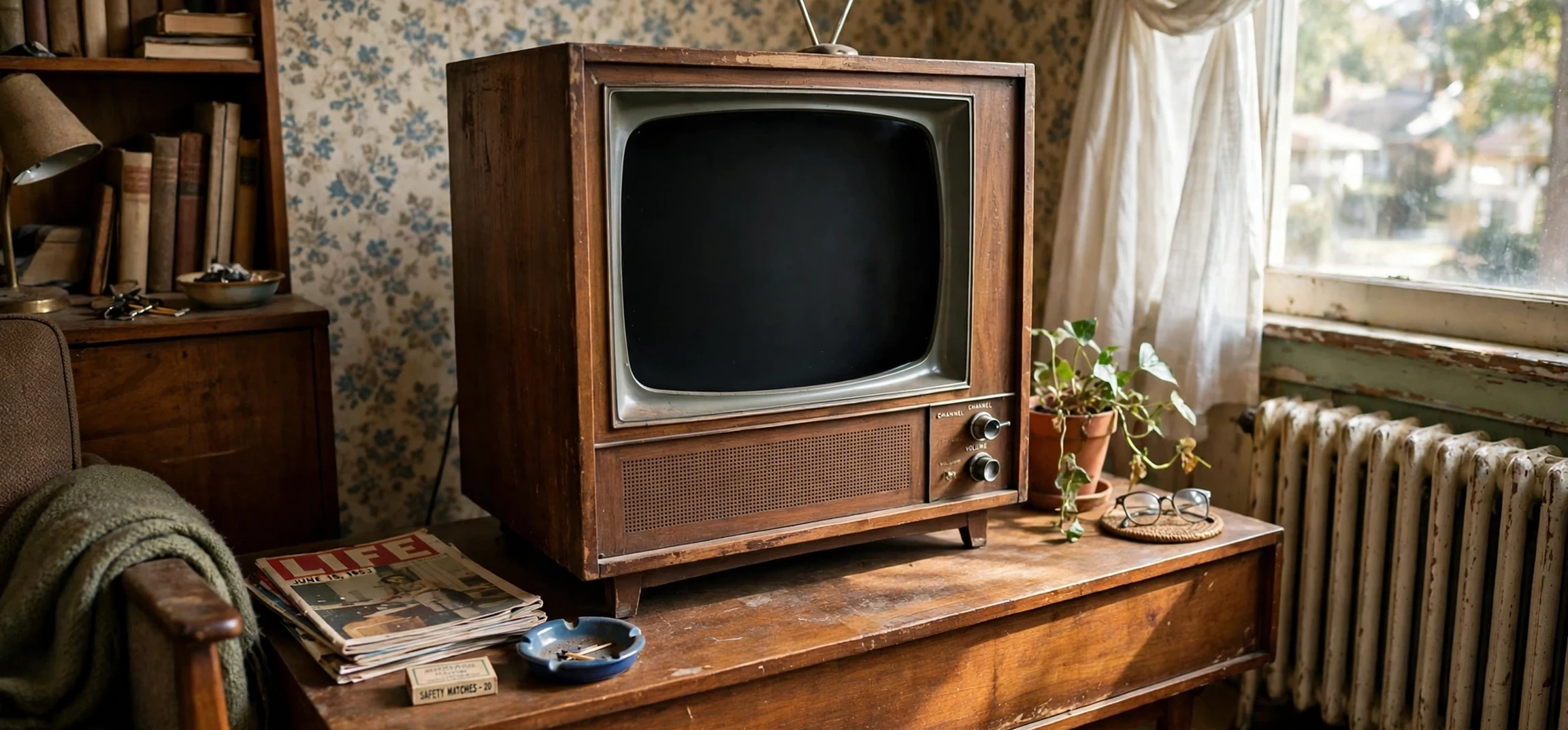
If you have ever searched for when where tvs invented, you have probably found several different years, and that is because television was not invented in a single moment by a single person. The answer to when where tvs invented depends on whether you mean the first mechanical picture, the first fully electronic system, the first public broadcast, or the first television set in an ordinary home. This guide untangles those milestones, explains who contributed what, and gives you a clear timeline you can use without overstating any single claim.
Television grew out of earlier work on photography, radio, and the transmission of images by wire. In the nineteenth century, inventors learned how to send still pictures and signals over distances, and in the early twentieth century they began to ask whether moving pictures could be sent the same way. Two rival approaches emerged: mechanical television, which scanned an image with a spinning disc, and electronic television, which used cathode-ray tubes and later fully electronic cameras. Both approaches matter, and the story of when where tvs invented is really the story of how the electronic system won.
when where tvs invented: The Mechanical Beginning
The mechanical chapter of when where tvs invented is often dated to the 1920s. Scottish inventor John Logie Baird demonstrated a working mechanical television system in London in 1926, transmitting recognisable moving images over a short distance. Around the same time, other inventors in Europe and the United States were testing similar scanning-disc systems. These early pictures were small, flickering, and low in resolution by modern standards, but they proved the central idea: a moving scene could be broken into lines, sent as a signal, and rebuilt as a picture somewhere else.
Mechanical television had a serious limit. A spinning disc could only scan a limited number of lines, so pictures stayed coarse, and the machinery was bulky and noisy. Broadcasters in Britain and elsewhere did experiment with mechanical services in the late 1920s and early 1930s, and a small number of enthusiasts built or bought receivers. For most people, however, mechanical television was a demonstration technology rather than a household product. Its importance lies in showing the public what television could be, which encouraged investment in a better system.
Why the spinning disc mattered anyway
The disc system taught engineers how scanning, synchronisation, and frame rate worked. Without those lessons, the electronic system would have taken longer to develop. It also created an audience of curious viewers and a press story that kept television in the news. When electronic television arrived, it did not start from nothing. It inherited the idea of lines, frames, and broadcast schedules from the mechanical experiments that came before it.
when where tvs invented: The Electronic Breakthrough
The electronic chapter of when where tvs invented centres on the work of Philo Farnsworth in the United States and Vladimir Zworykin, who worked for a major electronics company. Farnsworth demonstrated an electronic television system in San Francisco in 1927, using a camera tube that converted light into an electrical signal without a spinning disc. Zworykin developed the iconoscope camera tube and the kinescope receiver tube, which became central to later commercial systems. By the mid-1930s, electronic systems could produce sharper pictures with more lines than mechanical systems ever managed.
Britain made the next decisive step. The BBC began a regular, high-definition electronic television service from Alexandra Palace in London in 1936, using a system with 405 lines. That service is often described as the first regular high-definition public television service, and it marks an important answer to {kw2} if your question is about regular public broadcasting rather than a laboratory demonstration. The service was interrupted by the Second World War and resumed afterwards, and it helped establish the pattern of scheduled programmes, studios, and outside broadcasts that later television followed worldwide.
America joins the regular-service era
In the United States, regular commercial television broadcasting expanded around 1939 to 1941, with experimental stations becoming licensed commercial stations. The 1939 New York World’s Fair is often remembered because television was demonstrated to large crowds there, but the more important change was behind the scenes: standards for picture lines, sound, and channel spacing were agreed so that sets made by different companies could receive the same broadcasts. That standardisation is what turned television from an experiment into an industry.
A Simple Timeline for Television
| Period | Milestone | Why it matters |
|---|---|---|
| 1926 | Mechanical demonstration in London | Proved moving pictures could be transmitted |
| 1927 | Electronic demonstration in San Francisco | Showed a disc-free camera could work |
| 1936 | Regular electronic service in London | First regular high-definition public service |
| Late 1930s | Commercial expansion in the United States | Standards turned sets into mass products |
| 1950s | Television enters millions of homes | Becomes a daily household medium |
That timeline also explains why a single year for when where tvs invented can mislead. If someone asks when television was invented, a careful answer names the stage: mechanical demonstration in the mid-1920s, electronic demonstration in 1927, regular public service in 1936, and mass household adoption in the 1950s. Colour television, cable, satellite, and flat screens came later, and each of those was its own invention story. For a fuller sense of how television culture grew, see our look at classic television series and our retro pick Airwolf as a retro classic, which show how programme-making changed once the technology was settled.
when where tvs invented and the Move Into Homes
After the war, television sets became cheaper, screens became larger, and broadcast hours expanded. Families gathered around a single set in the living room, and programmes such as news bulletins, drama, comedy, and sport created shared national moments. The set itself changed too, from a wooden cabinet with a small round screen to larger rectangular screens, then to colour, then to remote controls, video recorders, and eventually flat panels. Each change made television easier to watch, but the core idea from the 1920s remained: scan a scene, send the signal, and rebuild the picture.
It is worth remembering that television did not spread at the same speed everywhere. Wealth, electricity supply, broadcast licensing, and programme production all affected when a country gained a service and when ordinary households could afford a set. That uneven spread is another reason why {kw2} has no single worldwide date. Historians therefore talk about invention, first service, and mass adoption as three different milestones, and a good answer keeps them separate.
Frequently Asked Questions
Who invented television?
No single person did. Baird pioneered mechanical television, Farnsworth pioneered electronic camera work, and Zworykin developed key camera and receiver tubes. Later engineers, broadcasters, and standards bodies turned those inventions into services and products. Credit is therefore shared, and textbooks that name only one inventor are simplifying a team effort spread across countries.
What year was the first television broadcast?
Experimental broadcasts began in the late 1920s, while regular public services began in the mid-1930s, with the BBC service of 1936 as the best-known example. If you need one year for a school answer, state which milestone you mean, and your answer will be both accurate and defensible.
When did colour television arrive?
Colour systems were demonstrated in the 1940s and 1950s, and regular colour services expanded in the 1950s and 1960s, at different speeds in different countries. Colour did not replace black-and-white overnight, and many households kept older sets for years after colour broadcasts began.
When Where TVs Invented: Colour and Later Changes
Colour is a good test of how to answer when where tvs invented, because colour television was not a single invention either. Engineers demonstrated colour systems in the 1940s, broadcasters tested them in the 1950s, and households adopted them gradually over the following decades. The pattern repeats the earlier story: a laboratory success, a broadcast standard, and then slow mass adoption. When where tvs invented therefore remains a story of stages, even after the black-and-white era ended.
Later changes followed the same pattern. Cable television expanded channel choice, satellite television reached remote areas, and flat-panel screens replaced bulky cathode-ray tubes. Each change made television more convenient, but none changed the core idea proved in the 1920s: scan a moving scene, transmit it as a signal, and rebuild it as a picture. Students who remember that core idea can place any later invention in context, whether it is a remote control, a video recorder, or a streaming box.
It also helps to separate invention from popularity. A technology can be invented years before it becomes affordable, reliable, and widely available. Television is a clear example, because the gap between the first demonstrations and the living-room set was roughly thirty years. That gap is normal for complex technologies, and it explains why different sources give different years for when where tvs invented. The careful answer always names the stage, the place, and the year together.
Finally, remember the people behind the stages. Baird, Farnsworth, and Zworykin are the names most often cited, but hundreds of engineers, camera operators, and broadcasters turned their work into services. When where tvs invented is therefore best answered as a shared achievement, spread across London, San Francisco, and many other cities, rather than as a single eureka moment in one laboratory.
Conclusion
The honest answer to when where tvs invented is a short story, not a single year. Mechanical television proved the idea in the 1920s, electronic television made the picture sharp enough for regular service in the 1930s, and the post-war years made television a household medium. Remember those three stages, name the inventor or service that matches the stage you mean, and you will never be caught out by a quiz, an essay question, or a debate about when where tvs invented again.