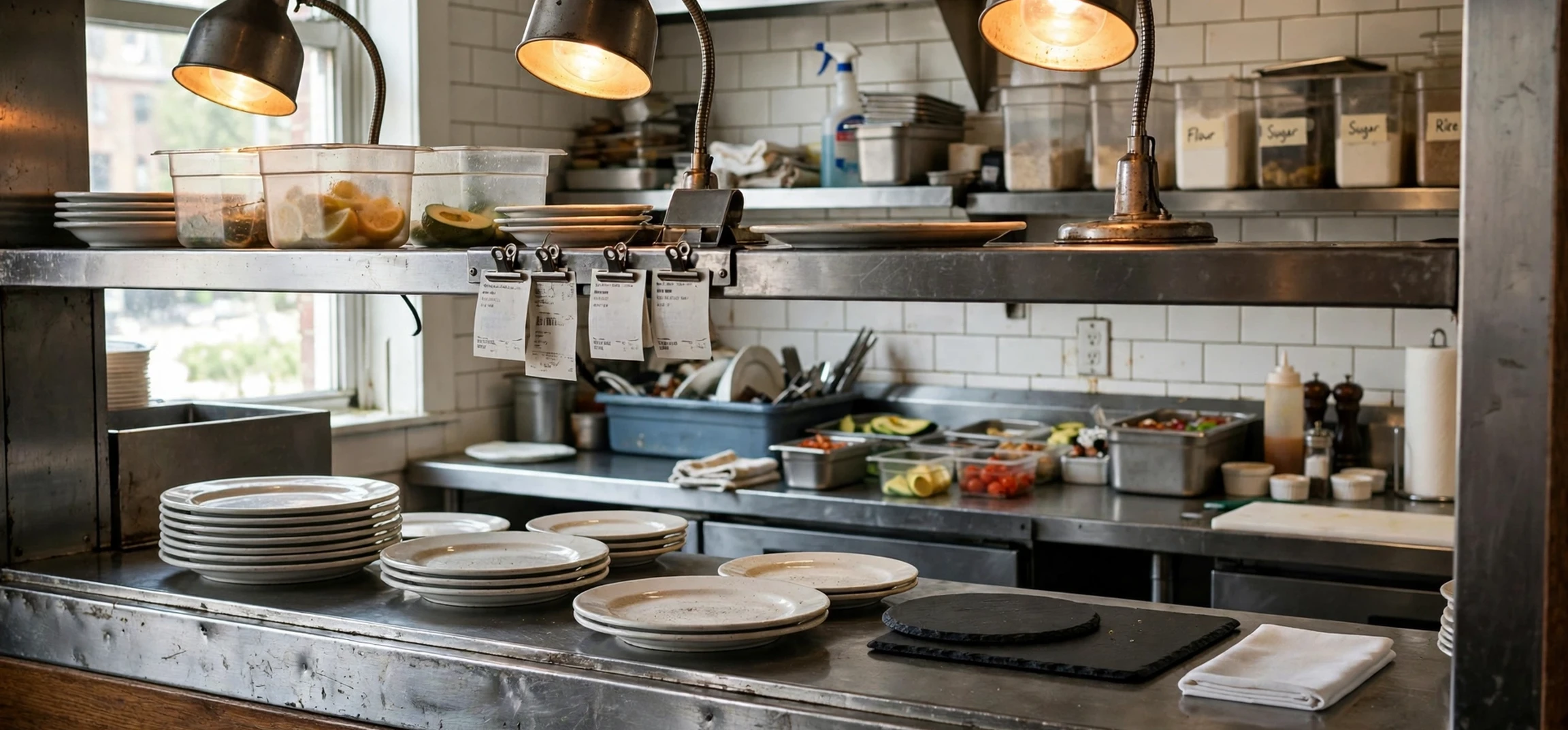
If you have ever watched a busy restaurant kitchen during dinner service, you may have heard a cook call out “all day” followed by a dish name and a number, and wondered what it meant. The all day restaurant term is kitchen shorthand for the total number of a particular dish that the kitchen still needs to prepare across all outstanding orders. When the expediter calls “four salmon all day,” it does not mean four salmon for one table; it means four salmon in total are currently on order across every ticket in the kitchen. This guide explains the all day restaurant term in full, where it is used, how it differs from similar calls, and why this small piece of slang matters so much to a smooth service.
Restaurant kitchens are loud, hot, fast, and unforgiving of confusion. Dozens of orders arrive at once, each with different dishes, cooking times, and special requests, and every station must produce its part so that each table’s food arrives together. The all day restaurant term is one of the tools kitchens use to keep that chaos organized. It gives everyone a single running total for each dish, so cooks know exactly how much to fire, how much is already cooking, and how much is still to come, without stopping to count tickets.
What the All Day Restaurant Term Means
At its simplest, the all day restaurant term is a running total. Imagine three tables each order two orders of the same pasta dish. The kitchen does not think of these as three separate orders of two; it thinks of them as six pastas all day. If one table’s pasta is already cooked and plated, the remaining total becomes four all day. The number constantly updates as new orders arrive and as dishes leave the kitchen, giving the team a live picture of the workload for each item on the menu.
The phrase is most often used by the expediter, the person who coordinates between the dining room and the kitchen. The expediter reads incoming tickets, calls out the orders to each station, and tracks what is ready and what is still needed. When a new ticket arrives, the expediter might call “two burgers, that makes eight burgers all day,” combining the new order with the existing total. That single sentence tells the grill cook both the new order and the overall demand, which helps with planning grill space, timing, and ingredient preparation.
The all day restaurant term also helps the kitchen manage its supplies. If the all day count for a dish climbs toward the amount of an ingredient left in the kitchen, the team knows a popular item may run out soon and can warn the servers before a guest orders it. This is far better than discovering mid-service that the kitchen has sold more of a dish than it can produce. In this way, a two-word phrase protects both the kitchen’s workflow and the guest’s experience.
The All Day Restaurant Term in Action During Service
During a typical service, the all day restaurant term is called out constantly, and the rhythm of those calls is part of the kitchen’s language. When the doors open and the first orders arrive, the counts are small: two chickens all day, three salads all day. As the dining room fills, the numbers climb, and cooks adjust their pace and their station setup to match. A grill cook hearing “twelve steaks all day” knows to reserve enough grill space and to stagger the cooking so that steaks for different tables finish at the right times rather than all at once.
Timing is where the all day restaurant term earns its keep. Not every dish takes the same time to cook, and a table’s dishes must be ready together. The expediter uses the all day totals, along with knowledge of each station’s speed, to call “fire” orders at the right moment. A slow-cooking dish might be fired early, while a quick salad is held until the last moment. Without the running total, each station would only see its own tickets and could easily fire dishes too early or too late, leading to cold food, remakes, and frustrated guests.
The system also helps with communication between stations. A dish often involves more than one station: the grill cooks the protein, the saute station prepares the sauce, and the garnish station finishes the plate. When everyone hears the same all day restaurant term count, each station can prepare its component in the right quantity without separate instructions. This shared awareness is one reason professional kitchens can produce dozens of complex plates simultaneously with what looks, from the outside, like choreographed calm.
All Day Restaurant Term Versus Other Kitchen Calls
Newcomers sometimes confuse the all day restaurant term with other kitchen shorthand, but each call has a distinct job. “Fire” means start cooking an order now. “Hold” means wait before cooking, usually because the table is not ready or another course is still being served. “On the fly” means an order is urgent, often because of a mistake or a VIP guest, and it jumps the queue. “All day” is different from all of these: it is not an instruction to start, wait, or hurry, but a statement of the total quantity outstanding.
Another related call is “86,” which means an item is out of stock and can no longer be ordered. The all day restaurant term and “86” work together: as the all day count approaches the available supply, the kitchen can anticipate an 86 before it happens and warn the front of house. Similarly, “in the weeds” describes a cook or station that is overwhelmed, which often happens when all day counts spike suddenly, such as when a large party orders the same dish at once. Knowing the vocabulary helps diners understand kitchen culture, but all day remains the most practical of the terms because it directly tracks workload.
There is also a difference between “all day” and a simple order count on a single ticket. A single ticket might show two steaks for table twelve, but the all day restaurant term for steaks might be fifteen, reflecting every table in the restaurant. That distinction is the whole point: the kitchen plans around totals, not individual tickets. A cook who only knew the tickets one by one would have no sense of the overall demand, and would be unable to plan ingredients, equipment, or timing across the whole service.
Where the All Day Restaurant Term Comes From
The origins of the all day restaurant term are not precisely documented, but the phrase has been part of professional kitchen language for many decades, and its logic suggests it grew out of the daily rhythm of restaurant work. Kitchens think in terms of a whole day of service: prep in the morning, lunch service, dinner service, and closing. A total that runs “all day” captures everything outstanding at that moment, as opposed to a single order or a single table. The phrase is compact, unambiguous, and easy to shout over noise, which are exactly the qualities kitchen language needs.
The term spread through the apprenticeship culture of professional cooking, where new cooks learn by working alongside experienced ones and absorbing the calls of the line. Cooking schools and culinary programs now teach it explicitly, and food media, chef memoirs, and cooking shows have carried it to a wider audience. Many home cooks first encounter the all day restaurant term through a television show or a restaurant documentary, where a chef’s rapid-fire calls provide a glimpse into the organized intensity of a professional kitchen.
It is worth noting that the all day restaurant term is primarily a feature of restaurants that cook to order in a brigade-style kitchen, where different stations handle different tasks. In a small cafe with a single cook, or a fast-food outlet with a fixed production line, the term may be used less often or not at all, because the workload is simpler and the totals are easier to track informally. Wherever it is used, though, its purpose is the same: a shared, live count that keeps everyone on the same page.
Why the All Day Restaurant Term Matters for Guests
Guests never hear the all day restaurant term directly unless they sit near an open kitchen, but they benefit from it every time a meal arrives hot, complete, and on time. When the kitchen tracks totals accurately, tables receive all their dishes together instead of one guest eating while others wait. When the kitchen spots a dish approaching its supply limit early, servers can suggest alternatives before a guest sets their heart on an unavailable item. When the kitchen paces its cooking using the totals, food does not sit under heat lamps losing quality while other dishes catch up.
The term also matters for food waste and cost control. A kitchen that knows its all day totals can prep the right amount of each ingredient, fire the right number of portions, and avoid overproducing dishes that will be thrown away. Over a busy service, that precision adds up to significant savings and less waste. For restaurant owners, the discipline behind the all day restaurant term is part of what separates a profitable kitchen from one that bleeds money through remakes, waste, and comped meals.
For diners who enjoy food culture, understanding the all day restaurant term adds a layer of appreciation to a restaurant visit. Watching an open kitchen becomes more interesting once you know what the calls mean, and you can spot a well-run kitchen by the calm, rhythmic way its team communicates. The next time you eat at a restaurant with a visible kitchen, listen for the numbers being called: behind each one is a system designed to make your meal arrive exactly as it should.
Learning Kitchen Language as a Home Cook or Student
If you are a culinary student or an enthusiastic home cook, learning the all day restaurant term is a good entry point into professional kitchen language, because it teaches the mindset behind the vocabulary. Professional kitchen language is not slang for its own sake; it is a tool for speed, clarity, and safety. Every term exists to prevent a specific kind of mistake, and all day prevents the mistake of cooking the wrong quantity. Students who understand why the term exists will use it correctly, while those who merely memorize it may misuse it under pressure.
A practical way to practice is to use the concept at home when cooking for a crowd. If several guests request the same dish, keep a running total rather than thinking of each request separately, and plan your cooking around that total. This habit helps with timing, portioning, and ingredient shopping, and it mirrors exactly what professional cooks do on a larger scale. It also makes group cooking more fun, because everyone involved shares the same picture of what still needs to be done.
For those considering a career in cooking, familiarity with terms like all day, fire, hold, and 86 signals to potential employers that you understand kitchen culture and can slot into a team without slowing it down. Many kitchens expect new hires to learn the calls quickly, and showing that knowledge in a trial shift can make a strong impression. The vocabulary is not difficult, but using it under the pressure of a real service takes practice, and that practice starts with understanding the simple, powerful idea of a running total.
| Kitchen call | Meaning | Example |
|---|---|---|
| All day | Total of a dish outstanding across all orders | Eight salmon all day |
| Fire | Start cooking an order now | Fire table twelve |
| Hold | Wait before cooking | Hold the mains for table four |
| 86 | Item is out of stock | 86 the special |
| On the fly | Urgent order that jumps the queue | One risotto on the fly |
Frequently Asked Questions
What does the all day restaurant term mean in simple words?
It means the total number of a particular dish that the kitchen still needs to make across every order currently in the kitchen, not just for one table.
Who uses the all day restaurant term?
Mainly the expediter and the cooks in a professional restaurant kitchen, especially in busy restaurants where many orders are being prepared at the same time.
Is the all day restaurant term the same as an order for the whole day?
No. It is a live running total for the current service that rises as new orders arrive and falls as dishes are completed. It does not refer to the entire calendar day’s sales.
Can home cooks use the all day restaurant term?
Yes, as a planning habit. Keeping a running total of each dish when cooking for a group helps with timing, portions, and shopping, just as it does in a professional kitchen.
Conclusion
The all day restaurant term is a small phrase with a big job: it tells the whole kitchen, at a glance, how much of each dish is still outstanding across every order. That running total drives timing, ingredient management, and coordination between stations, and it is one of the reasons professional kitchens can serve many tables at once without descending into chaos. Whether you are a diner curious about kitchen culture, a student learning the trade, or a home cook feeding a crowd, the concept is worth knowing, because it captures the teamwork and precision behind every well-run service. For more kitchen language, see our explainers on all day in the kitchen and all day in the kitchen, another take.