Every cook eventually faces the same question in the soup aisle: is it worth making chicken stock and broth at home, or does the carton do the job just as well? The difference between chicken broth and chicken stock is already a source of confusion, and the homemade versus store-bought choice adds another layer, because the two routes differ in flavour, cost, convenience, and control. This guide compares homemade and store-bought stock and broth side by side, explains how to make each one at home, and helps you decide when the carton is perfectly fine and when the pot is worth the effort.
The honest answer is that both routes have a place in a good kitchen. Homemade stock and broth taste better, cost less per litre, and let you control salt and fat completely, but they take time and freezer space. Store-bought versions are instant, consistent, and available at any hour, but they vary wildly in quality and are often saltier and thinner than the real thing. The smart approach is not to pick one side for life, but to know which jobs deserve homemade and which jobs the carton can handle.
The Difference Between Chicken Broth and Chicken Stock When You Make Them Yourself
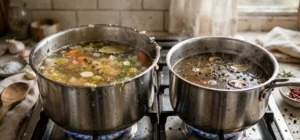
The stock-versus-broth distinction is easiest to understand when you make them at home, because you can see and taste each step. Homemade chicken stock starts with bones: a roast chicken carcass, backs, necks, and wings, plus onion, carrot, celery, bay leaf, and peppercorns, covered with cold water and simmered gently for four to six hours. The long, quiet simmer is what draws collagen from the bones, and when the finished stock cools in the fridge, it sets into a soft jelly, the unmistakable sign of a good stock. It is usually left unseasoned, so that the cook can season the final dish.
Homemade chicken broth starts with meat instead: a whole chicken or meaty pieces, the same vegetables, cold water, and a little seasoning, simmered for one to two hours until the meat is tender and the liquid tastes good. The reward is twofold, because you get both cooked chicken for sandwiches, salads, and noodle soup, and a light, flavourful broth. Broth does not gel firmly when chilled, because it contains less collagen, and it tastes brighter and fresher than stock. Making both at home, even once, teaches the distinction far better than any label can.
There is also a middle path that many experienced cooks use: roast the bones first for a deeper colour and flavour, then simmer them into stock, and keep the meat from a roast chicken for broth-based soups later in the week. A single roast chicken can therefore supply a Sunday dinner, a pot of stock, and several days of soup, which is one reason homemade stock feels so economical once it becomes a habit.
Making Stock and Broth at Home: Methods and Tips
The stovetop method is the classic one, and it needs little more than a large pot, a sieve, and patience. Use cold water, because it draws flavour and collagen out more evenly than hot water, bring the pot barely to a simmer, and skim the foam that rises in the first half hour. Keep the heat low enough that only a few bubbles break the surface: a rolling boil clouds the liquid and churns fat into it. For stock, simmer for four to six hours, topping up the water if the bones become exposed; for broth, one to two hours is enough, and the chicken should be lifted out as soon as it is tender so it does not dry out.
A slow cooker makes the process almost effortless. Load the bones or the chicken, vegetables, and water in the morning, cook on low for eight to ten hours for stock or four to six hours for broth, and strain in the evening. A pressure cooker is the fastest route, producing a rich stock in about an hour and a good broth in around thirty minutes, although the flavour is slightly less clear than a slow stovetop simmer. Whichever method you choose, cool the liquid quickly, skim the fat once it has set in the fridge, and strain through a fine sieve or cloth for the cleanest result.
Freezing is what makes homemade stock practical. Pour it into litre containers for soups, freezer bags laid flat for easy stacking, and ice-cube trays for small amounts to enrich sauces, gravies, and stir-fries. Label every container with the contents and the date, and use frozen stock within three to six months for the best flavour. Once you have a freezer stash, reaching for homemade stock becomes just as quick as opening a carton, and the difference in taste will convince you to keep the habit going.
Store-Bought Stock and Broth: What You Are Really Buying
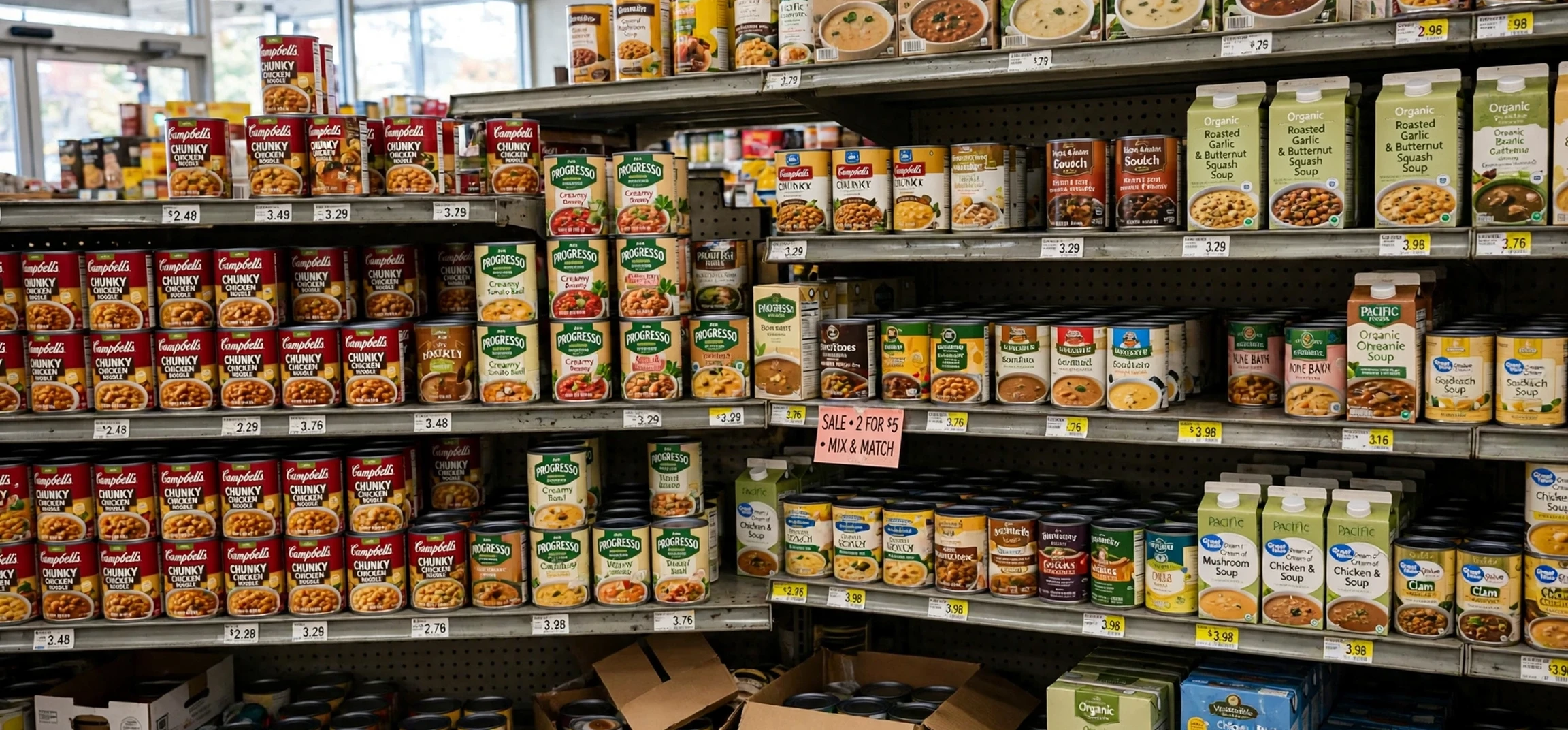
Store-bought stock and broth come in several forms, and they are not equal. Cartons are the most common, and they range from thin, salty liquids that are little more than flavoured water to genuinely good products with a short ingredient list and a real chicken taste. Concentrated pastes and powders are cheap and convenient, but they are usually the saltiest option and lack the gelatin body of real stock. Chilled fresh stock, sold in the refrigerated section, is often the closest to homemade, and frozen stock from a butcher or deli can be excellent, although it costs more.
Reading the label is the skill that separates a good carton from a poor one. A good stock lists chicken stock or chicken bones among the first ingredients, has a short list you recognise, and is low in salt. A poor one lists salt, sugar, flavourings, or yeast extract early, and tastes one-dimensional no matter how you use it. Taste a spoonful of any new brand before cooking with it, and adjust your seasoning accordingly, because the salt level in cartons varies far more than most shoppers expect.
Price is another factor. A carton may look cheap, but a litre of homemade stock made from a leftover carcass and vegetable trimmings costs almost nothing, and even stock made from bought bones is usually cheaper per litre than the premium cartons. The real cost of homemade is time, not money, and the slow cooker and pressure cooker methods reduce that cost sharply. If you cook soups, sauces, and braises more than once a week, homemade stock pays for itself quickly, in both money and flavour.
| Factor | Homemade | Store-bought |
|---|---|---|
| Flavour | Deep, fresh, fully controllable | Variable, often thinner and saltier |
| Body and gelatin | High, gels when chilled | Usually low, stays liquid |
| Salt control | Complete, season as you cook | Fixed, check the label |
| Cost per litre | Very low, especially from leftovers | Higher, especially premium brands |
| Convenience | Needs time and freezer space | Instant, always available |
| Consistency | Varies with each batch | Same every time |
The Difference Between Chicken Broth and Chicken Stock When Shopping
The stock-versus-broth line gets blurred on shop shelves, because manufacturers know that most shoppers want a liquid they can use straight from the carton, so many products labelled stock are in practice lightly seasoned and thin, much closer to broth. That does not make them bad products, but it does mean you should shop by taste and label rather than by the word on the front. If a carton marked stock tastes seasoned and stays liquid in the fridge, treat it as broth in your cooking, and season accordingly.
A practical shopping rule is to keep two products at home if you buy rather than make: a low-sodium stock or broth for cooking, where you want control over the final seasoning, and a well-seasoned broth for soups and sipping, where you want flavour straight from the carton. That pair covers almost every weeknight need, and it avoids the common mistake of using a salty broth in a dish that will reduce and become over-salted. For special dishes, such as a risotto, a braise, or a sauce that depends on gelatin, it is worth reaching for homemade stock from the freezer, or the best chilled stock you can find.
When you do buy, favour brands with short ingredient lists, low sodium, and no added sugar, and be wary of products that promise dramatic health benefits on the packaging. A carton that claims to be a cure or a miracle is selling marketing, not soup. The best carton is the one that tastes like chicken, lists ingredients you recognise, and leaves you in charge of the salt. For more kitchen language, see our guide to what braised means and our note on what all day means in a kitchen.
Frequently Asked Questions
Is homemade chicken stock really better than store-bought?
Yes, in flavour, body, and control over salt and fat, homemade stock is noticeably better, and most cooks who try it never go back for their important dishes. Store-bought is still perfectly fine for everyday soups and for dishes where the liquid is a background note, so the best approach is to use homemade where it matters and cartons where it does not.
How long does homemade stock last?
Homemade stock and broth keep for three to four days in the fridge and for three to six months in the freezer. Cool them quickly after cooking, skim the fat once chilled, and always label containers with the contents and the date.
Can I use a slow cooker or pressure cooker for stock?
Yes, both work well. A slow cooker needs eight to ten hours on low for stock and four to six hours for broth, while a pressure cooker produces stock in about an hour and broth in around thirty minutes. The stovetop gives the clearest flavour, but the convenience of the other methods makes homemade stock realistic for busy cooks.
What bones should I use for chicken stock?
A roast chicken carcass is ideal, and backs, necks, wings, and feet all add gelatin and flavour. Roasting the bones first gives a deeper colour and a richer taste. Avoid using bones that are already heavily seasoned or sauced, since those flavours will carry into the stock.
Conclusion
The difference between chicken broth and chicken stock is only half the story; the other half is whether the liquid in your pot came from your own kitchen or from a carton. Homemade stock and broth win on flavour, body, cost, and control, and the slow cooker and freezer make them far more practical than their reputation suggests. Store-bought versions win on convenience and consistency, and a good low-sodium carton is a perfectly respectable stand-in for weeknight cooking. The wisest kitchen keeps both: a freezer stash of homemade stock for the dishes where it matters, and a couple of trusted cartons for everything else. Once you have tasted the difference, you will know exactly when each one earns its place.