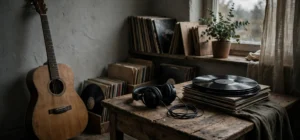
When readers search for dsbm meaning, they usually meet an abbreviation that belongs to a specific corner of heavy music, and they want a clear answer without sensational detail. In plain terms, dsbm meaning refers to depressive suicidal black metal, a subgenre of black metal that emerged in the 1990s and is characterised by slow tempos, raw or lo-fi production, repetitive guitar patterns, atmospheric keyboards and vocals that are often distant, strained or whispered rather than cleanly sung. This guide explains dsbm meaning in neutral, non-explicit terms, traces how the style developed from earlier black metal, describes its musical features, and explains how listeners, writers and researchers can discuss it responsibly.
It is important to state the scope of this article at the start. It is a music-genre explainer, not a discussion of personal distress, and it does not provide graphic detail about lyrics or imagery. The genre name itself contains words that can be difficult to read, and some listeners prefer to use the abbreviation DSBM precisely because it allows discussion of the music without repeating the full phrase in every sentence. This article follows that practice where possible, while still giving the full expansion once so that a search for dsbm meaning returns an accurate answer. Readers who need support for personal wellbeing should contact a trusted local support service or a healthcare professional, rather than looking to music writing for guidance.
DSBM Meaning: A Simple Definition
At its simplest, dsbm meaning can be defined by three elements: black metal as the parent genre, a depressive or melancholic emotional atmosphere as the defining mood, and a slower, more hypnotic musical approach than the fast, aggressive style associated with much early black metal. Where classic black metal often emphasised speed, blast beats and a harsh, confrontational sound, DSBM slowed the pace down, stretched songs over longer durations, and used repetition to create a sense of bleak atmosphere. The result is music that many listeners describe as immersive, heavy and emotionally intense, even when they do not follow the lyrics closely.
The abbreviation is also used by fans, journalists and cataloguers to group together bands that share that atmosphere, even when their individual sounds differ. Some DSBM bands lean toward ambient and minimalist textures, with long instrumental passages and very little traditional song structure. Others keep a clearer rock or metal band format, with recognisable riffs and drum patterns, but still use the slow tempo and raw production that mark the style. That variety is normal for a subgenre label: dsbm meaning describes a family resemblance, not a single rigid formula that every band must follow.
DSBM Meaning and the History of Black Metal
To understand dsbm meaning, it helps to place it inside the wider history of black metal. Black metal developed in the 1980s and early 1990s from thrash and death metal influences, with bands in Scandinavia and elsewhere developing a distinctive sound based on tremolo-picked guitar melodies, harsh vocals, raw production and an interest in atmosphere, mythology and opposition to mainstream culture. Early black metal was often fast and deliberately unpolished, and its visual style favoured stark black-and-white imagery and a rejection of commercial polish.
By the mid-1990s, some musicians within that scene began to explore slower and more introspective directions. They kept the raw guitar tone and the atmospheric ambition of black metal, but they replaced speed with space, and confrontation with a more withdrawn, melancholic mood. That shift is the origin of DSBM. It was not a single band or a single album, but a gradual tendency that listeners and writers later grouped under one label. As with many underground genres, the label was applied retrospectively as much as it was claimed by the musicians themselves, and some artists associated with the style have mixed feelings about being categorised in this way.
From First Wave to Atmospheric Branches
Black metal has always produced branches that emphasise atmosphere over aggression, and DSBM is one of the most distinctive of those branches. Other branches explored folk melodies, ambient soundscapes or symphonic arrangements. DSBM stands apart because its atmosphere is specifically low, slow and emotionally heavy, rather than epic or folk-inspired. That distinction helps explain why listeners who enjoy atmospheric black metal in general may still find DSBM a separate listening experience, with its own expectations about pacing, duration and mood.
DSBM Meaning: Musical Features
Musically, DSBM is recognised by several recurring features, though no single band shows all of them at once. Tempos are often slow to mid-paced, with long sections built on a small number of repeating guitar figures. Drums may be simple and steady, or may use slow patterns that leave space for guitar and keyboard textures to dominate. Production is frequently raw, with a preference for a dense, hazy sound rather than a clean, modern metal mix. Vocals, when present, are often buried in the mix, delivered as distant screams, whispers or spoken passages, which reinforces the sense of distance and introspection.
Song lengths in DSBM are often longer than in mainstream rock or metal, sometimes extending well beyond ten minutes, and albums may contain only a small number of tracks. That structure encourages a different kind of listening: rather than following verse and chorus hooks, the listener follows gradual changes in texture, volume and repetition. Keyboards and synthesisers are sometimes used to add a cold, spacious layer, while acoustic passages, field recordings or ambient interludes can appear between heavier sections. For a reader researching dsbm meaning, these musical markers are more reliable identifiers than lyrical themes alone, because they can be heard directly in the recordings.
It is also worth noting what DSBM is not. It is not the same as all slow metal, and it is not the same as doom metal, although the two share slow tempos. Doom metal typically draws on early heavy metal and blues-based riffs, with a focus on weight and groove. DSBM draws on black metal guitar techniques and production, with a focus on atmosphere and repetition. Keeping that distinction clear helps listeners navigate catalogues, playlists and genre guides without confusing two styles that sound slow but come from different traditions.
DSBM Meaning in Fan Culture and Cataloguing
In fan culture, dsbm meaning is used as a practical tag. Streaming playlists, metal archives, forums and review sites use the label to help listeners find similar bands, and fans use it in discussion to signal a preference for slower, atmospheric black metal rather than faster, more aggressive forms. That tagging function is useful, but it also creates debates: fans disagree about which bands belong, about whether newer bands that mix DSBM with shoegaze, post-rock or ambient music should still count, and about whether the label should be used at all given its difficult name.
Those debates are a normal part of underground music culture. Genre labels are tools for conversation, not official classifications, and they evolve as new bands appear. A listener who searches for dsbm meaning today may find that some sources use the term broadly for any melancholic black metal, while others use it narrowly for a specific 1990s and 2000s underground sound. Both uses are understandable, and the best approach for a newcomer is to listen to a few representative examples, note the musical features described above, and then decide which narrower or broader use feels most helpful.
How to Explore Responsibly
Exploring any intense music genre benefits from a balanced approach. Listen in moderation, pay attention to how the music affects your mood, and mix it with other styles rather than treating one atmosphere as a complete musical diet. Writers and playlist makers can help by focusing on musical description, by avoiding sensational presentation, and by not using a genre name as a shorthand for a personal condition. Music writing works best when it describes sound, history and culture clearly, and leaves personal wellbeing to appropriate professional sources.
DSBM Meaning, Retro Classic Status and Why the Style Endures
The retro classic tag attached to this slug reflects a real pattern: DSBM recordings from the 1990s and 2000s are now discussed as classic underground releases, reissued, reviewed retrospectively and cited as influences by newer bands. That classic status does not mean the style is mainstream. It remains an underground, niche taste, but within metal culture its early recordings are treated with the same archival respect given to classic albums in other genres. Fans collect original releases, share histories of small labels, and debate which recordings best represent the early sound.
Several factors explain why the style endures. First, its slow, atmospheric approach offers a contrast to faster and more polished modern metal, and some listeners value that contrast. Second, its emphasis on texture and repetition aligns with wider interests in ambient and post-rock music, which has brought new listeners to older DSBM recordings through crossover playlists. Third, the internet has preserved underground music history more effectively than in the past, so a style that once circulated on tapes and small pressings can now be discovered by a global audience. A search for dsbm meaning is often the first step in that discovery process.
For readers who enjoy retro and classic guides in other areas, our look back at a classic action series in Airwolf TV show retro classic follows a similar archival approach, revisiting older popular culture with context rather than hype. For a musical term explained in dictionary style, see rubato meaning music guide, and for a slang term explained with attention to register and context, see trill meaning slang guide. Together these guides show how reference writing can cover specialist vocabulary clearly and calmly.
| Feature | DSBM tendency | Contrast with faster black metal |
|---|---|---|
| Tempo | Slow to mid-paced, often hypnotic | Often fast, with rapid drum patterns |
| Song length | Long tracks, few songs per album | Shorter, more numerous tracks |
| Production | Raw, hazy, atmospheric | Raw but often sharper and more aggressive |
| Vocals | Distant, whispered or strained, often low in mix | Prominent harsh vocals |
| Mood | Melancholic, withdrawn, immersive | Confrontational, intense, outward |
| Related styles | Atmospheric black metal, ambient, post-rock influences | Thrash-influenced and symphonic branches |
Frequently Asked Questions
What does DSBM stand for?
DSBM stands for depressive suicidal black metal, a subgenre of black metal defined by slow tempos, raw production and a melancholic atmosphere. The abbreviation is commonly used in genre discussion, and this article uses it after the first definition for brevity and sensitivity.
Is DSBM the same as doom metal?
No. Both can be slow, but DSBM comes from black metal guitar techniques and atmosphere, while doom metal comes from early heavy metal and blues-based riff traditions. The shared slowness does not make them the same genre.
When did DSBM emerge?
The style developed gradually in the 1990s as some black metal musicians explored slower, more introspective directions, and it became more widely recognised as a label in the 2000s as underground catalogues and online discussion grew.
Why do people search for dsbm meaning?
People search for dsbm meaning when they encounter the abbreviation in a playlist, a review, a forum or a genre list and want a neutral explanation of the music style, its history and its musical features.
Conclusion
In summary, dsbm meaning points to a slow, atmospheric branch of black metal, defined less by a single band than by a shared mood, tempo and production approach that developed in the 1990s and remains a recognised, if niche, part of metal culture today. Understanding the term means recognising its musical markers, its place inside black metal history, and its difference from related slow styles such as doom metal. Approached in that calm, descriptive way, DSBM can be discussed as music history and genre culture, with attention to sound and context, and without sensational detail. For new listeners, the best next step is simply to listen to a few representative recordings, note the slow pacing and layered textures, and judge the style on its musical terms.