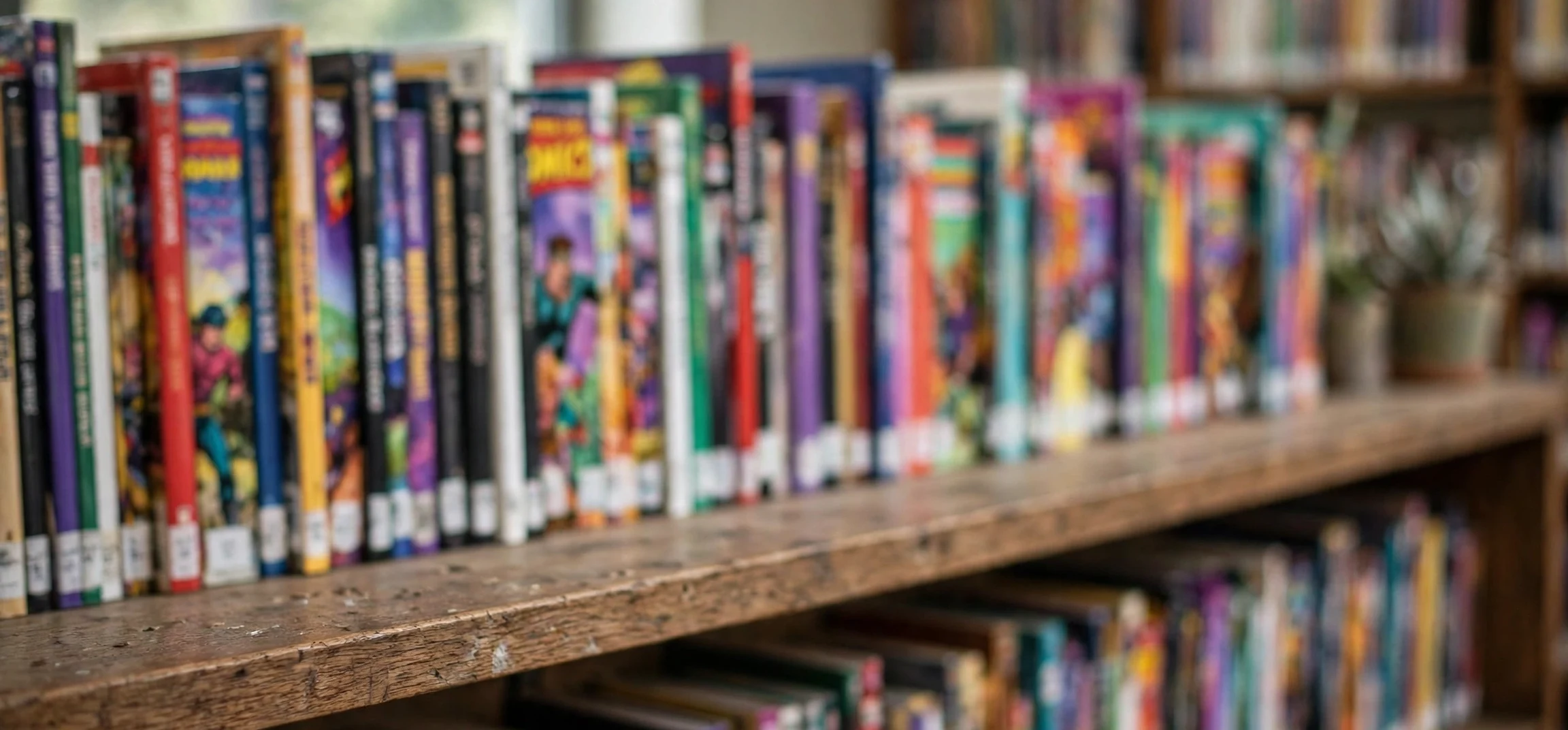
If you arrived here after searching for alphatron tv home, you may be wondering what that phrase has to do with cartoons, comics, and museums. The honest answer is that alphatron tv home appears as a search phrase that brings some readers to this page, but it is not the name of an exhibition, a collection, or a programme at the museum described below. This article is about the Billy Ireland Cartoon Library and Museum, one of the largest and most important research collections of cartoon and comic art in the world. It explains what the library and museum holds, why cartoon art deserves serious study, how researchers and casual visitors can make the most of a visit, and how to search more effectively when a search phrase does not match the place you actually want to find.
The Billy Ireland Cartoon Library and Museum is part of Ohio State University, and it preserves original cartoon art, comic books, comic strips, graphic novels, editorial cartoons, and related material spanning more than a century of popular culture. Its holdings include original drawings, printed comics, manuscripts, correspondence, and reference material that document how cartoonists worked, how newspapers and magazines published their art, and how readers responded to it. For historians, the collection is a record of changing humour, politics, fashion, language, and social attitudes. For artists, it is a masterclass in line, composition, storytelling, and character design. For general visitors, it is a chance to stand close to original artwork and see the pencil marks, corrections, and ink work that printed reproductions usually hide.
What alphatron tv home Means as a Search Phrase
Search phrases do not always describe their destination neatly. A phrase such as alphatron tv home can surface for many reasons: a mistyped query, a suggested search, a phrase copied from another page, or a combination of words that a search engine associates with home entertainment and television. When that happens, the most helpful response is clarity rather than invention. There is no documented connection between alphatron tv home and the Billy Ireland Cartoon Library and Museum, and this article does not claim one. Instead, it treats alphatron tv home as the search term that led you here and then gives you a complete, accurate guide to the museum itself, so that your visit to this page is still worthwhile.
Understanding how search phrases work can save time on any research task. Search engines match words, not intentions, and they sometimes return pages that share only one or two terms with your query. If you were looking for information about a television product, a home entertainment setup, or a brand name, the museum guide below will not answer that question, and it is better to know that straight away than to read a page that pretends otherwise. If, on the other hand, you were looking for a museum devoted to cartoon art, or you simply followed a curious link and stayed, the rest of this article will give you a solid introduction. Either way, refining your next search with a place name, a city, or a specific topic, such as cartoon collections or comic art exhibitions, will usually produce far more precise results.
alphatron tv home and the Billy Ireland Cartoon Library and Museum
The link between alphatron tv home and this museum exists only at the level of search: the phrase is the keyword associated with this page, while the subject of the page is the Billy Ireland Cartoon Library and Museum. Keeping those two things separate matters, because museum research depends on accurate attribution. The library is named for Billy Ireland, a celebrated editorial cartoonist for the Columbus Dispatch whose work combined sharp political observation with warm, recognisable characters. The collection that bears his name grew from his own papers and artwork into a vast archive covering American and international cartooning, and it continues to grow through donations, purchases, and partnerships with cartoonists and their families.
What makes the Billy Ireland collection distinctive is its emphasis on original art. Many people encounter comics only in printed form, whether in a newspaper, a collected edition, or on a screen. Original art tells a different story. A single page may show blue pencil underdrawing, white correction fluid, pasted panels, margin notes, and lettering guides, all of which reveal how a cartoonist solved problems on the page. Researchers can trace revisions, compare a published strip with its original, and study how an artist’s style changed over decades. Exhibitions draw on this strength, pairing original drawings with context about the artist, the publication, and the historical moment, so that visitors see both the artwork and the world it responded to.
Inside the Billy Ireland Cartoon Library and Museum
The museum side of the institution presents rotating exhibitions, while the library side supports research, teaching, and preservation. Exhibitions have covered newspaper comic strips, editorial cartooning, underground comics, graphic novels, animation art, and the work of individual cartoonists. A visitor might encounter early twentieth-century newspaper strips beside contemporary graphic novels, or political cartoons from a particular decade beside the sketches that led to them. The juxtaposition is deliberate: it shows cartooning as a continuous, evolving art form rather than a single style or era.
Collections and Research Strengths
The research collections are unusually broad. They include original art for comic strips and comic books, editorial cartoons, magazine cartoons, and illustrations, alongside printed runs, books, and archival papers. Scholars use the material to study visual storytelling, journalism history, American culture, race and representation, gender, war, and politics, among many other topics. Students use it to learn drawing, narrative structure, and publishing history. Because the collection is housed at a university, it also supports classes, lectures, and public programmes that connect cartoon art with history, literature, media studies, and art education.
Exhibitions for First-Time Visitors
First-time visitors often benefit from starting with the current exhibition rather than trying to absorb the whole collection at once. Exhibition labels explain who the artists were, when and where their work appeared, and why particular pieces were chosen. Look closely at the originals: notice the size of the art, which is often larger than the printed version, the quality of the ink line, and the way lettering sits inside a panel. Then step back and consider the story or joke as a reader of the time would have encountered it. That combination of close looking and historical context is what turns a pleasant gallery visit into a memorable one, and it is also why original cartoon art rewards repeat visits as exhibitions change.
Planning a Visit to the Billy Ireland Cartoon Library and Museum
Before visiting any university museum, it is sensible to check current opening hours, exhibition schedules, and any visitor guidance published by the institution itself, since hours and gallery availability can change between academic terms. University museums often have quieter periods during teaching breaks and busier periods when classes and school groups are present, so a little advance planning can make a visit more relaxed. Allow enough time to read labels and to revisit favourite pieces, and remember that photography rules vary by exhibition, particularly where original art is on loan or light-sensitive. When in doubt, ask gallery staff, who can also point you toward related displays and reading material.
| Part of the visit | What to expect | Tip for visitors |
|---|---|---|
| Current exhibitions | Original cartoon and comic art with explanatory labels | Start here for an overview of the art form |
| Research collections | Original art, printed comics, and archival papers | Check access rules in advance if you plan to research |
| Public programmes | Talks, lectures, and events connected to exhibitions | Look for programme listings before your trip |
| Study and teaching use | Material used in university classes and courses | Students should ask about class-related displays |
Researchers planning a longer visit should think about their questions before they arrive. Are you tracing one cartoonist, one strip, one period, or one theme? Do you need original art, printed material, or archival correspondence? The more specific your request, the more efficiently staff can help. General visitors, by contrast, can simply enjoy the galleries and let curiosity lead: a familiar childhood strip, a striking editorial cartoon, or an unfamiliar graphic novel can each open a new interest. Either approach works, and both are welcome in a collection built for public as well as academic use. If you enjoy character-driven cartoon history, you may also enjoy reading about cartoon characters with distinctive designs and forgotten cartoons from the 1980s as a light companion to a museum visit.
Why Cartoon Art Deserves Serious Attention
Cartoon art is sometimes dismissed as light entertainment, yet it has carried serious arguments for well over a century. Editorial cartoons have criticised governments, exposed corruption, and shaped public debate with a single image. Comic strips have recorded everyday life, family humour, workplace satire, and social change in a form readers returned to daily. Graphic novels have tackled memoir, history, journalism, and fiction with a sophistication that rivals any prose form. Preserving this material is therefore not nostalgia alone; it is preserving a record of how societies talked to themselves, laughed at themselves, and argued with themselves.
The Billy Ireland collection also matters because cartoon art is fragile. Newsprint yellows and crumbles, original art can be lost when studios close or estates are dispersed, and digital files can become unreadable as formats change. A dedicated library and museum addresses those risks through conservation, cataloguing, digitisation where appropriate, and secure storage. That work is largely invisible to gallery visitors, but it is what makes future exhibitions and research possible. When a researcher fifty years from now wants to study today’s comics, the decisions made now about what to preserve and how to describe it will shape what survives.
Frequently Asked Questions About alphatron tv home and the Museum
Is alphatron tv home a museum exhibition?
No. The phrase alphatron tv home is the search keyword associated with this page, not the title of an exhibition, collection, or event at the Billy Ireland Cartoon Library and Museum. This article explains that distinction openly rather than inventing a connection, and it focuses on the museum itself so readers get accurate information.
What is the Billy Ireland Cartoon Library and Museum?
It is a research library and museum at Ohio State University devoted to cartoon and comic art. It holds original drawings, comic books, comic strips, graphic novels, editorial cartoons, and archival material, and it presents exhibitions and public programmes drawn from those collections.
Who was Billy Ireland?
Billy Ireland was a noted editorial cartoonist for the Columbus Dispatch. The library and museum is named for him, and its collection grew from his papers and artwork into one of the world’s leading archives of cartoon art.
Can the public visit the museum?
Yes, the museum presents public exhibitions, but visitors should check current hours and exhibition information from the institution before travelling, since schedules can change during university terms and between exhibitions.
Search behaviour also explains why a phrase such as alphatron tv home can keep reappearing even when it has no museum connection: once a phrase is associated with a page, search engines may continue to show that page for the phrase, and readers may repeat the phrase in their own queries. The cycle is a reminder to check the actual subject of any page you open, rather than assuming the search phrase describes it accurately.
For readers who did intend to research home entertainment, the lesson of alphatron tv home is a practical one: add a brand name, a model, or a specific feature to your next search, and compare several sources before trusting a single result. For readers who stayed for the museum, the same habit helps too, since searching by the museum name and exhibition topic will surface far more relevant material than a general phrase ever will.
Teachers and students can use alphatron tv home as a small case study in search literacy, showing how a keyword can bring the right audience to the wrong topic, or the wrong audience to the right topic. Either way, the skill that matters is the same: read the page in front of you, check what it actually covers, and refine your search when the two do not match.
None of this diminishes the museum itself. Whether you reached this guide through alphatron tv home or through a direct search for cartoon art, the collection described here stands on its own merits, and its exhibitions, research holdings, and public programmes are worth exploring on their own terms.
A final note on searching: if alphatron tv home was your original query, save this museum guide and refine your next search with a museum name or topic; if alphatron tv home was a suggested phrase, treat it as a prompt to check sources carefully; if alphatron tv home appears in your search history, it is a reminder that search phrases and page subjects do not always match; if alphatron tv home led you here by accident, you have still found a useful introduction to cartoon art; if alphatron tv home was typed in error, a corrected search will serve you better; and if alphatron tv home interests you as a phrase itself, studying how search engines match it is a practical lesson in digital literacy.
Conclusion
Searching for alphatron tv home may not have been a search for a cartoon museum, but it has led to a genuine introduction to one of the most significant cartoon art collections in the world. The Billy Ireland Cartoon Library and Museum preserves original art, supports research and teaching, and presents exhibitions that show cartooning as a serious, inventive, and historically important art form. If this guide has sparked an interest, the next step is simple: check the current exhibitions, plan a visit when you can, and spend time looking closely at original cartoon art. A single original page, with its pencil lines and ink work still visible, can change how you read every comic strip that follows. That is the real value of a collection like this, and it is well worth discovering even when the search phrase that brought you here pointed somewhere else entirely.



