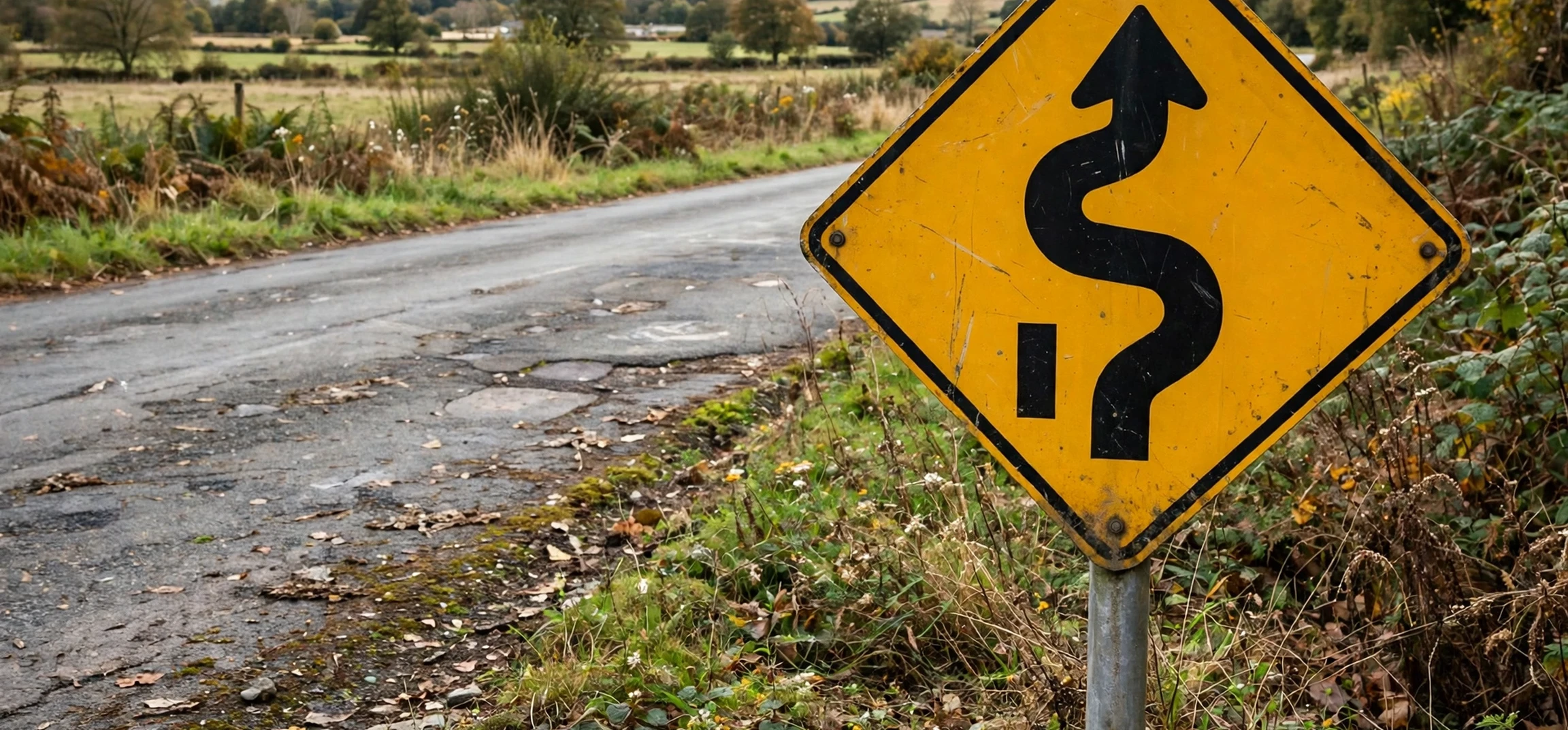
If you searched for “what do yellow traffic signs indicate”, you are asking about one of the most recognisable colour codes on the road. In general road-safety education, yellow signs are warning signs: they alert drivers, cyclists, and pedestrians to a hazard, a change in road conditions, or something ahead that needs extra attention. They do not usually give orders or state speed limits, and they do not mark routes the way green or blue signs often do. Instead, they say, in effect, be careful, because something here deserves a slower, more watchful approach. This guide explains the general meaning of yellow signs, the common shapes and symbols you may see, and how to respond to them safely. It is general education only, and road rules vary by country and region, so always follow the official rules where you are driving.
Road signs work because their colours and shapes carry meaning at a glance. A driver travelling at speed has only a second or two to read a sign, so the system relies on quick visual cues rather than long sentences. Colour is one of the strongest cues. Red tends to signal prohibition or danger, green and blue often give directions or information, and yellow is the colour of warning. When you understand what do yellow traffic signs indicate in this system, you can read the road more quickly and make better decisions, even in unfamiliar places.
What Do Yellow Traffic Signs Indicate at a Glance?
The short answer to what do yellow traffic signs indicate is that they warn of a hazard ahead. That hazard might be a sharp bend, a junction, a narrowing road, roadworks, a school crossing, animals crossing, or a slippery surface. The sign itself usually carries a black symbol or picture that shows the specific hazard, so the colour tells you the category and the symbol tells you the detail. Learning to recognise the colour first, and then the symbol, is the fastest way to read warning signs.
It is worth noting that the exact use of yellow varies between countries. In the United States, yellow is the standard colour for warning signs, which are usually diamond-shaped. In the United Kingdom and much of Europe, warning signs are more often triangular with a red border and a white or yellow background, and yellow is also used for temporary signs at roadworks. In some places, yellow road markings and yellow signs serve different purposes. The principle, however, is consistent: yellow draws the eye and signals caution, and a yellow sign should always prompt you to look ahead, check your speed, and prepare for a change.
What Do Yellow Traffic Signs Indicate on Different Types of Road?
On rural roads, yellow warning signs often point to bends, hills, narrow bridges, and places where farm vehicles or animals may enter the road. These hazards can be hard to see in advance, especially on winding roads with hedges or trees blocking the view, so the sign gives you advance notice that the road ahead is not straightforward. Slowing down before the hazard, rather than during it, is the safer response.
On urban roads, yellow signs more often relate to junctions, pedestrian crossings, schools, and roadworks. Temporary yellow signs are especially common around construction zones, where the layout of the road may have changed since you last travelled it. Lanes may be narrower, surfaces may be uneven, and workers may be close to traffic. In these areas, the warning is not only about your own safety but about the safety of people working nearby, so extra patience is appropriate.
On motorways and major highways, warning signs may alert you to merging traffic, lane closures, fog, or a change in the road surface. At higher speeds, the distance covered while you react is much greater, so early warning matters even more. A yellow sign on a fast road is a prompt to increase your following distance, check your mirrors, and be ready to adjust your lane position or speed.
Shapes, Symbols, and Common Examples
Shape is the second half of the warning-sign system. In the United States, most warning signs are diamonds, which is itself a signal that the sign is a warning even before you read the symbol. In the United Kingdom, warning signs are triangles pointing upwards, and the red border adds urgency. Temporary signs in many countries use rectangular or diamond shapes in yellow, making them stand out from permanent signs. Knowing the shape system of the country you are in helps you read signs more quickly.
The symbols on yellow signs are designed to be understood without words. A curving arrow means a bend ahead, and a series of curves means a winding road. A cross or a T shape represents a junction. A figure of a person, often with a child, marks a school or pedestrian area. An animal silhouette warns of deer, cattle, or other animals crossing. A worker with a spade marks roadworks. Because the symbols are pictorial, they can be understood by drivers who speak different languages, which is one reason the system works across borders.
| Symbol You May See | General Warning Meaning | Sensible Driver Response |
|---|---|---|
| Curving arrow | A bend or series of bends ahead | Slow down before the bend, not during it |
| Junction symbol | Traffic joining from a side road | Check side roads and be ready to give way |
| Pedestrian figure | People crossing or walking nearby | Reduce speed and watch the roadside |
| Animal silhouette | Animals may cross the road | Stay alert, especially at dawn and dusk |
| Worker symbol | Roadworks ahead | Slow down and follow temporary directions |
| Wavy lines or skidding car | Slippery or uneven surface | Avoid sudden braking or sharp steering |
Yellow Signs Compared With Other Sign Colours
Understanding what do yellow traffic signs indicate becomes easier when you compare yellow with the other colours in the system. Red signs generally prohibit something, such as entering a road, or require a stop. Green signs often give directions and distances on major routes, while blue signs commonly give information or mandatory instructions, depending on the country. Brown signs point to tourist attractions, and orange or yellow temporary signs mark roadworks. Yellow stands apart because it neither orders nor directs: it warns.
This distinction matters in practice. A red sign that you ignore may mean breaking a rule, while a yellow sign that you ignore may mean missing a hazard. Both deserve attention, but for different reasons. The yellow sign is advice backed by a real risk: the hazard it warns about is genuinely ahead, and the sign is there because drivers have been caught out by it before. Treating warning signs as optional is a common mistake, and it is one that better sign-reading habits can fix.
How to Respond When You See a Yellow Warning Sign
The right response to a yellow sign is calm and early. First, read the symbol and identify the hazard. Second, check your speed and your surroundings, including mirrors and the road ahead. Third, adjust before you reach the hazard: ease off the accelerator, increase your following distance, and position your vehicle appropriately. Avoid sudden braking, which can surprise drivers behind you, and avoid swerving, which can create a new danger.
For learners and new drivers, it helps to practise narrating signs aloud during lessons or supervised drives. Saying “yellow warning sign, bend ahead” turns sign-reading into a habit and builds the connection between the sign and the response. Experienced drivers can fall into the opposite trap, which is familiarity: driving the same route daily can make signs invisible. Deliberately scanning for signs, even on familiar roads, keeps the habit alive, and it matters most when something on that familiar route has changed.
Night driving and bad weather deserve special mention. Yellow signs are made with reflective materials so they remain visible in headlights, but rain, fog, and glare can still reduce visibility. In poor conditions, the safe response is to slow down earlier and leave more space, because the hazard warned about may itself be harder to see. Road markings in yellow also deserve attention: in many countries, yellow lines at the edge of the road or in the centre carry their own meanings about parking or overtaking, and these are separate from yellow warning signs, so do not confuse the two systems.
Readers interested in other everyday guides may enjoy our explainer on what 20-30 vision means, which covers another area where clear visual information matters, and our guide to the address for Seattle airport, which is a reminder that checking official details before a journey avoids confusion. For a lighter read, our guide to all the Paw Patrol pups names shows how a clear naming system helps everyone find what they need quickly.
Frequently Asked Questions
Do yellow signs always mean the same thing everywhere?
Not exactly. The general principle of yellow as a warning colour is widespread, but the shapes, symbols, and specific rules differ by country. Always learn the sign system of the place where you are driving, and treat local official guidance as the final word.
Is a yellow sign a legal order?
Usually not in itself. Warning signs advise rather than order, but the hazard they warn about is real, and other rules, such as speed limits or give-way rules, may apply at the same location. A warning sign does not remove your duty to drive carefully.
What is the difference between a yellow sign and a yellow road marking?
Signs and markings are separate systems. A yellow warning sign alerts you to a hazard ahead, while yellow lines on the road surface usually relate to parking, waiting, or overtaking rules, depending on the country. Learn both systems separately.
Why are roadworks signs often yellow?
Roadworks change the road layout temporarily, and drivers cannot rely on habit in those areas. Bright yellow signs stand out from permanent signs, making it clear that something is different and that extra caution is needed around workers and changed lanes.
Conclusion
So, what do yellow traffic signs indicate? In general, they are warning signs that alert you to a hazard, a change in road conditions, or something ahead that needs your attention. The colour tells you the category, the shape tells you the sign type, and the symbol tells you the specific hazard, from bends and junctions to school crossings and roadworks. Reading them early, slowing down calmly, and adjusting before you reach the hazard are the habits that turn a warning into a safer journey. Road rules vary by place, so treat this guide as general education and check the official rules where you drive. The next time a yellow sign catches your eye, you will know exactly what it is asking of you: pay attention, be ready, and drive with care.