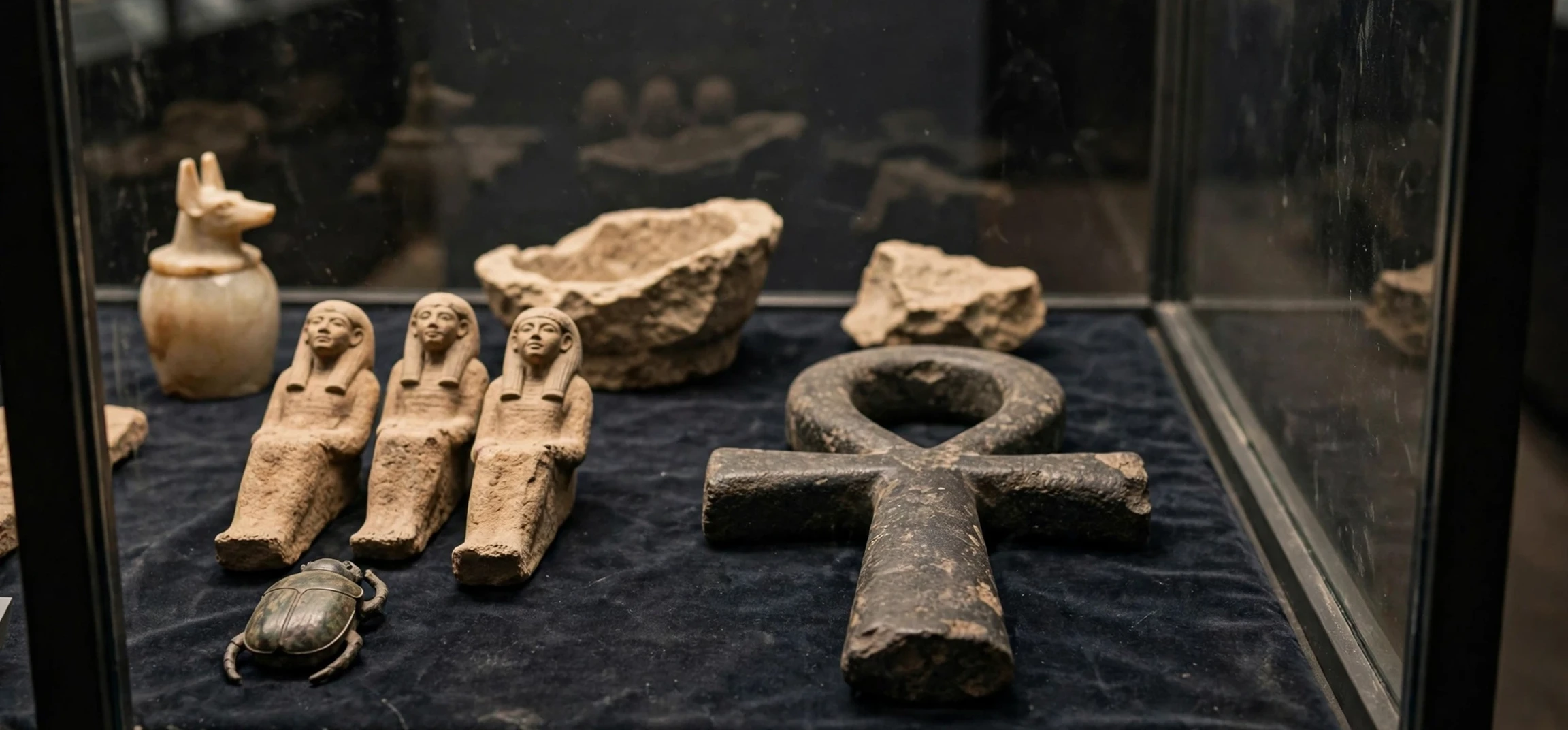
The question of ankh Christianity brings together two rich traditions: the ancient Egyptian symbol of life and the Christian faith with its own symbols, history, and beliefs. The ankh is a cross-like sign with a loop at the top, long associated in ancient Egypt with life, vitality, and divine power. When people ask about ankh Christianity, they usually want to know whether Christians use the ankh, how it relates to the Christian cross, and what different churches and believers think about it today. This guide explains ankh Christianity in neutral, factual terms, describing history and differing views without advocating any particular position.
It is important to begin with a clear distinction. The ankh began as an Egyptian symbol, not as a Christian one, and its meaning in ancient Egypt was centred on life itself. Over centuries, as Egypt became Christian, some Egyptian Christians adapted familiar forms, and the ankh influenced certain Coptic Christian art. Other Christian traditions, however, have not adopted the ankh, and many Christians regard the cross alone as their central symbol. Understanding ankh Christianity therefore means understanding both a shared history and a range of different modern views.
Ankh Christianity: The Ancient Egyptian Origins of the Ankh
The ankh is one of the most recognisable symbols of ancient Egypt. It appears in temple carvings, tomb paintings, and jewellery from thousands of years ago, often held by gods and goddesses or offered to kings as a sign of life. Egyptologists generally interpret the ankh as a symbol of life, including eternal life, and it is sometimes called the key of life because of its shape. Its loop may have suggested the sun rising over the horizon, or a sandal strap, or a knot, but scholars do not agree on a single origin for its form, and its meaning as life is far more certain than the story of its shape.
In ancient Egyptian religion, the ankh was not merely decorative. It was used in rituals, worn as an amulet, and placed in burials as a wish for life after death. Gods were shown holding the ankh to the nose of a king, as if breathing life into him, and the symbol appeared alongside other powerful signs such as the was sceptre and the djed pillar. This background matters for ankh Christianity, because it explains why the ankh carried such strong associations long before Christianity arrived in Egypt. Any later Christian use of an ankh-like form did not start from a blank page; it started from a symbol already full of meaning.
Ankh Christianity and the Coptic Church
The closest historical link in ankh Christianity is found in Egypt itself, in the Coptic Orthodox Church, one of the oldest Christian churches in the world. Christianity spread in Egypt in the first centuries after Christ, in a land where the ankh was already a familiar sign. Early Egyptian Christians, known as Copts, developed their own form of cross, the Coptic cross, which in some versions has a looped or rounded top that recalls the ankh. This form is sometimes called the crux ansata, a Latin term meaning handled cross, and it is the clearest example of an ankh-like shape within a Christian tradition.
Historians note that this adaptation makes cultural sense. When a new faith arrives in a place, its art often borrows familiar local forms while giving them new meaning. For Coptic Christians, the looped cross could speak of life through Christ, combining an Egyptian image of life with a Christian message of resurrection. That does not mean Coptic Christianity teaches that the ankh and the cross are the same symbol, or that the ankh itself is a Christian doctrine. It means that, in one particular place and time, a familiar shape was reshaped for Christian use, just as Christian art elsewhere borrowed Roman, Greek, and local forms.
Modern Coptic crosses vary a great deal. Some are ornate and looped, others are plain and straight-armed, and many Coptic Christians today use crosses that look like those used in other Orthodox churches. The ankh-like form is therefore best understood as part of Coptic artistic heritage, rather than as a universal Christian symbol, and that distinction is central to any fair account of ankh Christianity. Anyone interested in ankh Christianity should be careful not to generalise from Coptic art to all Christianity, because Christian traditions differ widely in their symbols, art, and attitudes to images.
Ankh Christianity: How the Ankh Differs From the Christian Cross
Although the ankh and the cross look similar at a glance, they are distinct symbols with distinct histories. The Christian cross, in its Latin form, has a vertical beam crossed by a horizontal beam, and it refers to the crucifixion of Jesus, an event central to Christian belief. The Greek cross has arms of equal length, and the Orthodox cross often adds a slanted lower bar, but in all cases the cross points to the crucifixion and resurrection. The ankh, by contrast, has a loop instead of a full upper arm, and its original reference is to life in the Egyptian sense, not to the crucifixion.
This difference in reference is why many Christians draw a firm line between the two symbols. For them, the cross is not a general symbol of life, but a specific reminder of Christ’s death and resurrection, and replacing it with an ankh would change its meaning. Other Christians take a more flexible view, seeing the ankh as a cultural symbol of life that can sit alongside Christian belief without replacing the cross. Still others, particularly in African diaspora traditions, value the ankh as a symbol of African heritage and identity, and may wear it for cultural reasons while also holding Christian faith. These views coexist, and ankh Christianity is best described as a spectrum rather than a single rule.
Shape alone does not settle meaning. A looped cross in a museum, a piece of jewellery, or a tattoo may be an Egyptian ankh, a Coptic crux ansata, or a modern design that borrows from both. Context matters: where it appears, who made it, and what its wearer intends it to mean. That is why questions about ankh Christianity often have no simple yes or no answer, and why respectful conversation about symbols usually begins by asking what the symbol means to the person using it, rather than assuming a single interpretation.
| Feature | Ankh | Christian cross |
|---|---|---|
| Origin | Ancient Egypt | Early Christian tradition |
| Shape | Loop at the top, cross below | Vertical beam crossed by a horizontal beam |
| Central meaning | Life, vitality, eternal life | Crucifixion and resurrection of Jesus |
| Main Christian link | Coptic crux ansata in Egypt | Universal symbol across Christian churches |
| Modern use | Cultural, historical, decorative, and spiritual uses | Worship, devotion, identification, and art |
Ankh Christianity: Different Christian Views Today
Today, Christian views on the ankh vary, and it is helpful to describe them fairly. Some Christians, especially those from Coptic or Egyptian backgrounds, regard an ankh-like cross as part of their heritage and see no conflict with their faith. They may point to the long history of Egyptian Christianity and to the idea that God can be honoured through local cultural forms. For these believers, the ankh is not a rival to the cross, but a historical relative of it, shaped by the place where their church was born.
Other Christians are cautious about the ankh because of its pre-Christian religious associations. They argue that symbols carry history, and that a symbol once used in Egyptian temple religion should not be treated as a Christian symbol. This view is often held by Christians who emphasise a clear break between Christianity and earlier religions, and who prefer to keep Christian worship focused on the cross, the Bible, and other symbols with direct Christian origins. From this perspective, wearing an ankh as a Christian might cause confusion about what the wearer believes.
A third group takes a cultural rather than theological view. They may wear an ankh as a celebration of African history, Egyptian art, or personal identity, while also attending church and affirming Christian beliefs. For them, the ankh functions more like a cultural emblem than a doctrinal statement, similar to the way people wear national or regional symbols alongside religious ones. This cultural use is common in fashion and jewellery, where the ankh appears as a design as well as a symbol. Understanding ankh Christianity requires recognising that not every use of a symbol is a theological claim.
Church leaders also differ. Some have written or spoken about the ankh in the context of African heritage, some have warned against mixing symbols, and many have said nothing at all, leaving the matter to individual conscience. There is no single, worldwide Christian ruling on the ankh, and that absence of a single ruling is itself an important fact about ankh Christianity. Readers who want guidance for their own practice are best advised to speak with a trusted minister, priest, or teacher in their own tradition, rather than relying on a general article about ankh Christianity alone.
Ankh Christianity and the Symbolism of Life
One reason ankh Christianity continues to attract interest is the shared theme of life. In ancient Egypt, the ankh meant life. In Christianity, eternal life through Christ is a central promise, expressed in the New Testament in passages about resurrection and new life. It is therefore easy to see why people draw a parallel between the two, and why some artists have combined them. The parallel is real at the level of theme, even though the theological details differ greatly. Egyptian ideas of life after death, involving judgement, the underworld, and the preservation of the body, are not the same as Christian ideas of resurrection, grace, and salvation.
Symbolism also explains why the ankh appears in modern jewellery, tattoos, and art far beyond Egypt or Christianity. For many people today, the ankh is a general symbol of life, protection, or African identity, detached from its original temple context. That broad, modern use can cause misunderstandings when a symbol is read in a purely religious way by one person and a purely cultural way by another. A helpful habit is to distinguish between three questions: what did the ankh mean historically, what does it mean in a particular church tradition, and what does it mean to the individual wearing it. Those three answers may differ, and all three can be true at once.
For readers exploring symbols more broadly, a guide to what jubilee in the Bible means shows how a biblical concept carries its own history and layers of meaning, while an explanation of 888 tattoo meaning shows how numbers and symbols gain new meanings in modern tattoo culture. A look at Samoan tattoos with meaning offers another example of a tradition in which symbols, identity, and faith are closely woven together. Each of these helps place ankh Christianity in a wider pattern: symbols travel, change, and gather new meanings as they move between cultures.
The Ankh in Christian Art and Architecture
Beyond the Coptic cross, ankh-like forms appear occasionally in Christian art from Egypt and Nubia, in manuscripts, textiles, and church decoration. These examples are valuable for historians because they show how early Christians in Egypt expressed their faith in a visual language their neighbours understood. They do not show that the ankh became a standard Christian symbol elsewhere, and they should not be used to claim that all early Christians used the ankh. Art history is local, and Egyptian Christian art is best read as Egyptian first and Christian second in its visual sources, even though its message was Christian.
Wearing an Ankh Today: Questions to Consider
People considering an ankh as jewellery or a tattoo often ask practical questions: will others read it as Egyptian, Christian, cultural, or fashionable? The honest answer is that different people will read it differently, and no wearer can control every interpretation. Thinking about the setting matters: an ankh worn in Egypt, in a Coptic church, at a cultural festival, or in a fashion context may be understood in different ways. Reflecting on personal intention, family background, and community norms can help a wearer decide whether an ankh, a cross, or both feels right, without needing to claim that one choice is correct for everyone.
Frequently Asked Questions About Ankh Christianity
Is the ankh a Christian symbol?
The ankh began as an ancient Egyptian symbol of life, not as a Christian symbol. It influenced the Coptic crux ansata, a looped cross used by some Egyptian Christians, but it is not a universal Christian symbol in the way the cross is.
Do Coptic Christians use the ankh?
Some Coptic art uses a looped cross that recalls the ankh, known as the crux ansata, as part of Egyptian Christian heritage. Modern Coptic crosses vary, and many look like crosses used in other Orthodox churches, so the ankh-like form is only one part of Coptic tradition.
Can a Christian wear an ankh?
Christian views differ. Some Christians see an ankh-like cross as part of Egyptian heritage and wear it without concern, others prefer to use only the cross because of the ankh’s pre-Christian associations, and others wear it mainly as a cultural symbol. There is no single worldwide Christian rule, so individual conscience and guidance from one’s own church tradition are often decisive.
What is the difference between an ankh and a cross?
The ankh has a loop at the top and originally symbolised life in ancient Egypt. The Christian cross has a vertical beam crossed by a horizontal beam and refers specifically to the crucifixion and resurrection of Jesus. They look similar, but their histories and central meanings differ.
Conclusion
The story of ankh Christianity is a story of a symbol travelling across time and faith: born in ancient Egypt as a sign of life, reshaped in early Egyptian Christianity into the looped Coptic cross, and still debated, worn, and admired today. It reminds us that symbols rarely belong to one people or one era alone, and that understanding them requires history, context, and respect for differing views. Whether you meet the ankh in a museum, a church, a piece of jewellery, or a work of art, knowing its Egyptian roots and its limited but real Christian connection will help you read it more accurately, and to appreciate why it continues to fascinate people around the world.



