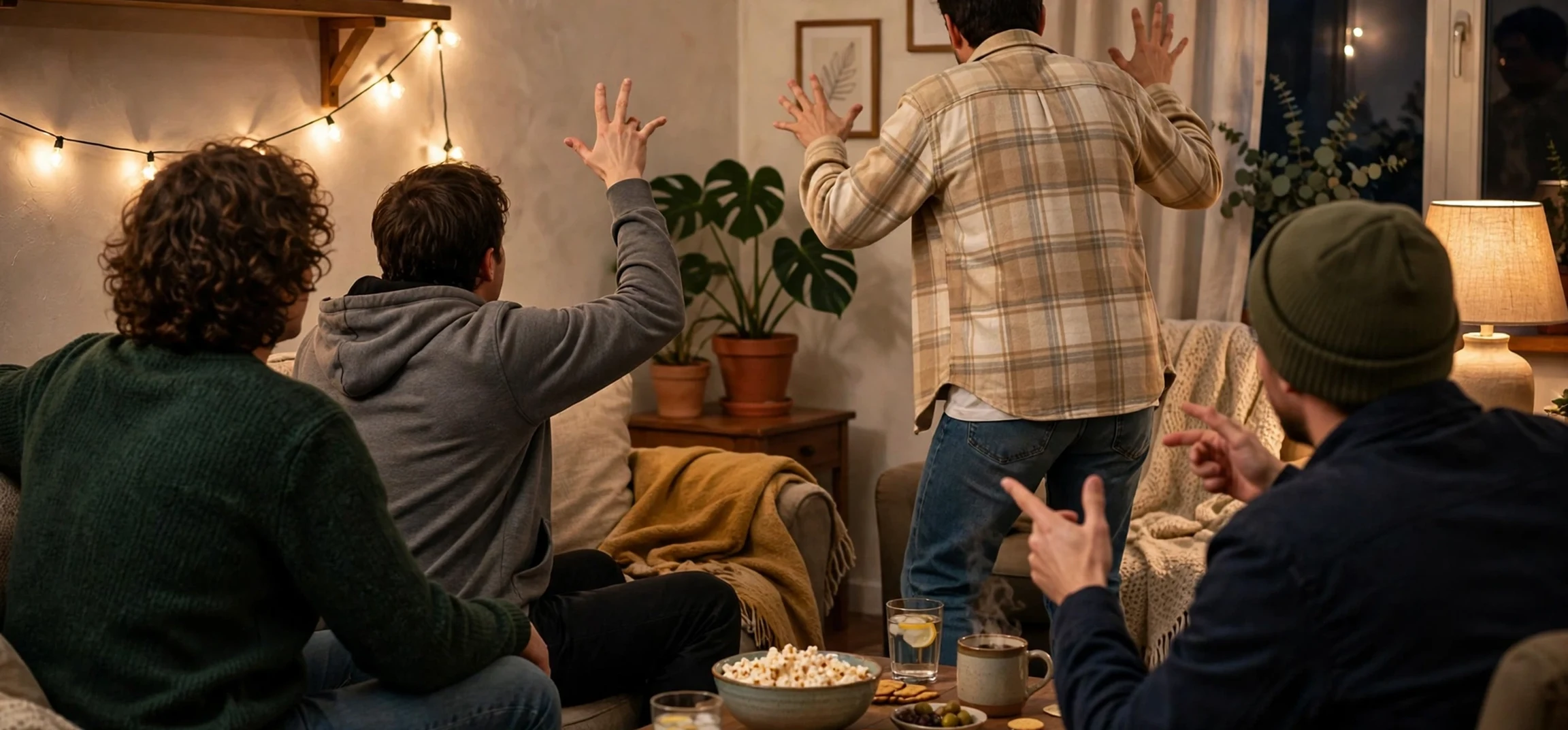
If you have ever heard someone say “let us play charades” at a party and wondered what the game actually involves, the simplest place to start is the charades meaning itself. In everyday language, the charades meaning is a guessing game in which one person silently acts out a word, phrase, book title, film title, or song title while the rest of the group tries to guess what it is. No speaking, no writing, and no pointing at objects in the room are allowed for the actor. Everything must be communicated through gestures, mime, and facial expressions, which is exactly what makes the game funny, chaotic, and surprisingly competitive.
The charades meaning goes beyond a single party trick. Charades is one of the oldest parlour games still played today, and it has survived because it needs no board, no cards, and no special equipment. All you need is a group of people, a list of words or titles, and a willingness to look a little silly in front of friends. The charades meaning also covers a second, figurative use of the word: when people describe something as a charade, they often mean a pretence or an empty show, as in “the whole meeting was a charade.” Both senses come from the same root idea of acting something out, but the party game is by far the more common use.
In this guide, we explain the charades meaning in full, from the classic rules to modern variations, team play, scoring, and the meme-ready side of the game that keeps it popular online. Whether you are hosting a family night, planning a classroom activity, or just trying to understand a reference you saw on social media, this guide gives you everything you need to play with confidence.
The Phrase charades meaning in Plain English
At its core, the charades meaning describes a game of silent communication. One player, the actor, receives a secret word or phrase and must convey it without speaking. The other players shout out guesses until someone gets it right. The actor can use standard hand signals to help the group: holding up fingers to show how many words are in the phrase, tapping an arm to show which word they are acting, or pulling an ear to show that the guess sounds like the target word. These signals are part of the shared language of the game, and learning them makes play much smoother.
The charades meaning also includes the idea of categories. Before acting begins, the actor usually signals the category, such as book, film, song, or television show, so the guessers know what kind of answer to expect. A film title is acted differently from a single common word, and experienced players adjust their guesses accordingly. This category system is one reason charades works for mixed-age groups: children can play with simple words like animals, while adults can tackle long film titles or famous quotations.
Where the Word Charades Comes From
The word charades comes from French, where it described a word puzzle in which each syllable of a word was acted or described in turn. The game travelled into English-speaking parlours in the nineteenth century and gradually changed into the silent acting game we know today. Knowing this history helps explain why the charades meaning still carries a hint of wordplay: the game is not just about acting, but about breaking a phrase into pieces that can be guessed one part at a time.
How the Game Behind charades meaning Works
A typical round of charades follows a simple pattern. First, the group splits into two teams, although casual games often skip teams and just take turns. Next, the actor draws a word or phrase from a hat, a list, or an app. A timer is usually set, often for one or two minutes. The actor then performs, and the team guesses. If the team guesses correctly before time runs out, it scores a point. If not, the other team may get a chance to steal, depending on the house rules.
Good charades players think in stages. They start with the big picture, acting the overall idea, and then break the phrase into individual words when the group gets stuck. For example, acting the film title “Home Alone” might begin with a house shape made with the hands, followed by a lonely shrug for “alone.” The charades meaning is not about perfect acting skill; it is about finding the clearest, simplest gesture that points the guessers in the right direction. Overacting usually slows the game down, while small, clear movements win rounds.
Standard Signals Every Player Should Know
Although house rules vary, a few signals are widely understood. Holding up a number of fingers shows how many words are in the phrase. Holding up one finger and then pointing to the arm shows that the actor is working on the first word. Cupping a hand behind the ear means “sounds like,” which lets the actor act a rhyming word instead of a hard one. A sweeping hand motion over the whole group can mean “the whole phrase,” while a chopping motion can mean a shorter word or a smaller part. Agreeing on these signals before the first round prevents arguments later, and it is one of the first tips in any good guide to the charades meaning.
| Signal | What It Means | When to Use It |
|---|---|---|
| Fingers held up | Number of words in the phrase | At the start of every round |
| Tap on the arm | Which word you are acting now | When moving between words |
| Hand cupped behind the ear | Sounds like the target word | When a word is hard to mime directly |
| Book-opening gesture | The category is a book | Before acting a book title |
| Camera-cranking gesture | The category is a film | Before acting a film title |
| Thumbs down or a wave-off | That guess is not close | To steer guessers away from a wrong path |
charades meaning for Parties, Classrooms, and Family Nights
One reason the charades meaning has stayed popular is its flexibility. At a party, charades is a natural icebreaker because it gets people laughing within minutes. In a classroom, teachers use charades to review vocabulary, because acting a word forces students to think about what it really means. At a family night, charades works across generations: grandparents, parents, and children can all play together if the word list is chosen with care. The game adapts to the group, not the other way around.
For classrooms and study groups, themed rounds work best. A science teacher might use terms like gravity, photosynthesis, or volcano, while a language teacher might use verbs and everyday nouns. The point is not to test acting talent but to connect a word with its meaning through movement. Parents often find that children remember words better after acting them, because the physical gesture gives the brain an extra way to store the idea. That educational side is a big part of why the charades meaning keeps appearing in teaching guides as well as party guides.
If you enjoy word games and guessing games in general, you may also like the guessing format explained in our guide to the picture guessing game, which uses images instead of mime but follows a similar shout-out-the-answer style. Mixing the two games at one event keeps the energy high and gives quieter players a different way to join in.
Popular Variations on the Classic charades meaning
Once you know the basic charades meaning, you can try variations that change the pace or the challenge. Speed charades shortens the timer to thirty seconds and rewards fast thinking. Reverse charades flips the format so that a whole team acts while one person guesses, which is excellent for large groups. Themed charades limits every answer to one topic, such as animals, films from a single decade, or songs by one artist, which makes the game harder for experts and fairer for beginners who know the theme well.
Another popular variation is charades with props banned or allowed. In the strict version, no props and no pointing at real objects are allowed, which forces pure mime. In the relaxed version, players may use nearby objects as hints, which suits younger children. Some groups also play “charades relay,” where the actor changes every fifteen seconds, so the whole team has to keep the performance going. Each variation keeps the core charades meaning intact while changing just enough to feel fresh on a repeat game night.
Charades for Children and Mixed-Age Groups
For children, the best charades lists use short, concrete words: animals, foods, jobs, and actions like swimming or brushing teeth. Avoid phrases that depend on spelling or wordplay, since those frustrate younger players. Let children act in pairs if they are shy, and skip the timer for the first few rounds so nobody feels rushed. For mixed-age groups, split the word list into easy and hard piles and let each player choose their difficulty level. That small adjustment keeps adults challenged and children included, which is the whole point of a family game.
The Meme-Ready Side of charades meaning Online
In recent years, the charades meaning has picked up a new layer online. Short clips of dramatic or failed charades performances are widely shared, because a silent acting attempt is easy to understand without sound and funny even out of context. A player miming a complicated title with total confidence, only for the team to guess something completely different, is perfect short-form content. That is why charades clips, reaction images, and “guess what I am acting” challenges appear so often on social feeds.
The meme-ready side of the game also shows up in captions and jokes. People describe awkward social situations as “playing charades” when everyone is hinting at something without saying it directly. That figurative use connects back to the older sense of the word as a pretence: a conversation where nobody says what they mean can feel like a game of charades. If you enjoy internet slang and word origins, our guide to a popular slang term shows how quickly a single word can pick up new layers of meaning online, just as charades has.
For hosts, the online trend is useful. Recording a round (with everyone’s permission) gives you a shareable memory of the night, and watching it back often reveals gestures that were much funnier than they felt in the moment. Just keep the focus on fun rather than embarrassment: the best charades clips are the ones where everyone is laughing together, including the actor.
Tips for Winning at Charades
Winning at charades is less about drama-school skill and more about clear thinking. Start with the number of words and the category, then act the easiest word first to build momentum. Use the “sounds like” signal early when a word is abstract, because a rhyming word is often easier to mime. Keep your gestures big and simple, face the guessers, and repeat a gesture calmly rather than adding new ones when the group is close. Most importantly, listen to the guesses: if the team keeps guessing words in the same family, your gesture is pointing in the right direction, and a small change may unlock the answer.
As a guesser, shout out partial ideas rather than waiting for certainty. Charades rewards fast, loud thinking, because even a wrong guess can spark the right one in a teammate. Watch the actor’s reactions closely: a nod, a pointed finger, or an excited bounce usually means you are on the right track. And remember the etiquette that keeps the game friendly: no shouting over the actor, no looking at the word card, and no sulking when a round is lost. The charades meaning is, above all, a social game, and the best players are the ones everyone wants on their team again next time.
If you like games built around names and characters, you may also enjoy our look at a famous storybook cat name, which is a good example of the kind of well-known title that makes a satisfying charades round.
Frequently Asked Questions About charades meaning
What is the simple charades meaning?
The simple charades meaning is a guessing game where one person acts out a word or phrase without speaking while others try to guess it. The actor uses gestures, mime, and facial expressions, plus standard hand signals for the number of words and the category.
Can you talk during charades?
In classic charades, the actor cannot speak, spell words aloud, or point at objects that give the answer away. Guessers, on the other hand, are encouraged to talk and shout guesses freely. Some house rules allow the actor to make sounds like animal noises, but that is a variation, not the standard rule.
How many people do you need to play charades?
Charades works with as few as four people, but it is best with six or more so that teams feel balanced and guessing stays lively. Very large groups can play with a single actor and the whole room guessing, which is a common format at parties and school events.
What are good charades words for beginners?
Good beginner words are short, visual, and familiar: cat, swimming, pizza, teacher, dancing, or brushing teeth. As players gain confidence, move on to two-word phrases, then to book and film titles, which are the classic advanced charades challenge.
Conclusion: charades meaning
The charades meaning is simple to explain and endlessly fun to play: act in silence, guess out loud, and laugh at the gap between the two. From its origins as a French word puzzle to its modern life as a party staple and a meme-ready online format, charades has survived because it asks for nothing but imagination and a group of willing players. Learn the basic signals, choose a word list that suits your group, agree on the timer and the house rules, and you are ready to play. The next time someone suggests a game night, you will not only know the charades meaning, you will be ready to act it out.