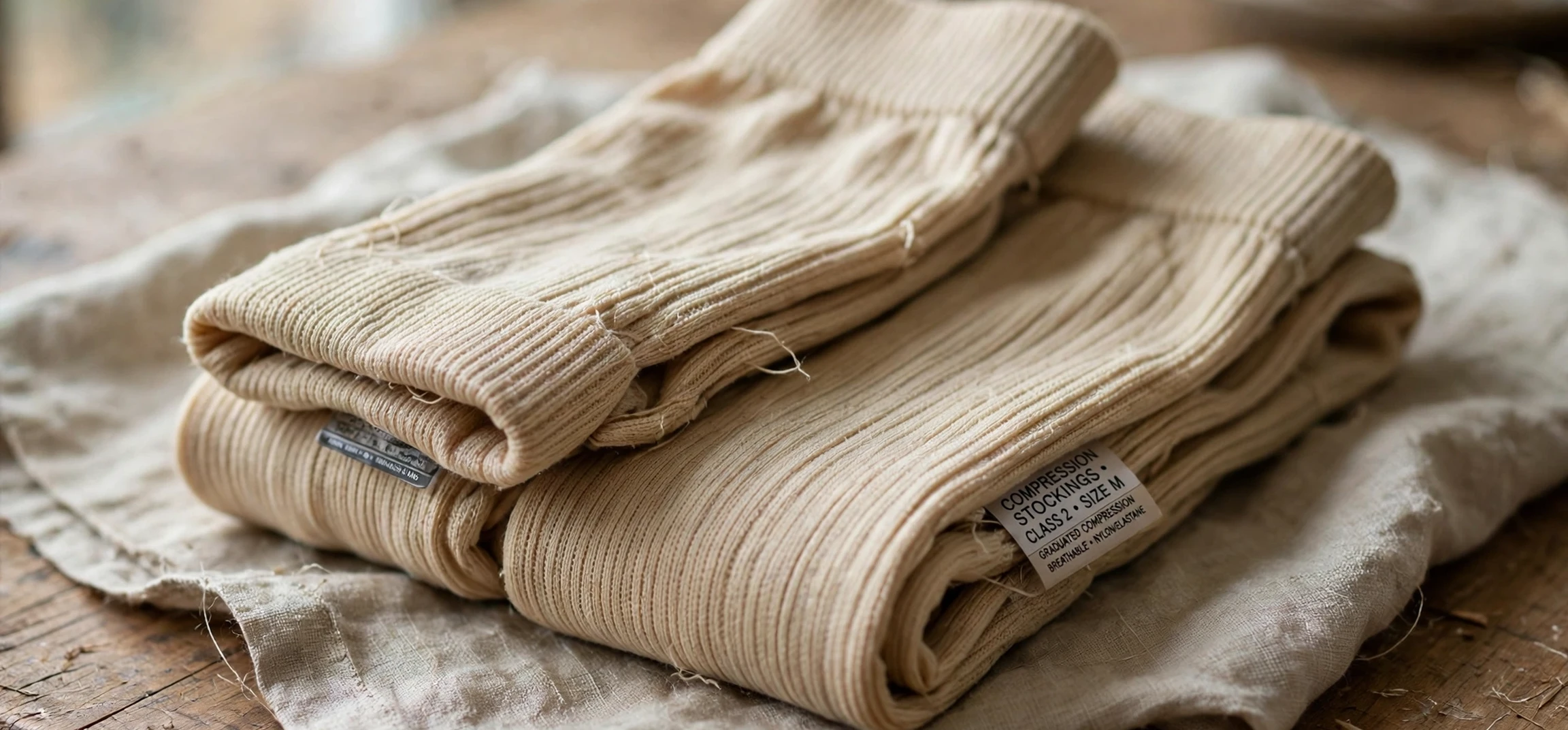
If you have noticed swelling in your legs and wondered about stockings that might help, you may have searched do compression socks help edema. Do compression socks help edema is a common question, and the honest general answer is that compression stockings are widely used as a supportive measure for leg swelling in many clinical contexts, but whether they are appropriate for any individual depends on the cause of the swelling, other health conditions, and professional advice. This guide gives general education only about how compression stockings work, what kinds exist, how they are typically fitted and worn, and when to seek prompt professional care. It does not diagnose any condition, does not recommend a product or pressure level for any person, and does not replace advice from a clinician who knows your history.
Swelling in the legs, often called oedema in some regions and edema in others, can have many causes, ranging from long periods of sitting or standing, to fluid retention, to conditions affecting veins, lymphatic drainage, the heart, kidneys, or other systems. Because the causes differ so much, a measure that is helpful in one situation may be unsuitable in another. That is why general information about compression stockings is useful for understanding the topic, but it cannot substitute for an assessment of the individual. If swelling is new, sudden, painful, one-sided, or accompanied by other concerning symptoms, seeking prompt professional care is important, and this guide highlights those prompts without attempting to diagnose. That distinction matters when asking do compression socks help edema.
Do Compression Socks Help Edema? The Basics
Do compression socks help edema in general terms? Compression stockings, also called compression socks, are elastic garments designed to apply graduated pressure to the leg, meaning the pressure is generally strongest at the ankle and gradually lessens higher up the leg. That graduated pattern is intended to support the veins and surrounding tissues and to encourage blood and fluid to move upward toward the heart, rather than pooling in the lower leg. In that general sense, compression is a well-established supportive concept in leg care, and it is used in many settings, from everyday support during long travel or long standing, to clinical management plans that a clinician designs for a particular condition.
It is important to understand what compression stockings are not. They are not a cure for the underlying cause of swelling, and they do not by themselves identify why swelling is present. They are a supportive tool that may form one part of a broader plan, which could also include movement, leg elevation, skin care, weight and activity considerations, and treatment of any underlying condition, as directed by a clinician. Thinking of them as support, rather than as a standalone solution, helps set realistic expectations and encourages the right follow-up when swelling persists or changes. Anyone wondering do compression socks help edema should note this point.
The word edema itself simply describes swelling caused by excess fluid in tissues. It is a sign, not a single disease, and clinicians approach it by looking for its cause. That approach matters for compression, because some causes of leg swelling respond well to external pressure support, while other situations require a different approach first, or require caution. A clinician may check circulation, skin condition, and medical history before suggesting compression, and may advise against it or advise a different level of pressure in certain circumstances. That assessment step is part of safe use, not an unnecessary delay. The question do compression socks help edema has no one-size answer.
How graduated pressure is supposed to work
Veins in the legs carry blood back toward the heart, working against gravity, with the help of valves and the pumping action of leg muscles during movement. When a person sits or stands still for a long time, that pumping action is reduced, and fluid can collect in the lower legs. Graduated compression aims to gently squeeze the leg, supporting the veins, reducing the space available for fluid to collect, and helping blood move upward. The effect is mechanical and external: the garment does not change the veins themselves, but it changes the pressure environment around them while it is worn. Fit and cause both shape whether do compression socks help edema in practice.
That mechanical idea also explains why fit matters so much. A stocking that is too loose may provide little support, while one that is too tight, bunched, or folded can be uncomfortable and may create uneven pressure. Properly fitted stockings are usually measured, often at the ankle and calf and sometimes at the thigh, depending on the length, and the measurements are matched to a size chart for that product. Off-the-shelf sizes suit many people for general support, but a clinician or trained fitter may recommend measured fitting when swelling is significant, when leg shape is unusual, or when a higher level of support is being considered. Discuss this point with a clinician if you ask do compression socks help edema.
Do Compression Socks Help Edema? Types and Lengths
Do compression socks help edema depends in part on which type is being discussed, because compression products vary in length, pressure, material, and purpose. Knee-length stockings are the most common for general leg swelling, covering the foot, ankle, and calf up to just below the knee. Thigh-length stockings extend further up the leg, and waist-high or pantyhose-style garments cover the whole lower body. Open-toe and closed-toe versions exist, and the choice often depends on foot shape, comfort, footwear, and clinician guidance. Shorter socks that end at the ankle provide less leg coverage and are generally intended for different purposes than full knee-length support.
Pressure levels are another key difference. Products sold for general everyday support usually provide mild pressure, while clinical-grade stockings provide stronger, measured pressure and are often obtained with professional guidance or a prescription, depending on local rules. Stronger is not automatically better. Higher pressure can be uncomfortable, harder to put on, and unsuitable for some people, and the appropriate level depends on the clinical situation. Labels describe pressure in millimetres of mercury, a standard pressure unit, but interpreting that number for an individual is a clinical decision, not a shopping choice to make on pressure alone. That caution belongs in any discussion of do compression socks help edema.
Materials also vary. Modern compression stockings are made from elastic fibres blended with materials chosen for stretch, breathability, durability, and comfort. Some are designed for warm weather, some for durability during daily wear, and some for easier donning. Skin sensitivity, allergies, and comfort during long wear are practical considerations, and a product that is comfortable enough to wear consistently is more useful than a stronger product that is left in a drawer. Comfort, fit, and consistency of wear are therefore part of the practical picture, alongside the pressure level itself. That distinction matters when asking do compression socks help edema.
Everyday support versus clinical use
Everyday support products are often used by people who stand or sit for long periods, travel for long hours, or notice mild swelling after a long day, and who have no concerning symptoms or diagnosed condition. Clinical use, by contrast, is part of a plan designed by a clinician for a specific condition, with fitting, pressure, duration of wear, and follow-up all considered. The boundary between those uses is not always sharp, and a person who starts with everyday support and notices persistent, worsening, or one-sided swelling should seek professional assessment rather than simply moving to a stronger product. That step protects against missing a cause that needs different treatment. Anyone wondering do compression socks help edema should note this point.
Fitting, Wearing, and Daily Care
Putting on compression stockings takes a little technique, because the elastic must be distributed evenly without bunching or folding. General guidance often suggests putting them on in the morning, when swelling is usually least, with clean, dry skin, and smoothing them up the leg gradually rather than pulling hard from the top. Donning aids, such as special gloves or frames, can help people with limited hand strength or flexibility. If a stocking rolls down, digs in, or leaves a deep, painful mark, that is a sign to re-check fit and to seek advice, rather than to simply endure it, because a poorly fitting garment does not provide the intended even support. The question do compression socks help edema has no one-size answer.
Duration of wear is another common question, and it depends on the reason for wearing them. Some people wear support stockings during the day and remove them at night, while clinical plans may specify different schedules. As a general principle, compression stockings are daytime garments in most contexts, and they are not normally worn overnight unless a clinician specifically advises it. Removing them at night also gives the skin a chance to breathe and allows you to check for irritation, redness, or marks. Any persistent skin problem, numbness, tingling, colour change, or increased pain while wearing them is a reason to stop and seek professional advice. Fit and cause both shape whether do compression socks help edema in practice.
Care of the garments themselves affects both comfort and lifespan. Most compression stockings are washed by hand or on a gentle cycle, following the product label, and air-dried rather than tumble-dried at high heat, because heat can damage elastic fibres. Having a second pair can help, so one pair can be washed while the other is worn, and so wear can continue consistently. Over time, elastic weakens, and stockings that have lost their stretch no longer provide the same support, even if they still look intact. Replacing them when they become loose, thin, or difficult to keep in place is part of sensible use, and the product guidance usually gives an indication of expected lifespan. Discuss this point with a clinician if you ask do compression socks help edema.
Movement, elevation, and skin care alongside compression
Compression is often discussed alongside other general leg-care habits, because movement and elevation support the same goal of helping fluid move rather than pool. Regular walking, ankle movements during long sitting, and avoiding long uninterrupted periods of standing or sitting are general habits that support leg circulation. Elevating the legs above heart level for periods during the day can also help fluid drain, as a general measure. Skin care matters too, because swollen skin can be fragile, dry, or prone to cracking, and keeping skin clean and moisturised, while watching for cuts, blisters, or sores, is a sensible part of daily care. These habits are general education, not a treatment plan, and they complement, rather than replace, professional assessment when swelling is persistent. That caution belongs in any discussion of do compression socks help edema.
| Topic | General point | When to seek professional advice |
|---|---|---|
| Purpose | Graduated support to help fluid move upward | When swelling is new, sudden, or unexplained |
| Fit | Measured at ankle and calf, smooth without bunching | When stockings dig in, roll, or cause pain or numbness |
| Pressure | Mild for general support, stronger only with guidance | Before choosing a strong clinical-grade level |
| Wear time | Usually daytime, removed at night unless advised otherwise | When unsure about schedule for your situation |
| Skin checks | Check skin daily for irritation or sores | When redness, sores, or colour change persist |
When to Seek Prompt Professional Care
Certain features of leg swelling should prompt timely professional care, rather than self-management with stockings alone. Sudden swelling in one leg, especially with pain, warmth, redness, or tenderness, deserves prompt assessment. Swelling accompanied by chest pain, breathlessness, or coughing up blood is an emergency and needs urgent care. Swelling that appears with fever, spreading redness, a skin wound that is not healing, or rapidly increasing pain also needs prompt attention. This guide lists those prompts for general education, not as a diagnostic checklist, and anyone experiencing them should seek care promptly and describe the symptoms fully to the clinician. That distinction matters when asking do compression socks help edema.
Other situations also merit assessment, even if they are not emergencies. Swelling that persists for more than a short time, returns repeatedly, affects daily activities, or is accompanied by weight gain, reduced urination, or other new symptoms should be discussed with a clinician, because the cause needs to be identified. People with diabetes, circulation problems, nerve problems, skin conditions, heart, kidney, or liver conditions, or a history of blood clots should be particularly careful about starting compression without advice, because those histories can change what is safe. A clinician who knows the full history can weigh those factors in a way that general information cannot. Anyone wondering do compression socks help edema should note this point.
It is also worth noting that swelling in pregnancy, after surgery, after long travel, or during certain treatments has its own considerations, and guidance in those situations is individual. This guide does not address those situations in detail, and anyone in them should follow the advice of the clinician overseeing their care. The general message remains the same: compression can be a useful supportive tool, but the decision to use it, the type, and the pressure level are best made with professional input when swelling is more than mild, transient, and clearly linked to a long day on your feet. The question do compression socks help edema has no one-size answer.
For readers exploring related general health topics, this site also covers compression meaning and blood test TSH meaning. Those explainers cover vocabulary and general background that can help when reading health information or discussing results with a clinician.
Do Compression Socks Help Edema? Frequently Asked Questions
Do compression socks help edema for everyone?
No, not for everyone, and not in every situation. They are a supportive tool that helps many people with leg swelling, but suitability depends on the cause of the swelling and on other health conditions. A clinician assessment is the reliable way to know whether they are appropriate for an individual.
How long does it take to notice a difference?
Experiences vary, and general information cannot predict an individual timeline. Some people notice less end-of-day swelling while wearing support, while others need a broader plan addressing the underlying cause. Persistent or worsening swelling should be assessed rather than monitored alone.
Can I wear compression socks all day?
Many people wear them during daytime hours and remove them at night, unless a clinician advises a different schedule. Comfort, skin checks, and fit should be reviewed regularly, and any pain, numbness, or skin problem is a reason to seek advice.
Are stronger stockings better?
Not necessarily. Stronger pressure is harder to wear, may be uncomfortable, and may be unsuitable for some people. The appropriate pressure depends on the clinical situation, and stronger clinical-grade levels are usually chosen with professional guidance.
What should I do if swelling is only in one leg?
One-sided swelling, especially if sudden or painful, should be assessed promptly by a clinician, rather than managed with stockings alone. Describe when it started, whether there is pain or warmth, and any other symptoms, so the clinician can assess it fully.
Conclusion
Do compression socks help edema? In general terms, graduated compression stockings are a widely used supportive measure that can help reduce leg swelling for many people, by supporting veins and encouraging fluid to move upward rather than pool in the lower legs. They work best as part of a thoughtful approach that includes correct fitting, comfortable consistent wear, movement, elevation, and skin care, and, crucially, professional assessment when swelling is new, persistent, one-sided, painful, or accompanied by other concerning features. They are not a diagnosis, not a cure for an underlying cause, and not a substitute for clinical advice. If you are considering them, use this general education as background, and talk with a clinician about whether, and which type, is right for you.



