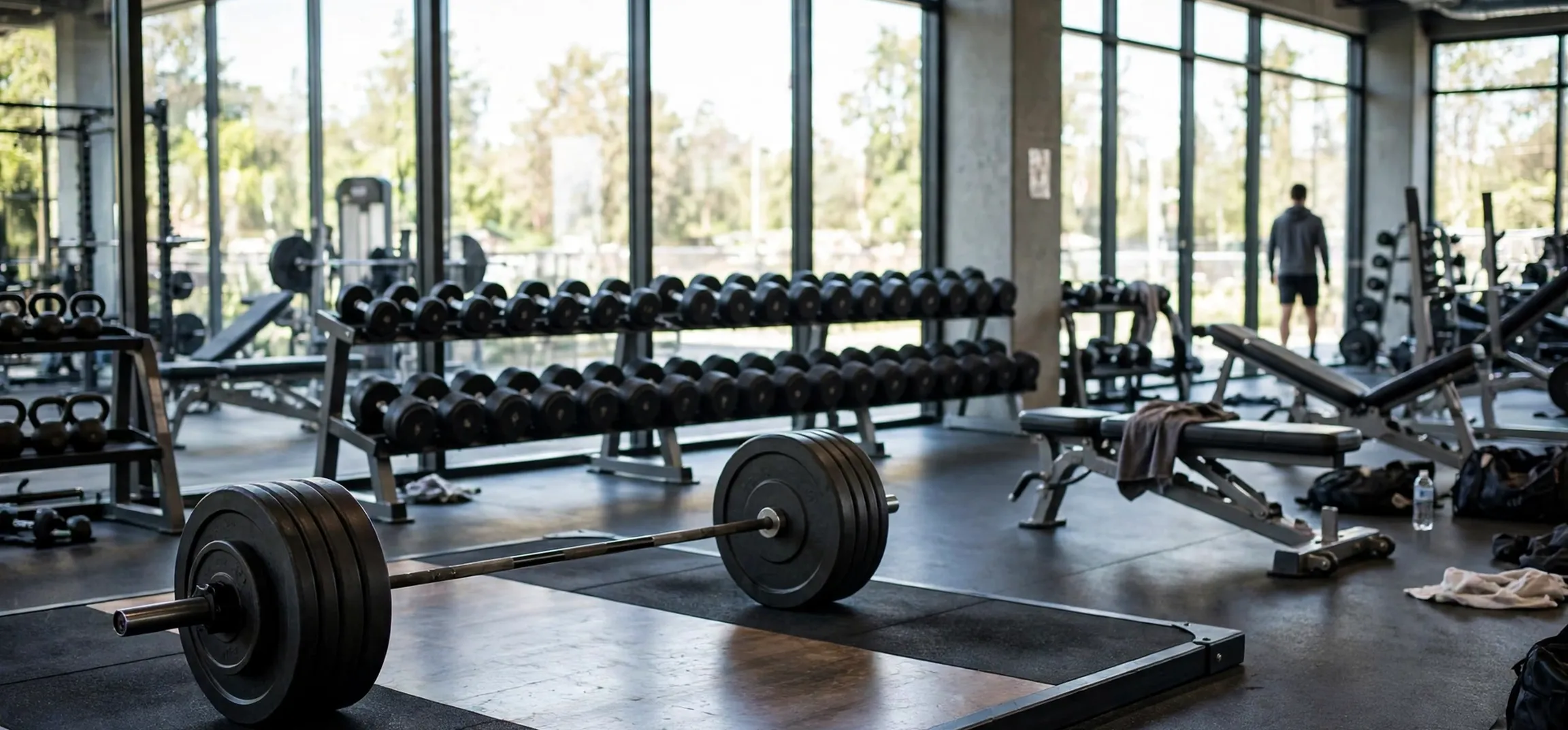
Ask a coach to define strength in fitness and you will get a shorter answer than you might expect: strength is the ability of your muscles to produce force. Everything else in the weights room, the programmes, the personal bests and the debates about what counts as strong, is built on that one foundation. This article sets out how professionals define strength in fitness, how it differs from muscle size and endurance, how it is measured, and how beginners actually build it.
The word does a lot of work in everyday gym talk. People use it for how much someone can lift, how muscular they look and how fit they seem, all at once. Untangling those ideas is the first step to training with a clear target.
How coaches define strength in fitness
The standard way to define strength in fitness is as maximal force production: the greatest amount of force a muscle or group of muscles can generate in a single effort. Sports scientists sometimes call this maximal strength, and it is usually expressed through the heaviest load you can move once with sound technique, known as a one-repetition maximum. When a textbook sets out to define strength in fitness, that is the definition it reaches for, because it can be observed, tested and compared.
Two close relatives complete the picture. Power is strength expressed quickly, force multiplied by speed, and it is what jumping and throwing depend on. Strength endurance is the ability to repeat submaximal efforts, producing moderate force many times before fatigue wins. A complete athlete needs all three in different proportions, but when trainers define strength in fitness as a quality to be tested, maximal strength is the anchor, and the other qualities are described in relation to it.
Strength is not size, and it is not endurance
The most persistent confusion in gyms is the assumption that the biggest muscles are automatically the strongest. Muscle size, called hypertrophy, does contribute to strength because a larger muscle has more contractile material. But much of strength is neural: your nervous system learns to recruit more muscle fibres at once, to fire them faster and to coordinate the muscles around a joint. That is why beginners get dramatically stronger in their first months of training before they look any different, and why a lean competitive lifter can out-lift a much larger casual trainer. Any honest attempt to define strength in fitness has to include the nervous system, not just the tape measure.
Endurance is a separate quality again. The ability to keep going, whether that is repetitions in a set or kilometres on a road, rests on energy systems and fatigue resistance rather than maximal force. The table below separates the three qualities so the distinctions stay clear.
| Quality | What it means | Typical test |
|---|---|---|
| Maximal strength | The most force you can produce in one effort | One-repetition maximum on a squat, press or deadlift |
| Power | Producing force quickly | Vertical jump or a thrown medicine ball |
| Strength endurance | Repeating moderate efforts before fatigue | Maximum strict repetitions at a fixed load |
| Hypertrophy | Muscle size itself | Measurements, photos and body-composition checks |
Seeing the categories side by side shows why programmes differ so much. Training that chases one quality only partly develops the others, which is why coaches define strength in fitness precisely before they write a single workout: the definition decides the method.
How strength is measured in practice
In practice, strength is measured against loads, repetitions and standards. The one-repetition maximum is the headline measure, tested directly by experienced lifters or estimated from a hard set of three to five repetitions by everyone else, which is safer and nearly as useful. Relative strength compares that result with body weight, which is how a lighter lifter pressing their own body weight overhead can be judged stronger, pound for pound, than a heavier lifter pressing more in absolute terms.
Grip strength deserves a special mention, because researchers use it as a simple marker of overall strength and even of general health in older adults. It is measured with a hand dynamometer, takes seconds, and needs no gym. Its popularity in studies underlines the same lesson: when scientists define strength in fitness for measurement, they choose tests that are simple, repeatable and hard to fake.
How beginners actually build strength
Building strength follows a principle called progressive overload: gradually asking the muscles and nervous system to handle a little more than they are used to, then recovering and repeating. In practice that means a small set of compound movements, squats, hinges, presses and rows, performed for low to moderate repetitions with loads that feel challenging, added to slowly over weeks. Two to four full-body or split sessions a week is a typical and sustainable rhythm for a beginner.
Recovery is half the method. Muscle and connective tissue adapt between sessions, not during them, so sleep, adequate food with enough protein, and rest days are part of the programme rather than rewards for finishing it. Technique comes before load at every stage: the way professionals define strength in fitness assumes the force is produced with sound form, and a lift completed by twisting and straining is measuring risk tolerance more than strength. If you are new, a few sessions with a qualified coach will repay themselves for years.
Strength standards: how people judge the numbers when they define strength in fitness terms
Because people who define strength in fitness terms like comparisons, coaching culture has built informal standards that sort lifters by level. A beginner might work toward squatting their own body weight; an intermediate lifter might aim for one and a half times body weight on the same lift; advanced and elite standards climb from there and differ by sex, age and weight class. These tables are conventions, not laws of nature, and good coaches hold them lightly. Their real use is motivational and diagnostic: they show a trainee which lifts lag behind the others, and they give a year’s training a shape.
Two cautions keep standards healthy. First, they describe performance on specific barbell lifts under specific conditions, not human worth or even general athleticism; a gymnast, a climber and a rower are all extraordinarily strong in patterns the barbell tables do not test. Second, comparisons only make sense against the right peer group, because body weight, age and training history move the goalposts enormously. Used with those cautions, standards are a friendly scoreboard. Used without them, they are a reliable way to feel bad about excellent progress.
Relative strength and absolute strength
The distinction between the two is worth keeping whenever numbers are quoted. Absolute strength is the total load moved, the biggest number wins, and it favours heavier athletes. Relative strength divides the load by body weight, and it favours lighter ones. Sports care about one or the other depending on their demands: a powerlifter competes inside a weight class, a strongman simply lifts the stone, and a rock climber lives or dies by relative strength, because the load being moved is their own body. Asking which kind of strength a number describes is the expert follow-up question to any impressive claim.
It is also worth saying plainly that strength is trainable at every age and starting point. The standards and tests in this article describe a quality, not a club with a door policy: the same definition applies to a grandparent regaining the strength to climb stairs confidently and to a competitive lifter chasing a record, and progress means the same thing for both, more force than last season, produced safely.
Frequently asked questions
How do experts define strength in fitness in one line? As the maximum force a muscle or muscle group can produce in a single effort. Power and strength endurance are related qualities, but maximal force production is the core definition used in coaching and sports science.
Can you be strong without looking muscular? Yes. Much of strength is neural adaptation, recruiting and coordinating muscle fibres efficiently. Competitive lifters in lighter weight classes regularly demonstrate strength far beyond what their appearance suggests, which is exactly why appearance is not used to define strength in fitness.
How long does it take to build noticeable strength? Beginners usually feel clear progress within four to eight weeks of consistent training, largely from neural adaptation, with muscle growth following over the following months. The rate slows as you advance, which is normal at every level.
Is strength training safe for older adults? Generally yes, and it is widely recommended, because maintaining strength protects independence, balance and bone health. Loads and exercises should be scaled to the individual, and anyone with a medical condition should check with their doctor and work with a qualified trainer.
Conclusion
To define strength in fitness is to talk about force: how much your muscles and nervous system can produce in a single, well-executed effort. Size supports it, endurance neighbours it, and power speeds it up, but maximal force is the heart of the matter. Train it progressively, measure it honestly and recover properly, and it is one of the most rewarding qualities fitness has to offer.
For more training reading, our list of ab workout names decodes the exercises you will meet in programmes, the Body Beast workout guide walks through a structured home programme, and our guide to back muscles and their names helps you learn the anatomy behind the lifts.