The meaning of El Elohe Israel is one of those phrases that rewards a slow, careful reading. At its simplest, the meaning of El Elohe Israel is “God, the God of Israel”, a name given to an altar built by Jacob after a long and difficult journey. Yet behind that short translation sits a story about identity, reconciliation and belonging, and that is why readers keep searching for the meaning of El Elohe Israel today. This guide explains the phrase word by word, places it in its biblical setting, and shows how it differs from similar names for God, so that you can understand it with confidence rather than guesswork.
People come to search for the meaning of El Elohe Israel from many directions. Some meet it while reading Genesis, others hear it in a sermon, a song or a Bible study, and others simply wonder what the Hebrew words mean. Whatever brought you here, the aim is the same: a clear explanation in plain language, grounded in the passage where the name first appears. You do not need to know Hebrew to follow this article, although a little Hebrew helps, and we will introduce each word gently as we go.
What Does the Meaning of El Elohe Israel Mean?
The meaning of El Elohe Israel can be unpacked in three parts. “El” is a Hebrew word for God, used widely across the Old Testament. “Elohe” is a form of “Elohim”, also meaning God, here in a possessive construction that can be rendered “God of”. “Israel” is the name given to Jacob after he wrestled through the night at Peniel, and it became the name of the people descended from him. Put together, the phrase declares that God is the God of Israel, in a personal and covenantal sense rather than as a distant, abstract deity.
That distinction matters. Ancient peoples often spoke of gods tied to a city, a mountain or a nation. This phrase does something more specific: it ties the God who is being worshipped to a particular person and a particular story. Jacob is not dedicating an altar to a god in general. He is naming the God who met him, changed him and brought him home. The meaning of El Elohe Israel is therefore relational before it is theological in the academic sense. It is a statement about whose God this is, and about a relationship that has survived trouble.
Translators sometimes render the phrase slightly differently, for example as “God, the God of Israel” or “El-Elohe-Israel”, with hyphens to show that it functions as a single name. The differences are matters of punctuation and style, not of substance. In every mainstream English translation, the sense remains the same: the God of Jacob, now called Israel, is being honoured at a place of return.
The Meaning of El Elohe Israel in Genesis
The phrase appears in Genesis 33, at a turning point in Jacob’s life. Jacob has spent years away from home, first fleeing his brother Esau and then working for his uncle Laban. He returns with a large household, flocks and herds, and a great deal of anxiety about the welcome he will receive. The famous night-time wrestling match has left him with a new name, Israel, and a limp that will remind him of the encounter for the rest of his life.
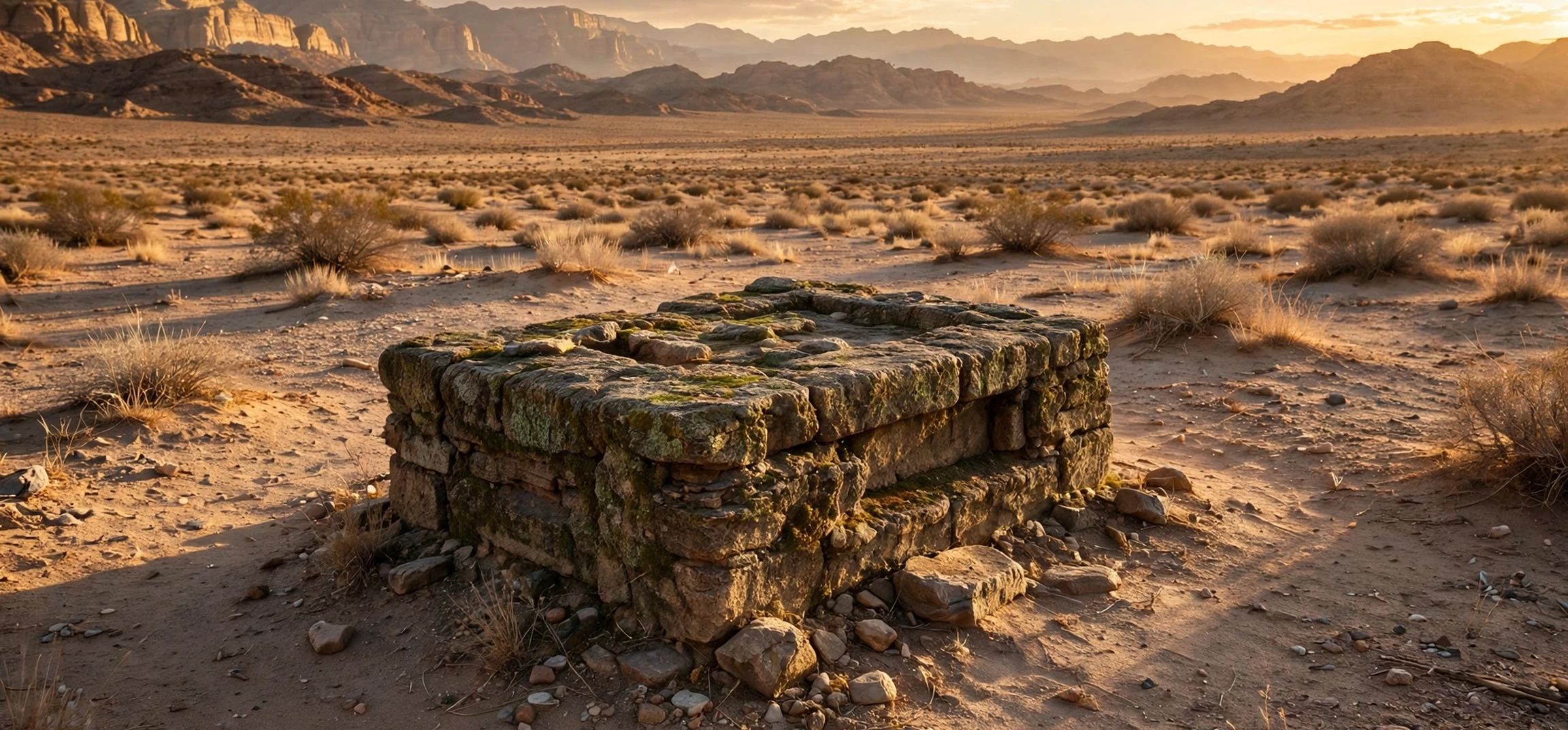
When Jacob arrives at Shechem, he buys a plot of land, pitches his tent and builds an altar. That altar receives the name El Elohe Israel. In the ancient world, building an altar was a public act, and the meaning of El Elohe Israel is tied to that act. It marked a place as sacred, declared allegiance, and created a visible memorial for future generations. Jacob is effectively saying, in stone and sacrifice, that he has come home under God’s protection and that his household now belongs to this God in this land.
It is worth noticing the order of events. The altar is not built at the start of the journey, when everything is still uncertain, but after arrival, purchase and settlement. The meaning of El Elohe Israel therefore carries a note of gratitude and testimony. Jacob looks back over danger, deception, hard labour and family conflict, and he credits God with bringing him through. The name is a summary of the whole journey, compressed into four words.
Why Shechem Matters in the Story
Shechem was a significant location, a town in the hill country with a long history as a meeting place and trading centre. By buying land there, Jacob was putting down roots rather than passing through as a visitor. The altar gave that settlement a spiritual centre. For later readers, Shechem would recur in the story of Israel, which makes Jacob’s altar an early marker in a much longer history. Understanding this setting helps the meaning of El Elohe Israel feel less like an isolated curiosity and more like a milestone.
Breaking Down the Hebrew Words
Let us look at each word in turn. “El” is one of the oldest Hebrew words for God. It appears in many biblical names, such as Bethel, meaning “house of God”, and Israel itself, which contains “El” as its final element. In some contexts “El” can refer to God in a general sense, but in the Hebrew Bible it is overwhelmingly used of the God of Israel, which is why context always matters.
“Elohe” comes from the same root as “Elohim”, the most common Hebrew word for God in the Old Testament. Grammatically, it is in what scholars call the construct state, meaning it is joined to the following word: “God of”. That is why the phrase is not simply “God God Israel” but “God, the God of Israel”. The doubling of divine names is not accidental repetition; it is emphasis. It is as if Jacob is saying, “God, yes, this God, the God who is mine and my people’s”.
“Israel” itself is rich in meaning. Traditionally it is understood as “he struggles with God” or “God struggles”, reflecting the wrestling match that gave Jacob his new name. Others render it as “God prevails” or “prince with God”. Whatever the precise nuance, the name marks transformation. Jacob the schemer becomes Israel the patriarch. When the altar name includes Israel, it honours that changed identity and the future people who will carry the name.
El Elohe Israel and Other Names for God
Readers sometimes confuse El Elohe Israel with other compound names in Genesis, so a brief comparison helps. El Shaddai is usually rendered “God Almighty” and stresses power and provision. El Elyon means “God Most High” and stresses supremacy over all other powers. El Roi, the name Hagar gives God, means “the God who sees me” and stresses personal attention in distress. Each name reveals a different facet of God’s character as experienced in a particular moment.
When you ask about the meaning of El Elohe Israel, it fits this pattern perfectly. It is not a universal title invented in a vacuum; it is a name born from experience. Jacob does not call God by a generic title but by the name that fits his own story. That is also why the phrase continues to resonate. Many readers have their own moments of return after difficulty, and a name that speaks of a God who stays faithful through a long journey feels personal rather than remote.
It is also helpful, when studying the meaning of El Elohe Israel, to distinguish this altar name from the later tabernacle and temple worship of Israel. The altar at Shechem was a family memorial, not yet part of a national sanctuary system. Later, Israel’s worship would be centralised, but these early altar stories preserve something valuable: faith expressed in ordinary places, by ordinary households, at decisive moments in their lives.
How the Phrase Is Used Today
Today, the meaning of El Elohe Israel is most often discussed in Bible study groups, sermons on Jacob’s life, and articles explaining Hebrew names for God. Preachers use it to talk about identity, about God keeping promises over decades, and about homecoming after estrangement. Worship songs occasionally borrow the phrase or its translation, and it appears in devotional writing about trusting God through long seasons of waiting.
For students of the Bible, the meaning of El Elohe Israel is also a useful example of how Hebrew names work. It shows how a name can function as a sentence, how grammar shapes theology, and how a place name or altar name can preserve a story for later generations. If you are studying other names in Genesis, such as Bethel or Peniel, you will notice the same pattern: a place, an encounter and a name that keeps the memory alive.
There is one caution worth stating plainly. Because the phrase is ancient and sacred to many readers, it deserves to be quoted accurately and explained respectfully. It is not a slogan or a decorative label. Treating it as a piece of trivia would miss the point of the story, which is about a real person giving thanks after a hard road home. The meaning of El Elohe Israel is best honoured by reading the passage itself, slowly, and letting the context do its work.
Common Questions About El Elohe Israel
One frequent question is whether El Elohe Israel is a name for God or a name for the altar. Strictly speaking, it is the name given to the altar, and it is formed from a description of God. That is a common pattern in Genesis: an altar or place is named after what God did there. So it is accurate to say both that Jacob named the altar El Elohe Israel and that the phrase declares who God is.
Another question concerns pronunciation. English speakers commonly say “el el-oh-HAY iz-ray-el”, with the stress on the middle syllable of Elohe. Hebrew pronunciation varies by tradition, so there is no single correct English rendering to worry about. What matters most is recognising the words and their sense, not achieving perfect ancient pronunciation.
Readers also ask whether the phrase appears anywhere else in the Bible. It is distinctive to Genesis 33, which is part of its interest. Unlike titles such as El Shaddai, which recur, El Elohe Israel is tied to one moment and one place. Its uniqueness is the point: it captures a once-in-a-lifetime homecoming, not a routine formula.
Frequently Asked Questions
What is the simple meaning of El Elohe Israel?
In simple terms, it means “God, the God of Israel”. Jacob gave this name to the altar he built at Shechem after returning home, declaring that the God who had guided him was the God of his new identity and his household.
Where in the Bible does El Elohe Israel appear?
It appears in Genesis 33, after Jacob’s reconciliation with Esau and his arrival at Shechem. The verse records that he erected an altar there and called it El Elohe Israel.
How is El Elohe Israel different from El Shaddai?
El Shaddai stresses God’s almighty power and provision, while El Elohe Israel stresses covenant relationship: this is the God of Israel, the God of Jacob’s family and future people. Both are Hebrew names for God, but each highlights a different aspect of the relationship.
| Word | Usual rendering | What it adds to the phrase |
|---|---|---|
| El | God | The divine name at the heart of the phrase |
| Elohe | God of | Links God possessively to Israel |
| Israel | Israel | Jacob’s new name and his descendants |
If you enjoy exploring the meanings of words and names, you may also like our guide to the meaning of Bildungsroman, another look at how a single term can carry a whole story. A companion piece on Bildungsroman meaning explores the same idea from a different angle, and readers interested in seasonal traditions can explore Saint Patrick’s Day meaning as well.
Conclusion
The meaning of El Elohe Israel is beautifully concise: God, the God of Israel. Yet within those few words sits a lifetime of wandering, wrestling, reconciliation and return. Jacob built an altar at Shechem not to impress anyone but to mark the truth that God had brought him home. That is why the phrase endures. It reminds readers that faith is often named most clearly after the journey, when looking back makes the pattern visible. Read Genesis 33 in full, notice the gratitude behind the name, and the meaning of El Elohe Israel will stay with you far longer than any dictionary definition alone.