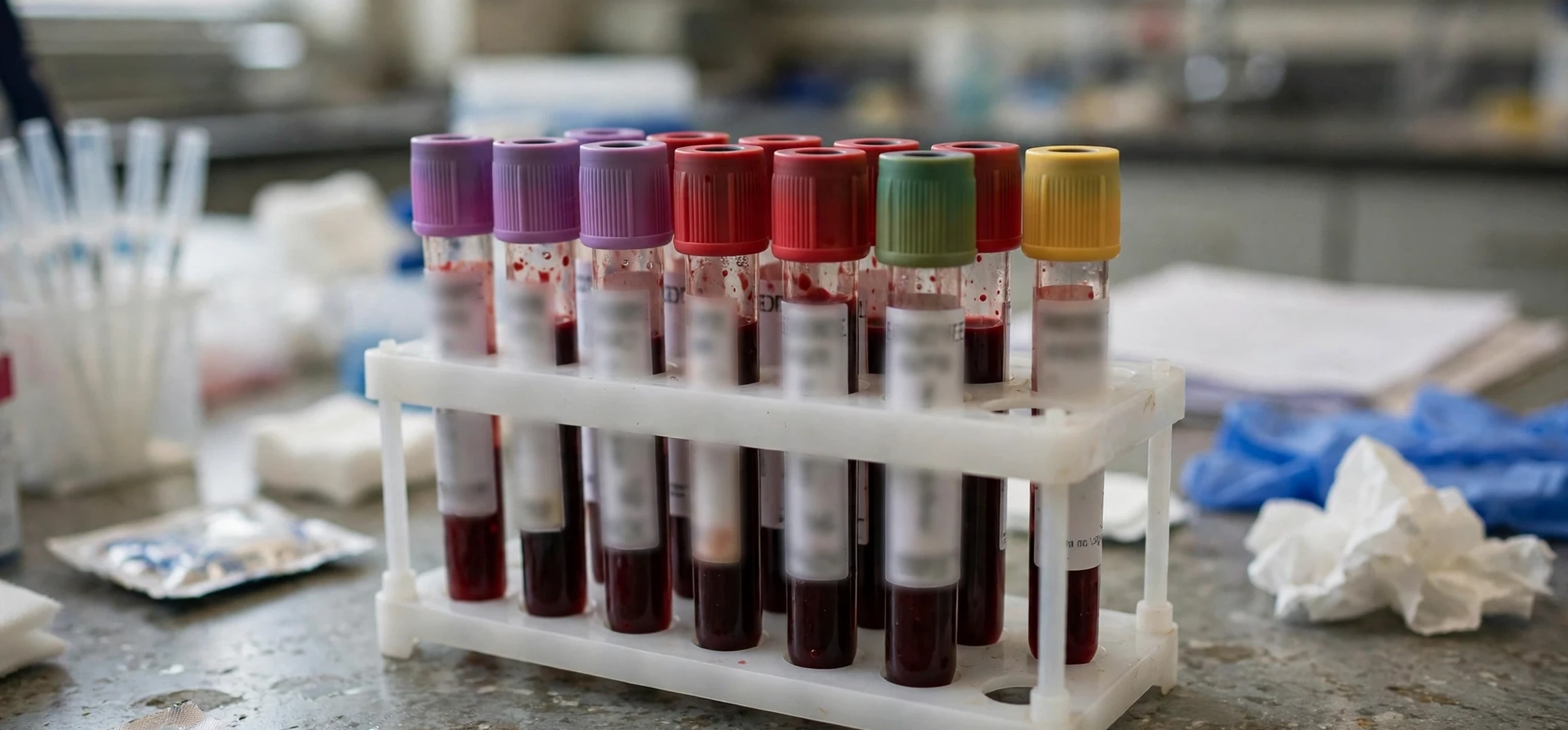
If you have typed high red blood cells what does it mean into a search box, you probably have a blood test report in front of you with a flagged result, and you want a calm, plain-language explanation. This article offers general health education only: it explains what red blood cells do, why a result can come back higher than the range printed on a report, and what sensible next steps look like. It cannot diagnose any person, and it is not a substitute for advice from your own clinician, who knows your full history and can interpret your result in context.
Red blood cells are the cells in your blood that carry oxygen from your lungs to the rest of your body and bring carbon dioxide back to be breathed out. They get their colour from haemoglobin, the iron-rich protein inside them. Because oxygen delivery affects almost every part of the body, clinicians pay close attention when the number of red blood cells, or related measures such as haemoglobin and haematocrit, sit outside the expected range on a report.
High Red Blood Cells What Does It Mean in Plain Language
To answer the question “high red blood cells what does it mean” in the simplest terms: it means the laboratory counted more red blood cells in your blood sample than the reference range printed on your report expects. A reference range is the span of results seen in most healthy people tested by that laboratory, and it can vary slightly between laboratories, so the same result can look different on reports from different labs.
A result above the range is often called a raised red cell count or erythrocytosis in medical writing. The phrase sounds alarming, but a single flagged result is a prompt for further thought, not a verdict. Clinicians look at the size of the difference, whether related measures are also raised, whether earlier results show a pattern, and what else is going on in your health and daily life before drawing any conclusions.
It is also worth knowing that a blood count is a snapshot. Hydration, recent illness, altitude, smoking, and even the time of day can nudge results. That is why a clinician may suggest repeating a test rather than acting on one number alone. A repeat test helps show whether a result was a one-off or part of a lasting pattern.
Why a Red Blood Cell Result Can Come Back High
There are several broad reasons a red cell count can sit above the reference range, and they range from everyday and temporary to medical and long-term. Understanding the categories helps you have a more useful conversation with your clinician, without jumping to conclusions about your own case.
Temporary and Everyday Factors
One common everyday factor is a low fluid volume in the body. When someone is dehydrated, the liquid part of the blood is reduced, so the cells make up a larger share of the sample and the count can read higher. This effect usually settles once fluid levels return to normal, which is one reason a clinician may ask about recent illness, vomiting, diarrhoea, or heavy sweating before interpreting a result.
Another everyday factor is altitude. People who live at high altitude, or who have recently spent time there, often produce more red blood cells because the air contains less oxygen and the body compensates by making more oxygen-carrying cells. This is a normal adaptation, and it reverses gradually after returning to lower altitude.
Smoking is another factor clinicians ask about. Long-term exposure to carbon monoxide from smoke reduces how effectively blood carries oxygen, and the body may respond by producing more red blood cells. This is one of many reasons clinicians encourage people who smoke to seek support to stop.
Medical Causes Clinicians Consider
Beyond everyday factors, clinicians consider conditions that reduce oxygen in the blood over time, such as long-standing lung or heart problems, and sleep-related breathing disorders. When tissues receive less oxygen over months or years, the body may keep producing extra red cells in an attempt to compensate.
There are also conditions in which the bone marrow itself produces too many red cells. The best-known example is polycythaemia vera, a rare, slow-developing blood condition in which the marrow overproduces red cells, and sometimes other blood cells too. This is uncommon, and it is diagnosed through a combination of blood tests, examination, and sometimes specialist tests, never from a single count alone.
Certain medicines and hormone treatments can also influence red cell production, and clinicians will review current medicines when a result is raised. Again, the point is not to guess which category applies to you, but to understand why a clinician asks wide-ranging questions before settling on an explanation.
| Factor | How it can raise the count | What usually happens next |
|---|---|---|
| Low fluid volume | Less plasma makes cells a larger share of the sample | Clinician may repeat the test after fluids normalise |
| High altitude | Body adapts to thinner air by making more cells | Count drifts back after time at lower altitude |
| Smoking | Reduced oxygen delivery prompts extra production | Clinician discusses stopping support and retesting |
| Long-term low oxygen | Body compensates for ongoing low oxygen levels | Clinician investigates the underlying cause |
| Marrow overproduction | Marrow makes too many red cells | Specialist review and further testing |
Symptoms People Ask About and When to Seek Care
Many people with a mildly raised red cell count feel entirely well, and the result is found by chance during a routine check. Others report non-specific experiences such as headaches, dizziness, tiredness, or itching after a hot bath or shower. These experiences are common, have many possible causes, and do not point to any single explanation on their own, so they should not be used to self-diagnose.
Seek prompt medical attention if you notice symptoms that worry you, such as chest pain, breathlessness, sudden weakness or numbness, vision changes, or severe headache. These can have many causes, some urgent, and they deserve same-day assessment rather than internet research. If you feel well but have a flagged result, booking a routine appointment to discuss it is the sensible step.
It can help to prepare for that appointment. Note when the test was taken, whether you were unwell or dehydrated at the time, whether you smoke, whether you live at or recently visited high altitude, and what medicines you take. Bring the report itself, since the clinician will want to see the full panel, not just the one flagged line.
High Red Blood Cells What Does It Mean for Your Next Steps
So, high red blood cells what does it mean for what you should actually do? In most cases, the next step is simply to talk to the clinician who ordered the test, or your usual doctor, and let them interpret the result alongside your history. They may repeat the blood test, check related measures, review your medicines, or refer you to a blood specialist if the pattern persists or other results are also unusual.
There is no diet, supplement, or home remedy that can be recommended from a single flagged result, and you should not start or stop any medicine because of a laboratory number without clinical advice. Be cautious of online sources that promise to “lower” a count quickly or that sell products aimed at blood results; a laboratory number is a clue for a clinician, not a shopping list.
For related general explanations, you may find our guides useful: what RBC means in a blood test, what blood pressure numbers mean, and what a high RDW level means in blood tests. Each covers a different line you may see on the same report.
What a Raised Count Does Not Tell You
One question that follows naturally from “high red blood cells what does it mean” is what a single raised count cannot tell you. It cannot tell you why the count is raised, how long it has been raised, or whether it matters for your health. A count is a measurement, not an explanation, and the same number can arise from very different situations. That is why clinicians gather history, examine you, and often repeat the test before they interpret it.
It also cannot tell you what to do next on its own. People sometimes search for “high red blood cells what does it mean” hoping for a home remedy or a diet change, but no single result justifies self-treatment. The safe response to a flagged result is a conversation with a clinician, who can place the number in the context of your age, medicines, lifestyle, and other results. Treat the internet as background reading and your clinician as the interpreter.
Frequently Asked Questions
Does a high red blood cell count mean I have a serious illness?
Not necessarily. A raised count has many possible explanations, including temporary factors such as dehydration and altitude, and many people with a flagged result turn out to have no serious condition. When people ask “high red blood cells what does it mean” in this worried frame of mind, the honest answer is that only a clinician who can review your full history and repeat testing can judge what it means for you.
Should I repeat the test?
That is a decision for your clinician, but repeat testing is common. A second result helps show whether the first was a one-off or part of a pattern, and it is often done after any temporary factor has settled. If you are still wondering “high red blood cells what does it mean” after a repeat test, bring both reports to your appointment so the clinician can compare them side by side.
Can I lower my red blood cell count myself?
Do not try to alter a blood result on your own. Staying hydrated and not smoking are general health measures, but any action aimed at a specific laboratory result should follow clinical advice, since the right step depends entirely on the underlying cause.
What other results appear alongside a red cell count?
Reports usually show haemoglobin, haematocrit, and related red cell indices together. Clinicians read them as a group, since the pattern across them is more informative than any single line.
Conclusion
A raised red blood cell count means the laboratory found more red cells than its reference range expects, and the explanation can range from temporary factors such as dehydration or altitude to long-term conditions that need specialist care. So, high red blood cells what does it mean in the end? It means a question to take to your clinician, not a conclusion to draw on your own. The result is a starting point for a conversation, not a diagnosis. If your report shows a flagged red cell count, the most useful step is to discuss it with your clinician, bring the full report, and follow their advice on repeat testing or referral. General information can ease worry and help you ask better questions, but personal interpretation belongs with the clinician who knows your health.



