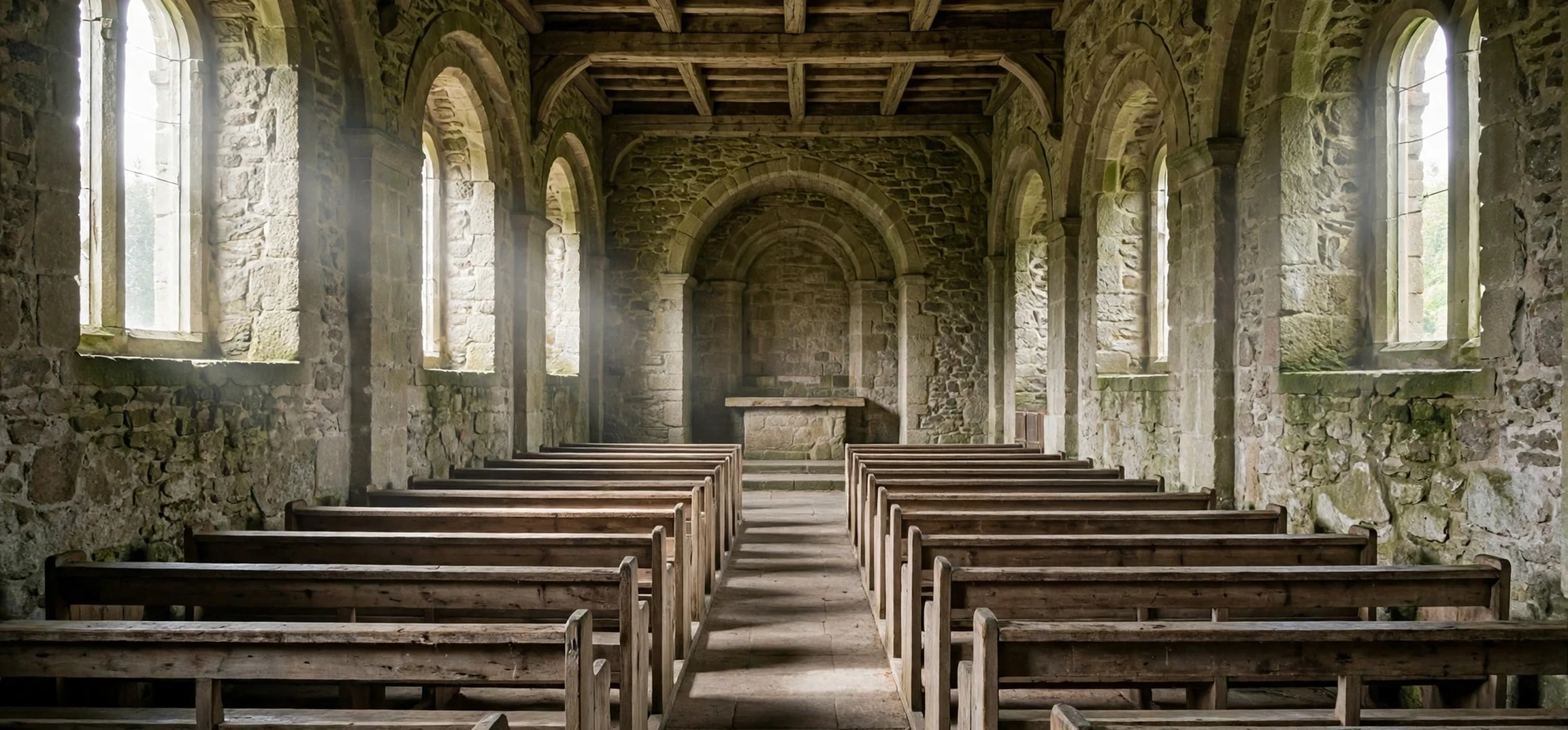
If you have ever wondered what is excommunicated in a religious context, you are not alone. The word sounds formal and old-fashioned, yet it still appears in news stories, history books, novels, and conversations about faith communities. In simple terms, to be excommunicated means to be formally excluded from participation in the communal life of a religious group, most often a church. It is not the same as simply leaving a faith, disagreeing with a teaching, or missing services for a while. Excommunication is an official act, carried out according to the rules of that community, and it carries specific consequences for the person involved. Understanding the term helps readers make sense of both historical events and modern headlines without jumping to conclusions about what actually happened.
Many people first meet the word in a history lesson about medieval Europe, where kings and bishops clashed over power. Others meet it in a film or a novel, where a character is dramatically cast out of a congregation. In everyday language, people sometimes use the word loosely to mean being shunned or cut off by any group. That loose use is understandable, but it can be misleading. In its precise sense, excommunication belongs to religious law and practice. Different traditions define it differently, apply it through different procedures, and reverse it in different ways. This guide explains the core meaning, the history behind it, how major traditions approach it, and what it does and does not mean today.
What Is Excommunicated: The Basic Meaning
When someone asks what is excommunicated, the shortest accurate answer is that the person has been formally barred from full communion with a religious community. The word itself comes from Latin roots suggesting being put outside of communion, or shared participation. Communion here does not only mean the ritual of sharing bread and wine, although that is part of it in many Christian traditions. It also means belonging: taking part in worship, receiving sacraments, holding office, and being counted as a member in good standing. Excommunication suspends or removes that standing by an official decision, not merely by personal drift or private disagreement.
It is important to distinguish excommunication from several nearby ideas. A person who stops attending services has not necessarily been excommunicated; they may simply be inactive. A person who is criticised by fellow believers has not necessarily been excommunicated either, because criticism is not a formal penalty. Likewise, a person who changes religion has made a personal choice, whereas excommunication is something imposed by an authority within the community. The distinction matters because excommunication implies a process, a decision-maker, and a set of rules that can usually be studied and, in many traditions, appealed or reversed.
The consequences also vary. In some traditions, an excommunicated person may still attend services but may not receive certain sacraments or hold a church role. In others, the exclusion is broader and affects social contact within the community. In still others, the penalty is understood mainly as a spiritual matter rather than a social one. Because of this variety, a headline that simply says someone was excommunicated tells only part of the story. Readers who want the full picture need to ask which tradition is involved, what rule was applied, and what the practical effects are in that community.
What Is Excommunicated in History
History gives the clearest examples of why excommunication once carried such weight. In medieval Europe, the church was not only a place of worship but also a central institution in daily life, education, charity, and record-keeping. To be excluded from it could affect a person’s social standing, business relationships, and political alliances. Rulers who clashed with church leaders sometimes faced excommunication, and the dispute could become a public contest over who held legitimate authority. These episodes are often retold in dramatic terms, but the underlying mechanism was usually legalistic: a specific offence was named, a warning was given, and a formal sentence followed.
Over time, the social power of excommunication changed as societies became more plural. Where many faiths coexist and where church and state are separate, exclusion from one religious community no longer controls a person’s civic rights, employment, or freedom of movement. That shift is worth keeping in mind when reading older sources. A punishment that once shook a kingdom may today affect mainly a person’s standing within one congregation or denomination. The word stayed the same, but the world around it changed a great deal.
Historians also note that excommunication was sometimes used as a tool of discipline inside religious orders and communities, not only against famous rulers. Monks, priests, scholars, and ordinary members could face it for breaking community rules, teaching doctrines judged to be false, or refusing to obey a lawful order. In those cases, the purpose was often described as corrective rather than purely punitive: the community hoped the person would reconsider, make amends, and return. Whether that hope was realistic depended on the circumstances, and many historical cases ended in lasting division instead.
Cases Readers Often Ask About
Students commonly encounter excommunication when studying the Reformation, when reformers challenged established church teaching and authority and were in turn condemned by church courts. They also meet it in the history of science, politics, and literature, where disputes about doctrine overlapped with disputes about power. In each case, the details matter more than the label. Two people described as excommunicated in different centuries may have experienced very different procedures and consequences, and modern readers should resist treating every case as identical.
How Different Religious Traditions Approach Excommunication
Christian traditions are the most frequent context for the word in English, but they do not all use it in the same way. In the Roman Catholic Church, excommunication is a canonical penalty governed by a detailed code of law. Some offences incur it automatically when the act is committed, while others require a formal declaration by a church authority. The penalty generally bars the person from receiving sacraments and from exercising certain church offices, and it can be lifted through repentance and absolution under defined conditions. The process is deliberately legal in character, with attention to intent, knowledge, and procedure.
In Eastern Orthodox churches, a similar concept exists, often described as exclusion from communion. The emphasis tends to fall on pastoral care and restoration: the person is separated from sacramental life for a period, with the hope of return through repentance and guidance from a spiritual father or bishop. In many Protestant churches, formal excommunication as a canonical penalty is less common, and discipline more often takes the form of church membership processes. A congregation may remove someone from membership for serious misconduct or persistent false teaching, following its own constitution and, in many cases, a pattern of private conversation, warnings, and a congregational decision.
Other religions have their own forms of exclusion, even when they do not use the word excommunication. Jewish communities have historical concepts of separation for certain offences, and contemporary communities handle membership and participation through their own rules. Muslim, Buddhist, Hindu, and other communities likewise have ways of defining membership, leadership, and discipline, though the vocabulary and mechanisms differ widely. The safest general approach is to use the term excommunication for the Christian canonical penalty and to describe other traditions in their own terms rather than forcing one label onto every faith.
Automatic and Declared Forms
One useful distinction within Catholic canon law is between penalties that apply automatically and those that must be declared. An automatic penalty takes effect when the offence itself is committed, even before any public announcement. A declared penalty, by contrast, requires a formal judgment. This distinction explains why news reports sometimes disagree about timing: one source may date the penalty to the act, while another dates it to the public declaration. Readers should look for that detail before drawing conclusions about a case.
What Excommunication Does Not Mean
Because the word is dramatic, it attracts misunderstandings. Excommunication does not mean that a person has been declared a bad person in any general sense, nor does it settle questions about their private beliefs or character. It is a judgment by a particular community under its own rules, and people outside that community may reasonably view the same actions differently. It also does not, in modern plural societies, remove citizenship, legal rights, or the ability to practise faith elsewhere. A person excluded from one denomination may join another, worship privately, or hold personal beliefs independently.
It is also not the same as damnation. Many traditions that practise excommunication describe it as a temporary and reversible discipline, not a final judgment about a person’s ultimate fate. That theological point matters to believers, but it also helps general readers avoid exaggeration. Saying someone was excommunicated is not the same as saying they were condemned forever. In traditions that emphasise restoration, the door back is explicitly left open, and the process for returning is part of the teaching itself.
| Term | What it usually means | How it differs from excommunication |
|---|---|---|
| Excommunication | Formal exclusion from full communion | An official penalty under community rules |
| Leaving a faith | A personal decision to stop belonging | Chosen by the individual, not imposed |
| Church discipline | Warnings, counsel, or membership action | May be informal and may not reach exclusion |
| Shunning | Social avoidance by community members | A social practice, not always a legal penalty |
Modern Use, Media Coverage, and Everyday Language
Today, the question of what is excommunicated arises most often in news coverage of disputes inside churches, especially when a public figure, theologian, or activist clashes with church leadership. Journalists must compress a complex canonical process into a short headline, and nuance is often lost. A careful report will name the authority that acted, the rule that was invoked, and whether the penalty was automatic or declared. A less careful report may leave readers with the impression of a single dramatic expulsion, when the reality involved months of correspondence and procedure.
In everyday speech, people sometimes say they were excommunicated from a club, a workplace, or a family when they mean they were excluded or ignored. That figurative use is vivid and widely understood, but it should not be confused with the technical meaning. Figurative use borrows the emotional force of the religious term without its legal precision. In writing that aims to inform, it is better to reserve the technical term for its religious sense and to use plain words such as excluded, removed, or cut off for social situations.
For readers researching the topic, reliable sources include church law codes, official statements from the relevant authority, and academic histories of the tradition in question. Social media summaries and opinion pieces can be useful starting points, but they often simplify or sensationalise. Checking the primary statement, where available, is the best way to confirm who acted, what was decided, and what happens next. If you enjoy exploring how words carry precise meanings in different contexts, you may also like our guide to related word meanings and our look at another commonly confused term.
Frequently Asked Questions About What Is Excommunicated
Can excommunication be reversed?
In most traditions that practise it, yes. The usual path involves repentance, a request for reconciliation, and a formal lifting of the penalty by the competent authority. The exact steps depend on the tradition and the offence, and some cases require higher authority than others. The reversible character of the penalty is one reason traditions describe it as medicinal or corrective rather than purely retributive.
Does excommunication affect legal rights?
In countries with religious freedom and separation of church and state, excommunication by a religious body does not change a person’s citizenship, property rights, or access to public services. Its effects are internal to the religious community, such as sacramental participation and office-holding. Historical periods in which church penalties carried civil consequences were shaped by very different legal arrangements.
Is it the same in every church?
No. Procedures, offences, effects, and routes to restoration differ between Catholic, Orthodox, and Protestant traditions, and between individual denominations and congregations. Always identify the tradition before assuming what a particular case involved. A general definition is a starting point, not a substitute for the specific rules of the community concerned.
What Is Excommunicated: Questions Readers Ask Most
When readers ask what is excommunicated, they often want a short answer they can use in conversation, not a lecture in canon law. The short answer is that what is excommunicated describes a formal exclusion from full communion, decided by a religious authority under that community’s rules. Asking what is excommunicated in a news story therefore means asking which authority acted and what the exclusion covers. If a report does not name the authority or the rule, the reader has only half the story, and a careful reader should look for those details before repeating the claim.
Another common question is whether what is excommunicated means the same thing in every denomination. It does not. What is excommunicated in one tradition may involve sacramental restrictions, while in another it may involve removal from membership, and in a third it may be a pastoral separation with a defined path back. That is why general guides explain the shared core while warning against overgeneralising. The phrase what is excommunicated points to a family of related penalties, not a single identical punishment used everywhere in the same way.
Finally, people ask whether what is excommunicated is permanent. In most traditions it is not. What is excommunicated usually includes, or sits alongside, a process for return through repentance, counselling, or a formal lifting of the penalty. Knowing that reversibility exists helps readers avoid the most common exaggeration about the topic: treating a disciplinary exclusion as a final judgment. A disciplined, reversible penalty and a permanent condemnation are very different things, and the distinction is central to understanding what is excommunicated in both history and current affairs.
Conclusion: What Is Excommunicated in Plain Terms
To sum up, what is excommunicated means, in plain terms, is that a religious community has formally excluded a person from full participation in its communal life under its own rules. The act is official, procedural, and usually reversible, and its practical effects depend on the tradition involved. It is not the same as drifting away, being criticised, or changing beliefs privately, and in modern societies it does not remove civil rights. Keeping those distinctions in mind helps readers interpret history, news, and fiction more accurately. When the word appears again, the most useful questions are simple ones: which community acted, under which rule, with what effect, and what path back, if any, was offered. For a broader look at faith-related symbolism, see also our article on symbols and their meanings.



