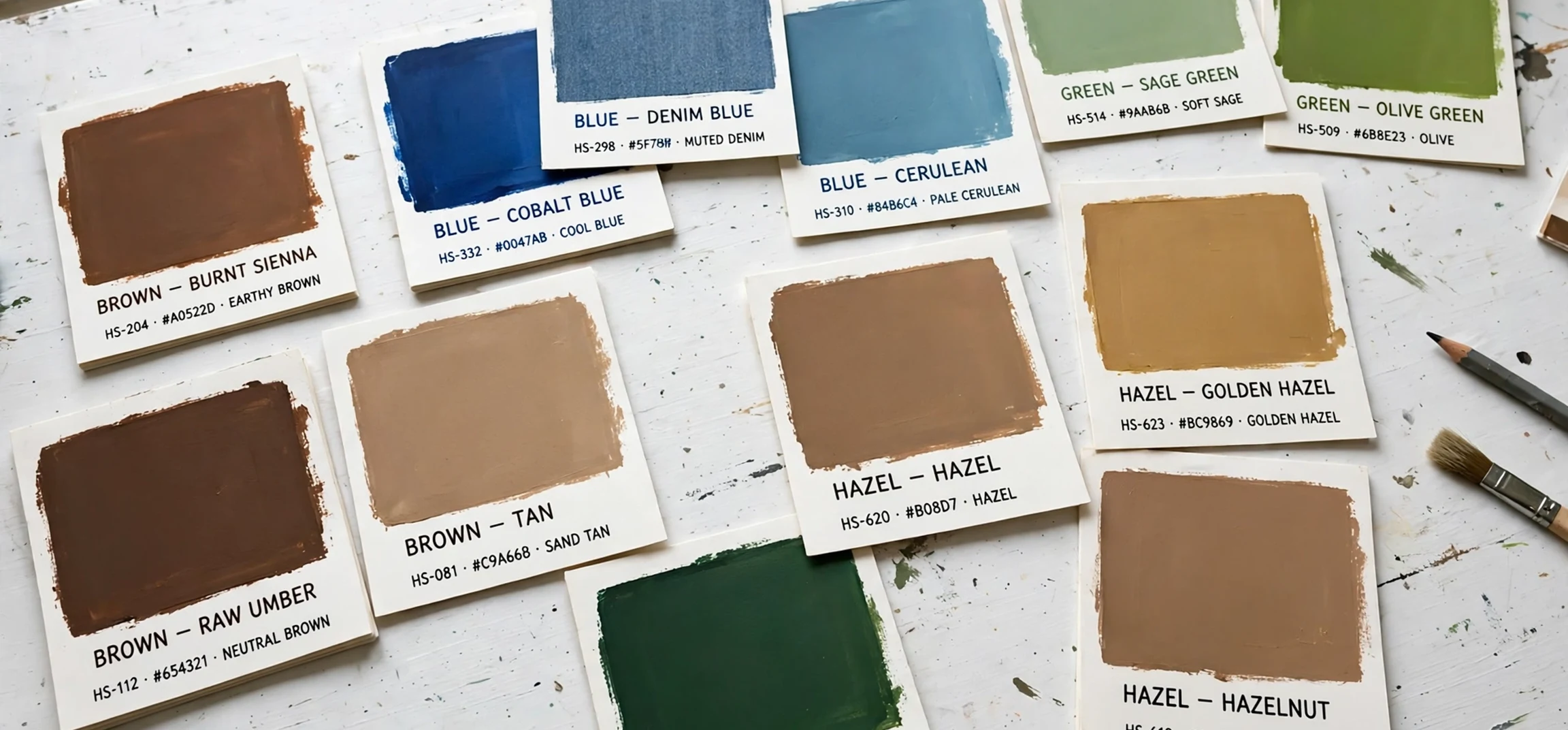
When people search for names of eye colors, they are usually looking for more than a short list of brown, blue, and green. The names of eye colors include a rich vocabulary of shades, from deep espresso and warm amber to icy grey, pale hazel, and striking violet-grey, and each name carries clues about tone, depth, and light. This guide explains the main names of eye colors, the rarer shades in between, and how to describe eye colour accurately for writing, art, photography, makeup, and everyday conversation, without confusing similar shades or overstating what a name can tell you about a person.
Eye colour is determined mainly by the amount and distribution of melanin in the iris, together with the way light scatters in the eye. That is why the names of eye colors can feel both precise and subjective: two people with brown eyes may have very different browns, and a colour that looks grey in daylight may look blue in a photograph. Learning the standard names, plus the descriptive words artists and writers use for undertones, helps you choose the right term for the shade you actually see, rather than settling for the nearest basic label.
Names of Eye Colors: The Main Categories Explained
The names of eye colors most people recognise fall into four broad families: brown, blue, green, and hazel, with grey often treated as a fifth family. Brown is the most common eye colour worldwide, and it ranges from light honey brown to almost black-brown. Blue eyes, which appear blue because of light scattering rather than blue pigment, range from pale sky blue to deep steel blue. Green eyes are less common and range from light sage to deep emerald. Hazel eyes are a mix, often combining brown, green, and gold, and they can appear to shift colour depending on lighting and clothing. Grey eyes, which are rarer, can look silver, smoky, or blue-grey.
Within each family, the names of eye colors become more specific. Light brown may be called honey, caramel, chestnut, or amber-brown, depending on warmth and lightness. Dark brown may be called espresso, chocolate, coffee, or dark walnut. Blue may be described as sky, baby blue, steel, sapphire, ice blue, or navy, although navy usually means a very deep blue that looks almost dark in low light. Green may be called emerald, sage, olive, moss, jade, or sea green. These descriptive names are not medical terms, but they are widely understood, and they help writers and artists communicate a shade without needing a colour chart in front of them.
Hazel deserves special attention because the names of eye colors for hazel are often misused. True hazel is not simply light brown, and it is not simply green. It is a combination, often with a brown or gold centre and a green or grey-green outer ring, and it can look different in different light. Some people describe hazel as golden-green, brown-green, or amber-green, and those compound names are often more accurate than hazel alone. If you are describing hazel eyes, mention the dominant tones you see, such as gold near the pupil and green towards the edge, rather than relying on the single word hazel to do all the work.
Names of Eye Colors: Rare and Unusual Shades
Beyond the main families, the names of eye colors include several rare and striking shades. Amber eyes are a solid golden-yellow or copper tone, without the green or brown flecks that define hazel. Amber is sometimes confused with light brown, but amber has a clearer golden quality, like honey held up to light. Grey eyes are another rare shade, and they can be described as silver grey, smoke grey, storm grey, or blue grey. Grey eyes often look different in photographs, because the camera and the lighting can emphasise blue or green undertones that are less obvious in person.
Violet and red tones are the rarest of all in everyday discussion, and they require careful description. Violet eyes are usually described as a very pale, lavender-grey blue rather than a vivid purple, and they are most often discussed in the context of lighting, photography, and fiction. Red or pink-toned eyes are associated with very low melanin and light scattering, and they are a sensitive topic that should be described respectfully and accurately, without sensational language. For most practical purposes, when someone says violet, they mean a cool, pale blue-grey with a lavender impression, not a saturated purple.
Another useful distinction is between solid colours and multi-tonal colours. Some eyes have a single dominant colour, while others have a darker limbal ring around the outer edge, a lighter starburst near the pupil, or flecks of gold, brown, or grey throughout the iris. The names of eye colors can be combined with these features for a fuller description, such as dark brown with a gold starburst, or blue-grey with a dark limbal ring. That level of detail is especially helpful for portrait artists, photographers, and writers who want a description that feels specific rather than generic.
A Complete List of Eye Colour Names to Use
The list below groups the most useful names of eye colors by family, so you can find the right term quickly. Use the family first, then choose the shade that matches the lightness, warmth, and undertone you see.
| Family | Common Shade Names | What to Look For |
|---|---|---|
| Brown | Honey, caramel, chestnut, chocolate, espresso, walnut, coffee | Warmth and depth, from light golden brown to near-black |
| Blue | Sky, baby blue, ice blue, steel, sapphire, powder blue | Light scattering, from pale and bright to deep and cool |
| Green | Emerald, sage, olive, moss, jade, sea green | Yellow-green to deep green, often with gold flecks |
| Hazel | Golden-green, brown-green, amber-green, light hazel, dark hazel | A mix of brown or gold and green, shifting in light |
| Grey | Silver, smoke grey, storm grey, blue grey, slate | Cool, muted tone, sometimes looking blue or green |
| Amber | Golden amber, copper, honey amber | Solid golden or copper tone, without green flecks |
When you use this list, remember that the names of eye colors are descriptive, not diagnostic. They describe appearance, not health, personality, or ancestry. Two people with the same eye colour name may have very different overall appearances, and the same person eyes may look different in sunlight, indoor light, and photographs. That variability is normal, and it is why good descriptions often include lighting context, such as in bright daylight, or in a photograph, alongside the colour name itself.
How to Describe Eye Colour Accurately in Writing and Art
Accurate description starts with observation. Look at the iris in natural light if possible, and note three things: the dominant colour, the lightness or darkness, and any secondary tones or patterns. Is the dominant colour brown, blue, green, hazel, grey, or amber? Is it light, medium, or dark? Are there gold flecks, a darker outer ring, or a green tint at the edge? Answering those three questions will usually give you a description that is far more useful than a single word alone, and it will help you choose between close names such as honey and caramel, or sage and olive.
For writers, the names of eye colors work best when they are used sparingly and specifically. Instead of repeating a colour name in every scene, use it once to establish the character appearance, and then use other details, such as expression, gaze, or reaction, to keep the character alive. A phrase such as dark chocolate brown eyes, or pale steel-blue eyes with a darker ring, gives the reader a clear image without slowing the story. Avoid clichés that link eye colour to personality, because those associations are not supported and they can make a description feel dated or stereotyped.
For artists and photographers, colour names are a starting point, not a formula. A reference photograph taken in the same lighting as your work will be more useful than a colour name alone, because iris colour changes with light, angle, and surrounding colours. If you are choosing makeup, contact lens colour, or clothing to complement eye colour, test the combination in daylight and indoor light before deciding, because a shade that enhances blue eyes in one setting may wash them out in another. The names of eye colors help you communicate your goal, but the final check should always be visual.
Why Eye Colour Names Can Seem to Change With Light
One of the most common confusions about the names of eye colors is why the same eyes can look different in different settings. The iris does not change colour in the way a painted surface changes, but the light that reaches it and reflects back to the viewer does change. Bright sunlight can make light eyes look paler and more vivid, while warm indoor light can make brown and hazel eyes look richer and more golden. Clothing colour also matters: a green shirt can bring out green tones in hazel eyes, while a blue shirt can emphasise blue in grey-blue eyes.
Photography adds another layer. Camera white balance, filters, and screen settings can shift eye colour, sometimes dramatically. That is why a person may look blue-eyed in one photograph and grey-eyed in another, even though their eyes have not changed. If you are describing eyes from a photograph, say so, and describe what you see in that image, rather than assuming it matches the person appearance in person. For identification or documentation purposes, a clear, well-lit photograph and a simple colour name are more reliable than a poetic description alone.
For readers interested in vision and colour guides, you may also like 20/30 vision meaning guide and American Spirit colour guide, which explore related questions about sight and colour naming in everyday language.
Choosing the Right Name for Everyday Use
For everyday conversation, simple names are usually best. Brown, blue, green, hazel, and grey cover most needs, and adding light or dark gives enough precision for forms, descriptions, and casual talk. For creative work, the fuller list in this guide gives you more options, but you do not need to use the rarest term to be accurate. Honey brown is more helpful than an obscure shade name that your reader has never heard, and steel blue is clearer than a poetic invention that no one else recognises.
It is also worth avoiding eye colour myths. Eye colour does not determine personality, intelligence, or ability, and it does not reliably indicate ancestry on its own. The names of eye colors are useful for description, art, and identification, not for making assumptions about a person. Keeping descriptions factual and respectful makes your writing more credible and more welcoming, and it avoids repeating stereotypes that have no basis in evidence.
Finally, remember that eye colour can appear to change gradually over a lifetime, and that some changes in eye appearance should be checked by a qualified eye care professional if they are sudden, one-sided, or accompanied by vision changes. This guide is about names and description, not medical advice, and it is not a substitute for professional eye care. If you notice a new spot, a change in pupil shape, or a sudden change in vision, seek professional advice rather than trying to diagnose it from a colour list.
Frequently Asked Questions
What are the main names of eye colors?
The main names of eye colors are brown, blue, green, hazel, grey, and amber, with many shade names inside each family, such as honey brown, steel blue, emerald green, golden-green hazel, silver grey, and golden amber.
What is the difference between hazel and amber eyes?
Hazel eyes combine brown or gold with green, and can appear to shift in different light, while amber eyes are a solid golden or copper tone without the green flecks that define hazel.
Why do grey eyes sometimes look blue?
Grey eyes can look blue because of light scattering and lighting conditions. In bright light or in photographs, blue undertones in grey eyes can become more visible, while in softer light the same eyes may look silver or smoky grey.
How should I describe eye colour for writing?
Describe the dominant colour, lightness, and any secondary tones or patterns in one clear phrase, such as pale sage green eyes with gold flecks, and use the colour name sparingly rather than repeating it in every scene.
Conclusion
The names of eye colors give us a shared language for a feature that is both common and endlessly varied. From honey brown and steel blue to emerald green, golden-green hazel, silver grey, and golden amber, each name helps us describe what we see more clearly, whether we are writing a character, painting a portrait, choosing makeup, or simply answering a form. Use the main families first, add shade and undertone details when they help, and remember that lighting and photography can shift how a colour appears. With that approach, the names of eye colors become a practical tool, not a puzzle, and your descriptions will be clearer, more accurate, and more respectful for every reader.