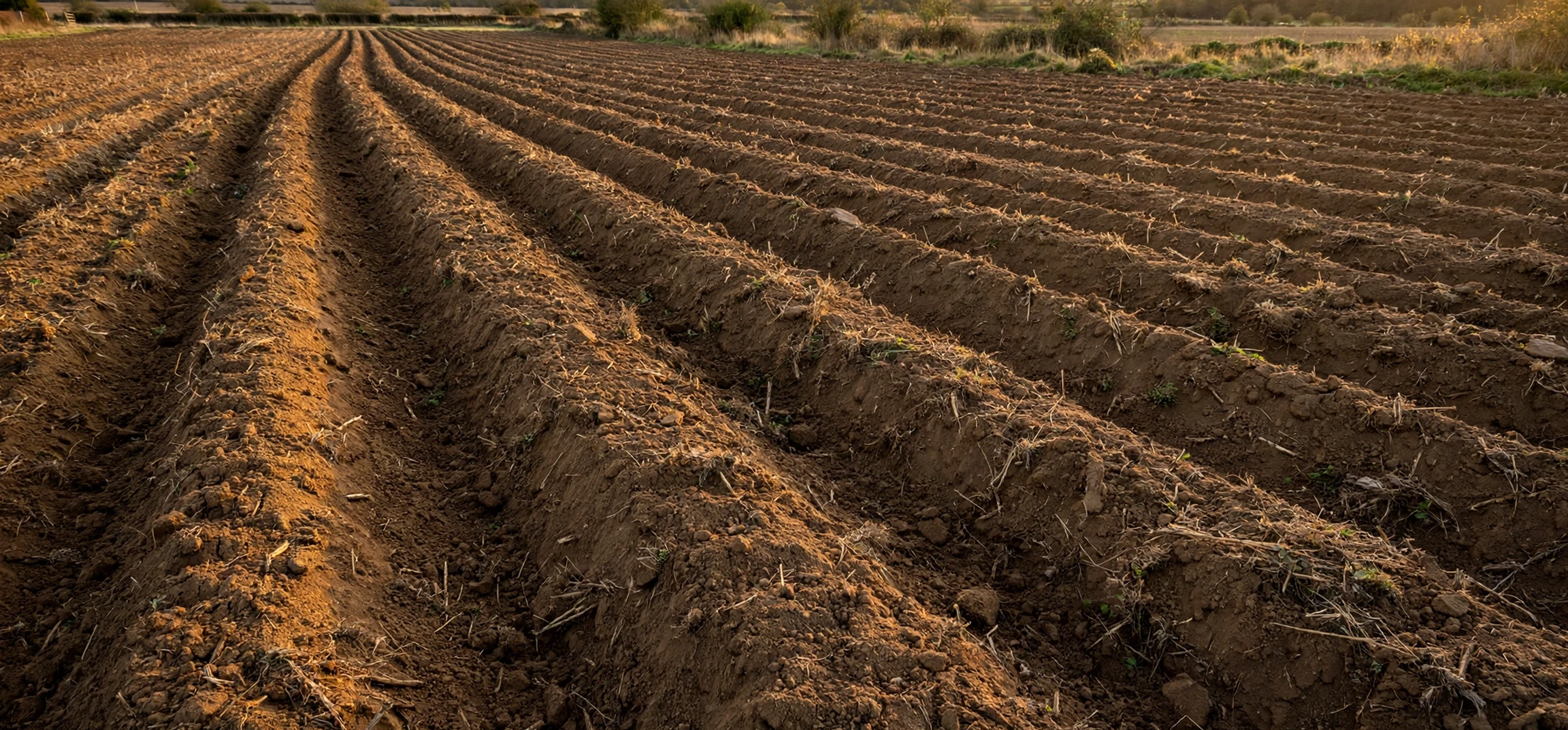
The field fallow definition is simple to state and rich in consequences: fallow land is farmland that is deliberately left unplanted for a period, usually a season or a whole year, so that the soil can recover. Farmers have used this practice for thousands of years, and it remains one of the most basic tools in agriculture, even in an age of advanced fertilizers and precision machinery. This guide explains the field fallow definition in plain words, describes what actually happens in resting soil, compares fallowing with modern alternatives, and shows how the idea connects to crop rotation, soil health, and sustainable farming. Whether you met the term in a geography lesson, a history book, or a discussion about farming, you will leave with a clear understanding of what fallow means and why it matters.
It helps to begin with the image behind the word. A field that is fallow is not abandoned. It is resting on purpose, like an athlete between seasons. During the rest, the soil rebuilds nutrients, moisture collects, weeds can be managed, and the living community of microbes, worms, and fungi in the soil recovers from the demands of cropping. When the field returns to production, it is usually more fertile and easier to work than it would have been if it had been cropped without a break. That cycle of use and rest is the heart of the idea, and it appears in farming traditions all over the world.
The field fallow definition in plain words
In plain words, the field fallow definition is this: land that is ploughed or otherwise prepared but left without a crop for a time, in order to restore its fertility. Some definitions add that the land may be kept clear of weeds during the fallow period, or grazed lightly, but the essential point is the absence of a harvested crop combined with the intention to farm the land again. A field left fallow is different from wasteland, which is land that is not farmed at all, and different from land that has simply been neglected. Fallow is a decision, part of a plan, with a return to cropping built into it.
The word “fallow” itself has old roots in English, connected to the pale colour of ploughed land that has been left to weather. You may also meet the term “lying fallow,” which is used both literally, for land, and figuratively, for a talent, a project, or an idea that is temporarily unused but not forgotten. The figurative use borrows the agricultural sense: something lying fallow is resting and gathering strength, not finished. In farming contexts, though, the word keeps its precise meaning, and it is worth using it precisely, since a fallow field, a pasture, and a set-aside conservation area are managed in different ways even though all three may look empty to a passer-by.
Why the field fallow definition matters for soil health
Every harvest removes nutrients from the soil. Crops take up nitrogen, phosphorus, potassium, and a range of trace elements as they grow, and although fertilizers can replace some of these, they do not replace everything, and they do not by themselves rebuild soil structure. A fallow period gives the soil time to recover on several fronts at once. Organic matter from roots and residues breaks down and feeds soil life. Moisture from rain is stored rather than taken up by a crop, which matters greatly in dry regions. The physical structure of the soil improves as roots decay and worms and microbes rework it, leaving channels that help water soak in rather than run off.
Weed and pest control is another benefit. Many crop pests and diseases depend on a continuous supply of their host plant, so a break in cropping interrupts their life cycle and reduces pressure on the next crop. Weeds can be dealt with during the fallow period without risking damage to a standing crop, whether by cultivation, grazing, or cover management. Farmers in dry climates have long used fallow specifically to conserve moisture: by keeping a field free of plants that would drink the stored water, they bank rainfall from one season for the next crop. That moisture-banking use is sometimes called “summer fallow” in regions with a dry summer season, and it remains a key strategy where irrigation is limited.
What happens below the surface
The most important changes during a fallow period happen out of sight. Soil is not inert dirt; it is a living system, and a cropping season is hard work for that system. Roots push through it, machinery compacts it, and harvest removes the plant material that would otherwise return to it. During a fallow, microbial communities rebalance, earthworms burrow and mix organic matter through the profile, and the soil’s ability to hold both water and nutrients improves. These changes are gradual and invisible from the road, which is why a fallow field can look like nothing is happening when, in fact, recovery is under way. Gardeners see a smaller version of the same process when they rest a bed for a season, and our zone 9 planting guide shows how timing, rest, and rotation fit together in a garden calendar.
Fallow in history: from medieval fields to modern farms
Fallowing is one of the oldest farming practices in the world, and its history explains why it became so central. In medieval Europe, the common open-field system divided a village’s arable land into strips, and each year one field in three, or one in two, was left fallow. This rotation spread risk, restored fertility without chemical fertilizer, and gave livestock a place to graze and add manure. The system was not efficient by modern standards, since a large share of land was always out of production, but it was sustainable over centuries, and it shaped the landscape of villages, hedges, and field patterns that can still be traced today.
The arrival of new crops and new knowledge changed the calculation. In the agricultural improvements of the eighteenth century, farmers began replacing bare fallow with planted fallow, sowing turnips, clover, or other crops that fed livestock while also improving the soil. Clover, in particular, fixed nitrogen from the air into the soil, which meant a field could recover while still producing something useful. This was a major breakthrough, because it reduced the amount of land that had to sit empty. Modern farming has gone further, with fertilizers, cover crops, and diverse rotations allowing many farmers to keep land in production every year. Even so, fallow has not disappeared. It survives where moisture is scarce, where soils are fragile, where pest pressure is high, or where a farmer judges that a season of rest will pay for itself in later yields.
Fallow, cover crops, and crop rotation compared
Modern readers often wonder how fallow relates to two related practices: cover cropping and crop rotation. The three are complementary, not rivals, and many farms use all of them in different fields or seasons. A cover crop is a plant grown not for harvest but to protect and improve the soil, for example by preventing erosion, suppressing weeds, or adding nitrogen. A rotation is the planned sequence of different crops on the same field over several years, which spreads nutrient demands and breaks pest cycles. Fallow is the deliberate gap in that sequence, a period with no crop at all, or with only light grazing and weed management.
Each approach has trade-offs. Bare fallow conserves moisture and breaks pest cycles, but leaves soil exposed to erosion if it is not managed carefully. Cover crops protect the soil and add organic matter, but they use water and need seed and labour. Rotation keeps land productive while spreading risk, but it cannot by itself restore a badly depleted field as quickly as a rest can. Good farm management is therefore a matter of judgment: which field needs what, in which season, given the soil, the climate, and the market? The field fallow definition gives you the vocabulary to follow that discussion, and it also helps you read older texts, where “fallow” appears constantly in accounts of farming life. For the wider language of definitions, a companion explainer such as the scorched earth policy meaning shows how a land-related term can carry both a literal and a historical sense, much as fallow does.
| Practice | What happens on the field | Main benefit | Main drawback |
|---|---|---|---|
| Bare fallow | No crop; weeds managed; soil rests | Restores moisture and fertility; breaks pest cycles | Land earns nothing; erosion risk if unmanaged |
| Planted fallow | A soil-improving crop such as clover | Improves soil while feeding livestock | Needs seed, labour, and some water |
| Cover crop | A protective crop grown between cash crops | Prevents erosion; adds organic matter | Uses water; adds cost and management |
| Crop rotation | Different crops in sequence over years | Spreads nutrient demand; reduces pests | Needs planning and market for each crop |
| Continuous cropping | The same or similar crops every year | Maximum land use each season | Depletes soil; builds pest and disease pressure |
Fallow in modern and sustainable farming
Today, fallow appears in several modern contexts. In dryland grain regions, summer fallow remains a standard moisture strategy, sometimes combined with minimum tillage to protect the soil surface while it rests. In conservation programs, land may be taken out of production for longer periods to protect wildlife habitat, reduce erosion, or safeguard water quality, and although this is usually called set-aside rather than fallow, the principle of planned rest is similar. In organic farming, where synthetic fertilizers are not used, fallow and planted fallow play a larger role, because the farm must rebuild fertility through biological means, and a rest period is one of the most reliable ways to do that.
Climate change has added new interest in fallow. As rainfall becomes less predictable in some regions, banking moisture through a fallow season looks more attractive, even at the cost of a year’s production. At the same time, researchers warn that bare soil left exposed in heavy rain can erode, so modern fallow management often combines rest with residue cover, reduced tillage, or a light cover that protects the surface without using much water. The old practice survives, but it is practiced with more attention to the soil surface than in the past, and that combination of ancient idea and modern care is typical of sustainable farming in general.
Frequently asked questions about fallow fields
What is the field fallow definition in one sentence?
Fallow land is farmland deliberately left unplanted for a period, usually a season or a year, so the soil can recover its fertility and moisture before it is cropped again.
How long is land left fallow?
It varies. A short fallow may last a single season between crops, while a traditional rotation fallow lasted a full year. Longer rests of several years are sometimes used for badly depleted land, though those are closer to set-aside than to routine fallow.
Is fallow land the same as abandoned land?
No. Fallow land is part of a farming plan and will be cropped again. Abandoned land has been given up, with no plan to return it to production.
Do farmers still use fallow today?
Yes, especially in dry regions where conserving moisture matters, in organic systems that rely on biological fertility, and wherever a field needs a break from pest or disease pressure.
What does “lying fallow” mean figuratively?
It means something is temporarily unused but not forgotten, like a skill or a project resting while its owner gathers energy or ideas, borrowing the image of a field resting between crops.
Conclusion
The field fallow definition captures one of farming’s oldest insights: that rest is productive. A field left fallow is not wasted land but land in recovery, rebuilding nutrients, storing moisture, breaking pest cycles, and restoring the living structure of the soil. History shows how central this rest was before chemical fertilizers, and modern farming shows how it has adapted, through planted fallows, cover crops, and careful moisture management, rather than disappearing. The next time you pass an empty field in farm country, it is worth asking whether it is truly empty, or whether it is lying fallow, quietly preparing for its next crop.



