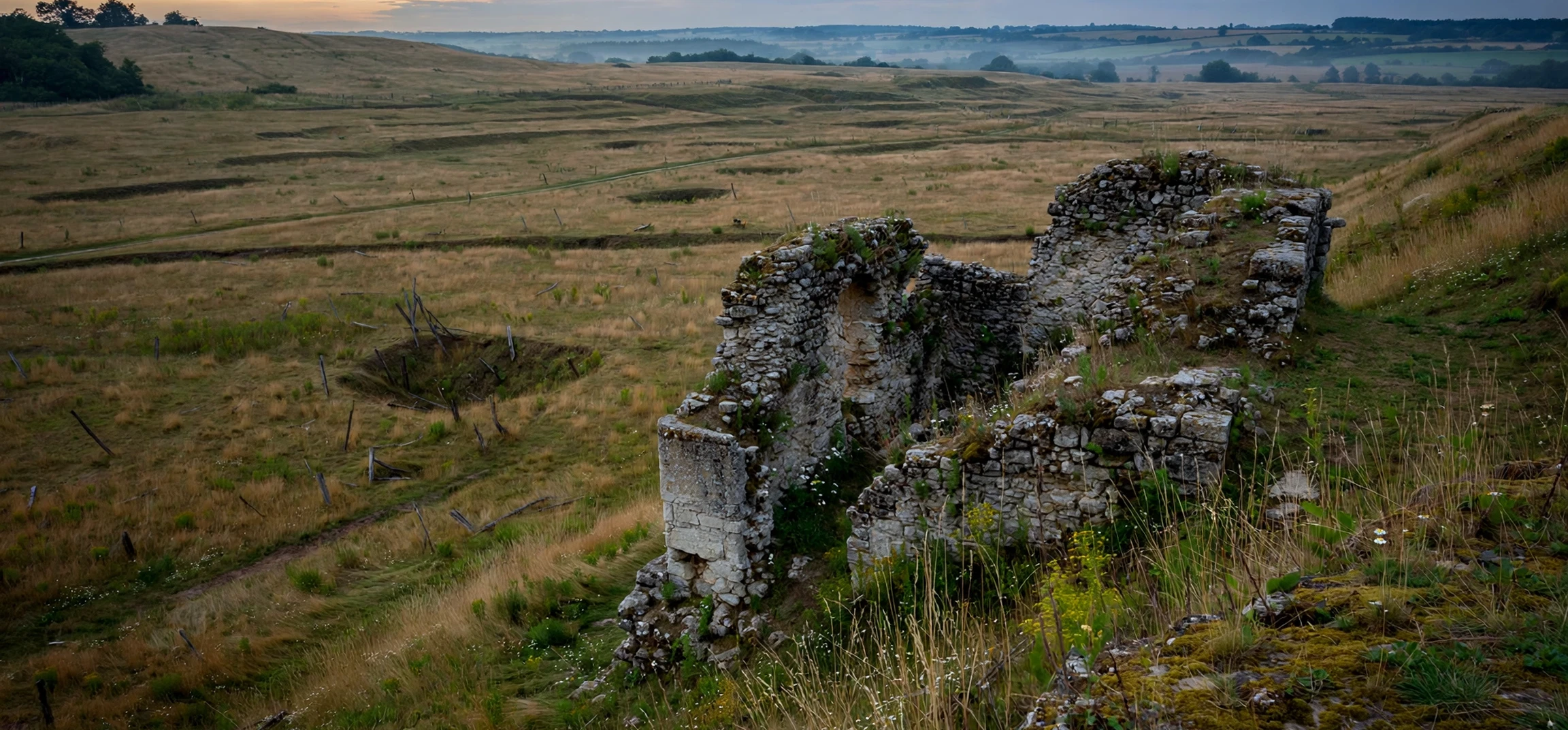
The meaning of scorched earth is a military strategy in which an army destroys anything that could be useful to an advancing enemy, including crops, food stores, bridges, transport, and shelter. Rather than leaving resources behind for an opponent to use, a retreating force removes or ruins them, so the enemy must advance through empty, unproductive territory. The phrase comes from the image of land that has been burned until nothing useful remains, and it has been used for centuries to describe this deliberate policy of denial. Understanding the meaning of scorched earth helps readers make sense of history books, news reports, and discussions of war, because the term is often used both literally and figuratively.
At its core, the meaning of scorched earth is about denying advantage. Armies need food, water, fuel, roads, and shelter, and when those things are removed, an advance becomes slower, more expensive, and harder to sustain. A force that practises scorched earth is usually giving up territory in the short term in order to protect its longer-term position. It may burn its own crops or destroy its own bridges, which shows how costly the strategy can be for the people who live in the affected area. That cost is one reason the policy is controversial and why historians study it carefully rather than treating it as a simple tactic.
This guide explains the meaning of scorched earth in plain language, looks at where the idea came from, examines well-known historical examples in general terms, and considers how the phrase is used today. It also explains the difference between scorched earth and other military ideas, such as siege warfare and guerrilla tactics, and answers common questions. The discussion is historical and educational, and it avoids graphic detail, focusing instead on strategy, consequences, and language.
What Is Scorched Earth?
The meaning of scorched earth is a policy of destroying or removing resources during a retreat so that an invading force cannot live off the land. The resources involved can be agricultural, industrial, or logistical. Crops may be burned, livestock moved away, wells blocked, railways damaged, and warehouses emptied. The goal is not destruction for its own sake, but denial: if the enemy cannot find food or transport, it must bring everything from far behind its own lines, which stretches supply chains and slows progress.
The meaning of scorched earth also includes a psychological dimension. An advancing army that finds only empty fields and ruined infrastructure may lose confidence, while a defending army that is willing to sacrifice its own territory can signal determination. At the same time, the policy can harden opposition, because civilians who lose homes, harvests, and livelihoods are unlikely to view the destruction neutrally. Historians therefore treat the meaning of scorched earth as a strategy with military, economic, and human consequences that must be weighed together.
It is important to note that the meaning of scorched earth is usually associated with retreat, not with occupation. An army that plans to stay in a region and govern it has little reason to destroy its productive capacity. The policy makes most sense when a force expects to return later, when it believes the territory can be recovered, or when slowing the enemy matters more than preserving the land in the short term. This logic explains why the strategy appears in wars fought over large territories, where distance itself becomes a weapon.
The Meaning of Scorched Earth in History
The meaning of scorched earth has deep historical roots. Long before the phrase was common, armies understood that an enemy army lived off the countryside through which it marched. Ancient and early modern commanders therefore sometimes ordered the removal of grain, the driving away of animals, and the destruction of stores ahead of an invasion. These actions were not always called scorched earth at the time, but historians now use the term to describe the same underlying logic.
One of the most famous associations is with Russia, where vast distances and harsh winters made supply extremely difficult for invaders. When large invading armies advanced into Russian territory in the nineteenth and twentieth centuries, defenders fell back, removed resources, and left little for the invaders to use. Combined with distance, weather, and stretched supply lines, this denial contributed to the invaders’ difficulties. These campaigns are often cited in textbooks as classic illustrations of the meaning of scorched earth, although historians emphasise that weather, logistics, and resistance all played roles as well.
Scorched earth also appears in other periods and places, including colonial conflicts, civil wars, and wars of independence. In some cases, it was ordered by governments as formal policy; in others, it developed locally as communities fled and destroyed stores rather than leaving them behind. The scale varied enormously, from a single valley to a whole region. What unites these cases is the deliberate decision to deny resources rather than to defend every town or field in place.
The meaning of scorched earth is also debated under modern international law, which places limits on the destruction of property and on tactics that cause unnecessary suffering to civilians. Historians and legal scholars therefore discuss scorched earth not only as a military technique but also as an ethical and legal question. The fact that the policy often harms civilians more than soldiers is central to that debate, and it is why modern accounts treat the strategy with caution and context rather than admiration.
Scorched Earth Policy Examples and the Meaning of Scorched Earth
To understand the meaning of scorched earth, it helps to look at the pattern that repeats across examples. First, a defending force decides it cannot hold a position. Second, it removes or destroys anything portable or useful, from food and fuel to vehicles and communications equipment. Third, it damages fixed infrastructure such as bridges, railways, and depots. Fourth, the advancing enemy arrives to find a landscape that cannot support it without long supply lines. Each step is deliberate, and each step imposes costs on both sides.
In some campaigns, the policy was applied systematically over a wide area, coordinated by a central government. In others, it was uneven, because local commanders made different decisions or because civilians fled before orders arrived. The effectiveness of the policy depended on many factors: the size of the territory, the season, the invader’s supply capacity, and whether the defending army could regroup and counterattack. A policy that merely destroys resources without a larger plan may cause suffering without changing the outcome of a war.
Students of history are often asked to compare the meaning of scorched earth with related ideas. A siege, for example, aims to starve a fortified place into surrender, while scorched earth aims to starve a moving army by emptying the land ahead of it. Guerrilla warfare, by contrast, relies on small, mobile attacks rather than on destroying the landscape. These distinctions matter, because they show that scorched earth is one tool among many, not a synonym for warfare in general.
For readers exploring related word meanings, our guide to other terms in context can help build vocabulary. See also the meaning of a classic literary term in our bildungsroman meaning guide, which explains another phrase that students often encounter in reading and study.
Scorched Earth Versus Other Strategies
The meaning of scorched earth is sometimes confused with total war, but the two ideas are different. Total war describes a conflict in which a whole society, including its economy and civilian population, is mobilised for war. Scorched earth is a specific tactic that can occur within a total war, but it can also occur in more limited conflicts. Similarly, scorched earth is not the same as a blockade, which cuts off supplies from outside, or as sabotage, which usually targets a single facility rather than a whole landscape.
The table below summarises these distinctions in a clear way, which is useful for students preparing essays or examinations.
| Strategy | Main aim | Typical action | Key difference from scorched earth |
|---|---|---|---|
| Scorched earth | Deny resources to an advancing enemy | Destroy or remove crops, stores, and infrastructure during retreat | Focused on denial during withdrawal |
| Siege warfare | Force a fortified place to surrender | Surround and cut off a town or fortress | Targets a fixed place, not a moving army |
| Guerrilla warfare | Harass a stronger enemy with small attacks | Ambushes, raids, and hit-and-run tactics | Relies on mobility, not landscape destruction |
| Blockade | Stop supplies reaching an enemy | Naval or economic closure of routes | Works from outside rather than by destroying local resources |
Understanding these differences helps readers avoid using the phrase too loosely. In everyday speech, people sometimes say a company or politician used a scorched earth approach, meaning they destroyed something rather than letting a rival benefit from it. That figurative use borrows the military image, but it is not the same as a military policy. Recognising the difference between the literal and figurative meaning of scorched earth is an important part of reading comprehension.
Why Scorched Earth Is Controversial
The meaning of scorched earth cannot be separated from its human cost. When crops are destroyed and homes are abandoned, ordinary people face hunger, displacement, and loss of livelihood. Even if the policy is intended to affect an army, civilians usually suffer first and most. Recovery can take years, because fields, orchards, workshops, and transport networks cannot be rebuilt overnight. This is why the policy is often remembered in affected communities as a trauma, not merely as a clever strategy.
There is also a strategic risk in the meaning of scorched earth. Destroying resources in your own territory weakens your own economy and may make it harder to rebuild after the war. If the defending army later recovers the territory, it inherits the damage. Commanders therefore face a difficult calculation: the short-term benefit of slowing the enemy must be weighed against the long-term cost to their own people and land. Historians often judge scorched earth campaigns by whether that calculation was realistic and whether alternative strategies were available.
Finally, the meaning of scorched earth raises questions about responsibility. When a government orders destruction, it is making a decision on behalf of people who may not have been consulted. When destruction happens without clear orders, it raises questions about discipline and control. These debates are part of why the meaning of scorched earth continues to be discussed in history classrooms, military colleges, and public debate, long after the wars in which it was used.
Military language itself is worth studying carefully, since terms can carry different meanings in different contexts. For a related example, see what PCS means in the military, which explains another piece of service terminology that is often misunderstood by civilians.
Scorched Earth in Modern Language
Today, the meaning of scorched earth is most often encountered in two ways. In history and current affairs, it describes a military policy of resource denial. In business, politics, and everyday argument, it is used figuratively to describe a person or organisation that would rather destroy an asset than let a competitor gain it. Examples include a departing executive who cancels projects, a company that withdraws from a market in a way that leaves little value behind, or a political faction that blocks reforms even at a cost to itself.
Figurative use is powerful because the image is vivid, but it can also be misleading. A business decision that disappoints a rival is not the same as a wartime policy that displaces civilians, and writers should be careful not to equate the two. When you see the phrase in a news article, it is worth asking whether the writer means the literal military strategy, the figurative sense, or something in between. That simple check improves understanding and prevents exaggeration.
The phrase also appears in fiction, film, and games, where it is used to signal desperation or ruthlessness. A character who adopts a scorched earth approach is usually presented as someone willing to pay a high price to deny victory to an enemy. Audiences recognise the moral complexity at once: the character may be determined and brave, but also destructive and costly to their own side. That dramatic tension is part of why the phrase has survived so long in popular culture.
For another historical naming puzzle, readers may enjoy the story behind a military operation named for an Austrian imperial lineage, which shows how military names and strategies are remembered and interpreted over time.
Frequently Asked Questions
What does scorched earth mean in simple terms?
In simple terms, the meaning of scorched earth is destroying or removing anything useful, such as food, fuel, and transport, so that an advancing enemy cannot use it. It is a retreat strategy based on denial rather than on holding ground.
Where does the phrase scorched earth come from?
The phrase comes from the image of land burned until nothing useful remains. It describes the result of the policy: a landscape that cannot support an army, rather than a single battle or weapon.
Is scorched earth still used today?
Deliberate destruction of civilian resources is restricted under modern international law, and it is widely condemned when it harms civilians. The phrase survives mainly in historical discussion and in figurative use for business and politics.
What is the difference between scorched earth and total war?
Scorched earth is a specific tactic of resource denial during retreat. Total war is a much broader concept describing a conflict in which an entire society is mobilised. Scorched earth can occur within total war, but the two terms are not interchangeable.
Conclusion
The meaning of scorched earth is best understood as a strategy of denial: when a force cannot hold territory, it removes or destroys the resources an enemy would need to advance and sustain itself. The policy has deep historical roots, dramatic examples, and serious human costs, which is why it remains both a useful historical concept and a controversial one. Its figurative use in business and politics borrows the same image of destruction rather than concession, but readers should keep the literal and figurative senses distinct.
For students, the key points are simple to remember. Scorched earth is about resources, retreat, and denial; it works by making advance slow and expensive; and it harms civilians and economies as well as armies. Keeping those points in mind will help you recognise the phrase in history, news, and everyday language, and to use it accurately in your own writing.