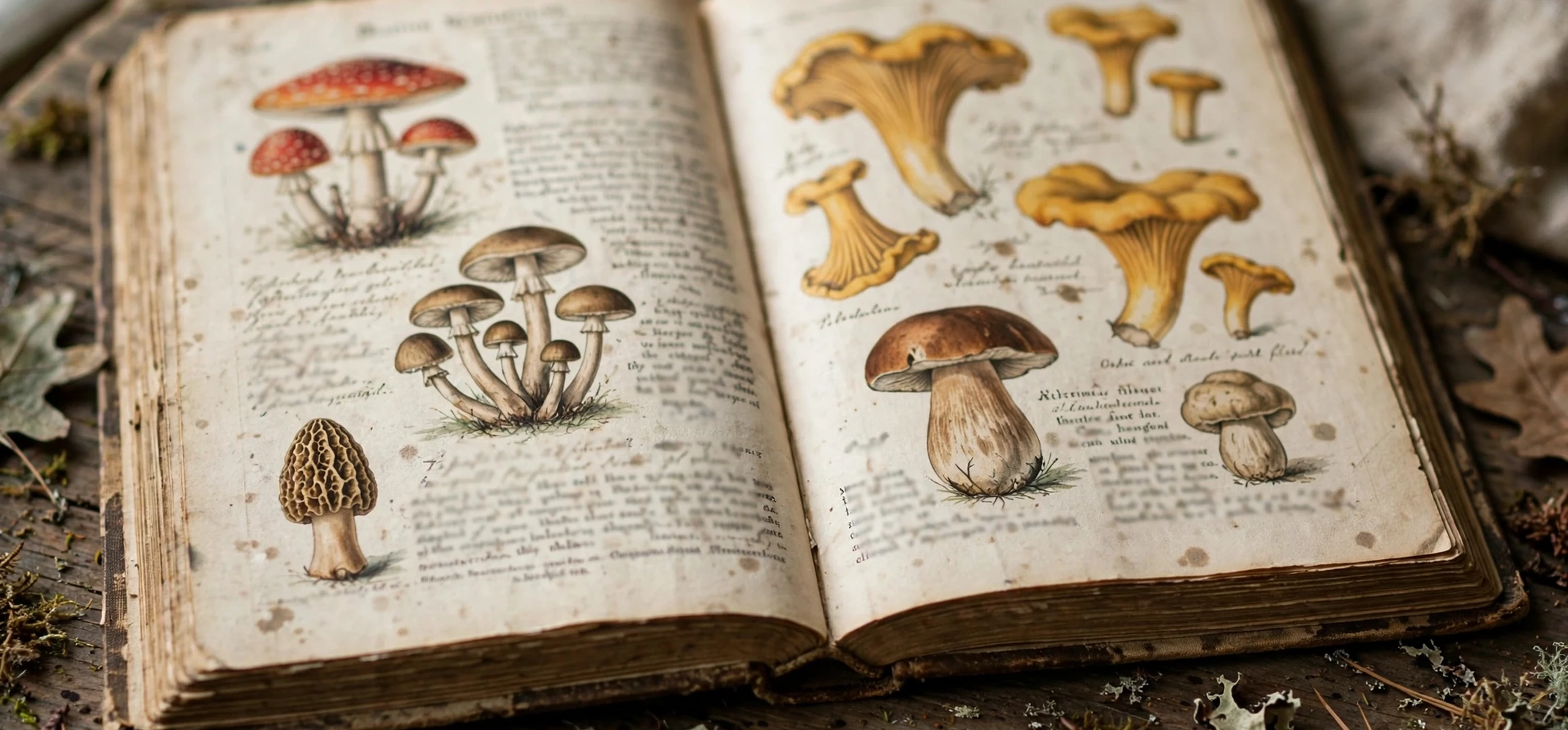
This guide to psilocybin mushrooms takes a different angle from a general science overview. Instead of starting with present-day headlines, it traces the long history of psilocybin research, from early Indigenous traditions and mid-twentieth-century discovery, through decades of prohibition, to the careful clinical studies of today. It is informational only. It contains no instructions for growing, preparing, identifying, or using psilocybin mushrooms, and it does not recommend their use. A guide to psilocybin mushrooms that focuses on history and research can explain why scientists became interested, why research stopped, why it restarted, and what still remains unknown.
History matters here because the current debate often sounds as if psilocybin research began yesterday. In fact, the story spans centuries and several continents, and it involves anthropologists, chemists, psychiatrists, policymakers, and Indigenous communities. Each group has seen these fungi differently: as sacred material, as a chemical puzzle, as a possible medicine, as a threat to public order, and as a subject of commercial interest. Following those changing views helps readers judge new claims with a clearer eye.
The research story also matters because it shows how science progresses unevenly. Early enthusiasm can outrun evidence, prohibition can freeze inquiry, and a later revival can bring both better methods and new hype. A guide to psilocybin mushrooms that is honest about that pattern will not promise cures or dismiss risks. It will show what was studied, what was found, what was ignored, and what researchers are still trying to learn.
Ancient and Indigenous History
Evidence for the ceremonial use of psilocybin-containing fungi in Mesoamerica goes back centuries. Stone carvings, codices, and colonial accounts refer to sacred mushrooms used in rituals connected to healing, divination, and communal life. The Nahuatl word teonanacatl, often translated as flesh of the gods, appears in early colonial sources. Those sources were written by outsiders, often hostile to Indigenous religion, so historians read them cautiously and alongside archaeological evidence and living community knowledge.
It is important to recognise that Indigenous practices were not a single tradition. Different communities, languages, and regions had different rituals, meanings, and rules about who could participate and under what conditions. Some traditions survived colonial suppression in modified form, particularly among Mazatec communities in Oaxaca, Mexico. Others were lost or transformed beyond recognition. Modern writers who treat all Indigenous use as one timeless practice flatten a diverse history and risk misrepresenting the communities involved.
Contemporary Indigenous voices have also raised a distinct concern: the commercialisation of traditions that were once sacred and communal. As Western interest grows, some companies use Indigenous imagery or language to market products and retreats, without consent, benefit-sharing, or respect for the source communities. Ethical discussion of psilocybin research therefore includes questions about who benefits, who decides, and how traditional knowledge is acknowledged. A guide to psilocybin mushrooms that ignores those questions would be incomplete.
A guide to psilocybin mushrooms and the Mid-Century Discovery
The Western scientific story begins in earnest in the 1950s. In 1957, Life magazine published an account by banker and amateur mycologist R. Gordon Wasson of a Mazatec ceremony led by curandera Maria Sabina in Mexico. The article brought the sacred mushrooms to mass attention in the United States. Wasson later worked with French mycologist Roger Heim, who identified the species involved, and with Swiss chemist Albert Hofmann, who isolated and named psilocybin and psilocin in 1958. Hofmann had earlier synthesised LSD, and his laboratory work gave researchers a pure, measurable compound to study for the first time.
That chemical breakthrough changed the field. Instead of relying on variable natural material, researchers could administer known doses in controlled settings and compare results across studies. Psychiatrists in the late 1950s and early 1960s explored psilocybin for a range of questions, from the nature of mystical experience to the treatment of anxiety, depression, and alcohol dependence. The methods of that era would not meet modern standards: samples were small, controls were often weak, and reporting was selective. Still, the period produced a body of literature that later researchers would revisit with interest.
Maria Sabina’s own story is a cautionary part of this history. After Wasson’s account, visitors flooded her village, disrupting community life and, by many accounts, causing her personal hardship. Historians cite her experience when discussing research ethics, informed consent, and the responsibility of outsiders who publicise Indigenous practices. A guide to psilocybin mushrooms should remember that discovery stories have human costs, not only scientific gains.
A guide to psilocybin mushrooms and the Decades of Prohibition
By the late 1960s, psychedelic substances were closely associated in public debate with counterculture, anti-war protest, and youth rebellion. Governments responded with strict controls. In the United States, the Controlled Substances Act of 1970 placed psilocybin in Schedule I, the most restrictive category. Internationally, the 1971 Convention on Psychotropic Substances listed psilocybin and psilocin as controlled substances. Research funding dried up, regulatory hurdles grew, and most clinical work stopped for roughly three decades.
Prohibition did not end interest, but it changed where interest lived. Popular books, underground networks, and later internet forums kept discussion alive, often with little scientific rigour. At the same time, a small number of researchers, notably at institutions such as Johns Hopkins University and Imperial College London, worked patiently through regulatory barriers to restart human studies in the 2000s. Their early work focused first on safety and on the nature of the experience itself, before moving to therapeutic questions. That cautious sequence is one reason the modern revival has been taken more seriously by regulators than the earlier wave.
The prohibition era also shaped public attitudes in ways that still matter. For many people, the word psychedelic still carries associations from the 1960s, whether positive or negative, and those associations colour how new research is received. Journalists, policymakers, and clinicians must therefore separate the history of a cultural movement from the evidence of a clinical trial. A guide to psilocybin mushrooms that conflates the two will mislead readers in both directions, either by romanticising the past or by dismissing new evidence because of old controversies.
The Modern Research Revival
The modern revival is usually dated to a 2006 study from Johns Hopkins, which reported that psilocybin, given under supportive conditions to carefully screened volunteers, could occasion experiences described as personally meaningful and spiritually significant, with lasting positive changes reported by many participants. Follow-up studies examined dose effects, the role of preparation and support, and the persistence of reported benefits. Those findings attracted attention because they were published in peer-reviewed journals with modern methods, not because they proved a medical treatment.
Subsequent trials turned to clinical populations. Studies of patients with cancer-related anxiety and depression reported reductions in symptoms for some participants. Studies of treatment-resistant depression tested psilocybin alongside psychological support and reported symptom improvement in a proportion of participants, though not in all. Studies of tobacco and alcohol dependence are at an earlier stage. In each case, researchers stress that participants were screened, that doses were prepared to pharmaceutical standards, and that support was provided before, during, and after sessions. Those conditions are part of the intervention, not optional extras.
Neuroscience has advanced alongside clinical work. Brain imaging studies suggest that psilocybin temporarily alters connectivity between brain networks, increases the diversity of brain activity patterns, and reduces activity in regions associated with rigid self-focused thought. Researchers hypothesise that this increased flexibility may create a window in which therapy can help patients reconsider entrenched patterns. These are hypotheses supported by early evidence, not established mechanisms, and different research groups propose different explanations. A responsible guide to psilocybin mushrooms reports that debate rather than presenting one theory as fact.
How Modern Psilocybin Research Is Actually Done
Understanding methods helps readers judge headlines. A typical modern trial begins with screening that excludes people with certain psychiatric histories, unstable medical conditions, or medications that could interact dangerously. Eligible volunteers receive preparation sessions in which therapists explain what may happen, discuss intentions, and build trust. The dosing session takes place in a calm, comfortable room with two trained guides present, music, and eye shades available. Integration sessions afterwards help participants reflect on the experience and connect it to their ongoing lives.
Blinding is a major challenge. Because psilocybin effects are obvious, participants and researchers can often tell who received the active dose, which can inflate reported benefits through expectancy. Researchers have tried active placebos, low doses as comparators, and other designs, but no perfect solution exists. Trial sizes remain modest, follow-up periods are often short, and publication bias may favour positive results. These limits do not invalidate the research, but they mean that larger, longer, and more diverse trials are needed before firm conclusions can be drawn.
Diversity is another limit. Early trials often enrolled participants who were relatively well educated, motivated, and already open to psychedelic experiences. Results may not generalise to broader populations, to people with complex psychiatric histories, or to settings without extensive support. Future research aims to include more diverse participants, to test different therapeutic models, and to study long-term safety. Readers should therefore treat current findings as a foundation for further work, not as a finished verdict.
| Era | Key Development | Research Lesson |
|---|---|---|
| Pre-colonial to 1950s | Indigenous ceremonial traditions in Mesoamerica | Use was communal, ritual, and governed by community rules |
| 1957 to 1958 | Wasson account, species identification, isolation of psilocybin | A pure compound made controlled study possible |
| 1960s | Early psychiatric studies and counterculture adoption | Enthusiasm outran methods, and politics intervened |
| 1970 to 2000 | Schedule I controls and research freeze | Prohibition halted inquiry but not public interest |
| 2006 onward | Johns Hopkins and Imperial College revival | Modern methods and support models improved rigour |
| Today | Larger trials and policy reform debates | Evidence is promising but still incomplete |
Legal Status Note
This history cannot be separated from law. Psilocybin remains a controlled substance under federal law in the United States and in many other countries, even as some states, cities, and nations have adopted limited reforms. Oregon and Colorado have created regulated supervised service models, while other jurisdictions have deprioritised enforcement without creating legal markets. Internationally, approaches range from strict prohibition to regulated research exceptions. The law is changing in some places and stable in others, so readers must check current rules in their own jurisdiction. This article is general information, not legal advice, and it provides no instructions for obtaining or using a controlled substance.
Policy debate continues on several fronts. Supporters of reform argue that strict controls block research and deny potential help to patients. Critics argue that reform may normalise use, increase harms, or benefit commercial interests before safety is established. Regulators in several countries have taken a middle path: allowing research, tightening trial standards, and delaying broader decisions until larger trials report. That cautious path reflects the state of the evidence, which is encouraging but not yet conclusive.
How to Read Psilocybin Research Critically
Check the sample and the setting
Ask how many people took part, who was excluded, and what support was provided. A result from twenty screened volunteers in a university clinic does not automatically apply to the general public.
Look for peer review and replication
Single studies, conference talks, and company press releases are weaker evidence than peer-reviewed trials that other teams have replicated. Media headlines often overstate single findings.
Separate experience from outcome
Participants may describe an experience as profound while their clinical symptoms change only modestly, or vice versa. Both measures matter, and neither alone proves a treatment works.
Watch for commercial interests
Companies funding trials, clinics selling services, and authors with financial stakes may present results more favourably. Disclosure statements and independent replication help readers weigh claims.
Frequently Asked Questions
How is this guide to psilocybin mushrooms different from a general guide?
This guide to psilocybin mushrooms focuses on history and research: Indigenous traditions, mid-century discovery, prohibition, and the modern revival. A general guide covers botany, effects, and law in broader terms. Both are informational only, and neither contains instructions for use.
Why did research stop for so long?
Strict drug laws, loss of funding, and regulatory barriers after 1970 made human trials extremely difficult. Research restarted only when a small number of institutions navigated those barriers with modern safety and ethics standards.
What do modern trials actually show?
Modern trials show promising but preliminary results for some participants under controlled, supported conditions. They do not establish psilocybin as a proven general treatment, and larger, longer trials are still needed.
Is psilocybin legal now because research has revived?
No. Research revival and legal reform are separate processes. In most places psilocybin remains controlled, and limited reforms in a few jurisdictions do not change the law elsewhere. Check local law for current rules.
Further Reading on History and Research
Readers who want to explore how historical topics are presented for general audiences can turn to a historical profile of Abraham Lincoln, a guide to writing clear explanatory articles, and background on American legal history. Those internal guides complement this history by showing how context, evidence, and careful sourcing support good historical writing.
Why a Historical guide to psilocybin mushrooms Matters
A historical guide to psilocybin mushrooms matters because the present debate repeats patterns from the past. A guide to psilocybin mushrooms that only reports this year headlines can miss how enthusiasm, prohibition, and revival have shaped the field before. This guide to psilocybin mushrooms has traced Indigenous traditions, the 1950s discovery, the long research freeze, and the modern revival, so readers can judge new claims in context. A guide to psilocybin mushrooms written with that history in mind is less likely to promise cures, less likely to dismiss risks, and more likely to help readers follow future trials with patience and critical judgment.
Conclusion
The history of psilocybin research is a story of discovery, enthusiasm, prohibition, and careful return. Indigenous communities used these fungi in sacred contexts long before Western science named the active compound. Mid-century chemists isolated psilocybin and opened a brief era of psychiatric exploration. Strict laws then froze research for decades, while public interest continued outside the laboratory. Modern researchers, working with stricter methods and stronger ethics, have revived the field and produced promising but incomplete evidence.
A guide to psilocybin mushrooms that follows that history will end not with a verdict but with a set of open questions: which patients, if any, benefit most, how long benefits last, what risks must be managed, how Indigenous knowledge should be respected, and how law should respond as evidence grows. Those questions will be answered, if at all, by larger trials, honest reporting, and careful policy debate. Readers who understand the history will be better placed to follow that debate without being misled by hype on either side, and to recognise that the most interesting chapter of psilocybin research may still be ahead.