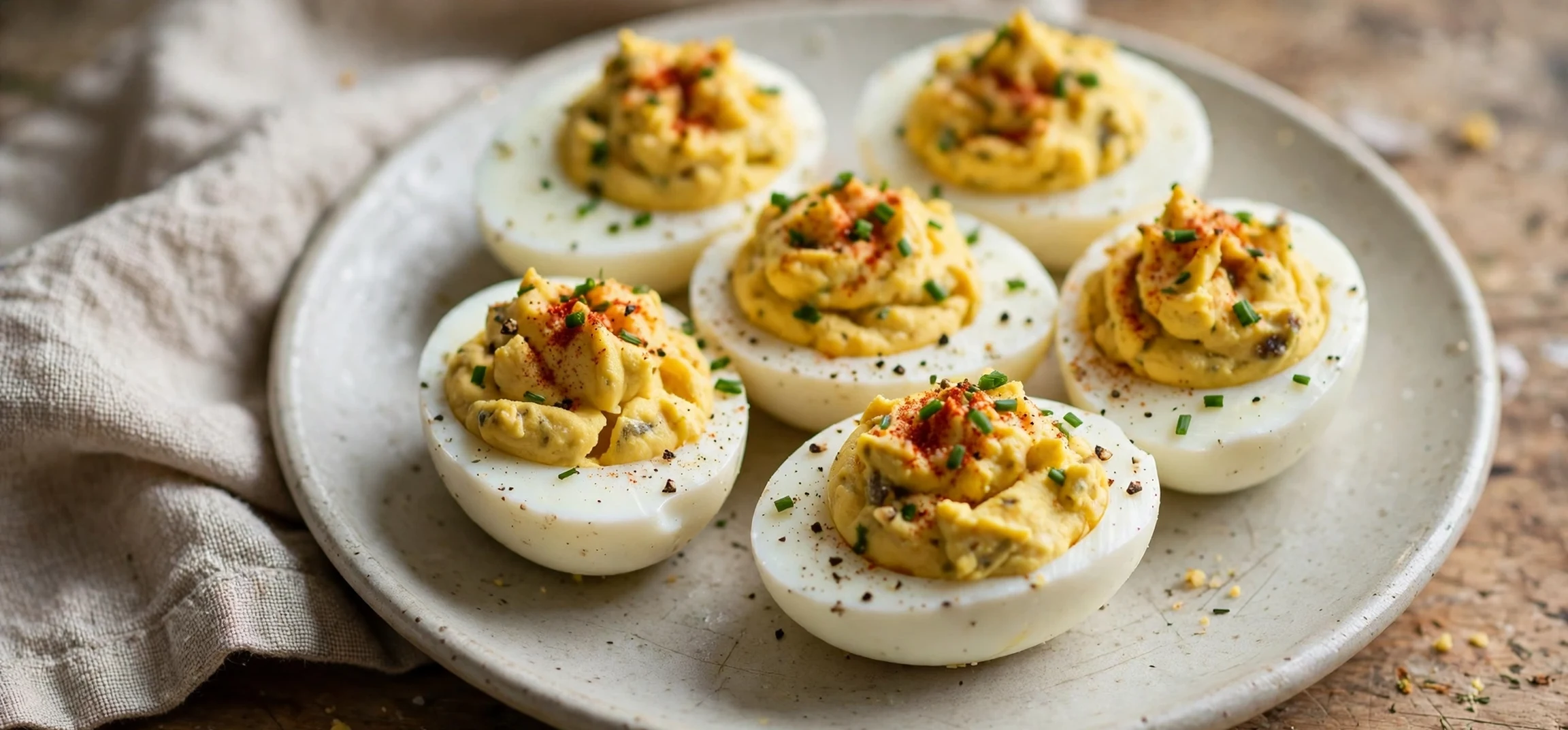
If you have ever wondered how did deviled eggs get its name, you are asking about one of the most curious phrases in the kitchen, because the name sounds as though it belongs in a storybook rather than on a party table. Deviled eggs are hard-boiled eggs, cut in half, with the yolks removed, mixed with seasonings, and spooned or piped back into the whites. They appear at picnics, holiday tables, and buffet spreads across the English-speaking world, and they are loved for their creamy filling and their simple, hands-on preparation. Yet the word deviled has nothing to do with mischief in the kitchen, and everything to do with an old cooking term for food that is highly seasoned. This guide explains how did deviled eggs get its name, traces the word back through centuries of cookbooks, and shows how a spicy idea became a beloved classic.
The short answer is that deviled was a fashionable culinary adjective in the eighteenth and nineteenth centuries, used for dishes made hot and piquant with mustard, pepper, cayenne, and similar seasonings. A cook who deviled a dish was not summoning anything supernatural; the cook was making it fiery, bold, and stimulating to the palate, in the playful sense that heat was thought to be a little devilish. Eggs prepared this way took the name naturally, because their yolk filling was mixed with mustard and spice and returned to the white with a flourish. Over time, the spelling settled, the recipe softened for many modern tables, and the name stayed, even when the filling became mild.
How Did Deviled Eggs Get Its Name?
To understand how did deviled eggs get its name, it helps to start with the verb to devil in old cookery writing. From the late eighteenth century onwards, English cookbooks used deviled to describe foods that were seasoned aggressively, often with mustard, vinegar, cayenne pepper, and other sharp flavours, and sometimes served hot. Deviled kidneys, deviled bones, and deviled chicken were all known dishes of the period, and they shared the same idea: a plain ingredient transformed by a bold, peppery treatment. The word was a piece of kitchen slang that caught on, because it captured the excitement of heat in a single vivid image.
Eggs fitted the pattern perfectly. A hard-boiled egg on its own is mild and plain, but a yolk mashed with mustard, a dash of vinegar, salt, and pepper becomes lively and tangy. Early recipes for stuffed eggs used exactly those seasonings, and as the deviled fashion spread, the name deviled eggs attached itself to the dish. The phrase did not describe the cooking method alone; it described the flavour. That is why older recipes tend to be sharper and hotter than many modern versions, which often lean on mayonnaise and a gentle touch of mustard for a creamier, milder result.
How Did Deviled Eggs Get Its Name in History?
Stuffed eggs themselves are far older than the name deviled eggs, and their history stretches back to ancient Rome, where boiled eggs seasoned with sauces were served as a first course. Medieval European cooks also filled eggs with herbs, spices, and other ingredients, and the idea of presenting a halved egg with a decorated filling travelled through many kitchens over the centuries. What changed in the English-speaking world was not the invention of the stuffed egg, but the arrival of a catchy name for a spiced version of it, and that name arrived with the fashion for deviled dishes.
By the nineteenth century, deviled eggs were appearing in American cookbooks and household guides, and the dish began its long rise as a social food. It was cheap, it could be made ahead, it travelled well to picnics and church suppers, and it looked attractive on a plate when the filling was piped neatly and dusted with paprika. The name, once a description of heat, gradually became the standard name for the dish in general, whatever the exact seasoning. That shift from flavour description to dish name is common in food history, and it explains why a modern deviled egg can be quite mild and still keep a fiery name.
Why Deviled and Not Spiced or Seasoned?
Cooks already had words such as spiced and seasoned, so why did deviled win? Part of the answer is fashion. In the eighteenth and nineteenth centuries, bold and playful language was popular in cookbooks aimed at fashionable households, and deviled sounded more exciting than a plain description. Part of the answer is precision: deviled suggested a particular kind of excitement, not just any seasoning, but heat, sharpness, and a lively kick. A dish could be seasoned gently without being deviled, but a deviled dish promised to wake up the palate.
There is also a cultural thread worth noting. In older English usage, the devil was a familiar figure of speech for anything mischievous, daring, or intensely hot, and cooks borrowed that imagery freely. A devilishly hot dish was one that dared the eater to enjoy the burn. The word therefore carried humour as well as heat, and humour helps a food name survive. Once deviled eggs became a fixture at gatherings, the name was repeated at thousands of tables, and repetition fixed it in place far more firmly than any cookbook definition could.
Deviled Eggs Around the World
Although the name deviled eggs is most familiar in the United States, Britain, and other English-speaking countries, stuffed eggs appear in many food traditions under different names. French cooks have long made eggs mimosa, named for the yellow mimosa flower, because the sieved yolk scattered over the filling resembles its blossom. Spanish and Latin American tables feature huevos rellenos, eggs filled with tuna, tomato, or seasoned mixtures. Eastern European cooks fill eggs with mushrooms, herring, or chopped vegetables for festive meals. Each version has its own seasoning and its own story, but the shared idea is the same: a humble boiled egg turned into something worth showing off.
Modern variations have expanded the dish even further. Some cooks add smoked salmon, bacon, avocado, curry powder, sriracha, or fresh herbs to the yolk mixture. Others keep the classic filling of yolk, mayonnaise, and mustard, finished with a light dusting of paprika and a snipped chive. The name has proved flexible enough to cover all of these, because it now functions as the name of the dish rather than a strict recipe rule. When someone says deviled eggs today, listeners picture the halved egg with its piped filling, whatever the exact flavour inside.
The Classic Deviled Egg Recipe
The classic method begins with eggs boiled until the yolks are firm, then cooled quickly so the shells peel cleanly. Each egg is sliced in half lengthwise, and the yolks are lifted out into a bowl. The yolks are mashed until smooth, then mixed with mayonnaise, a spoonful of mustard, a splash of vinegar or lemon juice, and salt and pepper to taste. The mixture is spooned or piped back into the egg white halves, and the finished eggs are chilled before serving. A dusting of paprika is the traditional finishing touch, giving colour and a gentle warmth.
Small details make a noticeable difference to the result. Older eggs peel more easily than very fresh ones, because the shell membrane loosens slightly with age. Cooling the eggs in cold water straight after boiling helps prevent a grey-green ring around the yolk. Mashing the yolks through a sieve gives the smoothest filling, while leaving a little texture gives a more rustic feel. Piping the filling with a star tip looks festive, but a simple spoon works just as well for a family table. Whatever the presentation, the balance to aim for is creamy, tangy, and seasoned enough to honour the deviled name without overwhelming the delicate egg.
Deviled Eggs at Parties and Holidays
Deviled eggs earned their place at gatherings because they solve several party problems at once. They can be prepared hours ahead and kept chilled, they need no cutlery, they suit a wide range of diets except for egg allergies, and they look generous even when the ingredients are inexpensive. At holiday tables, they sit comfortably beside roasted meats, salads, and breads, offering a cool, creamy contrast to richer dishes. At picnics, they travel in a covered container and are eaten at room temperature within a safe window, which is part of their old-fashioned charm.
Food safety matters with deviled eggs, because the filling is perishable. Keep them refrigerated until serving, and do not leave them out for more than a couple of hours, less in hot weather. Transport them in a chilled container, and return leftovers to the refrigerator promptly rather than leaving them on a buffet table all afternoon. These simple habits protect the dish’s reputation as well as its eaters, because a food that is loved at gatherings should also be a food that is handled with care. With that care taken, deviled eggs remain one of the most reliable crowd-pleasers in the cook’s repertoire.
| Period | What happened | Why it matters |
|---|---|---|
| Ancient Rome | Seasoned boiled eggs served as a first course | Stuffed eggs are far older than their English name |
| Medieval Europe | Eggs filled with herbs and spices | The filled-egg idea spread across kitchens |
| 18th century | Deviled used for hot, peppery dishes | The word described fiery seasoning |
| 19th century | Deviled eggs appear in household cookbooks | The name became standard for the dish |
| Today | Classic and creative versions served everywhere | The name now means the dish itself |
How Did Deviled Eggs Get Its Name Today?
Modern cooks still ask how did deviled eggs get its name, because the name sounds far more dramatic than the mild, creamy snack on the plate. When a modern cook asks how did deviled eggs get its name, the honest answer reaches back to that old kitchen slang for hot, peppery seasoning, and the question how did deviled eggs get its name is really a question about how cookery language changes over time. A word that once warned diners about heat has become a fixed label, and understanding that journey makes the dish more interesting, not less, because it connects a party staple to the history of taste itself.
Understanding how did deviled eggs get its name also helps explain why recipes vary so much today. If you explain how did deviled eggs get its name at the table, guests usually smile at the idea that their mild, mayonnaise-based filling descends from a fiery Victorian original, and the story of how did deviled eggs get its name gives you a natural way to talk about seasoning choices. Some hosts lean into the history and add extra mustard and cayenne, while others keep the filling gentle for children. Both versions are legitimate, because the name now describes the form of the dish, the halved egg with its filled yolk, rather than a fixed level of heat.
Teachers and food writers return to the question of how did deviled eggs get its name because it is a perfect example of a food name outliving its original meaning. The same pattern appears in other dishes whose names once described a technique or an effect and now simply identify the food. Asking how did deviled eggs get its name therefore opens a wider conversation about language, cooking, and tradition, and it is a question worth asking even when the eggs in front of you are mild, creamy, and entirely unthreatening.
Frequently Asked Questions
Does the name have anything to do with the devil?
Only as a playful figure of speech. Deviled was old kitchen slang for food seasoned hot and sharp with mustard and pepper, and the heat was described as devilish in a humorous sense, not a literal one.
Are deviled eggs supposed to be spicy?
Traditionally yes, they were sharper and hotter than many modern versions. Today the filling can be mild or spicy, and the name stays the same either way, because it now names the dish rather than setting a heat rule.
What is the difference between deviled eggs and eggs mimosa?
Eggs mimosa is the French name for a similar filled egg, often topped with sieved yolk that resembles mimosa blossom. The preparation is closely related, but the name comes from a flower rather than from seasoning.
How long can deviled eggs sit out?
Keep them chilled until serving and do not leave them out for more than a couple of hours, less in hot weather. Return leftovers to the refrigerator promptly.
How did deviled eggs get its name in one sentence?
In one sentence, the answer to how did deviled eggs get its name is that deviled was old cookery slang for food seasoned hot with mustard and pepper, and the stuffed egg took that name because its filling was seasoned exactly that way.
Conclusion
The answer to how did deviled eggs get its name lies in an old kitchen word for bold, peppery seasoning. Cooks in the eighteenth and nineteenth centuries called hot, mustard-laced dishes deviled, and a stuffed egg with a sharp yolk filling fitted that description so well that the name stuck. Over time, the word stopped being a flavour warning and became the name of the dish itself, surviving even as recipes grew milder and more varied. The next time you set a plate of deviled eggs on the table, you are serving a small piece of language history along with a timeless party food. For more food name stories, see our guide to the origin of a famous name, a healthy snack guide from a home recipe collection, and another home recipe guide for everyday cooking ideas.