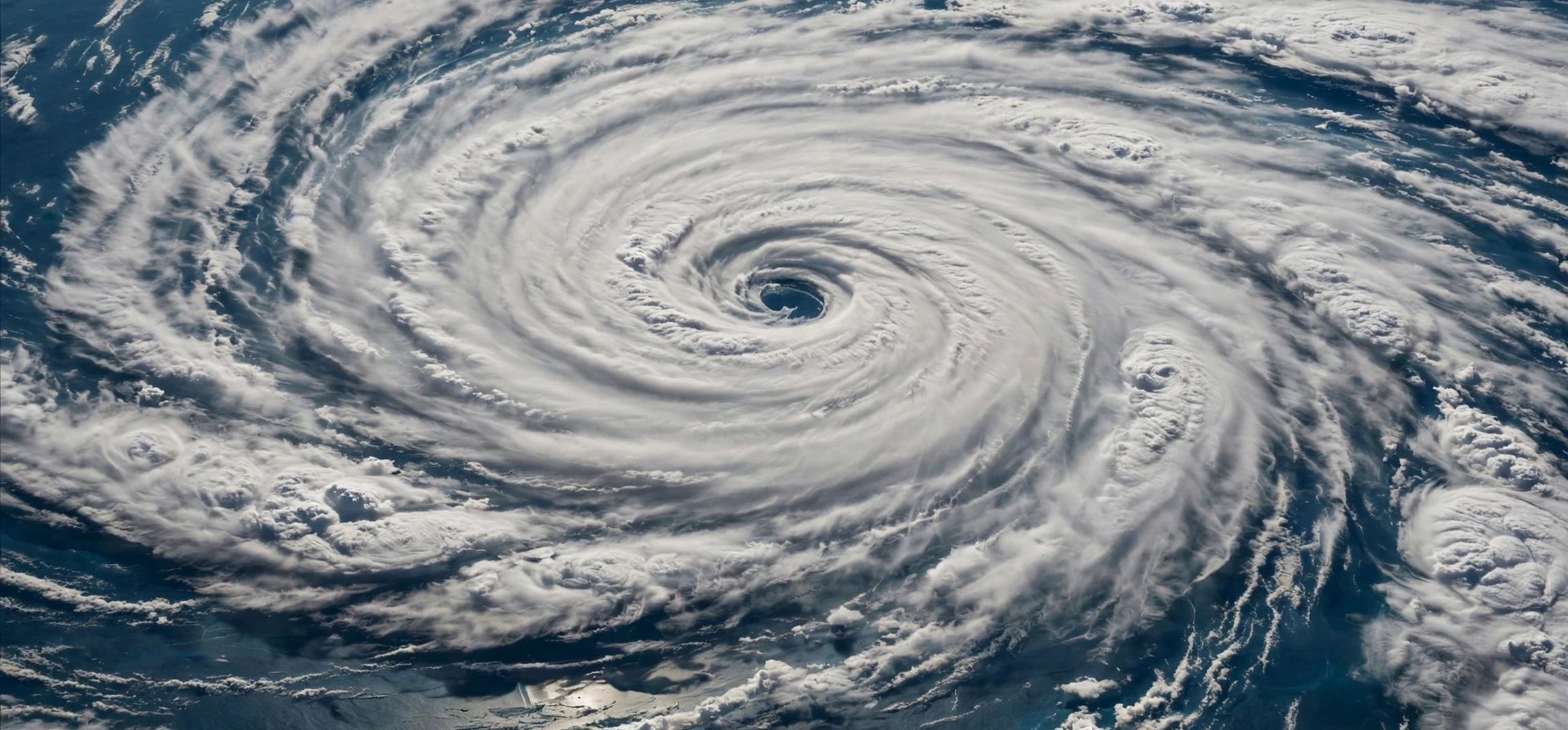
If you have ever watched a storm develop over the ocean and wondered, what are the names of all the hurricanes, you are asking about one of the most organised systems in weather forecasting. Hurricanes do not receive random names. Instead, their names come from official lists that are prepared years in advance, rotated on a fixed cycle, and managed by international weather organisations. Understanding this system explains why storm names sound familiar from one year to the next, why some letters never appear, and why certain names disappear forever after a devastating season.
This guide explains the complete naming system: who creates the lists, how names are chosen, what happens when a list runs out, and how the lists differ between ocean basins. For live information about any active storm, always check an official weather source, because storm positions and forecasts change constantly and this article does not track live storms.
What Are the Names of All the Hurricanes in the Atlantic?
When people ask what are the names of all the hurricanes, they usually mean the Atlantic basin, which affects North America, Central America, and the Caribbean. The Atlantic uses six lists of 21 names each. The lists rotate in order, so the list used in one year returns six years later. Each list runs alphabetically from A to W, skipping the letters Q, U, X, Y, and Z, because too few common names begin with those letters. Male and female names alternate throughout each list, and names are chosen to reflect the languages and cultures of the countries affected by Atlantic storms, including English, Spanish, and French names.
A storm only receives a name once it strengthens into a tropical storm, which means its sustained winds reach a set threshold. Before that point it is simply a tropical depression with a number. Once named, the storm keeps that name for its entire life, even if it crosses into another area or changes strength. This is why a single name can appear in headlines for days or weeks as the system develops, moves, and eventually fades.
How Hurricane Names Are Chosen
The names on the Atlantic lists are selected by the World Meteorological Organization, working with the national weather services of the countries in the region. Committee members propose names that are short, distinctive, and easy to pronounce and remember, because a clear name helps the public follow warnings. Names that are difficult to say, easily confused with another name, or likely to cause offence are avoided.
The lists are reviewed regularly, and countries can request changes. A name that becomes associated with a particularly deadly or costly storm is retired, which means it is removed from the rotation and replaced with a new name beginning with the same letter. Retirement is the reason the lists slowly evolve over time, even though the six-year rotation stays the same. The idea behind naming storms at all is practical: short names are far easier to use in warnings, news reports, and public discussion than latitude and longitude coordinates or long technical descriptions.
Before the current system, storms were sometimes identified by the saint’s day on which they struck, or by coordinates, both of which caused confusion. The modern naming system began to take shape in the mid-twentieth century and was standardised internationally so that every country in a region uses the same name for the same storm. That consistency matters during emergencies, when clear communication can save lives.
What Are the Names of All the Hurricanes in Other Ocean Basins?
Hurricanes are not limited to the Atlantic. The same kind of storm is called a typhoon in the northwest Pacific and a cyclone in the Indian Ocean and the South Pacific, but the naming principle is the same everywhere: an official list, managed regionally, applied in order. The details, however, differ from basin to basin.
In the eastern and central Pacific, lists maintained for those regions are used in rotation, similar to the Atlantic. In the northwest Pacific, names are contributed by many different countries and territories, so the list includes names from a wide range of languages and cultures, from flowers and animals to mythological figures and everyday words. In the North Indian Ocean, countries around the basin take turns contributing names, and each list is used once in order rather than rotating. In the South Pacific and the Australian region, separate lists are managed by the relevant national weather services. If you are trying to find the name of a storm in a particular part of the world, the first step is to identify the basin, because that tells you which naming list applies.
| Ocean basin | Common storm name | How names are organised |
|---|---|---|
| Atlantic | Hurricane | Six rotating lists of 21 names, reused every six years |
| Eastern and Central Pacific | Hurricane | Rotating lists managed for each region |
| Northwest Pacific | Typhoon | Names contributed by many countries, used in sequence |
| North Indian Ocean | Cyclone | Countries contribute names in turn, lists used in order |
| South Pacific and Australian region | Cyclone | Separate lists managed by regional weather services |
What Happens When the Name List Runs Out?
In a very busy season, all 21 names on a list can be used before the season ends. For many years, the Greek alphabet was used as a backup, so storms after the letter W received names such as Alpha, Beta, and Gamma. That practice created problems, however, because Greek names could be confusingly similar to each other and because a Greek-letter name could not easily be retired in the same way as a regular name. The system was therefore changed, and a supplemental list of names is now used when the main list is exhausted. The supplemental list works like the regular lists, with names in alphabetical order, and a supplemental name can be retired if the storm it labels causes exceptional damage.
This change shows how the naming system adapts. The core goals never change: names must be clear, consistent, and easy for the public to follow. The mechanics around the edges, such as what happens in an unusually active season, are adjusted when experience shows a better approach.
How to Find the Current Season’s Names
The simplest way to answer the question for a specific year is to look up the official list for that year and basin. The World Meteorological Organization publishes the Atlantic lists, and national weather services publish the lists for their own regions. For live storms, the official forecast centre for the basin is the authoritative source: it gives the current name, position, and forecast, and it updates as conditions change. Third-party news reports and social media posts may lag behind or contain errors, so during an active storm, official sources should always be your first stop.
It also helps to remember that a name on a future list is not a prediction. The lists are prepared in advance, and a name only becomes attached to a real storm if a tropical storm actually forms and reaches naming strength in the right order. Many names on a list will never be used in a given year, and some lists are only partly used before the season ends. If you want to explore the history of storm naming further, our companion guide to the list of hurricane names offers another way into the topic, and our guide to the names of the world’s oceans gives useful background on the regions where these storms form.
Why Knowing What Are the Names of All the Hurricanes Helps You Stay Safe
There is a practical reason to care about what are the names of all the hurricanes beyond curiosity. When a storm threatens, warnings, evacuation orders, and news reports all use the storm’s name, and recognising that name instantly tells you which system is being discussed. If two storms are active at once, which happens in busy seasons, the names are what keep them apart in your mind. Confusing one storm with another could mean following the wrong forecast, so the naming system is genuinely a safety tool, not just a labelling habit.
Knowing what are the names of all the hurricanes on the current list also helps you spot misinformation. If a social media post warns about a storm with a name that does not appear on the official list for that year, or claims a retired name is active again, that is a strong sign the post is wrong or outdated. Checking the name against the official list takes seconds and can save you from acting on a false alarm. Similarly, if you hear a name you recognise from a past disaster, remember that retired names are never reused, so a report using a retired name for a new storm should be treated with suspicion until an official source confirms it.
Finally, understanding what are the names of all the hurricanes in advance makes seasonal outlooks easier to follow. Forecasters often discuss how many named storms are expected in a season, and that count refers to storms reaching naming strength, not to every disturbance that forms. When you know the list, you can follow the season as it unfolds, name by name, and understand exactly how far through the list the season has progressed.
Frequently Asked Questions
Are hurricane names reused every year?
No. In the Atlantic, each list is reused every six years, not every year. A name used this season will normally return six seasons later, unless it is retired in the meantime.
Why are there no hurricanes starting with Q or U?
The Atlantic lists skip Q, U, X, Y, and Z because there are too few widely recognised names beginning with those letters. Skipping them keeps every list at a manageable 21 names.
Can a storm be renamed?
Generally, no. Once a tropical storm is named, it keeps that name for its whole lifetime, even if it weakens and strengthens again, so that warnings and records stay consistent.
Who decides when a name is retired?
The regional committee of the World Meteorological Organization decides, usually after a country affected by the storm requests retirement because of deaths or damage.
Quick Recap: What Are the Names of All the Hurricanes?
To recap, what are the names of all the hurricanes is a question with a system behind it, not a single list. The Atlantic rotates six lists of 21 names, other basins use their own lists, retired names are replaced, and a supplemental list covers exceptionally busy seasons. If you remember that what are the names of all the hurricanes depends on the basin and the year, you will always know where to look: the official list for that basin and year, and the official forecast centre for live storms.
Conclusion
So, what are the names of all the hurricanes? The honest answer is that there is no single fixed list, because hurricane names come from rotating regional lists that change as names are retired and replaced. In the Atlantic, six lists of 21 names rotate every six years, while other basins use their own systems, from contributed typhoon names in the northwest Pacific to rotating cyclone names in the Indian Ocean. The system exists for a serious reason: clear, consistent names make warnings easier to understand and follow. If a storm is active near you, skip the speculation and check the official forecast for your basin, where you will find the current name and the latest guidance.