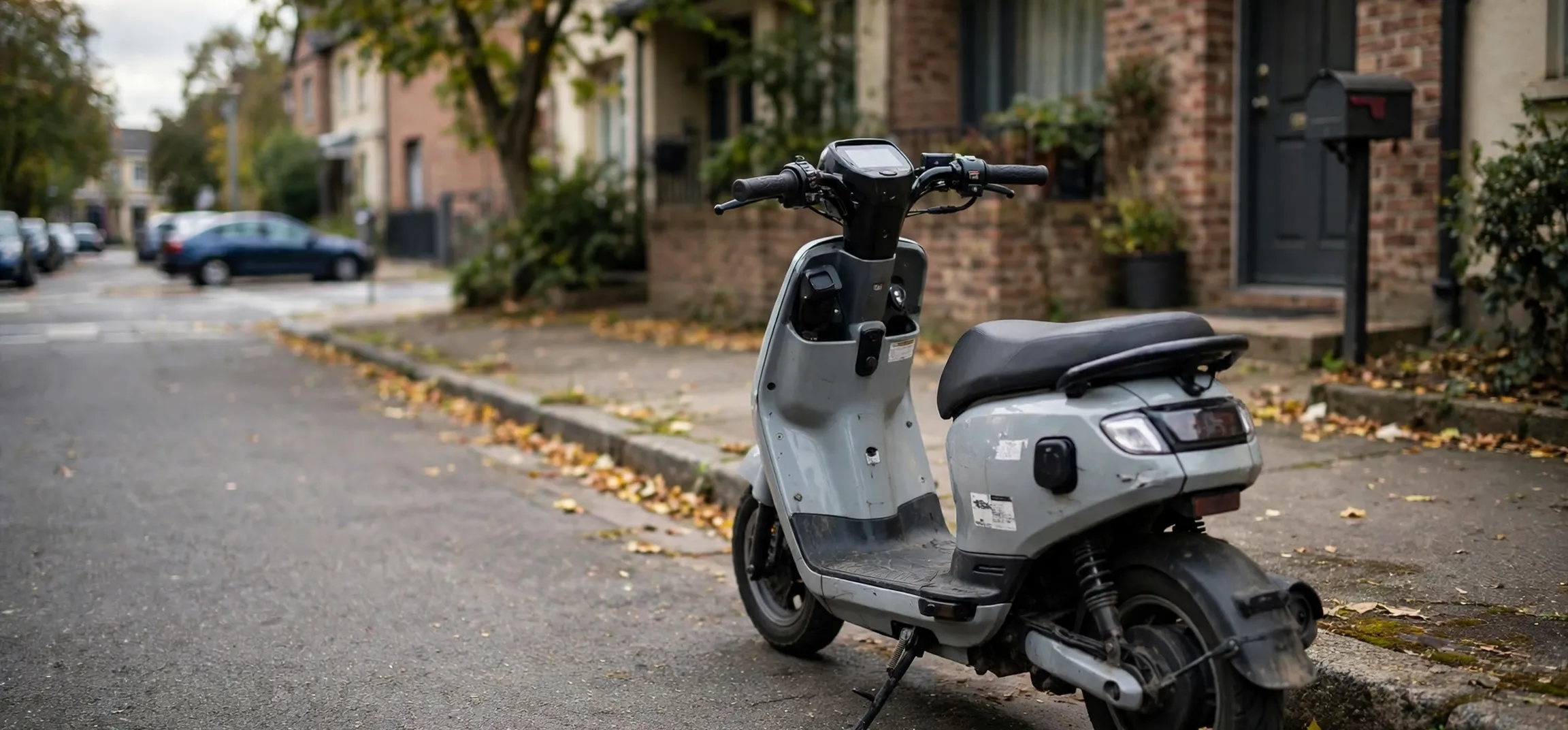
If you searched for moped def, you were probably looking for a short, clear definition, so here it is in the natural phrase first: a moped is a small, lightweight motorised two-wheeled vehicle, typically with a low-powered engine, pedals or a step-through frame in its classic form, and a top speed limited by law in many countries. The search term itself, moped def, is simply shorthand for “moped definition”, the kind of query people type when they want the meaning without a long essay. This guide gives that definition, then explains where the word came from, how mopeds differ from scooters and motorcycles, and how the law usually treats them.
The word moped is a blend with a neat history. It combines motor and pedal, reflecting the earliest mopeds, which were essentially bicycles fitted with a small auxiliary engine, and which could still be pedalled when the engine was off or when starting. Later designs dropped the pedals in many markets, replacing them with a step-through frame and an automatic transmission, but the name stuck. That history explains why older definitions mention pedals while newer ones often do not: the vehicle evolved, but the word remained.
Moped Def in Plain Terms: The Core Definition
In plain terms, the answer to a moped def search is that a moped is a low-powered, lightweight motorcycle, designed mainly for short, everyday journeys rather than long-distance or high-speed travel. Engine sizes are commonly around 50 cubic centimetres for petrol models, with electric models measured by motor power instead, and top speeds are often limited to about 28 to 31 miles per hour, equivalent to 45 kilometres per hour, in many licensing systems. The vehicle is usually ridden in an upright position, with small wheels, simple controls, and an automatic or semi-automatic transmission that requires no manual clutch work.
That simplicity is the point. A moped is meant to be easy to learn, cheap to run, and practical in towns and cities, where traffic is slow and parking is scarce. Fuel consumption on petrol models is typically low, electric models can be charged from a domestic supply, and maintenance is generally simpler than for a larger motorcycle. Those advantages come with trade-offs: limited speed, limited carrying capacity, less protection in poor weather, and less suitability for motorways or fast dual carriageways, where minimum speeds and traffic flow make low-powered vehicles unsafe or, in some jurisdictions, prohibited.
It is worth noting that the precise legal definition varies. Some countries define a moped by engine size and top speed, others by motor power, and some add requirements about weight, pedals, or licensing category. A vehicle that counts as a moped in one country might be classed as a light motorcycle or a different category in another. Anyone buying or riding a moped should therefore check the definition and licensing rules that apply locally, rather than relying on a general dictionary definition alone.
Moped Def and History: From Bicycle Engines to City Transport
The moped emerged in the years after the Second World War, when Europe needed cheap, practical transport and fuel was scarce. Manufacturers fitted small engines to strengthened bicycle frames, creating vehicles that workers could use for commuting without the cost of a car or a full motorcycle. Brands in France, Italy, Germany, and later Japan developed distinctive designs, and the moped became a familiar sight in towns across Europe, as well as in parts of Asia and North America.
By the 1960s and 1970s, mopeds had developed their own identity. Step-through frames, enclosed engines, leg shields, and automatic transmissions made them more comfortable and easier to ride than a motorised bicycle, while still keeping them light and economical. Young riders, students, and delivery workers adopted them widely, and the moped became a cultural symbol of youthful freedom in films and music of the period. Later, stricter licensing, safety rules, and the rise of small scooters changed the market, but the basic idea of a small, economical two-wheeler remained.
Electric mopeds are the latest chapter. Advances in batteries and motors have allowed manufacturers to build electric models with similar size and speed to petrol mopeds, but with quieter running, lower local emissions, and simpler servicing. Some electric models retain a moped-style step-through design, while others look more like small scooters. The legal classification usually depends on power and top speed rather than on whether the motor is petrol or electric, so an electric moped is still a moped in law if it meets the relevant limits, even though it has no engine in the traditional sense.
Moped Def Versus Scooter and Motorcycle
Confusion between mopeds, scooters, and motorcycles is common, because the categories overlap in appearance. A scooter is a style of two-wheeler, usually with a step-through frame, a floorboard for the feet, and small wheels, and it can be powered by an engine of almost any size. A small scooter with a 50 cubic centimetre engine may therefore also be a moped in legal terms, while a larger scooter with a 125 or 300 cubic centimetre engine is a motorcycle, not a moped, even though it looks similar. In other words, scooter describes a shape, while moped describes a legal and power category.
A motorcycle is the broader category for powered two-wheelers above moped limits, with larger engines or motors, higher top speeds, and usually a manual gearbox and a frame that the rider straddles rather than steps through. Motorcycles require a higher licence category in most systems, and they are designed for a wider range of roads, including faster routes. A moped, by contrast, is deliberately limited: it trades speed and power for simplicity, economy, and accessibility. Understanding that distinction prevents the common error of calling every small two-wheeler a moped, or every moped a scooter.
Electric bicycles, sometimes called e-bikes, add a further distinction. An e-bike is a bicycle with pedal assistance, where the motor helps the rider pedal but does not usually propel the vehicle on its own at higher speeds. A moped, even an electric one, can typically be ridden on motor power alone, without pedalling, and is therefore treated as a motor vehicle for licensing, insurance, and road use. That legal line matters for where the vehicle can be ridden, whether a licence and insurance are required, and whether a helmet is mandatory.
| Vehicle | Typical power | Top speed | Key difference |
|---|---|---|---|
| Moped | About 50cc or low electric power | About 28 to 31 mph | Low-powered motor vehicle, licence category limited |
| Small scooter | 50cc to 125cc or more | Varies by engine size | Style, not a legal power category |
| Motorcycle | Above moped limits | Well above moped limits | Higher licence, broader road use |
| Electric bicycle | Pedal assistance only | Assistance limited by law | Bicycle in law, not a motor vehicle in most systems |
Moped Def, Licensing, Safety, and Practical Use
Licensing for mopeds is usually the most accessible among motor vehicles, which is part of their appeal. Many countries allow moped riding from age sixteen, sometimes with a specific moped licence or a basic training course, and sometimes as part of a car licence, depending on when the licence was issued and local rules. Insurance, registration, and a helmet are normally required, and the helmet rule applies even for short journeys, because most serious moped injuries involve head injury and low speed does not remove that risk.
Safety deserves emphasis, because small size makes mopeds less visible to other road users, especially at junctions and in poor weather. Wearing bright or reflective clothing, keeping lights on, maintaining brakes and tyres, and riding defensively, meaning anticipating that other drivers may not have seen you, are practical habits that experienced riders recommend. Protective clothing, gloves, and sturdy footwear also reduce injury in a fall, even though they are not always legally required. A moped’s light weight makes it easy to handle, but also means it is more affected by wind, potholes, and uneven surfaces than a heavier motorcycle.
Practically, mopeds suit short urban journeys, commuting, campus travel, and local deliveries, where their economy and ease of parking outweigh their speed limits. They are less suited to long motorway journeys, carrying heavy loads, or riding two-up over long distances, although some models are designed for a passenger. Running costs, including fuel or charging, insurance, and servicing, are typically lower than for a car, which is why mopeds remain popular in cities with congested traffic and limited parking, and in rural areas where distances are short.
For readers interested in vehicle terminology, related guides on this site explain other mechanical terms in plain language. The guide to continuously variable transmission and its meaning covers a gearbox type used in many small vehicles, while the article on what dual motor means explains a term from electric vehicles. The guide to motor control centres covers a separate industrial use of the word motor, a useful reminder that the same root appears in very different contexts.
Frequently Asked Questions About Moped Def
What does moped def mean as a search?
It is shorthand for “moped definition”. People type moped def when they want a concise explanation of what a moped is, rather than a review or a buying guide. The natural definition is a small, low-powered, lightweight motorised two-wheeler for short journeys.
Does a moped have pedals?
Classic mopeds did, because the word blends motor and pedal. Most modern mopeds do not have pedals, having replaced them with a step-through frame and automatic transmission, but the name has remained.
Do I need a licence to ride a moped?
In most countries, yes, although the exact licence, minimum age, and training requirements vary. Check the rules where you live before riding, and do not assume that a car licence automatically covers a moped.
Is a moped the same as a scooter?
No. Scooter describes a style of vehicle with a step-through frame, while moped describes a low-power legal category. A small scooter can be a moped, but a larger scooter is a motorcycle in legal terms.
Conclusion
In short, the moped def answer is straightforward: a moped is a small, lightweight, low-powered motorised two-wheeler, originally combining a motor with pedals, now usually built as a step-through vehicle with automatic transmission and a legally limited top speed. It is distinct from a scooter, which is a style, from a motorcycle, which is more powerful, and from an electric bicycle, which is pedal-assisted. For city travel and short journeys, that combination of simplicity and economy is exactly why the moped has endured for more than seventy years.