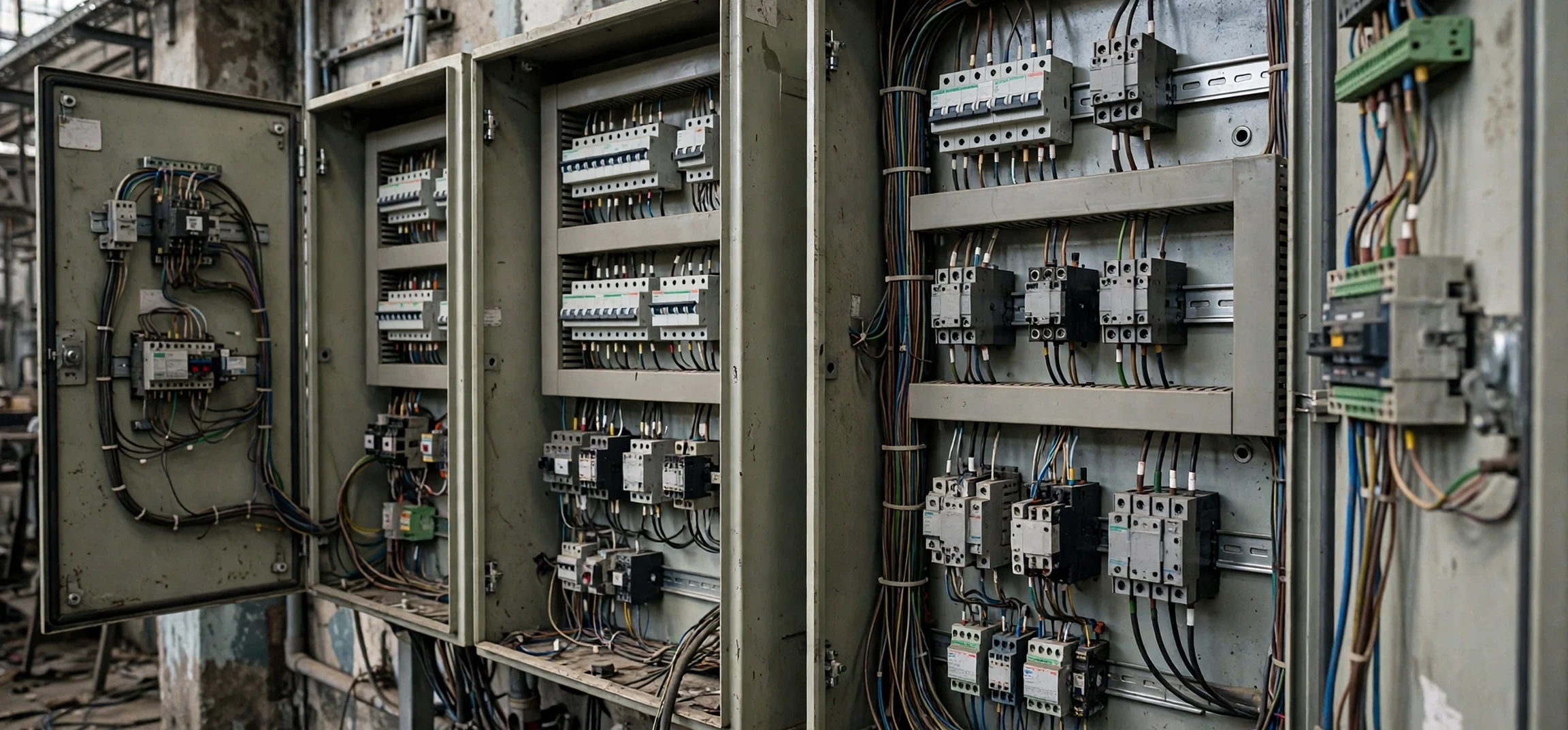
A motor control center wiki entry is usually the first place students, apprentices and curious readers land when they meet this piece of industrial equipment for the first time. In plain language, a motor control centre — abbreviated MCC — is a centralised assembly that controls, protects and distributes power to electric motors in factories, water plants, mines, hospitals and large commercial buildings. This guide works like a motor control center wiki page written for real readers: it explains what an MCC is, what lives inside one, the main types, the safety rules that surround them, and how they differ from related equipment. No prior electrical training is assumed.
Electric motors are everywhere in industry. They drive pumps, fans, conveyors, compressors, mixers and hoists, and a single large plant may run hundreds of them. Controlling each motor from a separate scattered starter would be chaotic and dangerous. The motor control centre solves that problem by gathering the starters, protective devices and controls for many motors into one organised, engineered assembly — usually a row of tall, floor-standing cabinets with a shared power bus running through them.
Motor Control Center Wiki: What Is a Motor Control Centre?
To give a proper motor control center wiki definition: an MCC is an assembly of one or more enclosed sections with a common power bus, containing motor control units such as starters, variable-frequency drives, feeder breakers and control devices. Each motor in the plant is fed from its own “bucket” or unit within the MCC, so an electrician can isolate, test or replace one motor’s controls without shutting down the whole installation.
Any thorough motor control center wiki treatment puts the busbar system first, because it explains the whole layout. The shared busbar is the heart of the design. Incoming power arrives at the MCC — typically at 400 V in the UK and much of the world, or 480 V in North America — and is distributed along horizontal busbars to vertical busbars in each section, which in turn feed the individual units. This arrangement keeps cable runs short, makes the installation tidy, and allows new motor units to be added later as the plant grows.
Readers consulting a motor control center wiki page often ask how an MCC differs from simpler panels. It is worth distinguishing an MCC from a general distribution board. A distribution board mainly splits power into circuits. An MCC goes further: it controls motors — starting and stopping them, reversing them, varying their speed, and protecting them against overloads, short circuits and phase faults. That control function is what earns it the name.
Inside a Motor Control Centre: The Main Components
A motor control center wiki guide is most useful when it names the parts a technician will actually meet. Open a typical MCC section and you will find a consistent set of components, whatever the manufacturer. Understanding these parts is the core of any motor control center wiki explanation.
Starters
The starter is the device that switches a motor on and off safely. The simplest is a direct-on-line starter, which connects the motor straight to full voltage. Larger motors may use star-delta starters or soft starters, which ramp the voltage up gradually to limit the inrush current and mechanical shock. Each approach trades cost against smoothness of starting.
Overload protection
Motors can be damaged if they draw too much current for too long — for example, if a pump jams. Overload relays detect this sustained overcurrent and trip the starter before the motor windings overheat. Modern electronic overload relays also monitor phase loss, earth faults and motor temperature.
Circuit breakers and fuses
While overload relays guard against slow overheating, breakers and fuses guard against short circuits — sudden, violent faults that must be cleared in milliseconds. Each MCC unit has its own short-circuit protection so a fault on one motor cannot cascade through the plant.
Variable-frequency drives (VFDs)
Increasingly, MCC units contain VFDs, which vary the frequency of the supply to control motor speed precisely. A VFD on a fan or pump can cut energy consumption dramatically, since a motor running at half speed uses far less than half the power. VFDs also enable soft starting and process control that a fixed-speed starter cannot offer.
Control and monitoring devices
Pushbuttons, selector switches, indicator lamps, meters and programmable controllers sit on the unit doors, giving operators local control and status information. Modern MCCs often add network communication, so a plant control room can monitor every motor’s current, temperature and running hours in real time.
Motor Control Center Wiki: Types of MCC
Motor control centres are classified in several ways, and the table below summarises the distinctions most commonly used in specifications and reference material.
| Type | Key feature | Typical use |
|---|---|---|
| Fixed MCC | Units bolted in place; wiring is hard-connected | Smaller, stable installations where motors rarely change |
| Withdrawable MCC | Units slide out on rails for maintenance or replacement | Large plants where uptime matters and units must be swapped fast |
| Low-voltage MCC | Operates below 1,000 V | The overwhelming majority of industrial and commercial MCCs |
| Medium-voltage MCC | Operates above 1,000 V, often several kilovolts | Very large motors in mining, petrochemicals and utilities |
| Intelligent MCC | Networked units with diagnostics and remote control | Modern plants with centralised monitoring and predictive maintenance |
| Arc-resistant MCC | Reinforced construction to contain arc-flash energy | Installations where personnel safety requirements are highest |
If you remember one practical point from this motor control center wiki guide, make it the withdrawable unit: it is the feature maintenance teams praise most. The withdrawable design deserves a special note, because it is one of the MCC’s great practical advantages. When a starter fails in a withdrawable MCC, a technician can isolate the unit, slide it out, slide in a spare, and restore the motor — often in minutes. In a fixed design, the same repair means working inside a live-adjacent cabinet with hand tools, which is slower and riskier.
Motor Control Center Wiki: MCC vs Switchgear, Panels and Control Panels
Confusion here is common, and a good motor control center wiki entry should clear it up early. Beginners often confuse an MCC with neighbouring equipment. A switchgear assembly primarily distributes and protects power at a higher level — it is the equipment upstream of the MCC. A control panel, by contrast, usually serves a single machine or process, with its own bespoke layout. An MCC sits between the two: more organised and standardised than a one-off control panel, more motor-focused than general switchgear.
This distinction matters when specifying equipment. If a project needs to run twenty motors, an MCC is almost always the economical and maintainable choice. If it needs to run one special machine, a dedicated control panel may be better. Engineers weigh factors such as motor count, fault levels, maintenance access, spare-unit strategy and future expansion before deciding.
Safety Around Motor Control Centres
Any motor control center wiki treatment must take safety seriously, because MCCs carry lethal voltages and enormous fault energy. Only qualified, authorised personnel should open, operate on or maintain an MCC. Key safety principles include:
Isolation before work
Before maintenance, the unit must be isolated, locked off and proved dead. Lockout-tagout procedures exist precisely because “I thought it was off” is one of the most common causes of electrical injury.
Arc-flash awareness
A short circuit inside an MCC can release arc-flash energy — an explosive burst of heat and light. Workers wear rated personal protective equipment, keep doors closed during switching where possible, and respect the arc-flash boundary marked on the equipment labels.
Qualified personnel only
MCC work is not DIY work. Design, installation, testing and maintenance are governed by national wiring regulations and standards, and by manufacturer instructions. In the UK, that means compliance with BS 7671 and the relevant product standards; in North America, the National Electrical Code and the NEMA and UL standards for MCCs apply.
These rules are not bureaucracy for its own sake. A correctly specified, installed and maintained MCC is a very safe piece of equipment; a neglected or tampered one is one of the most dangerous objects in a plant. The safety record of MCCs is excellent precisely because the industry treats them with respect.
Standards and Specifications
MCCs are built to published standards that define construction, testing, fault withstand and ingress protection. Internationally, IEC 61439 covers low-voltage switchgear and controlgear assemblies, including MCCs. In North America, NEMA ICS 2 and UL 845 perform a similar role. Specifiers also consider form of separation — the internal barriers that keep busbars, functional units and terminals apart — and the degree of protection (IP rating) against dust and water.
When reading any motor control center wiki page, the standards references are a useful quality check. A page that names the applicable standard and explains form of separation is drawing on real engineering practice; a page that describes MCCs only in vague marketing language is less trustworthy.
Where Motor Control Centres Are Used
Because motors are the workhorses of industry, MCCs appear in almost every sector. A motor control center wiki survey of applications could run to many pages; the sectors below are the most important. Water and wastewater plants use them to run pumps and aerators. Food and beverage factories use them for conveyors, mixers and refrigeration compressors. Mining uses rugged MCCs for crushers, hoists and ventilation fans. Hospitals and data centres use them for backup pumps, fans and chillers. Even large commercial buildings — airports, shopping centres, hospitals — rely on MCCs for heating, ventilation and air-conditioning plant.
The trend in all these sectors is towards intelligent MCCs: networked units that report motor health, predict bearing failures from current signatures, and let maintenance teams fix problems before a motor actually stops. This predictive approach is one of the quiet revolutions in industrial maintenance, and the MCC is its natural home, because it is the one place where every motor’s electrical data already passes through.
Frequently Asked Questions
What does MCC stand for?
MCC stands for motor control centre (motor control center in American spelling). It is the centralised assembly that controls and protects the electric motors in an installation.
What is the difference between an MCC and a distribution board?
A distribution board mainly splits power into circuits. An MCC also controls motors — starting, stopping, reversing and varying their speed — and provides motor-specific protection.
Can an MCC control motors of different sizes?
Yes. Each unit in an MCC is sized for its own motor, so one MCC can serve small fans and large pumps side by side.
Are MCCs only for factories?
No. They are used anywhere many motors must be controlled centrally, including water plants, hospitals, mines, airports and large commercial buildings.
Is it safe to work on an MCC?
Only for qualified, authorised personnel following isolation, lockout-tagout and arc-flash procedures. MCC work is never a DIY task.
Conclusion
A motor control centre is one of those industrial objects that is easy to overlook and impossible to do without. By gathering motor starters, protection, drives and controls into a single organised assembly, the MCC makes plants safer, easier to maintain and simpler to expand — and the move towards intelligent, networked MCCs is making them smarter every year. Whether you arrived here as a student, an apprentice, or simply a curious reader, you now have a working motor control center wiki in your head: what an MCC is, what lives inside it, the types available, and the safety rules that keep the people around it safe. For related technical explainers, see our guide to the nano machine wiki, our gigabit wiki explainer, and our climbing harness fitting guide for safety shoes.



