Searches for cardinal red robin bird meaning usually come from a moment of wonder: a flash of red at the window, or a bird that seems to appear at a meaningful time, and a wish to understand what it might signify. The phrase cardinal red robin bird meaning bundles together two different birds, the northern cardinal and the robin, and this guide untangles them while explaining the folklore and symbolism attached to each. The northern cardinal is the vivid red bird of North America, famous in stories as a visitor carrying comfort or a reminder of someone missed. The robin is a different bird entirely, beloved in its own traditions, and confusing the two blurs two rich sets of stories. What follows is folklore, belief, and cultural symbolism only, not medical or scientific claims about health, and it treats these traditions as stories people cherish rather than facts that can be proven.
Bird symbolism works the way folklore usually works: people notice a striking creature, attach their hopes and memories to it, and pass the story on. A cardinal’s colour makes it impossible to ignore against snow or green leaves, so it is no surprise that it became a symbol of vitality, devotion, and remembrance. Robins, with their own red breasts and cheerful song, gathered a parallel set of stories about spring, renewal, and good cheer. Keeping the birds distinct lets each tradition speak clearly, and it also helps with identification, so you can tell which visitor you actually saw.
Cardinal Red Robin Bird Meaning: The Northern Cardinal
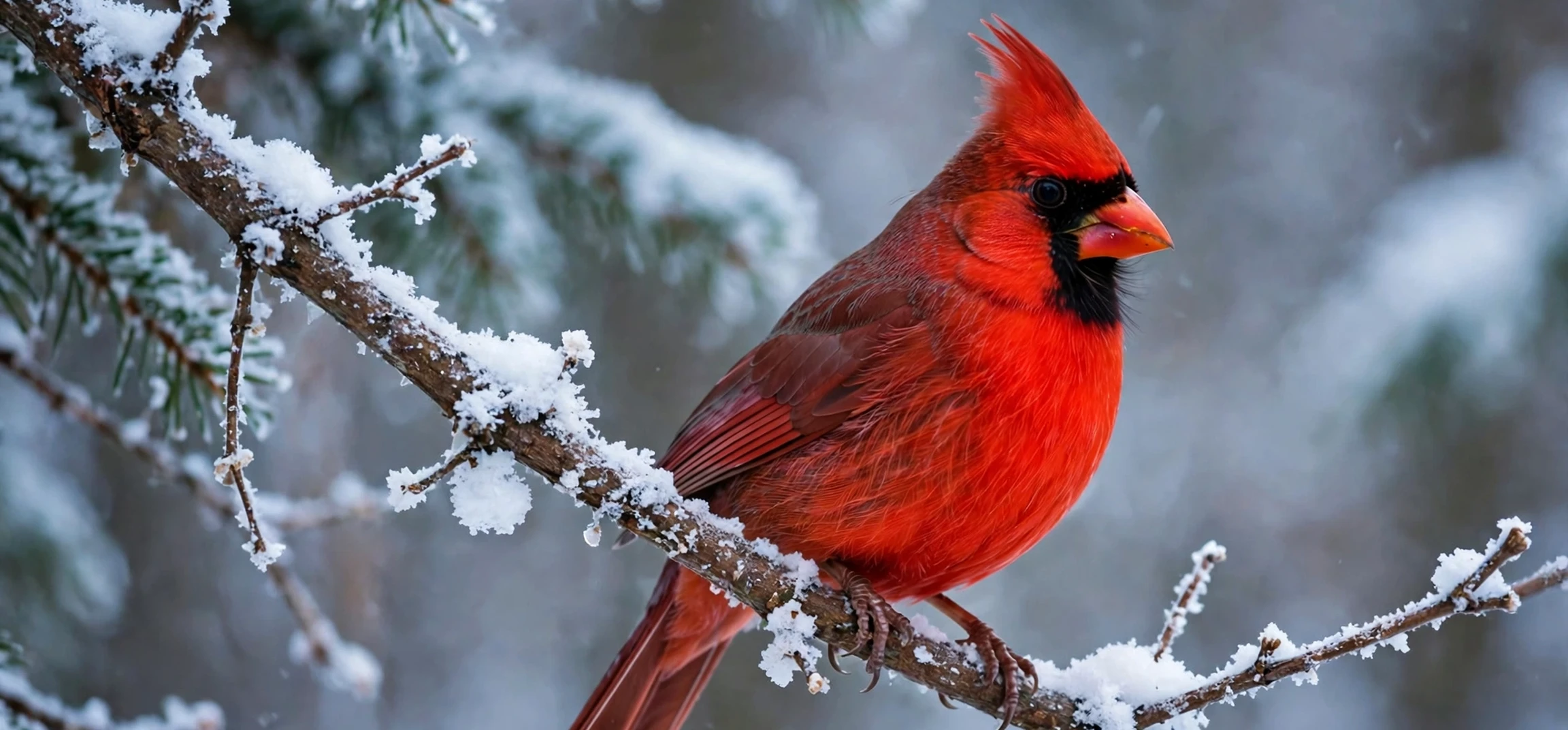
The northern cardinal is a songbird of North America, and the male is unmistakable: brilliant red plumage, a black mask around the face, and a pointed crest. Females are warm brown with red highlights on the wings, tail, and crest. Cardinals do not migrate, so they are visible all year, and their clear whistled songs carry through winter gardens when most other songbirds have fallen silent. That year-round presence is part of their symbolic power: a cardinal in snow feels like colour refusing to leave, and folklore has built a whole language around that image.
In popular belief, the most widespread cardinal story is that a cardinal’s visit is a sign that a loved one who has died is near, or is sending comfort. People often report noticing cardinals soon after a loss, at anniversaries, or during difficult weeks, and they describe the sighting as reassuring. This is a belief held by many and a comfort to many, and it should be understood as folklore and personal meaning, not as a verified phenomenon. The cardinal red robin bird meaning tradition also associates cardinals with devotion, because cardinal pairs stay together through the year and both parents care for their young, and with vitality, because of that startling red.
Cardinals in Art and Culture
Cardinals appear on greeting cards, memorial ornaments, garden flags, and tattoos, usually chosen to express remembrance or enduring love. Sports teams and the state symbols of several American states use the cardinal as an emblem, which has spread its image far beyond its natural range. In art, the bird’s red is often set against white snow or dark green foliage, a contrast that painters and photographers love. These cultural uses reinforce the folklore: the cardinal has become a visual shorthand for a message of comfort, whether or not the viewer holds the underlying belief.
The Robin: A Different Bird With Its Own Meaning
The robin in these searches usually means one of two birds, and both differ clearly from the cardinal. The American robin is a large thrush with a rusty-red breast, grey-brown back, and a cheerful song, famous for appearing on lawns in spring and for pulling worms from the grass. The European robin is smaller, with a bright red face and breast, and it is a beloved garden companion in Britain and Ireland, known for following gardeners and perching nearby. Neither is a cardinal: robins belong to the thrush family, cardinals to the cardinal family, and their shapes, songs, and habits are all different.
Robin folklore centres on spring and new beginnings. The American robin’s return is treated as a sign that winter is ending, and its song at dawn has made it a symbol of hope and fresh starts. The European robin carries its own stories, including tales that explain its red breast through kindness or sacrifice in old legends, and a tradition of robins on Christmas cards as emblems of good cheer. People who search for cardinal red robin bird meaning often hold both birds in mind at once because both are red-breasted and both appear in meaningful moments, but their traditions are separate and each is richer when told on its own.
How to Tell a Cardinal From a Robin
Identification is straightforward once you know what to look for. A male northern cardinal is almost entirely red with a crest and a black face mask, and it has a thick, cone-shaped beak suited to cracking seeds. An American robin is larger and longer-legged, with a grey-brown back, a rusty-red breast, and no crest, and it runs across lawns and pauses to look for worms. A European robin is much smaller than either, with a round body, a red face as well as a red breast, and a habit of perching close to people in gardens. Size, crest, beak shape, and behaviour together settle almost every sighting.
Habitat and sound help too. Cardinals sing from high perches in shrubs and trees with loud, clear whistles, often described as sounding like cheerful repeated phrases. Robins sing a rich, rambling song at dawn and dusk, and American robins are frequently seen on open ground. If the bird you saw was cracking seeds at a feeder, it was very likely a cardinal; if it was tugging at the lawn, it was very likely a robin. Knowing which bird visited makes the folklore more satisfying, because you can match the sighting to the right tradition instead of a blended one.
Cardinal Symbolism Across Traditions
Beyond the well-known remembrance belief, cardinal symbolism appears in several cultural threads. In some Christian traditions, the cardinal’s red has been linked with vitality and faith, and the bird’s name itself comes from the red robes of Catholic cardinals, a historical naming story rather than a mystical claim. In general folklore, red is the colour of energy, courage, and passion, and a red bird naturally gathers those associations. Gardeners and bird lovers also value cardinals simply as beautiful, loyal visitors: they return to the same feeders, sing through winter, and raise their young in nearby shrubs, which makes them feel like neighbours.
It is important to keep the framing honest. These are beliefs, stories, and cultural associations, and different people hold them with different degrees of seriousness. Some people find deep comfort in a cardinal sighting after a loss, others simply enjoy a beautiful bird, and both responses are entirely reasonable. What folklore does not do is diagnose, predict, or heal, and no bird sighting should be treated as medical guidance or as a substitute for support from family, friends, or professionals when someone is grieving. The value of the tradition lies in the comfort and meaning people choose to find in it.
Welcoming Cardinals and Robins to Your Garden
If you enjoy these birds, a garden can welcome both without confusion. Cardinals favour sunflower seeds and other seeds at platform or hopper feeders, dense shrubs for nesting, and a nearby water source. Robins prefer open lawns, fruit-bearing shrubs, and mealworms or soft foods, especially in colder months. Planting native shrubs, keeping a clean bird bath, and avoiding pesticides all help the whole garden community, not just the showiest visitors. Watching which species actually arrives, and learning its habits, is part of the pleasure, and it turns a fleeting red flash into a small piece of everyday natural history.
Keep a simple note of sightings if you like: the date, the bird, and what it was doing. Over time you will see patterns, such as cardinals singing earliest on cold mornings or robins appearing with the first warm days, and those patterns are genuinely informative about your local wildlife. Sharing notes with neighbours or a local bird group can deepen the enjoyment further. Whether you hold the folklore beliefs or simply admire the birds, paying attention is the heart of the tradition, and it costs nothing but a few minutes by the window.
Cardinal Versus Robin at a Glance
| Feature | Northern cardinal | Robin |
|---|---|---|
| Colour | Male almost entirely red, with crest and black mask | Rusty-red breast with grey-brown back (American) or red face and breast (European) |
| Family | Cardinal family | Thrush family |
| Size and shape | Medium songbird with crest and thick seed-cracking beak | American robin larger and long-legged; European robin small and round |
| Symbolism | Remembrance, devotion, vitality | Spring, renewal, good cheer |
| Typical sighting | At a seed feeder or singing from shrubs | On a lawn hunting worms or perched near gardeners |
Related reading: our guide to tattoo symbolism meanings and the meaning of the ankh symbol.
Cardinal Red Robin Bird Meaning: Reading the Search Phrase
The search phrase cardinal red robin bird meaning is interesting in itself, because it shows how people actually look for bird folklore. Someone typing cardinal red robin bird meaning may have seen a red bird and be unsure whether it was a cardinal or a robin, or they may be gathering stories about both birds at once. The phrase cardinal red robin bird meaning therefore deserves an answer that separates the birds first and then explains each tradition, which is exactly what this guide has done. When you meet cardinal red robin bird meaning again in your own searches, remember the key distinction: the cardinal is the crested, seed-eating red bird of year-round folklore about remembrance, while the robin is the thrush of springtime stories about renewal.
That distinction is the heart of cardinal red robin bird meaning as a topic. Both birds earn their place in folklore, and cardinal red robin bird meaning becomes much richer once you know which bird you saw. Keep watching, keep noting what you see, and let each bird’s own stories, rather than a blended version, shape what the sighting means to you. In that spirit, cardinal red robin bird meaning is less a single definition than an invitation to look closely at two remarkable birds.
One last note on cardinal red robin bird meaning: if you keep a nature journal, writing down cardinal red robin bird meaning notes beside each sighting helps you remember which bird you saw and which story belongs to it. Over a season, your own cardinal red robin bird meaning journal becomes a personal record of red birds and red-letter days alike, and that record is worth more than any single search result about cardinal red robin bird meaning.
Frequently Asked Questions
What does seeing a red cardinal mean?
In popular folklore, a red cardinal visit is often taken as a sign of comfort or remembrance, as if a loved one is near. This is a belief and a source of comfort for many people, not a verified fact.
Is a cardinal the same as a robin?
No. Cardinals and robins are different birds from different families. Cardinals are crested, seed-eating songbirds, while robins are thrushes known for lawns, worms, and springtime song.
Why do people associate cardinals with loved ones who have died?
The association comes from folklore: cardinals are vivid, year-round visitors whose appearance at emotional moments feels meaningful. People cherish the story as a source of comfort during grief.
What does a robin symbolise?
Robins are traditionally associated with spring, renewal, and good cheer. The American robin’s return is seen as a sign of winter ending, and the European robin is a beloved Christmas-card emblem.
Conclusion
The phrase cardinal red robin bird meaning brings two beloved birds together, but its real gift is the chance to tell them apart. The cardinal offers stories of remembrance, devotion, and colour that refuses to leave even in winter. The robin offers stories of spring, renewal, and cheerful company in the garden. Both traditions are folklore, held lightly and cherished deeply, and neither needs medical or supernatural claims to matter. Next time a flash of red catches your eye, take a moment to identify the bird, enjoy the sighting, and let the right story, cardinal or robin, speak for itself.