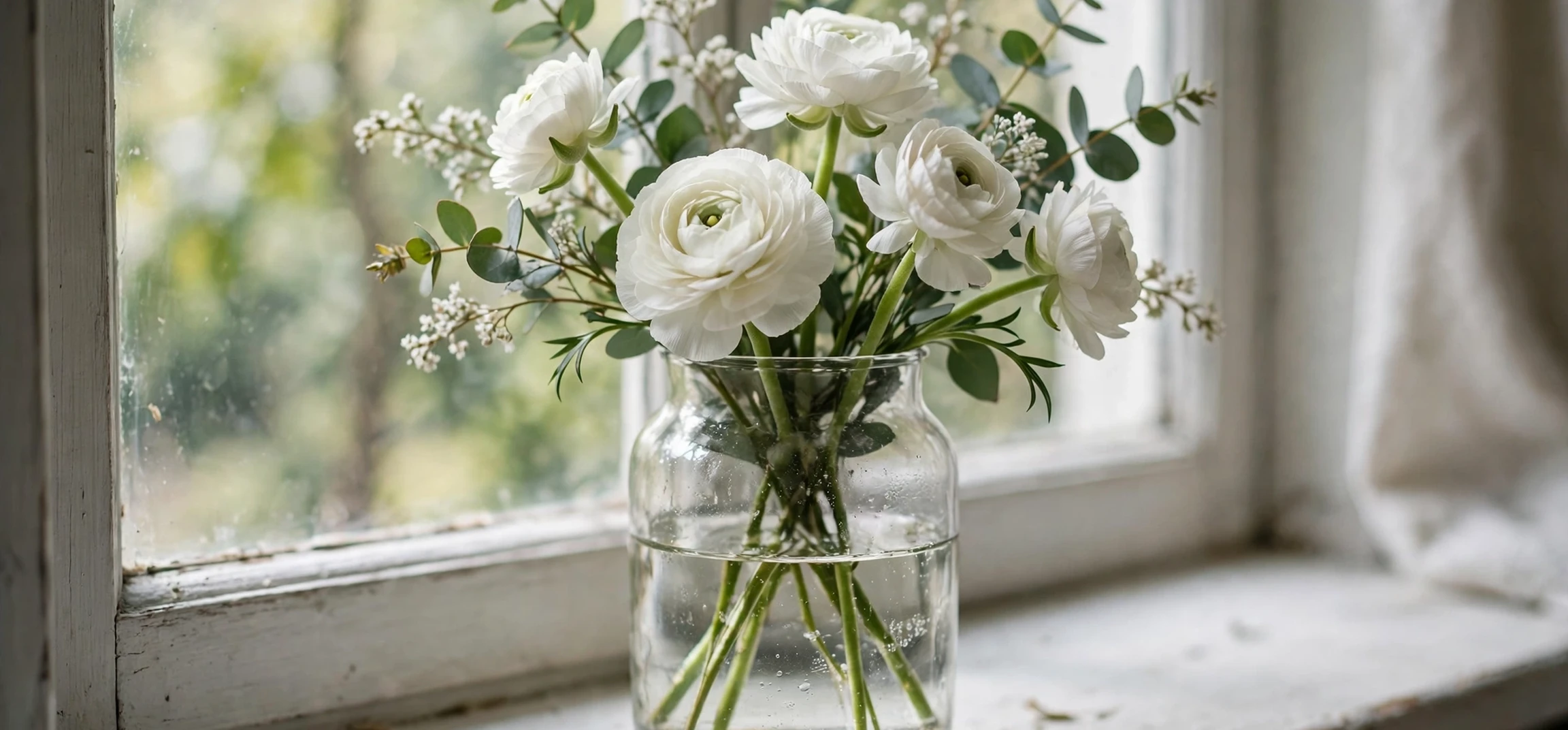
If you woke up wondering about the meaning of white flowers in a dream, you are joining a long tradition of dreamers who have found this image both beautiful and strangely moving. White flowers appear in dreams at weddings and funerals, in gardens and in wild places, given as gifts and found by chance, and each variation shifts the interpretation. This guide takes a different angle from a simple symbol dictionary: it looks at how psychologists, folklorists, and ordinary dreamers have understood white flowers, and how you can work out what your own dream was pointing toward.
The Meaning of White Flowers in a Dream
The meaning of white flowers in a dream is rarely about the flowers alone. Dream researchers note that the sleeping brain reuses images from waking life, combining them in ways that reflect emotional concerns rather than literal events. White flowers are visually striking and emotionally loaded, which makes them a natural vehicle for feelings about love, loss, hope, and forgiveness. When they appear in a dream, they often mark an emotional theme the dreamer is already carrying, even if the dreamer has not named it while awake.
This is why two people can dream of the same white roses and take away entirely different feelings. A person planning a wedding may dream of white roses as an expression of excitement and commitment. A person who has recently lost someone may dream of white lilies as an expression of grief. The symbol is flexible, and its meaning is completed by the dreamer’s life. Any interpretation that ignores the dreamer’s circumstances is, at best, a partial reading.
Folklore and Dream Dictionaries
Traditional dream dictionaries, which have been published for centuries, tend to give white flowers a favourable reading: happiness, success in love, or a peaceful period ahead. Some older dictionaries add a caution, noting that white flowers seen in a churchyard or at a funeral carry a more sombre meaning. These dictionaries are best treated as folklore rather than authority. They preserve the associations of their time and place, and they are useful for understanding what a symbol has meant historically, but they cannot know your life.
Modern dream folklore has added new layers. Online dream communities report white flowers appearing in dreams about pregnancy, about reconciliation after arguments, and about career changes. The pattern across these reports is consistent: white flowers cluster around transitions. Whether the transition is joyful or painful, the flower seems to mark a threshold, a moment when one phase gives way to another. That threshold quality may be the most durable part of the symbol’s meaning.
The Meaning of White Flowers in a Dream Across Settings
Setting is one of the strongest modifiers of the meaning of white flowers in a dream. A garden full of white flowers suggests an inner life that is being tended with care, or a relationship that is flourishing. A single white flower in an unexpected place, such as a city street or a battlefield, can suggest hope persisting in difficult conditions. White flowers floating on water evoke the lotus association of spiritual calm, while white flowers wilting in a vase may suggest a beautiful phase that is ending.
The people in the dream matter just as much. Flowers received from a partner may reflect the state of that relationship. Flowers associated with a deceased relative may reflect ongoing grief or a sense of continued connection. Flowers from an unknown figure can feel mysterious or even unsettling, and interpreters often read these as representing an unacknowledged part of the dreamer’s own feelings, such as a wish for forgiveness or a hope for recognition.
Emotions on Waking: The Most Honest Clue
Many dream workers argue that the emotion you feel on waking is more informative than any symbol dictionary. A white flower dream that leaves you calm and comforted probably reflects a need for, or an experience of, peace. One that leaves you tearful probably touches on loss or longing. One that leaves you uneasy may reflect a situation that looks pure or ideal on the surface but feels uncertain underneath. Recording the emotion immediately, before the details fade, is the single most useful habit for anyone interested in their dreams.
Keeping a dream journal, even a brief one, helps with this. A few lines each morning, noting the main image, the setting, the people present, and the waking emotion, will reveal patterns over weeks and months that a single dream cannot show. If white flowers recur, the journal will show whether they appear at similar life moments, which is far more meaningful than any generic interpretation.
| Dream setting | Common emotional theme | Question to ask yourself |
|---|---|---|
| Garden of white flowers | Cultivated peace, flourishing | What in my life am I tending with care? |
| Single white flower | Hope, a new possibility | What new thing am I noticing? |
| White flowers at a memorial | Grief, remembrance, farewell | What loss am I still processing? |
| Receiving a white bouquet | Recognition, affection, offer | What recognition do I want or fear? |
| Wilting white flowers | Ending, fading hope | What phase feels as if it is closing? |
When to Look Deeper
Most dreams about white flowers are ordinary and need no special attention. However, if such dreams recur alongside distress, grief, or anxiety that is affecting your daily life, it can be worth talking to a counsellor or therapist. Dreams are not diagnoses, but recurring dream themes sometimes accompany emotional difficulties that benefit from support. A professional can help you explore what the dream touches on without reducing it to a fixed symbol meaning.
It is also worth being cautious about dream-interpretation services that promise definitive answers or charge for personal readings. The most reliable interpretation is your own, informed by tradition but grounded in your life. No external authority can know what a white flower means to you better than you can, once you have the context of your own feelings and circumstances.
Working With Your Own Dream
If you want to understand a white flower dream more deeply, a simple reflective exercise can help. Write down the dream in as much detail as you can remember, then note three things: what was happening in your life when you had the dream, how you felt during the dream, and how you felt on waking. Then look for connections between those notes. Often a link will be obvious once it is written down: the dream may coincide with an anniversary, a decision, a reconciliation, or a loss that you had not connected to the image.
Another useful exercise is to imagine the dream from the flower’s perspective, a technique some dream workers recommend. Ask what the flower might represent if it could speak: is it offering comfort, marking an ending, celebrating a beginning, or asking for attention? This is not a literal method, and it does not produce a definitive answer, but it can unlock associations that a dictionary approach misses. The goal is not to decode the dream like a puzzle but to use it as a starting point for honest reflection about your emotional life.
Finally, remember that not every dream needs interpretation. Some dreams are simply the brain sorting through the day’s images, and a white flower may have appeared because you saw one in a shop window, a photograph, or a television programme. If no personal resonance emerges after reflection, that is a perfectly acceptable conclusion. The value of dream reflection lies in what it reveals, not in forcing every image to carry a message.
White Flowers and Personal Memory
Beyond tradition and psychology, white flowers in dreams are often tied to personal memory in ways no dictionary can predict. A person who grew up near a garden of white jasmine may dream of that scent when thinking of childhood. Someone who carried white roses at a wedding may dream of them on anniversaries. Someone who laid white lilies at a funeral may dream of them when grief resurfaces. These personal associations are the strongest of all, because they are built from lived experience rather than borrowed symbolism.
This is why asking someone else what your dream means has limits. Another person can offer traditions, patterns, and questions, but only you know which white flowers matter in your life and what they are connected to. If a dream of white flowers feels significant, the most productive question is not “what does this symbol mean in general?” but “what do white flowers mean to me, and what was happening when I dreamed of them?” That question turns a generic symbol into a personal insight, which is the real value of paying attention to dreams.
Frequently Asked Questions
What does dreaming of white flowers mean spiritually?
In many spiritual traditions, white flowers represent purity, devotion, and awakening. Whether that reading fits your dream depends on your own beliefs and on the dream’s context.
Can a white flower dream be a warning?
Dreams are not reliable warnings about future events. At most, a dream can highlight a current worry or a situation that deserves waking attention.
Why do I keep dreaming of white flowers?
Recurring symbols often accompany recurring life themes, such as grief, hope, or transition. A dream journal can help you see what those themes have in common.
Does the type of white flower matter?
Yes. Lilies lean toward remembrance, roses toward love, daisies toward innocence, and lotus toward spiritual growth. The type refines the general white-flower symbolism.
Conclusion
The meaning of white flowers in a dream is best understood as a conversation between tradition and personal life. Tradition supplies the broad themes of purity, new beginnings, peace, and remembrance, while your own circumstances, the dream’s setting, and your feelings on waking decide which theme applies. Record the details, notice the emotion, and look for patterns over time rather than settling for a single dictionary answer. That approach honours both the beauty of the image and the complexity of the life behind it. For more on reading symbols, see our guides on traditional symbols and symbol meanings.



