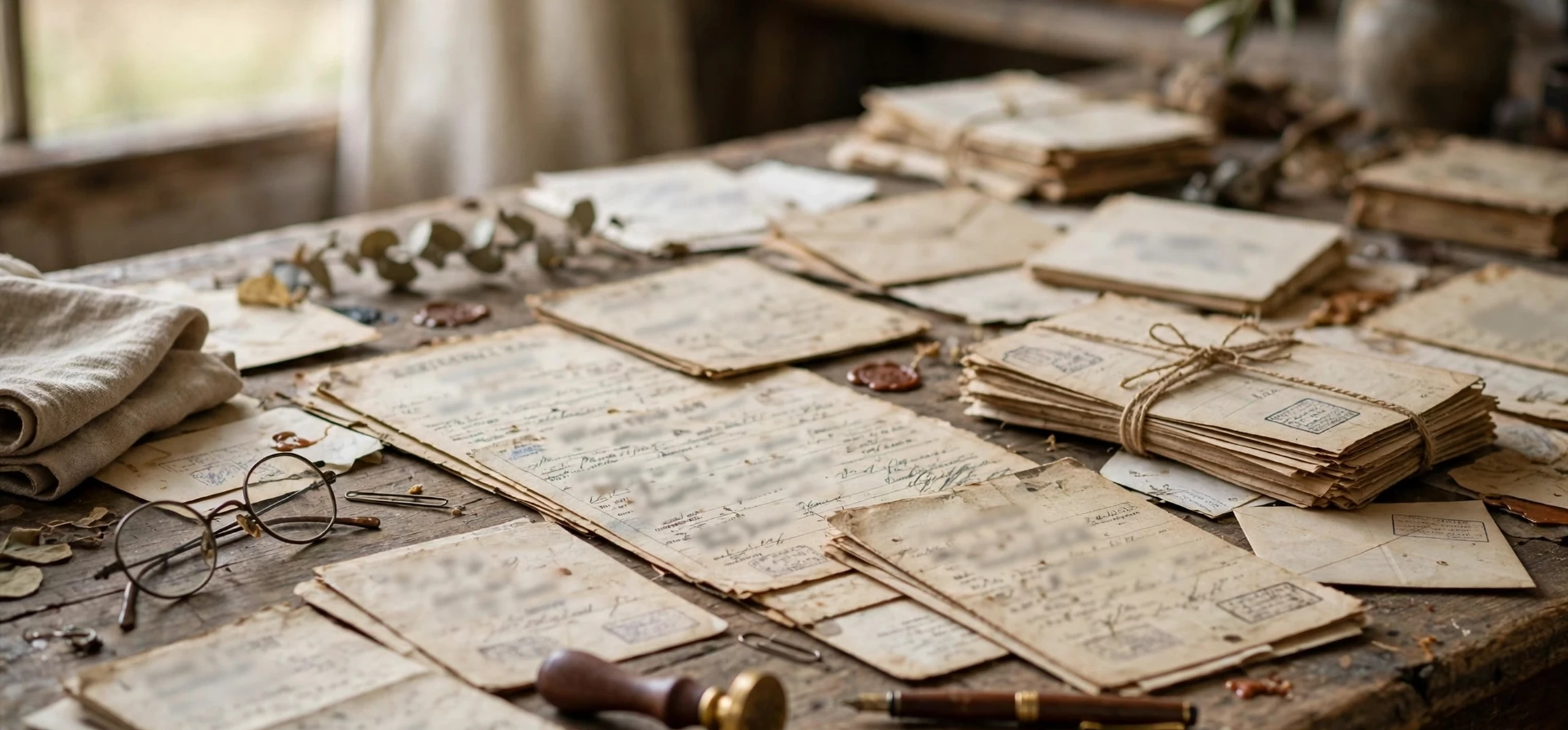
The Morrison last name is one of those surnames that sounds familiar in many English-speaking countries, and its history reaches back to medieval Scotland and Ireland, to patronymic naming, and to the personal name Morris. This guide to the Morrison last name explains what the name most likely means, where it comes from, how its spelling and pronunciation developed, and why families with the same surname are not necessarily related. It deals only with the history and meaning of the surname itself, so you can understand the name without confusing family legend with documented naming patterns.
Surnames like Morrison developed when growing populations needed a way to distinguish one John or Mary from another. A patronymic surname, formed from a father’s name, was one of the most natural solutions, and the Morrison last name is a classic example. In simple terms, Morrison generally means son of Morris, or descendant of Morris, with Morris itself coming from the name Maurice. That chain of names, from Maurice to Morris to Morrison, explains a great deal about the surname, even though individual families may have arrived at the name by slightly different routes.
Morrison Last Name Meaning
The core meaning of the Morrison last name is son of Morris. The suffix son is the giveaway, and it works the same way in many English and Scots surnames: a father’s given name plus son creates a family name that then becomes fixed and inherited. Morris, in turn, is a form of Maurice, a name of Latin origin associated with the word for dark or Moorish, and brought into Britain and Ireland through Norman and medieval naming traditions. Over time, Maurice became Morris in everyday use, and Morris became Morrison when a son needed to be identified by his father’s name.
That meaning is straightforward, but it carries an important warning. Because Morrison means son of Morris, any man named Morris in any village could have sons who became Morrisons. The surname therefore arose independently in many places, rather than descending from a single founding family. Two Morrison families in different counties, or different countries, may share nothing but the naming pattern. That is normal for patronymic surnames, and it is why surname history is about patterns and regions, not about proving that every bearer of a name belongs to one family tree.
Morris, Maurice, and Morrison
Understanding the Morrison last name is easier if you keep the three names separate. Maurice is the older, more formal given name, with medieval and saints’ associations. Morris is the shorter, everyday form that became common as a given name in its own right. Morrison is the surname built from Morris. You will also meet the spelling Morison, with one r, particularly in Scottish records, and that spelling is part of the same surname family rather than a completely different name. Spelling in older records was flexible, and the same person could appear under more than one spelling in different documents.
Is Morrison Scottish or Irish?
The honest answer is both, and also English in some cases. The Morrison last name is strongly associated with Scotland, where Morrison families, including those linked to the Western Isles and to Lewis in particular, have a long recorded presence. It is also found in Ireland, where Morris and Morrison names developed through Anglo-Norman settlement, English influence, and the adoption of English-style surnames. In England, Morrison appears as a patronymic surname as well. Regional association tells you where the name was common, not where any particular family originated, and only genealogical research in parish records, censuses, and other documents can trace an individual line.
Morrison Last Name Origins and History
The history of the Morrison last name follows the broader history of surnames in Britain and Ireland. Hereditary surnames became common over several centuries, roughly from the medieval period onwards, as populations grew, land records became more detailed, and administration required stable family names. Before that, a person might be known by a single name plus a descriptor, such as a trade, a place, or a father’s name used only for that generation. Morrison began as that kind of descriptor and then hardened into a permanent surname passed from parent to child.
In Scotland, the Morrison story includes clan associations, particularly in the Highlands and Islands. Clan histories are popular, and they can be a useful starting point for family interest, but they should be read with care. Clan membership in the modern sense, clan tartans, and clan histories as sold to tourists are often simplified or romanticised versions of a more complicated past. A family named Morrison may have lived in a clan area, worked for a clan chief, or simply shared a surname with clan members without being part of a formal clan structure. The Morrison last name is best understood first as a patronymic name, and only secondarily through clan stories that may or may not apply to a given family.
Migration spread the name widely. Scottish and Irish emigrants carried Morrison to England, North America, Australia, New Zealand, and beyond, particularly during periods of economic migration and settlement. In the United States, Canada, and Australia, Morrison became a familiar surname in many communities, and its bearers worked in every trade and profession. That global spread is why the name feels both distinctly Scottish or Irish and thoroughly international today. A Morrison in one country and a Morrison in another may have ancestors who left the same region centuries apart, or they may have no connection at all.
Spelling Variations to Watch For
When researching the Morrison last name, expect spelling variation. Morison, Morrisson, Morisson, and even Morieson appear in older records, and clerks sometimes recorded what they heard rather than what a family preferred. Pronunciation also varies by region, with some speakers stressing the first syllable more heavily than others. If you are tracing a family, search all plausible spellings, and do not assume that a spelling change means a different family. It often means a different clerk, a different century, or a move to a place where the name was spelled differently.
Where the Morrison Last Name Is Found
Today, the Morrison last name is found throughout the English-speaking world, with particular strength in Scotland, England, Ireland, the United States, Canada, and Australia. In Scotland, it remains associated with the north and the islands as well as with Lowland towns where families settled for work. In Ireland, it appears across several counties, reflecting different settlement and migration histories. In North America, Morrison families are found in many states and provinces, a result of several waves of migration rather than a single arrival.
Distribution maps can be interesting, but they need careful reading. A surname map shows where people with a name live now, or where they lived in a particular census, not where the name was invented. Modern distribution reflects jobs, housing, and migration as much as medieval origin. If you want to know where your own Morrison ancestors lived, census records, birth and marriage records, land records, and military records will tell you more than a general distribution map ever can.
The name also appears in place names, street names, and institutional names, which can confuse researchers. A town, school, or business named Morrison may be named for a local family, a founder, or a benefactor, but it does not prove that all Morrisons come from that place. Place-name evidence is useful for local history, but surname origin is a separate question, and the two should not be mixed without documentary evidence.
The Morrison Last Name in Public Life
The Morrison last name has been carried by many public figures, and their varied careers illustrate how widely the name has spread. In literature, Toni Morrison, the American novelist and Nobel laureate, is one of the most celebrated bearers of the name, known for novels that reshaped American literature and for essays and teaching that influenced generations of readers. In music, Van Morrison, the Northern Irish singer-songwriter, is known for a long career spanning rock, soul, folk, and jazz influences. In popular music history, Jim Morrison, lead singer of The Doors, remains a cultural figure whose work continues to be discussed decades after his death.
Those three examples alone show the range of the name: an American novelist, a Northern Irish musician, and an American rock singer, none of whom need be related to one another. The Morrison last name also appears in politics, sport, science, business, and the military, in many countries. That breadth is typical of a common patronymic surname. It is a reminder that a surname is a shared label, not a single family, and that fame attached to one bearer says nothing about another bearer beyond the name itself.
If you share the name, those public figures can be a source of interest or pride, but they are not evidence about your own ancestry. Genealogy works the other way round: start with yourself, work backwards through documented records, one generation at a time, and resist the temptation to jump to a famous namesake. The real story of a Morrison family is usually found in ordinary records: a marriage certificate, a census entry, a trade directory, or a gravestone, and those ordinary details are often more rewarding than a famous connection.
How to Research a Morrison Family
Begin with what you know: your own birth record, your parents’ and grandparents’ names, and any family documents, photographs, or stories. Interview older relatives while you can, and record names, places, and dates as they remember them, noting where memory is uncertain. Then move to official records, working backwards. Census records, civil registration, church registers, and immigration records are the backbone of most family research. Search spelling variants, including Morison, and search by place as well as by name, because a family may appear under a variant spelling in one census and the standard spelling in the next.
What the Morrison Last Name Means Today
Today, the Morrison last name functions like any other surname: it identifies a family, it appears on legal documents, and it carries personal and cultural associations for its bearers. Some Morrisons feel a strong Scottish or Irish identity through the name, and they may explore clan history, tartan, or family gatherings. Others simply use the name without thinking about its medieval roots. Both attitudes are normal. A surname can be a link to history, a practical label, or both, depending on the person.
For parents choosing names, Morrison is sometimes used as a first name as well, a common pattern in which surnames cross over into given names. That crossover can cause confusion in records, because a child named Morrison may not be a Morrison by surname, and a historical record for Morrison Smith and Smith Morrison needs careful reading. In genealogy, always check whether Morrison is functioning as a first name, a surname, or both in a given document.
For writers, researchers, and the simply curious, the Morrison last name is a good example of how English-language surnames work: a personal name becomes a patronymic, the patronymic becomes hereditary, spelling varies, migration spreads the name, and the result is a familiar surname with many independent origins. Understanding that process helps you read surname histories critically, whether you are researching your own family or simply wondering about a name you have encountered.
To explore other surname histories, see our guides to common English last names, the Butler name origin, and the Bowen name meaning.
Frequently Asked Questions About the Morrison Last Name
What does the Morrison last name mean?
The Morrison last name generally means son of Morris, with Morris itself being a form of Maurice. It is a patronymic surname that became hereditary over time.
Is the Morrison last name Scottish or Irish?
It is associated with both Scotland and Ireland, as well as England. The name arose through patronymic naming in different places, so regional association does not prove any individual family’s origin.
Are all people with the Morrison last name related?
No. Because the name means son of Morris, it arose independently wherever men named Morris had sons. Shared surname alone does not prove a family relationship.
What spelling variations should I search for?
Search for Morison, Morrisson, and Morisson as well as Morrison, and remember that older records often spell the same person’s name differently in different documents.
| Question | Short Answer |
|---|---|
| Meaning | Son of Morris, from Maurice |
| Type | Patronymic surname, later hereditary |
| Main regions | Scotland, Ireland, England, and the wider English-speaking world |
| Common variant | Morison, with one r, especially in Scottish records |
| Family link? | Shared surname alone does not prove relation |
Conclusion
The Morrison last name tells a clear and satisfying story: a medieval given name, Maurice, shortened to Morris, extended to Morrison for a son, and then fixed as a family name that travelled across Scotland, Ireland, England, and the world. It is a name with many origins rather than one, a name carried by celebrated writers and musicians who need not be related, and a name that rewards careful genealogical research over romantic guesswork. Whether you bear the name, are researching it, or simply wondered what it means, the Morrison last name is a reminder of how ordinary naming choices, repeated over centuries, become the surnames we use every day.