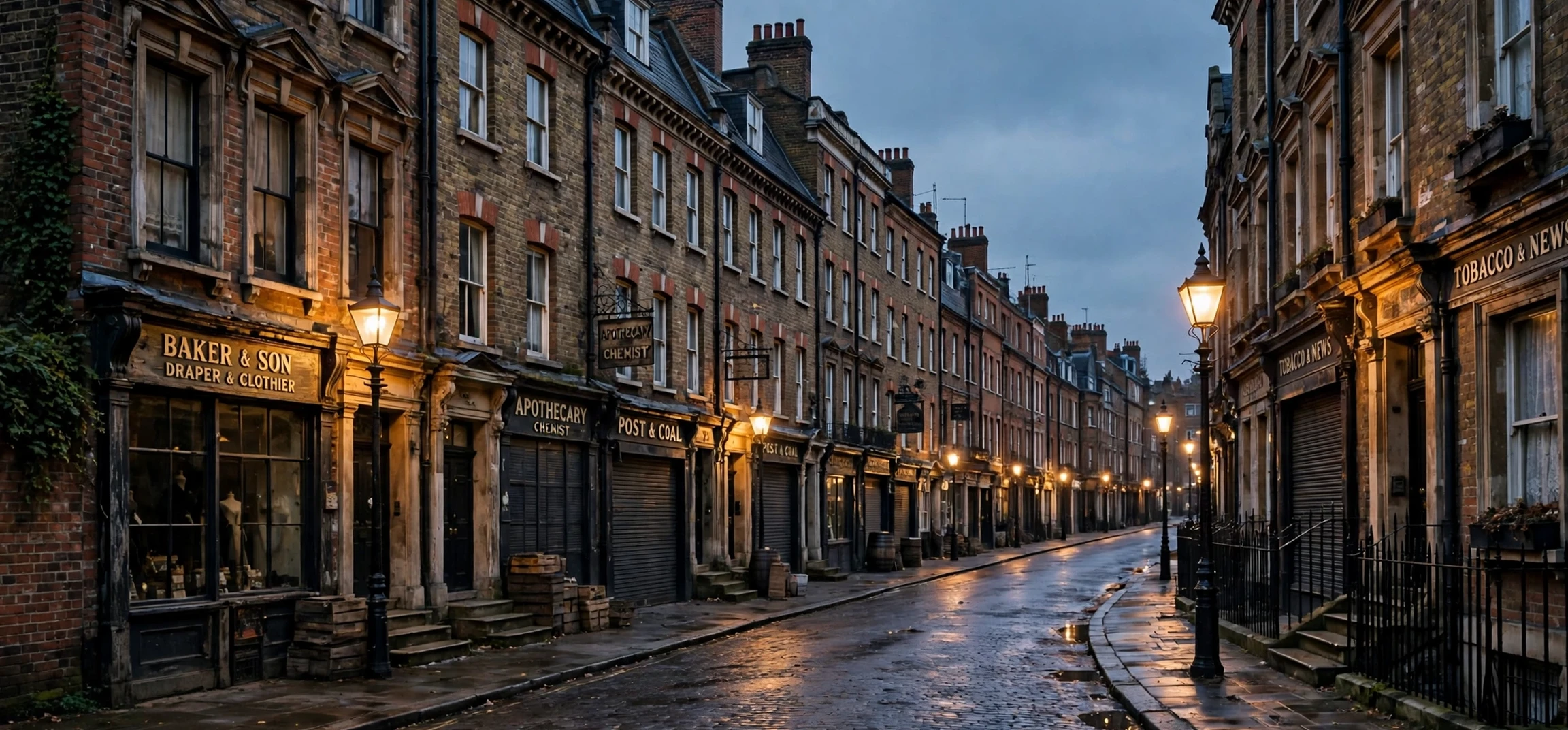
When readers search for victorian england names, they are usually looking for one of three things: authentic names for a story set in the nineteenth century, inspiration for a baby name with a classic feel, or an understanding of how naming worked in a period that still shapes English names today. Victorian England, broadly the reign of Queen Victoria from 1837 to 1901, was a period of enormous social change, and its names reflect that change. At the start of the period, a relatively small pool of traditional, often biblical or royal names dominated. By the end, that pool had widened considerably, with new names drawn from literature, nature, empire, industry and the growing middle class, alongside a strong tradition of family names passed down through generations. This guide explains that world in full: the most popular names, how they were chosen, how class and religion shaped them, and how to use them authentically today.
The Victorian period is particularly useful for name research because it is unusually well documented. Civil registration of births, marriages and deaths began in England and Wales in 1837, at the very start of the reign, which means that Victorian names can be studied through official records in a way that earlier periods cannot. Census records, parish registers, newspapers and novels all add further detail, and together they give a remarkably complete picture of which names were common, which were fashionable, which were considered respectable, and which were considered unusual or even eccentric. That documentary richness is part of why Victorian names remain so popular with writers, genealogists and parents today.
This guide is organised to be useful whether you are writing fiction, researching family history, or choosing a name. It begins with the most popular names of the period, moves through boys’ and girls’ names in turn, explains the social rules that governed naming, covers surnames and middle names, and ends with practical advice on using Victorian names authentically, plus answers to the questions readers ask most often.
Victorian England Names: The Most Popular Choices
The most popular victorian england names are, in many cases, still familiar today, which is part of their appeal. For boys, William, John, Thomas, George, James, Henry, Charles, Arthur, Frederick and Albert were among the most frequent choices throughout much of the period, with William and John leading the lists for decades. For girls, Mary, Elizabeth, Sarah, Ann or Anne, Jane, Emma, Margaret, Alice, Florence and Edith were similarly dominant, with Mary and Elizabeth at or near the top for much of the reign. A reader who picks any of those names for a Victorian character will rarely go wrong, because they were genuinely common across regions and social classes.
Popularity among victorian england names, however, was not static. Some names rose and fell with fashion, royalty and literature. Albert, for example, gained prominence through the Prince Consort, while Victoria itself became a popular girls’ name in honour of the Queen. Alexandra rose after the marriage of the Prince of Wales to Princess Alexandra, and literary names such as Alice gained ground after the success of popular novels. Conversely, some older names that had been common in the eighteenth century faded gradually, as parents sought names that felt current rather than dated. The result was a naming landscape that was stable at its core, with a small set of enduring favourites, but lively at its edges, with new names constantly entering use.
It is also important to understand how concentrated Victorian naming was. In a modern classroom, a wide variety of names is normal. In a Victorian classroom, several children might share the same first name, and would be distinguished by surnames, nicknames or middle names. Writers who give every Victorian character a different, unusual name may therefore create a less authentic impression than writers who reuse the common names realistically and distinguish characters in other ways. Authenticity often lies in repetition, not variety, and that is a useful rule to keep in mind throughout this guide.
| Rank in the period | Popular boys’ names | Popular girls’ names |
|---|---|---|
| Among the very commonest | William, John, Thomas, George | Mary, Elizabeth, Sarah, Ann |
| Very widely used | James, Henry, Charles, Arthur | Jane, Emma, Margaret, Alice |
| Fashionable and rising | Frederick, Albert, Ernest, Alfred | Florence, Edith, Clara, Beatrice |
| Respectable but less common | Edwin, Walter, Herbert, Sidney | Harriet, Louisa, Eleanor, Agnes |
Victorian England Names for Boys
The list of victorian england names for boys drew heavily on three sources: the Bible, royalty and history, and family tradition. Biblical names such as John, Thomas, James, Joseph, Samuel, Benjamin and David remained staples throughout the period, valued for their religious respectability and their long English history. Royal and historical names such as William, Henry, George, Charles, Edward and Arthur carried a sense of national continuity, and were popular across classes, from labourers’ cottages to country houses. Family names, including a father’s or grandfather’s first name, or a mother’s maiden surname used as a first name, were also common, and they explain why the same names repeat so often within a single family tree.
Occupational and aspirational naming also played a role, particularly in the growing middle class. Names such as Ernest, Herbert, Sidney and Percy, which sound distinctly Victorian to modern ears, gained ground in the later nineteenth century, partly through literature and partly through a desire for names that sounded educated, refined or modern. At the same time, working-class families often stuck more closely to the traditional core, partly from custom and partly because a familiar, respectable name was a safe choice for a child whose opportunities might depend on first impressions. Class differences in naming were real, but they were differences of emphasis rather than entirely separate lists, and the most popular names crossed class boundaries freely.
Nicknames and shortened forms were an everyday part of Victorian boys’ names. William became Will, Willie, Bill or Billy; James became Jim, Jimmy or Jem; Henry became Harry; Charles became Charlie; Edward became Ned, Ted or Teddy; and Albert became Bert or Bertie. A character in fiction who is always called William in formal settings and Will or Billy at home will feel more authentic than one who is always called by a single form. Readers interested in the origins of individual names may enjoy our guide to Anton name origin, which shows how a single name can carry a long history behind a short, familiar form.
Victorian England Names for Girls
Girls’ names in the period show a similar blend of tradition and fashion, with an added influence from literature, flowers and virtues. Mary, Elizabeth, Sarah, Ann and Jane remained the backbone of girls’ naming for much of the reign, valued for their biblical and historical associations. Alongside them, names such as Emma, Alice, Clara, Florence, Edith and Beatrice rose strongly, many of them through novels, poetry and royal example. Flower names such as Rose, Lily, Violet and Daisy, and virtue names such as Grace, Faith, Hope and Charity, were also used, though virtue names were more common in strongly religious families and in earlier decades than in the fashionable later period.
The later Victorian period saw a notable widening of girls’ names, as the middle class grew, girls’ education expanded, and novels and magazines circulated new names more widely. Names such as Ethel, Mabel, Gertrude, Winifred, Dorothea and Evelyn, which sound unmistakably Victorian today, belong largely to this later phase, and they are useful markers for a writer who wants to signal a character’s generation. A girl born in the 1840s is far more likely to be Mary, Elizabeth or Sarah, while a girl born in the 1880s might plausibly be Florence, Edith, Ethel or Mabel, alongside the enduring favourites. Getting the generation right is one of the simplest ways to make a Victorian setting feel authentic.
As with boys, nicknames mattered. Elizabeth became Lizzie, Bessie, Beth or Eliza; Margaret became Maggie, Peggy or Meg; Sarah became Sally; Ann became Annie; Florence became Flo; and Victoria became Vicky or Queenie in playful contexts. A girl might be registered as Margaret, called Maggie by her family, and addressed as Miss Margaret in formal society, all without any inconsistency. That layering of formal and familiar forms is a valuable tool for fiction writers, because it allows a character’s relationships to be shown through the name used, rather than explained in narration.
How Victorian Families Chose Names
Naming in Victorian England was rarely a purely individual choice. Family tradition was powerful: a first son might be named for his father or paternal grandfather, a first daughter for her mother or maternal grandmother, and later children for aunts, uncles, godparents or respected friends. Godparents, in particular, were often honoured by name, and a child might carry a godparent’s first name as a first or middle name. This pattern explains the repetition of names within families, and it is a gift for genealogists, because a child’s name can sometimes hint at the names of relatives who are otherwise hard to trace.
Religion also shaped naming, though in different ways for different denominations. Anglican families drew heavily on biblical and saints’ names, Catholic families might honour saints and use names such as Patrick, Bridget or Teresa, and Nonconformist families sometimes chose Old Testament names such as Ebenezer, Josiah or Prudence, which were less common elsewhere. Jewish families in Victorian England used both traditional Hebrew names and English names, often with a Hebrew name used within the family and an English name used in public life. A writer who gives every character a name from the same narrow pool, regardless of background, will miss this variety, while a writer who matches names to background will add quiet authenticity.
Fashion and public events also influenced choices, though less dramatically than modern celebrity culture does. Royal births, marriages and jubilees prompted waves of Victorias, Alexandras, Alberts and Edwards. Popular novels created new favourites almost overnight, and a name that had been rare could become fashionable within a few years of a successful book or play. At the same time, parents were generally cautious: a wildly unusual name was a risk, and most families balanced a desire for individuality against a desire for respectability. The result was a system in which new names entered slowly, proved themselves over a generation, and only then became common.
Surnames, Middle Names and Forms of Address
Surnames in Victorian England were already largely fixed and hereditary, unlike in earlier centuries when they could still change. The most common surnames, such as Smith, Jones, Taylor, Brown, Williams, Wilson and Johnson, were common in the Victorian period just as they are today, and they reflected older occupational, patronymic and descriptive origins. A character called John Smith is therefore not a cliché in a Victorian setting; he is a statistical likelihood. Less common surnames might reflect a trade, a place, a personal characteristic or a Norman-French origin, and they can be useful for signalling a family’s history, but they should be used sparingly, because an excess of unusual surnames quickly feels invented.
Middle names became increasingly common during the Victorian period, particularly in the middle and upper classes. A middle name might honour a relative, preserve a mother’s maiden name, or commemorate a godparent or family friend. Working-class children were less likely to have a middle name in the early Victorian period, though the practice spread steadily as the century progressed. For fiction writers, a middle name is a useful detail: it can reveal a family connection, provide a character with an alternative name to use later in life, or simply add a touch of period realism to a formal document, such as a birth certificate or a school register.
Forms of address are equally important for authenticity. An adult man might be Mr Smith in most contexts, with his first name used only by family and close friends. An adult woman might be Miss Smith if unmarried, and Mrs Smith if married, with her husband’s first name sometimes used in formal address. Children were often addressed by first name, or by first name and surname in school. Servants in a large household might be addressed by surname alone, or by first name, depending on the household’s customs. Readers interested in how surnames themselves developed may like our guide to Butler name origin, which traces one familiar surname to its occupational roots.
Using Victorian Names Authentically Today
For writers using victorian england names, the key to authentic Victorian naming is to start from the common core and add unusual names sparingly. Give most characters names from the popular lists in this guide, match names to their generation and social background, and use nicknames and forms of address to show relationships. Avoid the temptation to give every character a rare, striking name, because a Victorian street, school or household would not have looked like that. A single unusual name, explained by a family story, a foreign parent or a literary enthusiasm, will stand out far more effectively against a realistic background of Williams, Marys and Elizabeths than a whole cast of rarities will.
For parents choosing a baby name with a Victorian feel, the same lists offer a rich resource. Names such as Alice, Clara, Edith, Henry, Arthur, Frederick and Eleanor have returned to fashion in recent years, precisely because they combine historical depth with a soft, classic sound. When choosing, consider the full name, including surname and any middle names, and consider how the name will sound in childhood and adulthood, in formal and informal settings. A Victorian name that works well in both registers, with a natural nickname, is often the most satisfying choice, and the nickname traditions described above give parents a ready-made set of familiar forms to use.
For genealogists, Victorian names require patience with repetition. A family tree may contain several men named William or John in successive generations, distinguished only by middle names, occupations, spouses or addresses. Census records, civil registration and parish registers should be cross-checked carefully, and a name alone should never be treated as proof of identity. At the same time, naming patterns can be a clue: a child named for a grandparent, or a middle name that preserves a maiden surname, can point a researcher towards a relative or a marriage that might otherwise be missed. Our guide to Amish names for males offers a useful comparison, showing how a different community’s naming traditions also balance repetition, family honour and faith.
Victorian England Names: Frequently Asked Questions
What were the most common Victorian names?
For boys, William, John, Thomas, George, James and Henry were among the commonest throughout the period. For girls, Mary, Elizabeth, Sarah, Ann, Jane and Emma led the lists. These names remained popular across regions and classes, and they are safe choices for any Victorian setting.
Did Victorians use unusual names?
Yes, but less often than modern parents do, and usually within limits. New names entered through literature, royalty and fashion, and some families used virtue, flower or Old Testament names, but most families chose from a relatively small, respectable pool, and a very unusual name would have stood out.
How can I tell if a name is Victorian?
Check its period, not just its sound. A name may sound old-fashioned without being Victorian, and a Victorian name may still be common today. Civil registration records, census lists and contemporary novels are the best guides to whether a name was actually in use during the reign, and in which decades it was most popular.
Are Victorian names good baby names today?
Many are, and several have returned to fashion. Alice, Clara, Henry, Arthur and Eleanor are all Victorian favourites that work well today. Choose a name that sounds good with your surname, that has a nickname you like, and that will suit its bearer at every age.
Conclusion
Victorian england names offer a window into a society that valued tradition, family, faith and respectability, while also embracing new fashions, literature and ideas as the century progressed. The most popular names, William, John, Mary and Elizabeth, provide a stable core, while the rising names of the later period, Florence, Edith, Ernest and Albert, show how fashion moved within that stability. Whether you are writing a novel, tracing a family tree, or choosing a name for a child, the Victorian period rewards careful attention to generation, class, religion and family tradition. Start with the common names, use nicknames and forms of address thoughtfully, and let a single unusual name, when you use one, earn its place. That approach will give your Victorian names the authenticity that makes a setting, a story or a family history feel genuinely of its time.



