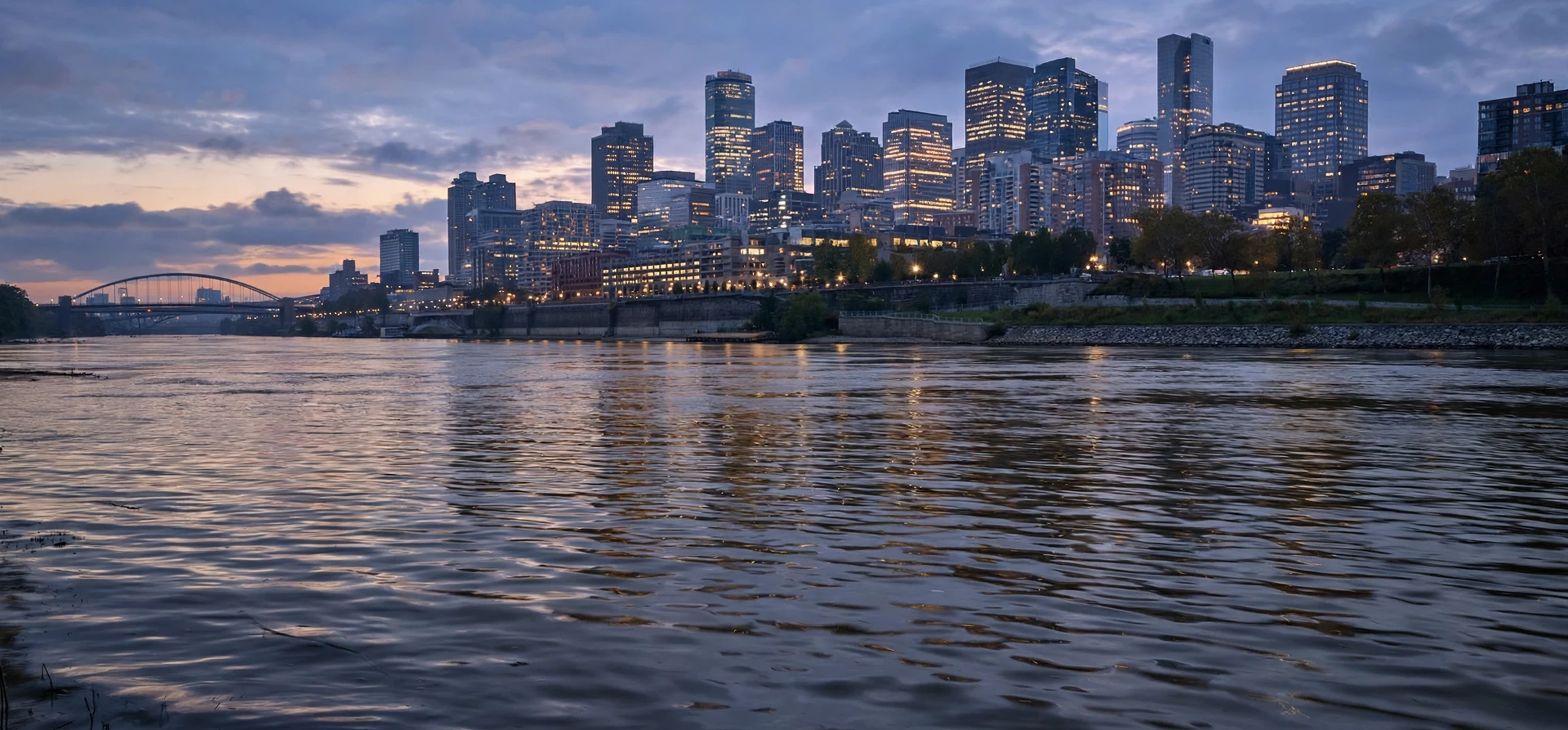
Ask someone to name a city in america and they will usually give you a place they have visited or seen on television. But the request to name a city in america can also be a doorway into a fascinating subject: how American cities got their names. This guide takes a different angle from a simple list — it explores the origins of American city names, from Native American words and European home towns to presidents, saints, and pure invention, with examples from across the country.
City names are history in miniature. They record who lived somewhere first, who arrived later, what the landscape looked like, and what the founders hoped the place would become. Reading the map of the United States is, in many ways, reading a condensed history of the country.
Name a City in America: Native American Origins
Many American city names come from Native American languages, often adapted by European settlers. Chicago comes from a word referring to wild garlic or onion that grew in the area. Milwaukee’s name is thought to derive from a word meaning a gathering place by the water. Seattle is named after Chief Seattle (Sealth) of the Suquamish and Duwamish peoples. Wichita, Omaha, Tulsa, and Miami all carry Native American roots, though the exact original meanings are sometimes debated by linguists, since early spellings were recorded by settlers who heard the words imperfectly.
These names are a reminder that American cities often stand on land with a much longer human history than the city itself. The names preserve, however imperfectly, languages and peoples that predate European settlement by centuries.
Name a City in America: European Home Towns and People
Settlers frequently named new places after the towns they had left behind. Boston is named after Boston in Lincolnshire, England. New York was named after the Duke of York. Philadelphia, from Greek roots meaning “brotherly love”, was chosen by William Penn as an ideal. Charleston was named for King Charles II of England, while Baltimore honours Lord Baltimore, the founder of the Maryland colony.
Other cities honour individuals: Washington, D.C., and the many Washingtons across the country, honour George Washington. Jefferson City, Missouri, honours Thomas Jefferson. Houston is named after Sam Houston, a leader of Texan independence. Lincoln, Nebraska, honours Abraham Lincoln. This habit of naming places after leaders means the map doubles as a hall of fame — and, in some cases, a record of contested legacies that communities still debate today.
Name a City in America: Descriptive and Invented Names
Some city names describe the landscape or the founders’ hopes. Salt Lake City describes its setting near the Great Salt Lake. Colorado Springs takes its name from mineral springs. Las Vegas, Spanish for “the meadows”, describes the green valley that surprised travellers in the desert. Phoenix, Arizona, was named after the mythical bird that rises from ashes, because the city was built on the ruins of an earlier canal system — a name chosen to express rebirth.
Other names are more playful or commercial. Truth or Consequences, New Mexico, famously renamed itself after a radio show in 1950. Hot Springs, Arkansas, describes its thermal waters. These names show that city naming was not always solemn: sometimes it was marketing, humour, or sheer optimism.
| City | Name origin type | Story in brief |
|---|---|---|
| Chicago | Native American | From a word for wild garlic in the area |
| Boston | English home town | Named after Boston, Lincolnshire |
| Seattle | Named person | Named after Chief Seattle |
| Phoenix | Symbolic | Mythical bird rising from earlier ruins |
| Las Vegas | Descriptive (Spanish) | “The meadows” in the desert valley |
| Salt Lake City | Descriptive | Named for the nearby Great Salt Lake |
Why So Many American Cities Share Names
One quirk of American geography is duplication: there are many Springfields, Salems, Madisons, and Clintons. This happened because settlers in different states independently chose the same popular names — a president, a home town, or a pleasant-sounding word. It is why a request to name a city in america is often followed by “which one?” — Springfield, Illinois, is the state capital, but Springfield, Missouri, is larger, and there are dozens more.
Duplicate names also create practical confusion, which is why postal addresses and official documents always include the state. When you name a city in america, adding the state is good practice, not pedantry.
Frequently Asked Questions
What is the most common city name in America?
Springfield and Salem are among the most repeated city names, each appearing in many states.
Do city names ever change?
Yes, though rarely. Cities have renamed themselves for many reasons, including honouring new figures, shedding controversial associations, or publicity.
Are all American city names in English?
No. Many come from Native American languages, Spanish, French, Dutch, and other languages, reflecting the continent’s layered history.
Name a City in America: Cities That Changed Their Names
City names are not permanent, and several American cities have changed theirs. New York was once New Amsterdam, under Dutch rule, before the English renamed it. Hot Springs, New Mexico, became Truth or Consequences in 1950 after a radio programme offered publicity to any town that adopted its name — a publicity stunt that became permanent. Other cities changed names to honour new figures, to distance themselves from controversial associations, or to attract settlers with a more appealing name.
Renaming debates continue today. Some communities reconsider names honouring figures whose legacies are now contested, while others defend historic names as heritage. These debates show that city names are not neutral labels: they express what a community values and remembers, and changing one is a significant civic act.
For researchers, name changes are a practical complication: historical records for a city may use an older name, and genealogists and historians must track both. Always check whether a place you are researching was known by another name in the period you are studying.
Name a City in America: Nicknames and Their Stories
Many American cities are better known by nicknames than by their formal names. New York is the Big Apple, Chicago the Windy City, New Orleans the Big Easy, Las Vegas Sin City, Boston Beantown, and Philadelphia the City of Brotherly Love. Each nickname has a story: the Big Apple may come from horse racing slang, the Windy City from politics or weather depending on which account you believe, and the Big Easy from the city’s relaxed attitude to life.
Nicknames serve a branding purpose as well as a colloquial one. Tourism boards adopt them, sports teams play on them, and residents use them with pride or irony. A nickname can capture a city’s character more vividly than its formal name, which is why nicknames often outlast the circumstances that created them.
Learning nicknames is also a quiz skill: questions often ask for a city by its nickname, and knowing that the Motor City is Detroit or the Mile High City is Denver can win points. Nicknames are, in effect, a second map of America, parallel to the official one.
Name a City in America: Unusual and Memorable Names
America’s map contains some wonderfully unusual city names. Intercourse, Pennsylvania, and Blue Ball, Pennsylvania, reflect old local names with innocent origins. Boring, Oregon, is twinned with Dull, Scotland, in a deliberate joke. Hell, Michigan, embraces its name with tourist enthusiasm. Accident, Maryland, and Why, Arizona, invite questions about their origins — and each has a story, often involving a surveyor, a local incident, or a misunderstanding.
Unusual names are memorable, which makes them useful for quizzes and conversations, but they also illustrate a serious point: place names come from ordinary people making ordinary decisions, and the results are sometimes eccentric. A name that seems odd today may have made perfect sense to the people who chose it.
When you name a city in america, an unusual name can be a conversation starter. It invites the question “where does that come from?”, and the answer is usually a small piece of local history worth hearing.
Name a City in America: Cities That Cross Boundaries
Some American cities cross state lines, which complicates the simple question of where a city “is”. Kansas City exists in both Missouri and Kansas, as two separate cities sharing a name and a metropolitan area. Texarkana straddles Texas and Arkansas, with State Line Avenue running down the middle — one side in each state. Bristol is split between Virginia and Tennessee, and the twin cities of the same name share a main street that is also a state boundary.
These divided cities create practical quirks: different tax rates, school systems, and laws on either side of the street, and residents who live in one state and work or shop in the other. They also create quiz traps: asking for the state of Kansas City has two correct answers, depending on which Kansas City is meant, and careful quiz-setters specify.
Other cities cross different kinds of boundaries: New York City spans five boroughs across several islands and the mainland, and its metropolitan area extends into New Jersey and Connecticut. Metropolitan areas, in general, rarely respect city or state limits, which is why population figures for a “city” and for its “metro area” can differ enormously.
Conclusion
To name a city in america is to touch a story: a Native American word, a settler’s home town, a president’s name, or a founder’s hope. Behind every familiar name on the map is a piece of history, and learning those stories makes the map itself far more interesting. For more geography and history guides, see our practical explainers and word origins, plus our general knowledge guides.



