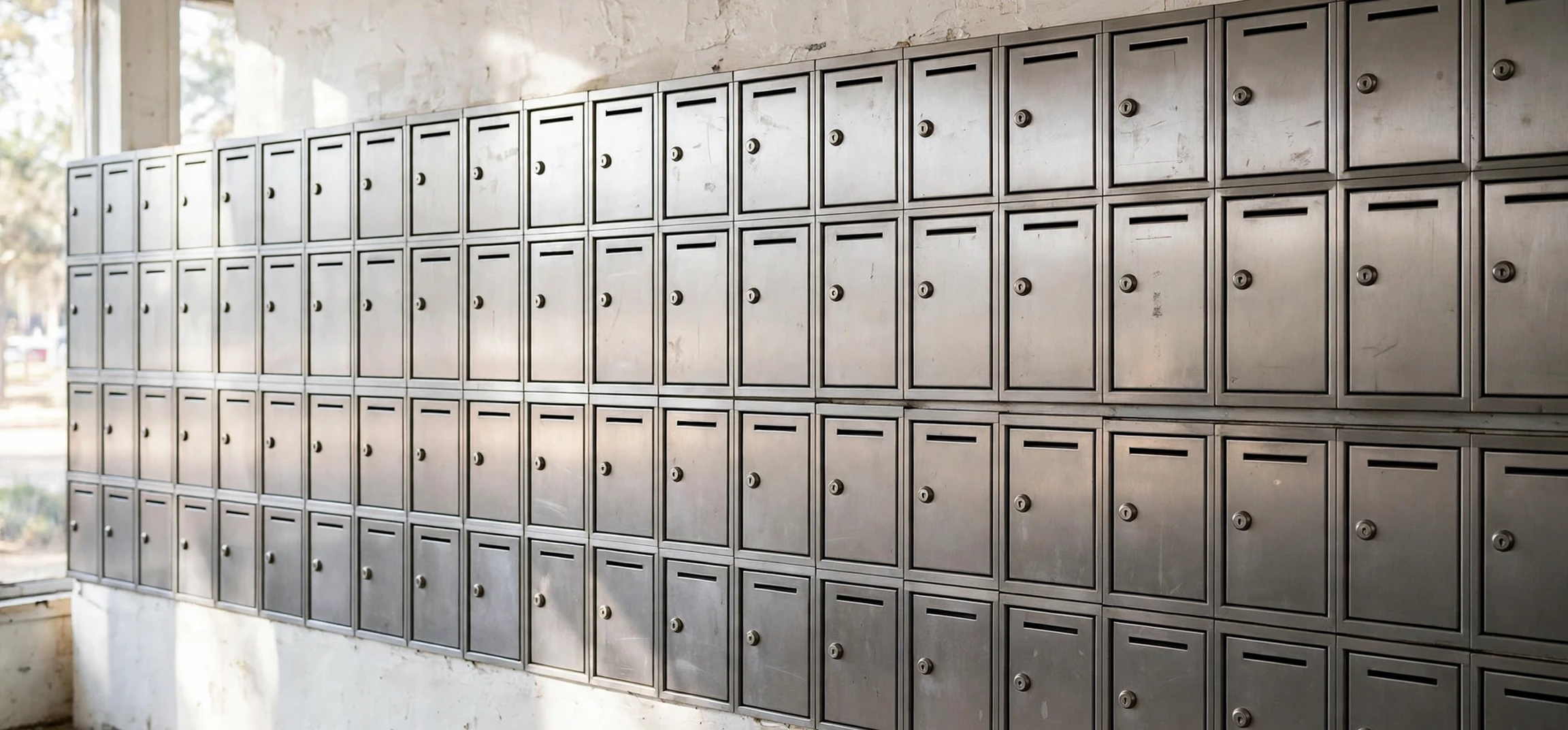
A virtual mailbox Nebraska service gives you a real street address in Nebraska that you can use for mail, without renting an office or living in the state. This guide explains what a virtual mailbox Nebraska option actually includes, who it suits, how to choose a provider, what “zero-cost” claims usually mean, and how to set one up safely. It covers service guidance only for a virtual mailbox Nebraska service: it does not ask for, include, or encourage sharing any personal data, and it does not promise a free service where none exists. If you are a freelancer, a remote business owner, a traveller, or a small company that wants a professional Nebraska presence, this guide will help you compare options with clear eyes.
The basic idea is simple. Instead of mail going to your home, a virtual mailbox provider receives it at their Nebraska facility, scans the outside of envelopes, and shows you digital images in an online dashboard. You then decide, item by item, whether to open and scan the contents, forward the item to another address, store it, shred it, or return it. That workflow suits people who move often, work remotely, or want to keep a business address separate from a home address. It does not suit every kind of mail, and it does not replace every legal or official address requirement, which is why understanding the limits matters as much as understanding the benefits.
Virtual Mailbox Nebraska: How It Works
A virtual mailbox Nebraska service typically begins with choosing a Nebraska city and address from the provider’s list, selecting a plan, and completing an identity verification step required by postal regulations for mail handling services. In the United States, commercial mail receiving agencies must follow postal rules, which generally include a form authorising the provider to receive mail on your behalf. That step is normal and legitimate, and any provider that skips identity checks entirely should be treated with caution. Once the account is active, mail addressed to your new Nebraska address is received, logged, and made visible in your dashboard, usually with a scan of the envelope exterior.
From the dashboard, you control what happens next. Opening and scanning lets you read letters and documents without waiting for forwarding, which is useful for time-sensitive correspondence. Forwarding bundles selected items and sends them to an address you specify, which suits travellers and people who split time between locations. Storage holds items you do not need immediately, shredding disposes of junk securely, and check deposit, where offered, handles incoming cheques digitally. Each action may carry its own fee depending on the plan, so the dashboard is not only a mail viewer but also a cost control tool: the more selectively you act, the more predictable your bill.
Virtual Mailbox Versus a PO Box
A virtual mailbox Nebraska address differs from a post office box in several practical ways. A PO box is a numbered box at a post office, while a virtual mailbox usually provides a street address, which many business registrations, banks, and online platforms prefer or require. A virtual mailbox also provides digital scans and remote management, whereas a PO box requires physical collection. A PO box, on the other hand, is often simpler and cheaper for purely personal mail, and it does not involve a third party opening or scanning your items. The right choice depends on whether you need a street address, digital access, and forwarding, or simply a secure place to collect letters.
There is also a difference between a virtual mailbox and a registered agent service, which is a common source of confusion for new Nebraska businesses. A registered agent receives legal and official state documents on behalf of a company, while a virtual mailbox handles general business and personal mail. Some providers bundle both, but they are distinct functions with distinct requirements. If you are forming a Nebraska company, check the state’s current requirements for a registered agent separately, and do not assume a virtual mailbox alone satisfies them. Similarly, some banks, government agencies, and licensing bodies have their own address rules, so confirm acceptance before relying on a virtual address for a specific application.
Who a Virtual Mailbox Nebraska Service Suits
Remote workers and digital nomads are natural users, because a virtual mailbox Nebraska address stays stable while the person moves. Freelancers and consultants use it to present a professional business address without publishing a home address on websites, invoices, and directories. Small e-commerce sellers use it to separate business correspondence from personal mail and to manage returns and supplier letters from one dashboard. Travellers, including people who spend months away from home, use it to avoid overflowing letterboxes and missed deadlines. In each case, the benefit is the same: a stable, professional address with remote control.
It suits some users less well. If you receive large parcels regularly, check size and weight limits, because many virtual mailbox plans are designed for letters and small packages, with larger items attracting extra fees or requiring a different service. If you need same-day physical access to original documents, a local address may be better than a remote dashboard. If you handle highly sensitive originals, consider how scanning, storage, and shredding are handled, and whether you are comfortable with a third party processing your mail at all. A virtual mailbox Nebraska service is a convenience and privacy tool, not a vault, and matching it to your actual mail pattern is the key to satisfaction.
For readers managing a move or an address change more generally, our guides to changing address with the postal service and to a new postal address explain the official steps that sit alongside any virtual mailbox decision. A virtual address changes where mail is received; it does not automatically update every account, subscription, and agency that holds your old address, so a separate update checklist remains essential.
Virtual Mailbox Nebraska Costs and “Zero-Cost” Claims
Plans for a virtual mailbox Nebraska service usually charge a monthly or annual subscription, with additional fees for actions such as extra scans, forwarding postage, storage beyond an included period, or handling large items. That tiered structure means the headline monthly price is only part of the total cost. A plan that looks cheap can become expensive if you open and forward many items, while a slightly higher plan with generous included actions can be cheaper overall for a heavy mail user. Comparing plans therefore requires estimating your own mail volume and habits, not simply picking the lowest headline price.
Claims of “zero-cost” virtual addresses deserve careful reading. A genuinely free mailbox with full scanning, forwarding, and storage, with no conditions, is rare, and most “zero-cost” language in this market refers to something narrower: a free trial period, a first month free, no setup fee, no cost for receiving mail itself, or a free address bundled with another paid service. None of those is the same as a permanently free service, and forwarding postage, in particular, is almost always charged because it is a real cost the provider pays to a carrier. Readers should treat any zero-cost claim as a prompt to ask what exactly is free, for how long, and what actions trigger fees, rather than as a promise of free mail handling forever.
Questions to Ask Before You Choose
Before committing, ask how mail is scanned and stored, how long items are kept, what happens to unclaimed mail, and how shredding is certified. Ask which carriers and mail types are accepted, whether parcels are supported, and what the size limits are. Ask how forwarding is priced, whether you can bundle items to save postage, and how quickly forwarding is dispatched. Ask what happens if you pause, downgrade, or cancel, and whether mail received after cancellation is returned or held. Ask about data security, including how dashboard access is protected and how long digital scans are retained. A provider that answers those questions clearly, in writing, is a provider you can compare fairly with others.
Also check the provider’s Nebraska footprint. A virtual mailbox Nebraska address should be a genuine address in Nebraska, not a forwarding label that routes elsewhere without disclosure. Check reviews from multiple sources, check how long the provider has operated, and check whether support is reachable by people as well as by ticket. A virtual mailbox is a long-term address relationship: you will give this address to clients, banks, and agencies, so changing providers later means updating all of them again. Choosing carefully at the start saves a second round of updates.
| Feature | What to compare | Why it matters |
|---|---|---|
| Monthly plan | Included recipients, scans, and storage days | Sets your baseline cost |
| Scanning | Envelope scans included; content scans priced per item or per page | Determines reading costs |
| Forwarding | Postage plus handling fee; bundling options | Often the largest variable cost |
| Storage | Free storage period and fees after it | Affects travellers and slow readers |
| Shredding | Secure shredding included or charged | Controls junk mail costs and privacy |
| Parcels | Size, weight, and carrier limits | Decides if the plan fits your mail mix |
| Cancellation | Notice period and handling of mail after cancellation | Prevents lost mail when you leave |
| Security | Dashboard protection and scan retention policy | Protects sensitive correspondence |
Setting Up a Virtual Mailbox Nebraska Address Step by Step
Setup usually follows a predictable sequence. First, choose a provider and a Nebraska location that suits your audience: Omaha and Lincoln offer the most recognisable city names, while smaller cities may suit businesses with a local focus. Second, choose a plan based on your expected mail volume, starting conservatively if you are unsure, since upgrading is usually easier than downgrading mid-contract. Third, complete identity verification and the postal authorisation form, providing the identification the provider and postal rules require. Fourth, test the address with a single, non-urgent item before updating banks, clients, and agencies, so that any setup issue is caught early.
Fifth, update your address systematically. Work through clients, suppliers, banks, insurers, subscriptions, and official bodies, and keep a list of what has been updated and what is pending. Sixth, set dashboard habits: check mail on a schedule that matches its urgency, act on time-sensitive items promptly, and clear or archive items regularly so the dashboard stays usable. Seventh, review the plan after two or three months against actual usage. If you consistently pay for actions you rarely use, or consistently exceed included allowances, adjust the plan rather than accepting a mismatch. That review is the difference between a service that saves time and one that quietly drains a budget.
Privacy is a genuine benefit, but it has limits worth stating plainly. A virtual mailbox Nebraska address keeps a home address off public business listings, which reduces unwanted visitors and unsolicited mail at home. It does not make a person anonymous to banks, tax authorities, or law enforcement, nor should it be used to evade legal obligations. Legitimate providers verify identity precisely because mail handling is a regulated activity. Readers should embrace the privacy benefit for its proper purpose — separating business and home life — and avoid any provider or scheme that promises anonymity as a way to avoid accountability.
If your Nebraska address is part of a wider online presence, a guide to getting your own domain name for email pairs naturally with a virtual mailbox, giving you a matching professional email domain and postal address. Consistent branding across email, website, and mail builds trust, and it is often the small consistencies, rather than any single service, that make a small business look established.
Virtual Mailbox Nebraska: Frequently Asked Questions
Is a virtual mailbox a real address?
Yes, a virtual mailbox Nebraska service provides a real street address at the provider’s facility, where mail is received on your behalf. It is not a fictional address, and providers must follow postal rules for commercial mail receiving, including identity verification. It is, however, a mailing address managed by a third party, not a physical office you occupy.
Is a virtual mailbox Nebraska service really zero-cost?
Usually not in the permanent, all-inclusive sense. Zero-cost language most often refers to a trial, a first month, no setup fee, or a bundled address with another paid service. Always ask what is free, for how long, and which actions, such as forwarding postage, are charged separately.
Can I use a virtual mailbox for a business registration?
It depends on the registration and the authority involved. Some filings accept a mailing address while requiring a separate registered agent address, and some banks and agencies have their own address rules. Check the specific requirements for your filing before relying on a virtual mailbox alone.
What happens to parcels sent to a virtual mailbox?
Many plans accept letters and small parcels, but size, weight, and carrier limits apply, and larger items may attract extra fees or be refused. If parcels are central to your business, confirm parcel handling explicitly before choosing a plan.
Conclusion: Virtual Mailbox Nebraska Done Right
A virtual mailbox Nebraska service is a practical tool when it is chosen for the right reasons: a stable street address, remote mail management, and a professional separation between business and home life. Its value depends on matching the plan to your real mail volume, reading “zero-cost” claims carefully, completing identity verification properly, and understanding where a mailing address ends and a registered agent or official address begins. Test the service, update your contacts systematically, review the plan after a few months, and treat the dashboard as part of your weekly routine. Done that way, a virtual mailbox Nebraska address becomes quiet infrastructure: mail arrives, you see it, you act on it, and you get on with your work, wherever you happen to be.



