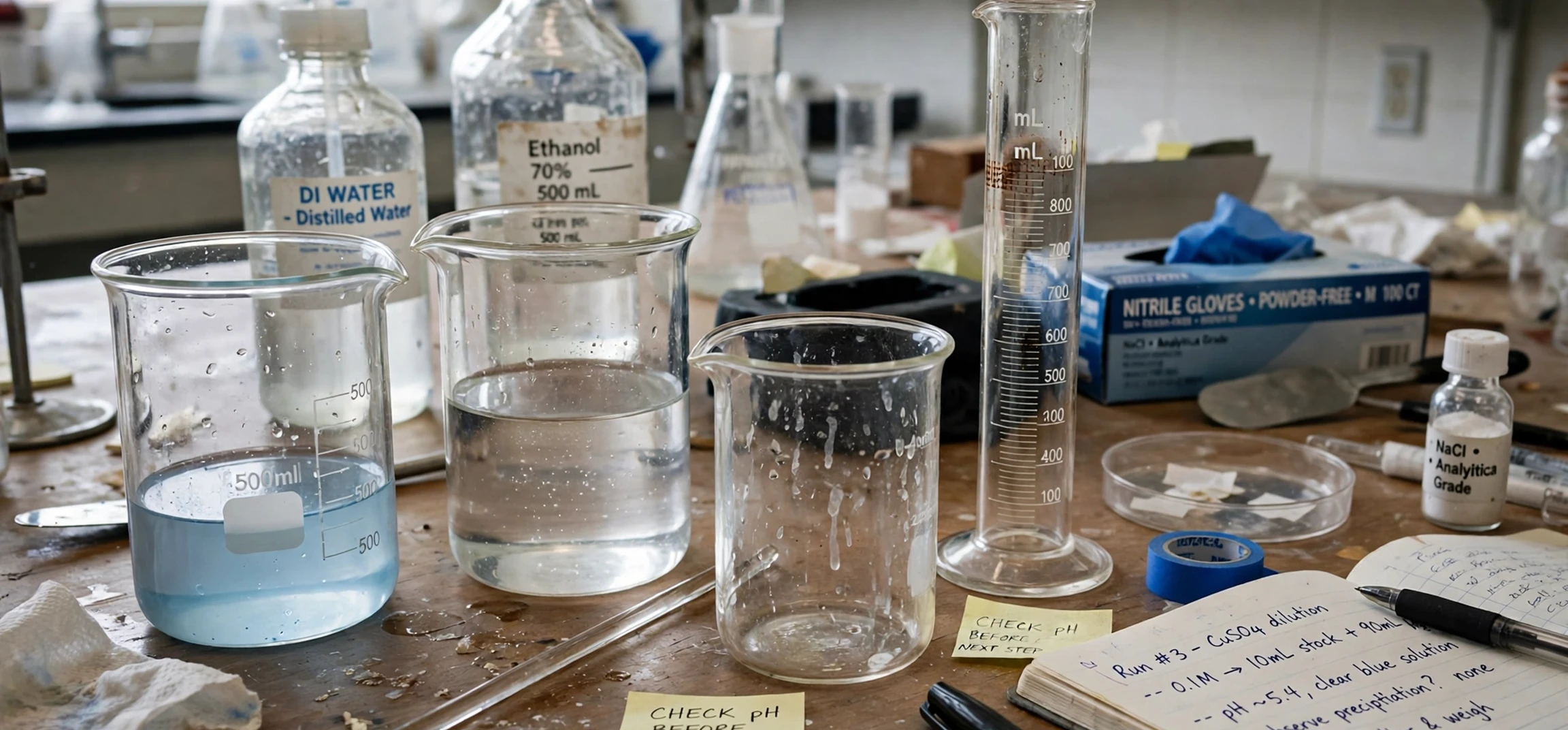
If you have searched for oh meaning chemistry, you have probably met one of the most useful two-letter symbols in all of science. In chemistry, OH most often stands for the hydroxide group: one oxygen atom bonded to one hydrogen atom. That tiny pairing shows up in water chemistry, acids and bases, alcohols, soaps, cleaners, and countless laboratory reactions. This guide explains oh meaning chemistry in plain language, covering the hydroxide ion, the hydroxyl group, the hydroxyl radical, and the common places where students confuse them. It is general science education only, written to help you read formulas, labels, and textbook diagrams with confidence.
Chemistry symbols are a shorthand, and like any shorthand they depend on context. The letters OH can mean slightly different things depending on whether they appear with a charge, inside a larger molecule, or in a reaction equation. Learning to spot those clues is the real skill. Once you know the difference between a free hydroxide ion and a hydroxyl group attached to a carbon chain, many formulas that once looked mysterious become readable. This guide builds that skill step by step, with clear definitions, everyday examples, and the mistakes to avoid.
That distinction is exactly what students mean when they ask about oh meaning chemistry.
oh meaning chemistry in Simple Terms
At its simplest, oh meaning chemistry refers to an oxygen atom and a hydrogen atom joined by a chemical bond. Oxygen is written as O and hydrogen as H, so OH is the natural shorthand for the pair. When the pair carries a negative charge, written as OH with a minus sign, it is called the hydroxide ion. When the pair is attached to another atom, usually carbon, it is called a hydroxyl group or hydroxyl functional group. Both forms contain the same two atoms, but they behave differently because their surroundings are different. That distinction is the key to almost every question about OH.
Think of OH as a building block rather than a finished substance on its own. In sodium hydroxide, the hydroxide ion pairs with a sodium ion to make a strong base used in cleaners and industry. In ethanol, the hydroxyl group attaches to a carbon chain to make an alcohol. In water, hydrogen and oxygen combine in a different ratio, H2O, which is a neutral molecule rather than a hydroxide ion. Keeping these three ideas separate, hydroxide ion, hydroxyl group, and water molecule, will prevent most confusion when you meet OH in textbooks, product labels, or exam questions.
Keeping the ion and the group apart is the central skill in oh meaning chemistry.
The Hydroxide Ion: oh meaning chemistry and Bases
The hydroxide ion is one of the central players in acid-base chemistry. Acids release hydrogen ions in water, while bases release hydroxide ions, and when an acid meets a base the two ions combine to form water in a neutralisation reaction. That is why oh meaning chemistry matters far beyond the classroom: it explains why some cleaners feel slippery, why antacids calm excess stomach acid, and why pH, the scale that measures acidity and alkalinity, moves in opposite directions for acids and bases. A solution with many hydroxide ions is alkaline, meaning it has a pH above 7, while a solution with few hydroxide ions and many hydrogen ions is acidic.
Strong bases such as sodium hydroxide and potassium hydroxide release hydroxide ions almost completely in water, which is why they must be handled with care in laboratories and industry. Weak bases release hydroxide ions only partly, so their solutions are less extreme. Students often ask why the same OH symbol appears in both strong and weak bases. The answer is that the symbol describes the ion itself, not how completely a compound releases it. Concentration, the identity of the partner ion, and the conditions of the solution all affect how strongly alkaline a solution feels and behaves. Always follow laboratory safety guidance and product instructions when handling any alkaline substance, and never taste or test an unknown chemical.
Teachers often return to oh meaning chemistry because the same two letters carry several meanings.
pH, Hydroxide, and Everyday Solutions
The pH scale runs from 0 to 14 in common school use, with 7 neutral, lower numbers acidic, and higher numbers alkaline. As hydroxide concentration rises, pH rises too. Pure water sits near neutral because it contains equal, very small amounts of hydrogen ions and hydroxide ions. Soap solutions, baking soda solutions, and many cleaners sit on the alkaline side, while vinegar, citrus juice, and fizzy drinks sit on the acidic side. This scale is logarithmic, which means each whole-number step represents a tenfold change in ion concentration. That is why a small pH difference can still mean a large chemical difference, and why careful measurement matters in science and industry.
The Hydroxyl Group in Alcohols and Organic Chemistry
In organic chemistry, oh meaning chemistry most often points to the hydroxyl functional group, written as -OH, attached to a carbon atom. A functional group is a specific arrangement of atoms that gives a molecule its characteristic behaviour, and the hydroxyl group is one of the most important of all. When -OH attaches to a carbon chain, the resulting molecule is an alcohol. Ethanol, the alcohol in fermented drinks, methanol, used as a fuel and solvent, and glycerol, used in cosmetics and food, all contain hydroxyl groups. The number and position of those groups change the properties of each molecule, from boiling point to solubility in water.
A careful reading of charges and brackets resolves most questions in oh meaning chemistry.
The hydroxyl group also explains why alcohols mix well with water. The oxygen in -OH attracts hydrogen atoms in nearby water molecules, forming hydrogen bonds that pull the substances together. That is why short-chain alcohols dissolve readily in water, while long-chain alcohols with large carbon sections dissolve less well: the water-loving hydroxyl group competes with the water-avoiding carbon chain. Recognising -OH in a structural diagram is therefore a powerful reading skill. Wherever you see -OH on a carbon skeleton, you can predict that the molecule will behave like an alcohol in many respects, even before you learn its full name.
The Hydroxyl Radical: A Reactive Cousin
Students sometimes meet a third OH species: the hydroxyl radical, written with a dot to show an unpaired electron. Unlike the stable hydroxide ion, the radical is extremely reactive and short-lived, because it seeks another electron to complete its outer shell. In the atmosphere, hydroxyl radicals help break down pollutants and greenhouse gases, which is why scientists sometimes call them the detergent of the atmosphere. In the body, related reactive species are studied in biology and medicine, but this guide stays at the level of general education: the key point is that the dot matters. Hydroxide ion, hydroxyl group, and hydroxyl radical share the letters OH, but the charge, the attachment, and the dot completely change the chemistry.
This everyday example shows why oh meaning chemistry matters outside the laboratory as well.
Confusing these three forms is one of the most common student errors. A useful check is to ask three questions whenever you see OH. First, is there a charge symbol? A minus sign points to the hydroxide ion. Second, is the OH attached to a carbon chain? That points to a hydroxyl group in an organic molecule. Third, is there a dot symbol? That points to the radical. If none of these clues is clear, look at the wider equation or diagram, because context usually resolves the meaning. Teachers and textbooks use these conventions consistently, so learning them once pays off across many topics.
Reading Formulas: oh meaning chemistry in Equations
Formulas become much easier once you can read OH in context. In sodium hydroxide, written NaOH, the OH is the hydroxide part paired with sodium. In calcium hydroxide, written Ca(OH)2, the brackets show that two hydroxide groups pair with one calcium ion, because calcium carries a double positive charge. In ethanol, written C2H5OH, the OH at the end is the hydroxyl group attached to the carbon chain. In a neutralisation equation, an acid plus a base gives a salt plus water, and the water forms when hydrogen ions meet hydroxide ions. Spotting OH in each of these places tells you what role it is playing before you even balance the equation.
Revision works best when oh meaning chemistry is practised with real formulas rather than memorised alone.
Balancing equations with OH requires care with brackets and subscripts. A subscript outside brackets, such as the 2 in Ca(OH)2, multiplies everything inside the brackets, so there are two oxygen atoms and two hydrogen atoms from the hydroxide groups. A subscript inside a formula, such as the 2 in H2O, applies only to the atom before it. These small notational rules are worth practising, because a misplaced bracket changes the meaning of the whole formula. Work through a few examples slowly, count atoms on each side of the equation, and check that charges balance as well as atoms. That habit will serve you in every area of chemistry, not only in questions about oh meaning chemistry.
Common Mistakes to Avoid
The most common mistake is calling every OH a hydroxide ion, even when it is a hydroxyl group in an alcohol. The second is writing OH for water, which is H2O, a different molecule with two hydrogen atoms and no charge. The third is forgetting that hydroxide is charged, which matters when balancing ionic equations. The fourth is confusing OH with other two-letter symbols, such as the element symbols for osmium or holmium, which are entirely different. Keep a short checklist beside you while studying: charge, attachment, brackets, and context. With that checklist, oh meaning chemistry stops being a guessing game and becomes a reliable reading skill.
The table above is a useful summary for anyone revising oh meaning chemistry before a test.
OH in Everyday Life: Soaps, Cleaners, and Food
Hydroxide chemistry is all around the home, most famously in soap making. Traditional soap is made by reacting fats or oils with an alkaline solution, a process called saponification, in which hydroxide ions break fat molecules into soap and glycerol. That is why strong alkalis appear in soap recipes and drain cleaners, and also why those products carry safety warnings. The same hydroxide chemistry that cleans effectively can irritate skin, so household products are formulated, diluted, and labelled to be used safely. Always follow the label, wear protection when advised, and store alkaline cleaners away from children and pets.
In food and drink, hydroxyl groups appear in sugars, glycerol, and many flavour compounds, where they affect sweetness, texture, and solubility. In medicine, the name of a compound often reveals a hydroxyl group, because the suffix -ol signals an alcohol. Paracetamol, for example, contains a hydroxyl group on a benzene ring, which is part of why its chemical name looks complex. You do not need to memorise every structure to benefit from this knowledge: simply recognising that -ol and -OH point to the same family of chemistry helps you read medicine leaflets, cosmetic labels, and food ingredient lists with more understanding. For related chemistry reading, see the guide to what a molecule means in chemistry and the explanation of matter in science.
In short, oh meaning chemistry is a reading skill as much as it is a set of definitions.
OH Forms Compared
| Form | Symbol | What It Is | Where You Meet It |
|---|---|---|---|
| Hydroxide ion | OH with a minus charge | Free ion in water solutions | Bases, cleaners, neutralisation |
| Hydroxyl group | -OH attached to carbon | Functional group in a molecule | Alcohols, sugars, glycerol |
| Hydroxyl radical | OH with a dot | Highly reactive species | Atmospheric chemistry research |
| Water molecule | H2O | Neutral molecule, not OH | Drinking water, solutions, biology |
| Sodium hydroxide | NaOH | Strong base compound | Industry, soap making, cleaners |
| Calcium hydroxide | Ca(OH)2 | Base with two hydroxide groups | Construction, water treatment |
| Ethanol | C2H5OH | Alcohol with one hydroxyl group | Fuels, solvents, fermented products |
| Glycerol | Three -OH groups | Alcohol with three hydroxyl groups | Cosmetics, food, pharmaceuticals |
Use this table as a quick reference when revising. Cover the right-hand columns, look at the symbol, and try to name the form and predict its behaviour. That active recall exercise is far more effective than simply rereading definitions. If you can explain why NaOH is a base, why C2H5OH is an alcohol, and why H2O is neither, you have mastered the core of oh meaning chemistry.
Frequently Asked Questions About oh meaning chemistry
Is OH the same as water?
No. Water is H2O, a neutral molecule with two hydrogen atoms and one oxygen atom. OH is either a charged hydroxide ion or a hydroxyl group attached to another atom. The formulas look similar, but the atom counts and charges are different.
Once that habit is formed, oh meaning chemistry becomes straightforward rather than confusing.
Why does hydroxide have a minus sign?
The minus sign shows that the hydroxide ion carries one extra electron, giving it a negative charge. That charge explains why it pairs with positive metal ions in bases and why it combines with hydrogen ions to form water.
Why do alcohols contain OH but not behave like strong bases?
In an alcohol, the -OH group is bonded to carbon and does not float free as an ion, so it does not release hydroxide ions into water the way a base does. The attachment changes the behaviour completely, even though the same two atoms are present.
Where is hydroxide used in industry?
Hydroxide compounds are used in soap making, paper production, water treatment, food processing, and chemical manufacturing. Each use relies on the same core chemistry, adjusted by concentration and formulation for safety and effectiveness.
Conclusion
The answer to oh meaning chemistry is short to state and rich to understand: OH is an oxygen atom bonded to a hydrogen atom, appearing as a hydroxide ion in bases, a hydroxyl group in alcohols and many other organic molecules, and a reactive radical in atmospheric science. Learning to tell those forms apart, by charge, by attachment, and by context, turns a confusing symbol into a reliable clue. It helps you read formulas, predict whether a substance will behave like a base or an alcohol, and follow neutralisation reactions with confidence. Keep the comparison table nearby, practise with real formulas, and remember that oh meaning chemistry is not a single definition to memorise, but a small set of patterns that unlock a large part of chemistry. For a further example of chemical naming, see the guide to acetylsalicylic acid and chemical names.