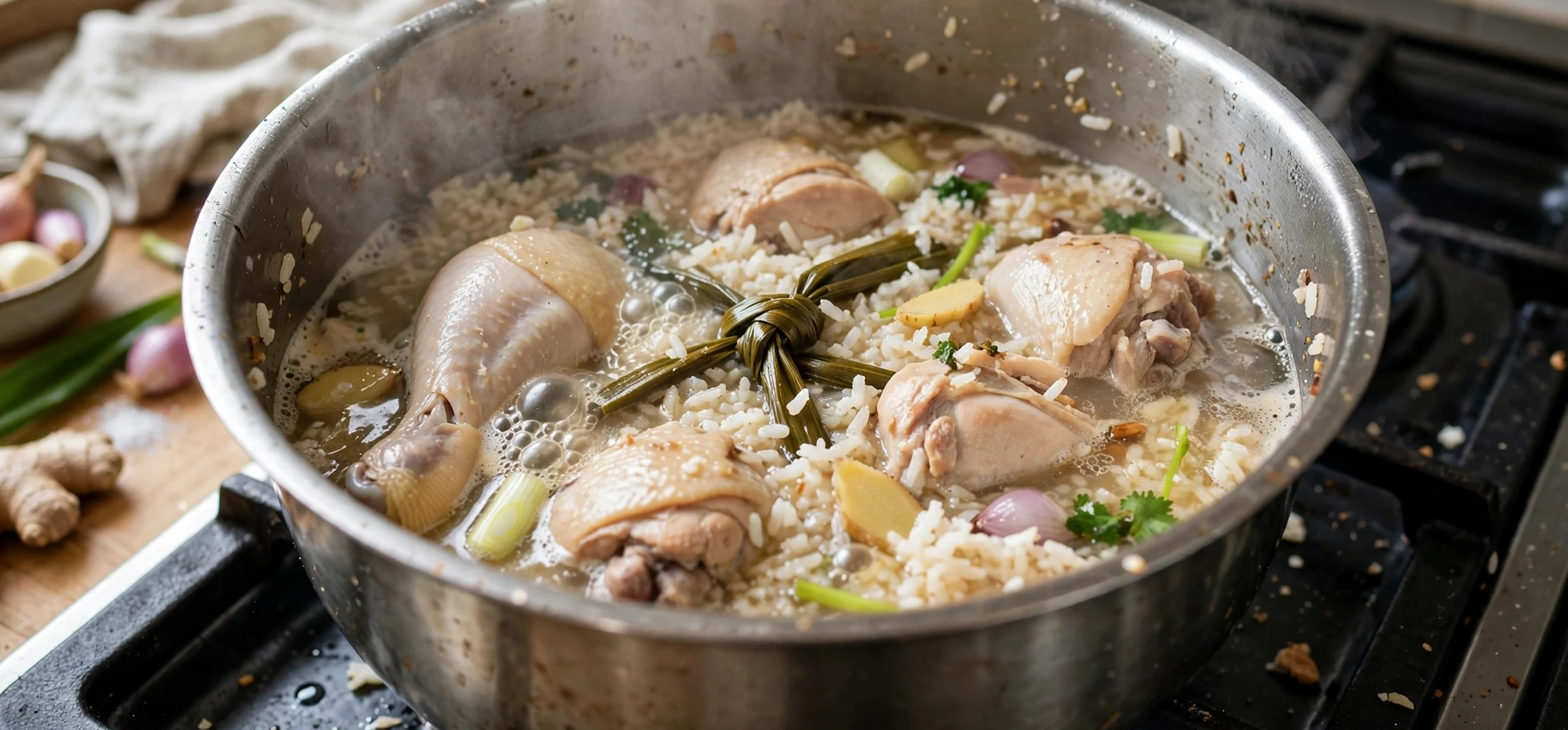
Learning how to cook rice in chicken stock is one of the easiest ways to turn a plain side dish into something rich, savoury, and satisfying. Instead of cooking rice in plain water, you cook it in warm, well-seasoned chicken stock, so every grain absorbs flavour as it softens. The result is rice that tastes complete on its own, pairs beautifully with roasted vegetables, grilled chicken, stews, and salads, and needs little extra seasoning at the table. This guide explains how to cook rice in chicken stock step by step, covers the ratios for the most common rice types, and shares the small habits that prevent sticky, mushy, or undercooked results. Whether you use a saucepan, a rice cooker, or an oven, the principles are the same: rinse when needed, measure carefully, bring the stock to a gentle simmer, and let the rice rest before fluffing.
Chicken stock adds depth that water cannot. It carries salt, savoury notes from the chicken, and gentle aromas from vegetables and herbs used in the stock itself. That is why learning how to cook rice in chicken stock is so useful for everyday cooking. A pot of rice cooked this way can anchor a weeknight dinner, fill out a lunchbox, or form the base for a fried rice the next day. It also makes economical sense: a carton or a batch of homemade stock stretches further when it flavours a staple as well as a soup or a sauce. The key is control. Stock varies in saltiness, so taste it before cooking, adjust lightly, and remember that the rice will concentrate the flavour as the liquid is absorbed.
How to Cook Rice in Chicken Stock: The Basics
The basic method for how to cook rice in chicken stock is simple. Measure the rice, rinse it if the type benefits from rinsing, and measure the stock. Heat a little oil or butter in a saucepan if you like a toasted note, add the rice, and stir for a minute until the grains look slightly translucent at the edges. Pour in the stock, bring it to a gentle boil, then reduce the heat to the lowest setting, cover the pan tightly, and cook without lifting the lid. When the time is up, remove the pan from the heat and leave it covered for ten minutes. That resting time is essential: it lets the last steam finish cooking the grains evenly. Only then should you fluff the rice gently with a fork.
Resisting the urge to lift the lid is the single most important habit when learning how to cook rice in chicken stock. Every time the lid comes off, steam escapes and the temperature drops, which can leave the top layer undercooked while the bottom overcooks. A tight-fitting lid and a low, steady heat matter more than fancy equipment. If your lid does not fit well, a sheet of foil under the lid can help seal the pan. Similarly, stirring during cooking breaks grains and releases starch, which is useful for risotto but not for fluffy, separate grains. Stir once, when the stock goes in, then leave the rice alone until it has rested.
Choosing the Right Rice
Different rices behave differently in stock, so the choice shapes the texture. Long-grain white rice, such as basmati or jasmine, gives light, separate grains and a fragrant result, which suits curries, grilled dishes, and salads. Medium-grain rice is slightly stickier and works well for bowls and pilafs. Short-grain rice clumps more and suits dishes where a creamy or compact texture is wanted. Brown rice is chewier, nuttier, and needs more liquid and a longer cooking time. When you learn how to cook rice in chicken stock, start with long-grain white rice, because it is forgiving and shows the flavour of the stock clearly. Once that method feels easy, adjust the ratio and time for other varieties using the table below.
How to Cook Rice in Chicken Stock: Ratios and Times
Ratios are the heart of how to cook rice in chicken stock. Too much stock gives soggy rice; too little leaves hard, chalky grains. The table below gives reliable starting points for a saucepan on low heat. Always use the same cup for rice and stock, rinse long-grain white rice until the water runs fairly clear, and remember that brown rice needs a longer soak in flavour. If your stock is very salty, dilute a small part of it with water and taste before cooking, because the salt will concentrate as the liquid reduces. If your stock is unsalted, add a pinch of salt and taste again.
| Rice type | Rice to chicken stock | Simmer time | Rest time |
|---|---|---|---|
| Long-grain white (basmati, jasmine) | 1 cup rice to 1.5 cups stock | 15 to 18 minutes | 10 minutes |
| Medium-grain white | 1 cup rice to 1.5 cups stock | 18 to 20 minutes | 10 minutes |
| Short-grain white | 1 cup rice to 1.25 cups stock | 18 to 20 minutes | 10 minutes |
| Brown rice | 1 cup rice to 2 cups stock | 40 to 45 minutes | 10 minutes |
| Wild rice blend | 1 cup rice to 2.5 cups stock | 45 to 50 minutes | 10 minutes |
These times assume a covered saucepan on the lowest heat. A rice cooker follows the same principle, with the machine controlling the heat and switching to a warming setting when the liquid is absorbed. In a rice cooker, the method for how to cook rice in chicken stock is even simpler: rinse the rice, add it to the cooker bowl, pour in the measured stock, close the lid, and press cook. Leave the rice to rest for ten minutes after the cooker switches to warm, then fluff. In the oven, use a covered ovenproof dish, the same ratio, and bake at a moderate temperature for about 25 minutes for white rice, checking once at the end. The oven method is useful for large batches because the heat surrounds the dish evenly.
Toasting, Aromatics, and Extra Flavour
Toasting the rice before adding stock is a small step with a big payoff. Heat a spoonful of oil or butter, add the rinsed and drained rice, and stir for one to two minutes until it smells nutty and a few grains turn pale gold. Then pour in the stock carefully, because it will steam and bubble. Aromatics can be added at this stage too: a crushed garlic clove, a small piece of onion, a bay leaf, a strip of lemon zest, or a few sprigs of thyme. These should be removed before serving. When thinking about how to cook rice in chicken stock, keep additions gentle. The stock already carries flavour, so one or two aromatics are enough. Too many strong spices will mask the savoury base rather than support it.
Butter and oil also affect texture. A little fat coats the grains and helps them stay separate, while too much makes the rice greasy. One teaspoon to one tablespoon per cup of dry rice is a sensible range. For a lighter result, skip the fat and simply pour the stock over the rice. For a richer pilaf, toast the rice in butter, add a finely chopped onion, cook until soft, then add the stock. This pilaf approach is a natural extension of how to cook rice in chicken stock, and it turns the same ingredients into a more complete side dish with very little extra work.
How to Cook Rice in Chicken Stock Step by Step
Here is a clear, repeatable method for how to cook rice in chicken stock using a saucepan. First, measure one cup of long-grain white rice and rinse it in a bowl of cold water, swirling gently and draining, repeating three or four times until the water is much clearer. Drain well. Second, heat one tablespoon of oil or butter in a medium saucepan over medium heat, add the rice, and stir for about a minute until it smells lightly toasted. Third, pour in one and a half cups of chicken stock, add a pinch of salt if the stock is unsalted, and stir once. Fourth, bring the liquid to a gentle boil, then immediately reduce the heat to low and cover tightly. Fifth, cook for 15 to 18 minutes without lifting the lid. Sixth, remove from the heat and rest, still covered, for ten minutes. Finally, remove the lid, fluff with a fork, and serve.
If the rice is still a little firm after resting, sprinkle over two tablespoons of hot stock or water, cover again, and rest for five more minutes. If it is slightly wet, leave the lid ajar for a few minutes so excess steam escapes, then fluff. These small fixes are part of learning how to cook rice in chicken stock in your own kitchen, because every hob, pan, and stock behaves a little differently. Keep a note of the ratio and time that works best for your pan, and the method will become second nature. For a larger batch, scale the ratio exactly, use a wider pan so the rice cooks evenly, and add a few extra minutes if the layer of rice is very deep.
Serving Ideas and Storage
Rice cooked in chicken stock is versatile. Serve it with roasted chicken and vegetables, spoon it beside a bean stew, or toss it with herbs, lemon zest, and toasted nuts for a simple salad base. It also makes excellent fried rice the next day, because chilled grains stay separate in the pan. For storage, cool the rice quickly, within an hour, transfer it to a covered container, and refrigerate. Use refrigerated rice within a day or two, and reheat it until it is piping hot throughout, adding a splash of stock or water to loosen the grains. Do not leave cooked rice at room temperature for long periods, and do not reheat it more than once. These habits keep a simple, flavourful staple safe as well as tasty.
For more kitchen reading, the guide to braised cooking explained covers a related slow-cooking method, while the piece on kitchen language and timing helps decode terms you may hear in a busy kitchen. If you enjoy food guides in general, the healthy snack guide offers lighter ideas to serve alongside a savoury main. Together they show how a single technique, such as cooking rice in stock, fits into a wider set of everyday kitchen skills.
Troubleshooting Common Problems
Sticky rice usually means too much liquid, too much stirring, or unrinsed starch. Next time, rinse more thoroughly, measure carefully, and do not stir during cooking. Mushy rice often means the heat was too high, the lid was lifted, or the rice rested too long in a hot pan. Use the lowest heat, keep the lid on, and move the pan off the heat promptly. Undercooked rice usually means too little liquid or a poor seal. Check the lid, add a splash of hot stock, and rest again. Burnt bottoms usually mean the heat was too high or the pan was too thin. A heavy-based pan and the lowest setting solve most cases. When you practise how to cook rice in chicken stock regularly, these fixes become quick and instinctive.
Salt is the other common issue. Chicken stock varies enormously: homemade stock may be unsalted, while a carton may be quite salty. Taste the stock cold, then remember that the flavour will intensify as the rice absorbs it. It is easier to add a pinch of salt at the end than to rescue over-salted rice, so start conservatively. If the finished rice is under-seasoned, a squeeze of lemon, a handful of fresh herbs, or a drizzle of good oil can lift it without masking the stock flavour. If it is over-salted, serving it with unsalted vegetables, plain beans, or a fresh salad helps balance the plate.
How to Cook Rice in Chicken Stock for Meal Prep
Meal prep is where knowing how to cook rice in chicken stock really pays off, because one batch can serve several meals without tasting repetitive. Cook a double batch using the same ratio, cool it quickly, and store it in portion-sized containers. During the week, use one portion as a side, one as a salad base with herbs and vegetables, and one for fried rice. Each time you reheat, add a splash of stock to restore moisture. The reason this works so well is that how to cook rice in chicken stock builds flavour into the grain itself, so even a simple reheated portion tastes complete. If you plan to freeze portions, cool them fully first, freeze in flat bags for quick thawing, and reheat until piping hot. Keeping the method consistent, which is the heart of how to cook rice in chicken stock, means every batch, whether fresh or reheated, stays fluffy, savoury, and reliable.
Frequently Asked Questions
Can I use chicken stock instead of water for any rice?
Yes, in general. The method for how to cook rice in chicken stock works for white, brown, and blended rices, with adjustments to liquid and time. The main change is flavour and salt, so taste the stock first and adjust the ratio for the rice type you are using.
Should I rinse rice before cooking it in stock?
For long-grain white rice, rinsing removes surface starch and gives separate grains. For short-grain rice where a stickier texture is wanted, a light rinse or no rinse may be better. Brown rice benefits from rinsing to remove dust and loose starch.
Can I cook rice in chicken stock in a rice cooker?
Yes. Use the same ratio, add the rice and stock to the cooker, close the lid, and cook as normal. Rest for ten minutes after cooking before fluffing, just as you would with a saucepan.
How do I keep leftover rice safe?
Cool it quickly, refrigerate in a covered container, use it within a day or two, and reheat until piping hot throughout. Do not leave cooked rice sitting at room temperature for long, and reheat only once.
Conclusion
Mastering how to cook rice in chicken stock comes down to a few reliable habits: choose the right rice, measure the stock carefully, bring it to a gentle simmer, cover tightly, cook on low heat, and rest before fluffing. Toasting the grains and adding one or two aromatics can deepen the flavour, but the stock itself does most of the work. Once the basic method feels easy, you can adapt it for brown rice, for a rice cooker, for the oven, or for a pilaf with onion and herbs. The reward is a side dish that tastes intentional rather than plain, a base that pairs with almost any savoury main, and a technique that makes the most of a staple ingredient. With the ratios in the table above and a little practice, flavourful, fluffy rice cooked in chicken stock will become a regular, reliable part of your cooking.



