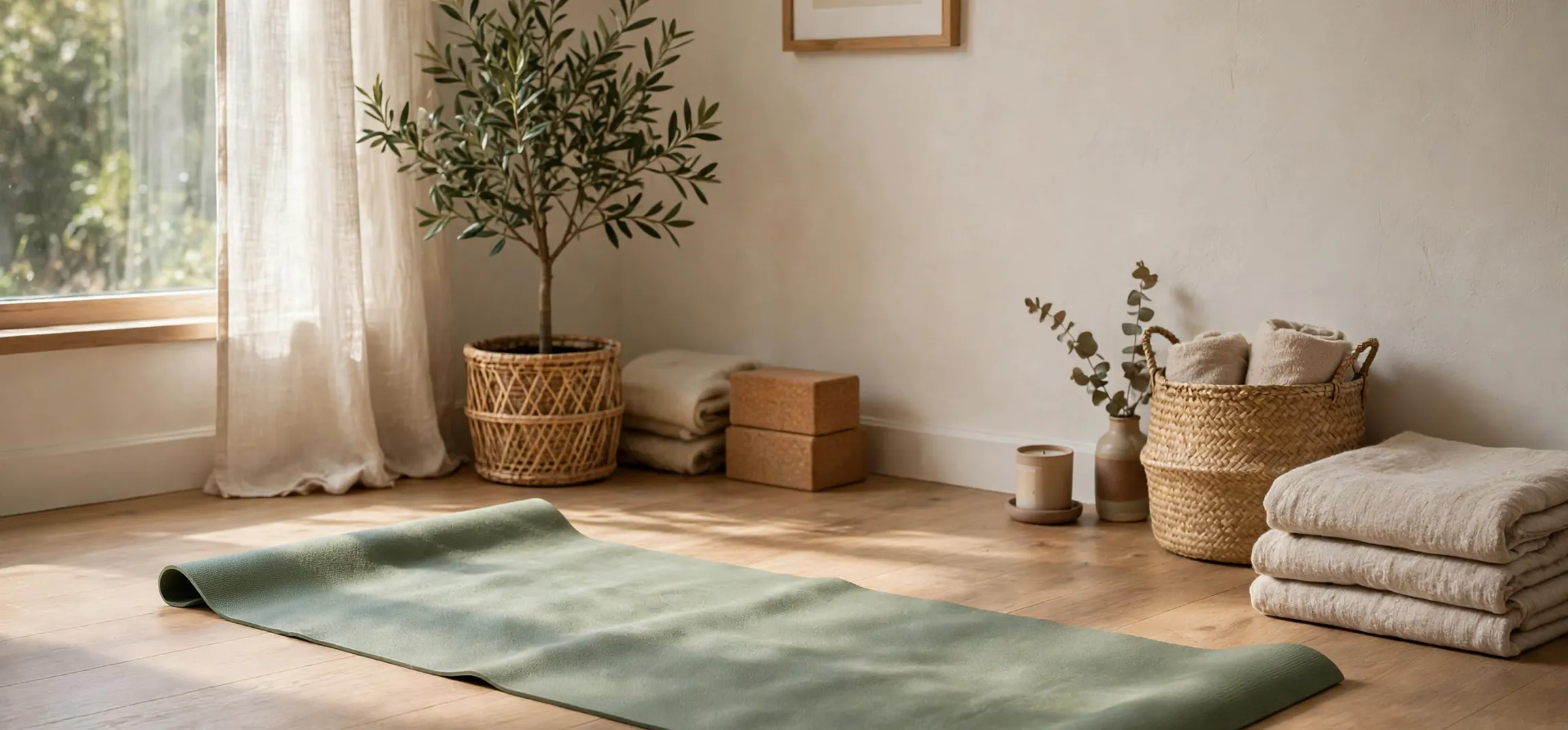
The shavasana definition is simple to state and rewarding to explore: Shavasana, also spelled Savasana, is the resting pose that traditionally closes a yoga practice, in which the practitioner lies flat on the back, arms relaxed at the sides, legs gently apart, and eyes closed, while breathing naturally and allowing the body to rest. The shavasana definition centres on stillness, rest, and quiet attention, rather than on effort, stretching, or movement. Although the pose looks like simply lying down, experienced practitioners treat it as a deliberate part of practice, a time to let the body settle after movement and to bring a session to a calm, unhurried close. This guide explains the shavasana definition in plain language, describes how the pose is usually set up, explores its place in yoga traditions, and answers common questions, without making any medical claims.
Shavasana is often the pose that newcomers find most surprising. After a session of standing, balancing, and bending, lying still can feel unfamiliar, and some beginners wonder whether they are doing anything at all. That reaction is normal, and it reflects a common misunderstanding about rest in yoga. Rest is not an absence of practice; it is a distinct part of practice with its own purpose and its own discipline. Learning to lie still, to breathe naturally, and to let thoughts pass without chasing them is a skill, and like any skill, it improves with gentle, regular practice.
Shavasana Definition: What the Name Means
The shavasana definition begins with the name itself. The word comes from Sanskrit, the classical language of yoga texts, where “shava” refers to a corpse and “asana” refers to a pose or seat. The name therefore translates loosely as corpse pose, a term that can sound startling in English but is meant symbolically rather than literally. The symbolism points to letting go, to stillness, and to a temporary setting aside of effort and activity, rather than to anything morbid. In practice, the name reminds practitioners that this pose is about release, not about achievement.
Two spellings are common, Shavasana and Savasana, and both refer to the same pose. The difference reflects different systems for writing Sanskrit sounds in the Roman alphabet, and neither spelling is wrong in general use. Yoga teachers, books, and class schedules use both forms, so readers may encounter either one depending on the source. This guide uses Shavasana for consistency, while recognising Savasana as an equally familiar spelling. When you search for classes or reading material, trying both spellings can help you find more resources.
Understanding the name helps clarify the purpose of the pose. Shavasana is not a warm-up, a stretch, or a trick to master, but a period of conscious rest. The practitioner remains awake and aware, rather than falling asleep, while allowing the muscles to soften and the breath to find its natural rhythm. That combination of wakefulness and rest is what distinguishes Shavasana from ordinary lying down, and it is why teachers often guide students through the pose with gentle verbal cues rather than leaving them entirely without direction.
Shavasana Definition: How the Pose Is Usually Practised
The shavasana definition in practical terms describes a simple setup that can be adapted to different bodies and settings. The practitioner lies on the back on a mat or a comfortable surface, with the legs extended and allowed to fall gently apart, the feet relaxed outward, the arms at the sides with the palms facing upward, and the head in a neutral position. The eyes are usually closed, and the breath is allowed to flow naturally without being forced or counted. Small supports, such as a folded blanket under the head or knees, are commonly used for comfort, and teachers often suggest adjusting the setup until the body feels supported and at ease.
During the pose, the teacher may offer cues to soften the muscles in turn, from the feet upward through the legs, torso, arms, shoulders, and face. Those cues are invitations, not instructions to achieve a perfect state, and practitioners are encouraged to notice tension without struggling against it. If the mind wanders, which it usually does, the guidance is to notice the wandering gently and return attention to the breath or to the feeling of the body resting. That gentle return, repeated many times, is part of the practice, and it is not a sign of failure.
The length of Shavasana varies by class and tradition. In a typical group class, it may last for several minutes at the end of a session, while in a longer or more restorative class, it may last considerably longer. Practitioners at home may choose a shorter or longer period depending on their time and their experience. What matters more than the exact length is the quality of the rest: a few minutes of genuine, unhurried stillness is more useful than a longer period spent fidgeting, planning, or checking the time. Beginners should start with a comfortable length and build gradually.
Setting Up Comfortably for Shavasana
Comfort is essential for Shavasana, because discomfort makes stillness difficult. A mat provides cushioning, a blanket can provide warmth, and a small support under the knees can ease the lower back for many people. Loose, comfortable clothing helps, and a quiet, dim room supports relaxation, although Shavasana can be practised in many settings. The goal is to remove as many distractions as practical, so that the body can rest and the mind can settle without constant adjustment.
Some practitioners prefer to cover their eyes with a soft cloth, while others prefer to keep the room dim but their eyes simply closed. Some like silence, while others prefer quiet background sounds or gentle guidance. Those preferences are personal, and there is no single correct arrangement. Experimenting with small changes, one at a time, helps you discover what supports your own rest. The best setup is the one that lets you lie still comfortably and breathe naturally, without needing to adjust repeatedly.
Shavasana Definition: Its Place in Yoga Practice
The shavasana definition is incomplete without its place in a yoga session. Traditionally, Shavasana comes at the end of practice, after the body has moved, stretched, and balanced. That placement is deliberate. Movement generates energy and attention, and a period of rest allows the practitioner to absorb the practice, to notice how the body feels, and to transition calmly back to everyday activity. Skipping Shavasana and rushing straight from vigorous movement to daily tasks can feel abrupt, while including it gives the session a clear, satisfying close.
In some traditions, short periods of rest are also included between more demanding poses, but the final Shavasana remains the most familiar form. Teachers often describe it as a time of integration, when the effects of the practice can settle. That language is deliberately general, because experiences during Shavasana vary widely. Some people feel calm, some feel restless, some notice physical sensations, and some simply enjoy lying still. All of those experiences are normal, and none of them needs to be judged as correct or incorrect.
Shavasana also appears in restorative and gentle yoga styles, where rest itself is the central theme. In those styles, supported poses and longer periods of stillness are used to encourage deep relaxation, and Shavasana may be the longest pose in the session. In more vigorous styles, Shavasana provides a contrast to effort, a reminder that practice includes both activity and rest. That balance between effort and rest is a recurring theme in yoga philosophy, and Shavasana embodies it in a simple, accessible form.
Shavasana Definition: Common Experiences and Questions
Many practitioners find Shavasana challenging at first, not because the pose is physically difficult, but because stillness is unfamiliar. The mind may race, the body may itch or twitch, and the urge to move may feel strong. Those responses are common and do not mean that you are doing the pose wrong. With regular practice, most people find that stillness becomes easier, although even experienced practitioners have restless days. The practice is to notice restlessness without fighting it, and to return gently to rest.
Another common experience is drowsiness. Lying still with closed eyes can lead toward sleep, especially after physical activity or at the end of a long day. Teachers often remind students to stay awake but relaxed, and a gentle way to support wakefulness is to keep the breath natural and the attention lightly on the body. If you do drift toward sleep occasionally, treat it without harsh self-judgement, and simply return to the pose when you notice. Over time, the balance between rest and wakefulness becomes easier to maintain.
Some people wonder whether they should think about anything specific during Shavasana. There is no required thought or image, and different teachers suggest different approaches, from following the breath to scanning the body to simply resting without a focus. Beginners may find a simple focus, such as the natural rise and fall of the breath, easier than trying to empty the mind completely. The aim is not to force the mind into silence, but to allow thoughts to come and go without being carried away by them.
Shavasana Definition: Quick Reference Table
The table below summarises the shavasana definition in a quick reference form. It is useful for beginners who want to check the basics before a class, and for more experienced practitioners who want a reminder of the key elements.
| Element | Usual form | Notes |
|---|---|---|
| Position | Lying on the back | Legs gently apart, arms at the sides |
| Hands | Palms facing upward | Fingers relaxed and naturally curved |
| Eyes | Closed | A soft cover may be used for comfort |
| Breath | Natural and unforced | Not counted or deliberately controlled |
| Place in class | Usually at the end | Provides a calm close to practice |
| Alternative spelling | Savasana | Same pose, different transliteration |
Use the table as a starting point, not as a rigid rulebook. Yoga teachers adapt poses to individual needs, and a good teacher will suggest modifications for comfort, mobility, or personal preference. If a standard setup does not feel comfortable, ask the teacher for an alternative, such as bending the knees or using additional supports. Comfort and ease are more important than matching a picture exactly.
Shavasana Definition: Frequently Asked Questions
What is the shavasana definition?
The shavasana definition is the resting yoga pose in which the practitioner lies on the back, relaxed, with eyes closed and natural breathing, traditionally at the end of a yoga session. It is a period of conscious rest and stillness, not sleep, and it is intended to close practice calmly.
Is Shavasana the same as Savasana?
Yes. Shavasana and Savasana are two spellings of the same pose, reflecting different ways of writing Sanskrit sounds in the Roman alphabet. Both forms are widely used in yoga books, classes, and schedules.
How long should Shavasana last?
The length varies by class and tradition, from a few minutes in a typical class to a longer period in a restorative session. A comfortable, unhurried period of rest is more valuable than a fixed length, and beginners should start with a duration that feels manageable.
Is Shavasana suitable for beginners?
Yes. Shavasana is accessible to beginners because it requires no strength, flexibility, or balance, only a comfortable surface and a willingness to lie still. Beginners often find stillness challenging at first, but that challenge eases with gentle, regular practice.
Conclusion
The shavasana definition, at its simplest, is conscious rest at the close of yoga practice: lying on the back, breathing naturally, and allowing the body and mind to settle. Its name, its placement at the end of a session, and its emphasis on stillness all point to the same idea, that rest is a valuable part of practice in its own right. Whether you are new to yoga or returning after a break, approaching Shavasana with patience and curiosity will help you enjoy it more. Lie down, get comfortable, breathe naturally, and let the pose do its quiet work. For more plain-language definitions, see our guide to cherub meaning and our look at Blaise name meaning.