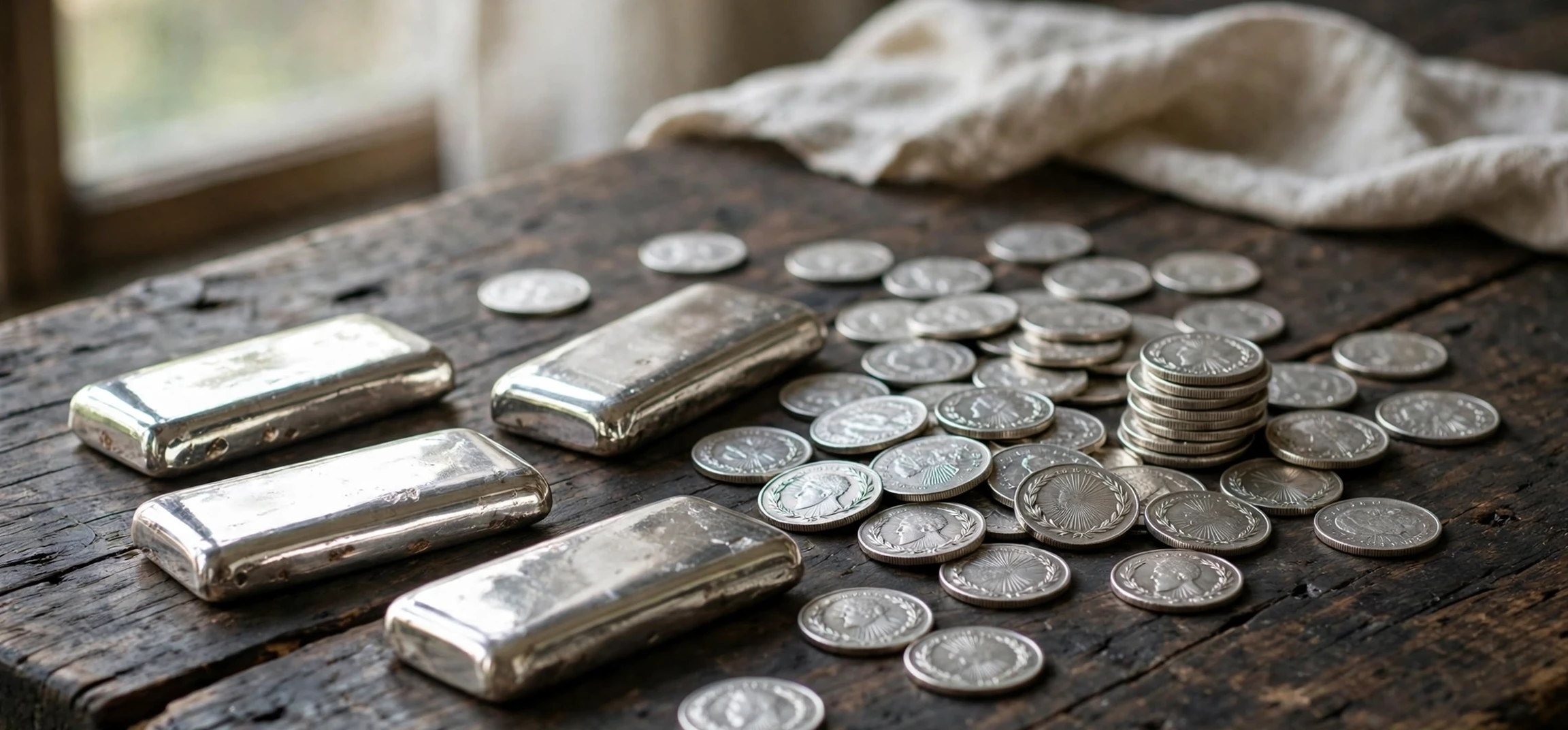
Searching for the $slv ticker is usually the first step for someone who wants to understand how silver is traded on a stock exchange without buying physical bars or coins. The $slv ticker is the short code used on market data platforms, brokerage screens and financial news pages to identify the iShares Silver Trust, an exchange-traded fund that aims to track the price of silver. Rather than quoting a live price here, this guide explains what the $slv ticker means, how it works, what moves it, and how beginners can read its charts and data sensibly. It is educational only and is not investment advice, a recommendation, or a forecast of where silver might go next.
What the $slv Ticker Means
A ticker symbol is a short, standardised code that identifies a security on an exchange. Just as a postcode identifies an address, a ticker identifies a listed fund or company so that orders, prices and news can be matched to the right product. The $slv ticker therefore does not refer to silver itself in the abstract; it refers to a specific listed product, the iShares Silver Trust, which holds physical silver bullion and whose shares trade on a US stock exchange during market hours. When you type the $slv ticker into a market app, you are asking for data about that fund, not about a silver coin in a shop.
The dollar sign in front of a ticker is a convention used mainly on social media and in casual market writing. It signals that the letters that follow are a ticker symbol rather than an ordinary word. On a brokerage platform you would normally search for SLV without the dollar sign, but the meaning is the same. Understanding that distinction helps avoid confusion when the same letters appear in different contexts, because ticker symbols can be reused across markets and asset classes in ways that are not always obvious.
An exchange-traded fund, or ETF, is a basket of assets that trades like a single share. In the case of the fund behind the $slv ticker, the underlying asset is silver held in vaults by a custodian. The fund issues shares that investors can buy and sell throughout the trading day. The share price generally moves in line with the silver price, although small differences can arise from fees, trading costs, supply and demand for the shares themselves, and the timing of market data.
How the $slv Ticker Works in Practice
When markets are open, buyers and sellers place orders for shares in the fund, and the resulting trades set the price you see next to the $slv ticker. That price is quoted in US dollars per share, and it changes continuously as orders arrive. Outside market hours, the last traded price remains on screen, sometimes alongside an indicative after-hours quote, but that figure is not the same as a live, exchange-matched price. Beginners often mistake a stale or after-hours figure for the current market price, so it is worth checking the timestamp on any quote before drawing conclusions.
The fund behind the $slv ticker charges an annual expense ratio, a small percentage deducted from the fund’s assets to cover custody, administration and other running costs. Over time, that fee creates a small gap between the performance of the fund’s shares and the performance of silver itself. It is not a hidden charge on your brokerage statement; it is reflected in the fund’s net asset value. Reading the fund’s official factsheet or prospectus is the reliable way to confirm the current fee and structure, because fees can change and secondary summaries can go out of date.
Another concept worth knowing is net asset value, often shortened to NAV. NAV is the value of the fund’s silver holdings divided by the number of shares in issue. Market makers and authorised participants help keep the share price close to NAV by creating and redeeming shares when a gap opens up. Small premiums or discounts to NAV can still occur, especially in fast-moving markets, but for a large, liquid fund they are usually modest. If you see a share price that seems far away from the silver price you expected, checking the premium or discount to NAV can explain part of the difference.
What Moves the $slv Ticker
The $slv ticker is driven first and foremost by the price of silver itself. Silver is both a precious metal and an industrial metal, which gives it a dual character that investors often find interesting. On the precious-metal side, silver is sometimes bought as a store of value or a hedge against uncertainty, in a similar way to gold, though silver is generally more volatile. On the industrial side, silver is used in electronics, solar panels, medical devices and other manufacturing, so demand from industry can also influence its price.
Currency movements matter too. Silver is priced in US dollars on world markets, so when the dollar strengthens against other currencies, silver can become more expensive for buyers using other currencies, which may dampen demand. When the dollar weakens, the reverse can happen. Interest rates also play a role: when rates are high, holding an asset that pays no interest, such as silver, carries a higher opportunity cost compared with holding cash or bonds. When rates are low, that cost falls. None of these relationships is mechanical, and they do not always move in the expected direction on any given day.
Broader market sentiment, inflation expectations and geopolitical news can also affect the $slv ticker, sometimes sharply. Silver’s smaller market, compared with gold, means that price swings can be larger in percentage terms. That volatility is one reason why general educational material about silver often stresses patience and position sizing, and why short-term price moves should not be read as a verdict on the long-term outlook. A single day’s movement, up or down, tells you very little on its own.
Silver Versus Gold: A Useful Comparison
People often compare the $slv ticker with gold funds, and the comparison is instructive. Gold is used mainly for jewellery, central-bank reserves and investment, while silver has a much larger industrial footprint. That difference means silver can behave more like a cyclical commodity at times, rising when manufacturing demand is strong and falling when factories slow down. The gold-to-silver ratio, which divides the gold price by the silver price, is a popular way of describing how expensive one metal looks relative to the other, but it is a descriptive statistic, not a trading signal in itself. A high ratio does not guarantee that silver will rise, and a low ratio does not guarantee that it will fall.
Reading a $slv Ticker Chart Without Overreacting
A chart for the $slv ticker will usually let you switch between time frames, from one day to five years or more. Each time frame answers a different question. A one-day chart shows intraday noise and the reaction to specific news. A one-year or five-year chart shows trends, ranges and the scale of past volatility. Beginners tend to spend too long on the shortest time frame, where every wiggle looks significant, and too little time on the longer view, where the pattern of ups and downs becomes clearer.
Volume is another useful piece of chart data. Volume shows how many shares changed hands in a period. High volume on a large price move suggests broad participation, while low volume on a similar move suggests a thinner market. Neither pattern predicts the next move reliably, but volume helps you judge whether a move was widely supported or driven by a small number of trades. Candlestick charts, line charts and bar charts all display the same underlying price data in different ways, so the choice of chart style is a matter of preference rather than accuracy.
It is also worth distinguishing between price return and total return. Because the fund behind the $slv ticker does not pay a regular dividend in the way a share in a profitable company might, its return comes mainly from price change, minus fees. Comparing its performance with a dividend-paying investment without adjusting for income can therefore be misleading. Always check what a performance figure includes before comparing two very different products.
Common Questions About the $slv Ticker
One frequent question is whether buying shares identified by the $slv ticker is the same as owning silver. The honest answer is that it is similar in economic exposure but not identical in practical terms. You gain exposure to silver price movements, but you do not hold bars in your own safe, you cannot take delivery of physical silver from the fund in the usual way, and you are exposed to the fund’s structure, fees and counterparty arrangements. For many people that trade-off is acceptable, because it avoids storage, insurance and dealer spreads. For others, physical ownership is the whole point, and a fund does not meet that need.
Another common question is how the $slv ticker differs from silver mining shares. Mining shares are shares in companies that extract silver, and their prices depend on operating costs, management decisions, mine output, regulation and debt, as well as the silver price. A mining company can fall even when silver rises, if its costs surge or a mine disappoints. The $slv ticker, by contrast, tracks the metal itself more directly, without company-specific risk, though it still carries market and commodity risk.
People also ask whether the $slv ticker is suitable for beginners. There is no universal answer, because suitability depends on a person’s goals, time horizon, tolerance for volatility and overall portfolio. Silver can fall sharply and stay low for long periods, and past performance is not a guide to future returns. Anyone considering any investment should read the official fund documents, understand the risks, and, where appropriate, seek independent financial advice from a qualified professional. Educational guides like this one are a starting point for research, not a substitute for advice.
Risks and Limitations to Understand
Commodity prices are volatile, and silver is among the more volatile major commodities. That volatility can be uncomfortable, particularly for anyone who checks prices daily or who has invested money they may need at short notice. Leverage, where available through other products, magnifies both gains and losses and is a separate risk that does not apply to simply holding unleveraged fund shares, but it is worth recognising because leveraged silver products sometimes appear alongside the $slv ticker in search results and can be confused with it.
Currency risk is another factor for non-US investors. Even if the silver price is unchanged in dollars, a movement in the exchange rate between the dollar and your home currency will change the value of your holding in local terms. Tax treatment also varies by country and by account type, and it can differ between physical silver, funds and mining shares. Tax rules change, so checking current local guidance, rather than relying on general articles, is important before making decisions.
Finally, remember that market data itself can mislead. Delayed quotes, adjusted historical prices, dividend or split adjustments and different data providers can all produce slightly different figures for the same ticker. If two sources disagree, check whether one is delayed, whether the time zones differ, and whether the figures are adjusted for corporate actions. Small discrepancies are normal; large ones usually have an identifiable explanation.
How to Research the $slv Ticker Responsibly
Good research starts with primary sources: the fund provider’s factsheet, prospectus and holdings disclosures. Those documents state the investment objective, fees, risks and custody arrangements in the provider’s own words. Reputable market data providers and exchange websites are the next layer, offering price history, volume and NAV data. News and commentary can add context, but they should be treated as opinion and reporting rather than as verified fact, especially when headlines promise certainty about future prices.
It helps to keep a simple research routine. Note what you want to know before you search, record the source and date of any figure you rely on, and compare at least two independent sources for important claims. Be wary of social media posts that present a single chart or a single price target as proof of a coming move. Markets are influenced by many factors at once, and confident predictions are often a sign of marketing rather than analysis. If a claim cannot be checked against a primary source, treat it with caution.
For readers who enjoy learning how markets work more broadly, our guides to screening and trading tools explain the wider toolkit that market watchers use. You can read about day trading stock scanners and about how to screen for shorted stocks using indicators for background on how traders filter large lists of tickers. Those guides are educational too, and they sit alongside this overview of the $slv ticker as part of a general introduction to market data, not as a set of instructions to trade.
Frequently Asked Questions About the $slv Ticker
What does the $slv ticker stand for?
The $slv ticker identifies the iShares Silver Trust, an exchange-traded fund that holds physical silver and trades on a US exchange. The dollar sign is a social media convention for ticker symbols; on brokerage platforms the symbol is usually shown simply as SLV.
Does the $slv ticker mean I own physical silver?
No, not directly. Buying shares in the fund gives you exposure to silver price movements through a fund structure, with fees and custody arrangements, rather than bars or coins held in your own possession.
Why does the $slv ticker price differ from the silver price?
The share price reflects the value of the fund’s silver per share, minus fees and adjusted for market supply and demand, premiums or discounts to NAV, and the timing of quotes. It tracks silver closely over time but is not identical to a per-ounce silver quote.
Is this article investment advice?
No. This article is educational only. It does not recommend buying or selling any security, and it does not state a current price as a fact or forecast a future price. Consider independent professional advice before making investment decisions.
| Topic | What it means for the $slv ticker |
|---|---|
| Ticker symbol | Short code identifying the iShares Silver Trust on market platforms |
| Underlying asset | Physical silver held by the fund’s custodian |
| Main driver | The market price of silver, plus fees and market factors |
| Key risk | Commodity volatility, currency movement and fund fees |
| Best first source | The fund provider’s factsheet and prospectus |
Conclusion: Using the $slv Ticker Wisely
The $slv ticker is a convenient shorthand for following silver through a listed fund, but it rewards a measured approach. Understand what the fund holds, how fees and NAV work, what drives the silver price, and how to read charts without overreacting to daily noise. Keep research grounded in primary sources, be sceptical of confident forecasts, and remember that this guide is educational only. With those habits, the $slv ticker becomes a useful window onto the silver market rather than a source of confusion, and you will be better placed to ask informed questions, whether you are simply curious about silver or researching it more seriously. For wider market background, see also our financial guide on the site.



