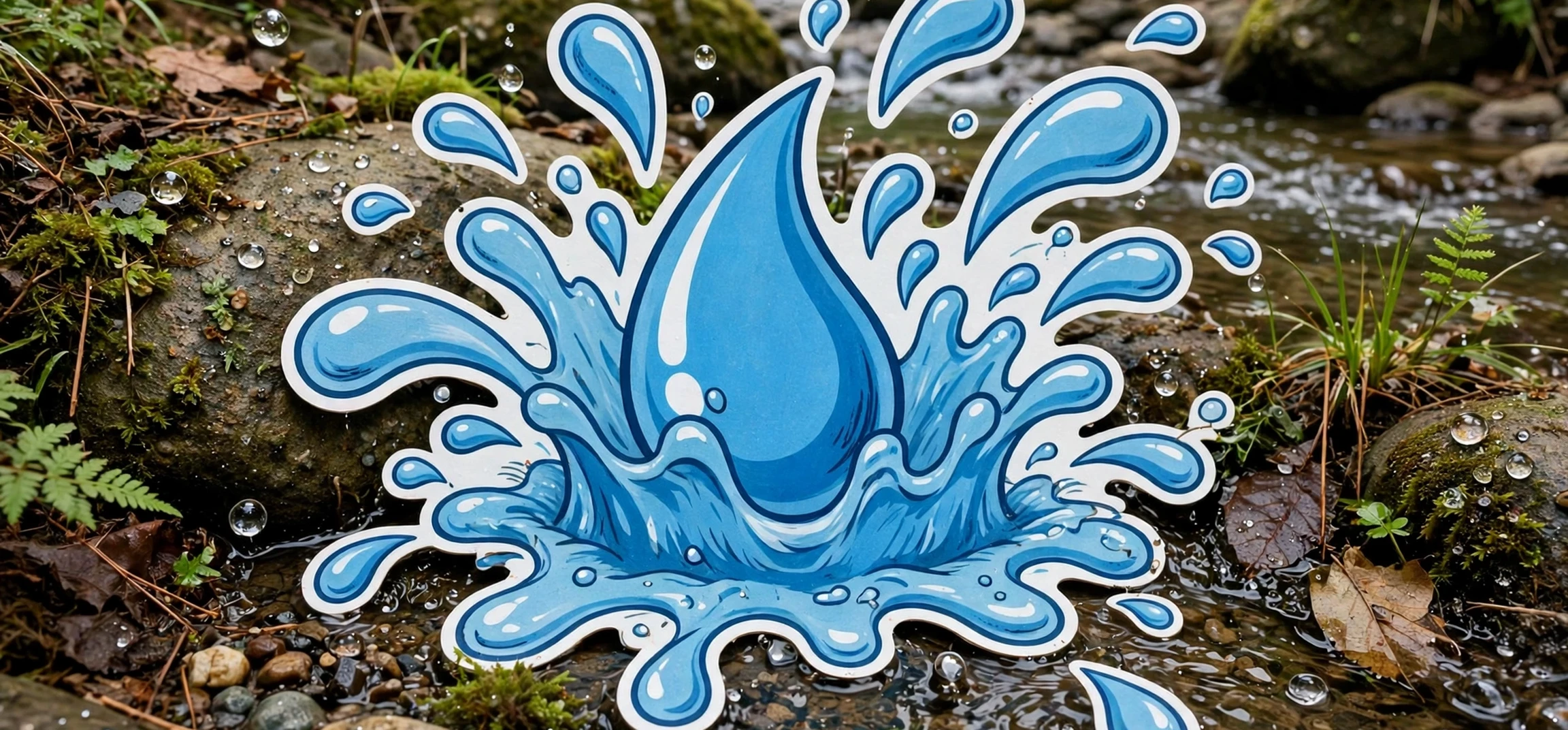
A splash water cartoon moment is one of the most recognisable sights in animation: a character cannonballs into a pool, a bucket tips over a head, or a wave crashes against a boat, and the water explodes into a crown of droplets, rings, and foam. Audiences read that image instantly, even though real water never behaves quite the way cartoons show it. Cartoon water is simplified, exaggerated, and timed for comedy or drama, and that is exactly why it works. This guide explains how animated splashes are designed, why they look the way they do, and what makes a splash read clearly on screen, with no links to watch or download anything.
Water is one of the hardest things to animate because it is transparent, constantly moving, and shaped by forces the viewer cannot see. Animators solve this by breaking a splash into stages that the eye can follow: the impact, the rise, the spread, and the settle. Each stage has its own shapes and timing, and each can be pushed further for humour or pulled back for realism. A small drip and a tidal wave use the same basic stages, just at different scales and speeds. Once you know the stages, you will start noticing them in every cartoon you watch.
The phrase splash water cartoon also covers a wide range of styles, from classic hand-drawn shorts to modern computer animation. Hand-drawn splashes rely on bold outlines and a limited number of frames, so each drawing must carry a lot of information. Computer-animated splashes can simulate thousands of droplets, but the best ones still follow the same principles of staging, timing, and exaggeration that hand-drawn animators developed decades ago. Technology changes the tools, not the ideas.
What Is a Splash Water Cartoon Moment?
A splash water cartoon moment is any animated scene where water bursts, spills, or erupts in a way that is drawn or simulated for effect rather than filmed. The splash itself is the star: it frames the action, sells the impact, and often delivers the joke. Think of a character who slips on a wet floor and lands in a fountain, sending a plume of water into the air that hangs for a beat before collapsing. The comedy comes not just from the fall but from the shape and timing of the water that follows it.
Cartoon splashes are rarely realistic, and that is a deliberate choice. Real splashes are chaotic, with droplets of many sizes moving in many directions, and they happen too fast for the eye to enjoy. A cartoon splash slows the action down, organises the chaos into readable shapes, and holds the most expressive frame a little longer so the audience can appreciate it. The water might form a crown, a mushroom, a fan, or a ring, each shape chosen to match the force and direction of the impact. The result feels more like water than a literal copy would, because it matches what viewers expect water to look like.
Splashes also do storytelling work. A gentle splash suggests playfulness, like a child jumping in puddles. A huge, slow splash suggests power, like a whale breaching or a dam breaking. A splash that soaks a villain suggests comeuppance, while a splash that drenches a hero just before an important moment suggests bad luck or humility. Animators use the size, speed, and shape of the splash to tell the audience how to feel about the scene, often without a single word of dialogue.
The Stages of a Cartoon Splash
Every splash, however stylised, follows a rough sequence. First comes the contact: an object hits the surface, and the water dents inward. Animators often draw this as a small ring or a dimple, sometimes with a tiny crown of droplets already forming at the edges. The contact frame is brief, often just one or two frames, because the eye registers impact instantly and wants to see the result. Holding it too long makes the action feel sluggish.
Second comes the rise: water shoots upward and outward from the impact point. This is the most dramatic stage, and it is where the classic crown shape appears. Droplets separate from the main body of water, arcs of liquid stretch and break, and the splash reaches its greatest height. Animators exaggerate this stage by making the crown taller, the droplets larger, and the arcs more curved than reality would allow. The rise is also where sound design matters most, with a swelling splash sound that matches the visual peak.
Third comes the spread: the rising water falls back, sending rings outward across the surface and throwing secondary droplets in all directions. The surface becomes choppy, with overlapping rings and foam patches that gradually calm. This stage is longer than the rise, and it gives the audience time to enjoy the aftermath. Animators often simplify the rings into a few clean ellipses rather than drawing every ripple, because clean shapes read better at speed.
Fourth comes the settle: the water returns to calm, with a few lingering bubbles, drips from the soaked character, and a final ripple fading out. The settle is important for comedy timing, because it is the moment the audience sees the result: a dripping character, a flooded room, or a puddle where a proud figure once stood. Rushing the settle robs the joke of its payoff, while holding it a beat too long can make the scene drag. Good timing lives in that balance.
Splash Water Cartoon Design Principles
Several principles guide splash design across styles. Staging means placing the splash where the audience is already looking, usually at the centre of the action or along the direction of movement. If a character dives from the left, the splash should erupt slightly to the right of the entry point, following the momentum. Anticipation means giving a hint before the splash, such as a character wobbling on a diving board or a bucket tipping slowly, so the audience is ready for the burst. Exaggeration means pushing the height, spread, and droplet size beyond realism for clarity and humour.
Timing is the principle that separates a good splash from a great one. A fast splash feels energetic and chaotic, suited to slapstick. A slow splash feels heavy and powerful, suited to drama or awe. Animators control timing by choosing how many frames each stage lasts: fewer frames mean faster action, more frames mean slower, weightier action. The same drawings played at different speeds can feel like completely different events, which is why timing charts are a core tool in animation studios.
Shape language matters too. Rounded, bouncy shapes feel friendly and playful, while sharp, jagged shapes feel violent or dangerous. A splash made of soft blobs reads as gentle bath water, while a splash made of spiky shards reads as a storm or an explosion of water under pressure. Colour reinforces the message: bright, clear blues feel clean and fun, while dark, murky greens or greys feel ominous or dirty. Even in black-and-white cartoons, animators used shading and line weight to suggest these differences.
Hand-Drawn Splashes vs Computer-Animated Splashes
Hand-drawn splashes are built from a sequence of individual drawings, each one a complete picture of the water at a moment in time. Because drawing every droplet would be impossibly slow, hand-drawn animators developed shorthand: a few large shapes for the main body of water, a scattering of medium droplets, and a handful of tiny dots for spray. The audience’s eye fills in the rest. This shorthand is why classic cartoon splashes look so bold and graphic: they are designed to be read in a fraction of a second, often while other action is happening on screen.
Computer animation can simulate water with physics, calculating how thousands of particles move, collide, and fall. This produces splashes that look impressively realistic, with fine spray, foam, and refraction. But realism is not always the goal, and the best computer-animated splashes still use the hand-drawn principles: a clear silhouette, a readable crown shape, and timing that serves the story. Without those principles, a simulated splash can look like noise, beautiful in a still frame but confusing in motion. The lesson is that tools change, but the audience’s eye does not.
Hybrid approaches are common today. An animator might simulate a realistic splash and then draw over it, simplifying shapes and pushing the timing for comic effect. Or a hand-drawn splash might be scanned and coloured digitally, keeping the bold shapes while gaining the flexibility of digital compositing. Either way, the goal is the same: water that the audience understands instantly and enjoys watching.
Why Splashes Are So Funny in Cartoons
Splashes are a perfect comic device because they combine surprise, transformation, and comeuppance. Surprise comes from the suddenness: a calm scene is interrupted by an explosion of water. Transformation comes from the aftermath: a dry, dignified character becomes a dripping, sputtering mess in a second. Comeuppance comes from the cause: the character who boasted, cheated, or showed off is the one who gets soaked. These three ingredients work in almost any setting, from a kitchen sink to an ocean liner.
Water also has a special quality as a comic material: it is harmless but humiliating. Unlike a fall from a height or a collision, a soaking rarely causes serious injury in cartoon logic, so the audience can laugh without worrying. The character shakes off the water, wrings out a hat, and carries on, often with a fish in a pocket or seaweed on the head for an extra gag. This safety lets writers use splashes repeatedly without the comedy turning cruel.
Sound completes the joke. A well-timed splash sound, followed by drips, squelches, and a sigh from the soaked character, turns a visual gag into a full comic beat. Silence can work too: a huge splash followed by total quiet, with only drips falling, can be funnier than a noisy aftermath. Sound designers and animators plan these beats together, matching the peak of the sound to the peak of the visual splash.
For more on cartoon design in general, see our guide to cartoon characters with big chins, which looks at how exaggerated features help audiences read characters quickly. Fans of classic animation may enjoy our look at cartoon dogs characters and how animal sidekicks are drawn for instant recognition. For broadcast history, our overview of the Boomerang Cartoon Network schedule traces how classic cartoons reached new audiences.
| Stage | What the audience sees | Timing tip |
|---|---|---|
| Contact | Surface dents, small ring forms | Keep it brief, one or two frames |
| Rise | Crown shape, droplets arc upward | Exaggerate height for comedy or drama |
| Spread | Rings move outward, foam appears | Let it last long enough to enjoy |
| Settle | Calm returns, drips linger | Hold the payoff beat before moving on |
Frequently Asked Questions
Why does cartoon water look different from real water?
Real water is chaotic and fast, which is hard to read on screen. Cartoon water is simplified into clear shapes and slowed down so the audience can follow the action and enjoy the gag or the spectacle.
What is the crown shape in a splash?
The crown is the ring of upward jets and droplets that forms when an object hits water. Animators exaggerate it because it is the most recognisable part of a splash and instantly signals impact.
Do computer-animated splashes still use hand-drawn principles?
Yes. Simulation can create realistic droplets, but staging, timing, exaggeration, and clear silhouettes still decide whether the audience understands and enjoys the splash.
Why are splashes used so often in comedy cartoons?
Because they combine surprise, visible transformation, and harmless humiliation. A soaking is funny without being cruel, and it gives the animators a big, readable visual beat.
Conclusion
A splash water cartoon moment works because animators turn a chaotic natural event into a readable story: contact, rise, spread, and settle, each timed and shaped for the audience. Whether drawn by hand or simulated by computer, the best splashes follow the same principles of staging, exaggeration, and timing that have guided animation for decades. Next time a cartoon character takes an unexpected dip, watch the water rather than the character for a moment. You will see the crown rise, the rings spread, and the drips fall, and you will understand why a well-made splash is one of animation’s most satisfying sights.



