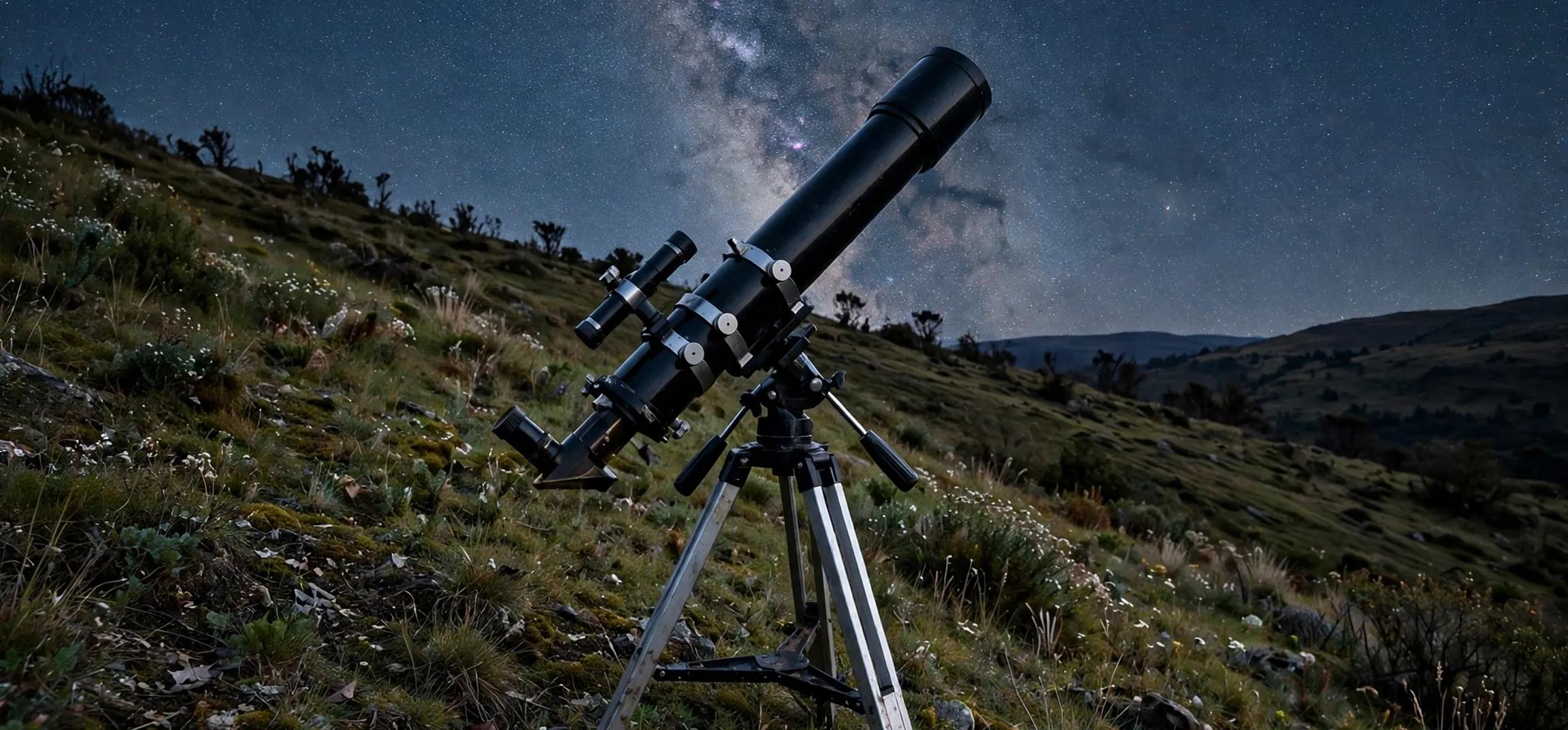
On a clear, dark night, the sky looks scattered with stars, but stargazers have long grouped those stars into patterns called constellations, and that brings us to a useful starting point: constellations definition in simple terms means a group of stars that forms a recognised pattern or picture in the night sky, as seen from Earth. The stars in a constellation are not necessarily close to each other in space. They can be very far apart, but from our viewpoint they line up into a shape that people have named, remembered, and passed down through stories. This guide to star constellation names you must see explains what constellations are, how they got their names, and which famous patterns are worth finding first, whether you are a complete beginner or someone returning to stargazing after a long break.
The word constellation comes from a Latin idea meaning a set of stars, and the modern sky is divided into 88 official constellations. That number was agreed by astronomers so that every part of the sky belongs to exactly one constellation, much like every place on a map belongs to one country or region. Ancient cultures drew their own pictures in the sky long before that agreement, using heroes, animals, ships, and everyday objects. Some of those old pictures survived, some were changed, and some were dropped entirely. The 88 constellations we use today therefore mix ancient Greek stories with newer patterns named by later explorers, especially in the southern sky, which ancient northern observers could not see well. Learning their names is a little like learning the names of neighbourhoods in a vast city: once you know a few landmarks, the rest of the map starts to make sense.
constellations definition: what the word really means
A careful constellations definition needs one important correction. A constellation is not a physical cluster of stars travelling together through space. Star clusters are real groups bound by gravity, but constellations are patterns of appearance. Two stars in the same constellation can sit at wildly different distances from Earth, and they only look like neighbours because we see them projected onto the same flat-looking sky. Think of a photograph of a street: two buildings may appear side by side in the picture even though one is much farther away. The sky works the same way. Constellations are useful because they give us a shared language for directions in the sky, helping observers say “look near Orion” instead of giving long lists of coordinates.
Within each constellation, the brightest stars often have their own names, and astronomers also label stars with Greek letters, starting with Alpha for the brightest star in many cases, then Beta, Gamma, and so on. Not every constellation has a bright, obvious shape, and that is normal. Some are large and easy to spot, like Ursa Major, while others are small and faint, and are best found with a star chart or a stargazing app. A good constellations definition also includes asterisms, which are smaller patterns inside a constellation or spanning more than one. The Big Dipper is the most famous example: it is not a constellation on its own, but a well-known part of Ursa Major, the Great Bear. Knowing the difference between a constellation and an asterism will save you a lot of confusion when you start reading star guides.
constellations definition: how the 88 patterns were chosen
The story of how the sky gained 88 constellations stretches over thousands of years. Early sky-watchers in Mesopotamia, Egypt, Greece, and China each made their own maps of the heavens, linking star patterns to gods, seasons, farming, and navigation. Greek stories became especially influential in Europe, giving us figures such as Perseus, Andromeda, Hercules, and Cassiopeia. Later, when European explorers sailed into southern waters, they saw stars that had never been charted in the north, and they added new constellations named after birds, fish, and instruments, such as Tucana the Toucan and Musca the Fly. By the early twentieth century, the sky had become crowded with competing names and overlapping borders, so the International Astronomical Union set the official list of 88 constellations with clear boundaries in 1928, and that list is still used today.
Those boundaries matter more than the pictures themselves. A constellation today is really a region of sky, and the picture is just a traditional way of joining its main stars. That is why a constellation can look quite different from its name. Ursa Major does not look much like a bear to most modern eyes, but the region still carries the name, and the Big Dipper inside it is the part most people recognise. Similarly, the constellation Draco winds between other patterns like a long, faint snake, and it takes patience to trace. Understanding this helps beginners set realistic expectations. You do not need to see a perfect animal shape in the stars. You only need to find the key stars and know which region you are looking at, and the name will follow.
Star constellation names you must see in the northern sky
If you live in the northern hemisphere, or you are visiting it, a handful of constellations will reward you quickly. Orion the Hunter is the best place to start in winter. Look for three stars in a straight line, forming Orion’s Belt, with bright stars marking his shoulders and knees. Below the belt, a faint smudge marks the Orion Nebula, a glowing cloud where new stars are forming. Ursa Major is visible for much of the year in the north, and its Big Dipper shape points the way to other stars: follow the two stars at the front edge of the dipper’s bowl to find Polaris, the North Star, which sits at the end of Ursa Minor, the Little Bear. Cassiopeia, shaped like a W or an M depending on the season, sits opposite the Big Dipper across Polaris, and it is easy to spot on autumn and winter nights.
Other northern favourites include Lyra, home of the bright star Vega, which forms one corner of the Summer Triangle along with Deneb in Cygnus the Swan and Altair in Aquila the Eagle. Cygnus is sometimes called the Northern Cross, and its long shape really does suggest a bird in flight along the Milky Way. Taurus the Bull holds the bright orange star Aldebaran and the Pleiades star cluster, a tiny dipper-shaped group that looks like a sprinkle of glitter. Gemini the Twins, marked by the bright stars Castor and Pollux, is a fine winter target, and Leo the Lion, with its distinctive sickle shape like a backwards question mark, announces spring. For a deeper look at another well-known pattern, see our guide to the constellation of stars names, which explores how star names and patterns fit together.
Orion the Hunter
Orion is the showpiece of the winter sky, and it is the constellation most beginners remember first. Its belt of three stars is almost perfectly straight, its bright stars Rigel and Betelgeuse shine with different colours, blue-white and orange-red, and its sword contains a nebula you can glimpse even with small binoculars. In myth, Orion was a mighty hunter, and the stories attached to him explain why he appears to chase Taurus across the sky while fleeing Scorpius, a pattern that rises as Orion sets. You do not need the myth to enjoy Orion, but the story makes the pattern easier to remember, and that is exactly why ancient people told such tales in the first place.
Ursa Major and the Big Dipper
Ursa Major, the Great Bear, is much larger than the Big Dipper alone, but the dipper is the part everyone learns first. Its seven bright stars form a shape like a saucepan, and the two stars at the front of the bowl are called the Pointers because they point to Polaris. Once you find the dipper, you can find the rest of the bear by extending the shape, although the bear’s full outline is fainter and takes a darker sky. The dipper also helps you find other constellations, acting as a signpost for the whole northern sky. That practical value is why it appears in so many beginner guides, and why it deserves a place on any must-see list.
Star constellation names you must see in the southern sky
The southern sky holds some of the most striking patterns of all, and travellers to the southern hemisphere often find them unforgettable. Crux, the Southern Cross, is small but brilliant, with four main stars forming a cross shape that has guided sailors for centuries. It points roughly towards the south celestial pole, and it sits near the bright stars Alpha and Beta Centauri, known as the Pointers, in the constellation Centaurus. Scorpius the Scorpion is another southern highlight, with a curved tail and a bright red heart star, Antares, and it is one of the few constellations that genuinely resembles its name. Carina the Keel, part of the old ship Argo, holds Canopus, the second-brightest star in the night sky, and the spectacular Carina Nebula.
Other southern treasures include Centaurus itself, a large constellation with a rich mix of bright stars and clusters, and the Large and Small Magellanic Clouds, which are not constellations at all but small neighbouring galaxies that look like detached pieces of the Milky Way. The constellation Pavo the Peacock, Grus the Crane, and Phoenix the Bird add colour and story to southern skies, and they remind us that the southern constellations were often named by explorers describing the new wildlife they encountered. If you ever travel south, give yourself at least one dark night away from city lights. The southern Milky Way, arching overhead with Crux and Scorpius, is one of the great sights of the natural world, and it explains why so many cultures treated the sky as a storybook.
Star constellation names you must see: a quick reference table
| Constellation | Meaning of the name | Best feature to find | Good season in the north |
|---|---|---|---|
| Orion | The Hunter | Three belt stars in a line | Winter |
| Ursa Major | The Great Bear | The Big Dipper | Year-round in the far north |
| Cassiopeia | The Queen | W-shaped group of stars | Autumn and winter |
| Cygnus | The Swan | Northern Cross shape | Summer |
| Lyra | The Lyre | Bright star Vega | Summer |
| Leo | The Lion | Sickle-shaped head | Spring |
| Scorpius | The Scorpion | Curved tail and red Antares | Summer, low in the south |
| Crux | The Southern Cross | Small, bright cross | Southern hemisphere |
How to find constellations on your first night out
Finding constellations is easier than most beginners expect, provided you choose the right conditions. Pick a night with clear skies and, if possible, get away from bright streetlights, since light pollution washes out faint stars and leaves only the brightest patterns visible. Let your eyes adjust to the darkness for at least twenty minutes, and avoid looking at bright phone screens during that time. Start with one easy target, such as the Big Dipper or Orion’s Belt, and use a printed star chart or a stargazing app set to night mode to confirm what you are seeing. Point the chart towards the direction you are facing, and match the brightest stars first before worrying about fainter ones. Patience is part of the skill, and each pattern you find makes the next one easier.
Binoculars are a wonderful next step, because they reveal star colours, double stars, and clusters without the cost or complexity of a telescope. They also make nebulae such as the Orion Nebula and the Pleiades cluster far more rewarding. Dress warmly, bring a reclining chair or a blanket if you plan to look up for a while, and consider going with a friend, since two pairs of eyes spot patterns faster than one. Keep notes about what you saw, the date, and the direction you faced, and you will soon build your own record of the sky through the seasons. For a related sense of how humans have named the world around them, you might enjoy our article on how the planet Earth got its name, which shows the same habit of naming at work on a planetary scale.
Frequently asked questions
How many constellations are there?
There are 88 officially recognised constellations, covering the entire sky. Every star you can see belongs to one of these regions, even if the pattern itself is faint or hard to recognise.
Can I see all constellations from one place?
No. Which constellations you can see depends on your latitude and the season. Northern observers cannot see far-southern patterns such as Crux, and southern observers cannot see far-northern patterns such as Ursa Minor, which is why travelling stargazers often keep a special wish list.
Do constellation stars stay in the same pattern?
For human lifetimes, yes, the patterns look essentially fixed, although stars do move slowly over thousands of years. The shapes we see tonight are the shapes our ancestors saw, which is part of why constellation stories have lasted so long.
What is the difference between a constellation and an asterism?
A constellation is an official region of the sky, while an asterism is a recognisable pattern of stars that may sit inside a constellation or cross its borders. The Big Dipper is an asterism within Ursa Major, and the Summer Triangle is an asterism spanning three constellations.
Many beginners arrive at stargazing by searching for a clear constellations definition, and that is a wise first step. A good constellations definition tells you that constellations are patterns as seen from Earth, not physical groups, and a clear constellations definition also explains why every part of the sky belongs to one constellation region. If you remember only one constellations definition, remember this: a constellation is a named region of sky with a traditional star picture inside it. That constellations definition will help you read star charts, understand stargazing apps, and explain what you see to friends. Keep that constellations definition in mind on your first night out, and the patterns will feel far less mysterious.
Teachers and parents often use a simple constellations definition when introducing children to the night sky, because it separates the picture from the science in a helpful way. A classroom constellations definition might say that ancient people joined the dots between bright stars to make pictures, and that modern astronomers kept those pictures as a map. That constellations definition is accurate enough for beginners, and it leads naturally to deeper questions about star distances, brightness, and movement. Whenever you share a constellations definition with someone new, pair it with one easy pattern to find, such as Orion’s Belt or the Big Dipper, so the definition becomes something they can see with their own eyes.
A clear constellations definition is the foundation of all stargazing. Share a simple constellations definition with a friend before your first night out. Test your constellations definition by pointing out one pattern in the real sky. A good constellations definition grows clearer every time you use it. Keep your constellations definition simple, and the sky will feel welcoming. That is why a strong constellations definition matters for every beginner.
Conclusion
Star constellation names are worth learning because they turn a confusing scatter of light into a map full of stories, signposts, and seasonal landmarks. Start with a clear constellations definition in mind, remember that the patterns are pictures as seen from Earth rather than physical groups, and then find a few bright favourites: Orion’s Belt, the Big Dipper, Cassiopeia’s W, and, if you travel south, the Southern Cross. From those landmarks, the rest of the sky opens up one pattern at a time. Take your time, enjoy the quiet of a dark night, and let the old names guide you. The sky has been telling its stories for thousands of years, and now you know how to read the first chapters.



