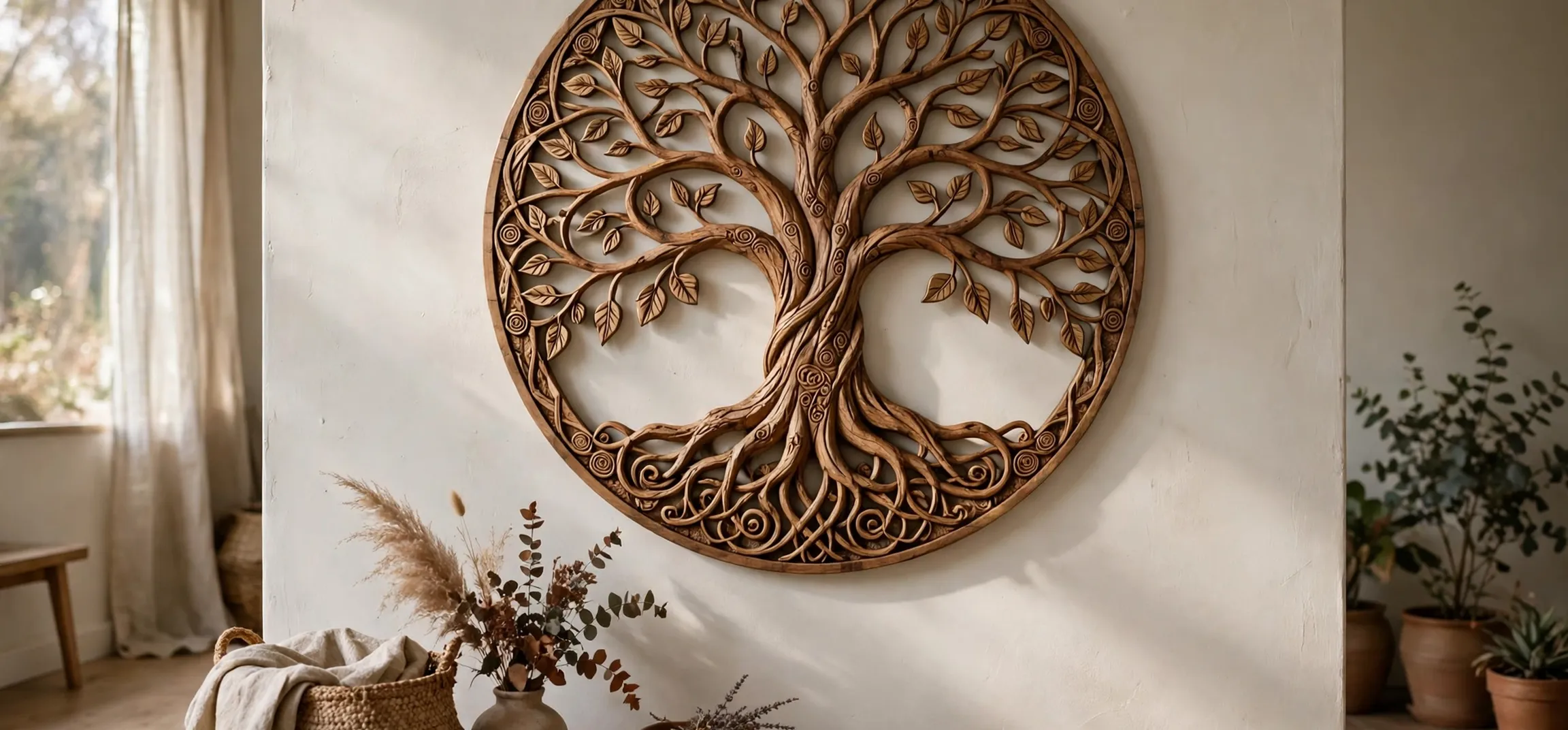
If you searched for “symbols in life”, you are probably looking for more than a list of pretty shapes. You want to know why certain images keep appearing across cultures, what they meant to the people who first used them, and why they still feel meaningful today. Symbols in life are the shorthand of human experience. Long before most people could read or write, communities used marks, objects, and images to record beliefs, mark important moments, and pass wisdom from one generation to the next. A single image could carry a whole story: a journey, a hope, a warning, or a promise. That is why symbols in life still show up everywhere, from jewellery and tattoos to flags, logos, architecture, and works of art.
The important thing to understand is that a symbol rarely has one fixed meaning for everyone. Its meaning depends on who is using it, where they live, and what tradition they belong to. The same image can mean protection in one culture, mourning in another, and good fortune in a third. Symbols in life therefore work best when they are read in context. This guide explains some of the best-known life symbols in a neutral, factual way, explores how they are used today, and offers a simple framework for interpreting any symbol you come across, without claiming that one reading is the only correct one.
Symbols in Life Explained: How Meaning Is Made
A symbol is something that stands for something else. A heart shape does not look like a human heart, yet most readers instantly connect it with love and affection. That connection is learned, not natural. It builds up over time as people see the image used in the same way again and again, in stories, ceremonies, songs, and everyday objects. When symbols in life are repeated across generations, they gather layers of association, and those layers are what make them feel deep and powerful.
Scholars often divide symbols into a few broad kinds. Some are natural symbols, drawn from the world around us, such as the sun, the moon, rivers, trees, and birds. Others are made by people, such as knots, keys, anchors, and wheels. A third group belongs to particular faiths or philosophies, where an image carries a teaching or a story that followers recognise at once. In practice, most symbols in life belong to more than one group at the same time. A tree, for example, is a natural object, a feature of many sacred stories, and a common design in art and jewellery. Its meaning grows precisely because it can be read on several levels at once.
It is also worth remembering that symbols in life change. An image that once belonged mainly to a religious tradition may later appear in fashion or popular culture with a lighter, more decorative meaning. That does not erase the older meaning, but it does mean that the same symbol can be understood differently by different viewers. When you meet a symbol you do not recognise, the most respectful approach is to ask what it means to the person using it, rather than assuming your first guess is right.
Symbols in Life: The Tree of Life
One of the most widespread symbols in life is the tree of life. It appears in art from many parts of the world, often drawn with spreading branches above and deep roots below, sometimes enclosed in a circle. The basic idea is easy to grasp: a tree grows, changes with the seasons, sheds leaves, and grows again, which makes it a natural image for growth, endurance, and renewal. Its roots suggest connection to family, home, or origins, while its branches suggest aspiration, learning, and the future.
In different traditions, the tree of life carries different stories. In some accounts it is linked to creation or to a sacred garden. In others it represents the connection between earth and sky, or between the physical world and a spiritual one. In modern use, it often appears as a personal symbol, chosen to mark family bonds, a fresh start after a difficult period, or a belief in steady growth over time. Because the image is so open, people can bring their own experiences to it, and that openness is part of its lasting appeal.
When you see the tree of life in jewellery or home decoration, it is usually being used in this broad, personal sense rather than as a statement about one particular belief. Still, because the tree also has specific meanings in particular faiths, it is wise to be aware that a design may carry a deeper significance for someone else. Appreciating the shared image while respecting its specific uses is a good general rule for symbols in life as a whole.
Ancient Symbols That Still Speak Today
Several ancient symbols remain familiar even to people who have never studied their origins. The ankh, an Egyptian cross with a loop at the top, is one of the best known. In ancient Egyptian art it was held by gods and rulers and is widely associated with life and vitality. Today it appears in museum displays, historical dramas, and jewellery, and many people wear it as a general symbol of life and energy. Readers who want a closer look at this particular image can explore related explanations of the ankh and its historical meanings alongside this guide.
The infinity symbol, a sideways figure of eight, is a more recent example of an old idea finding a new form. Mathematicians use it to represent a quantity without end, and in popular culture it has come to stand for lasting love, friendship, or commitment. The lotus flower offers another kind of story. It grows from muddy water and opens clean above the surface, which has made it, in several Asian traditions, an image of purity, awakening, and rising above difficulty. The dove, the anchor, and the key follow a similar pattern: each takes an ordinary thing from daily life and gives it a second, symbolic job. The dove suggests peace, the anchor suggests stability and hope, and the key suggests knowledge, opportunity, or access.
Numbers and patterns can work as symbols too. Repeating numbers, geometric shapes, and knots are often given personal meanings by the people who wear or display them, even when there is no single traditional meaning behind a particular design. That personal layer matters. A symbol does not have to be ancient to be meaningful, and a modern design can become deeply significant because of the moment or person it is connected with.
Symbols in Life Across Cultures and Faiths
Because symbols in life travel across borders, the same image can gather different meanings as it moves. The yin and yang symbol, for example, comes from Chinese philosophy and represents balance between complementary forces, such as light and dark, activity and rest. It is often used today as a general image of harmony, although its philosophical background is more specific and richer than a simple slogan about opposites. The om sound-symbol, written in the Devanagari script, is sacred in Hindu tradition and is also used in meditation and yoga practice around the world.
The cross, the crescent, the Star of David, and other faith symbols are different in an important way: they are not only cultural decorations but living signs of belief for millions of people. For followers, they may mark identity, worship, mourning, or celebration. For outsiders, the respectful course is to recognise that depth and not to treat such symbols as mere fashion without understanding their significance. The same caution applies to symbols belonging to Indigenous cultures, where an image may be tied to a specific community, story, or ceremony and may not be intended for general use.
This variety is not a problem to be solved. It is the point. Symbols in life are valuable precisely because they let different communities express their deepest ideas in a compact, memorable form. Learning about them is a way of learning about other people, provided the learning is done with curiosity and respect rather than with a desire to collect meanings like souvenirs.
Symbols in Everyday Modern Life
You do not have to visit a museum to meet symbols. They are built into daily routines. Road signs use simple pictures to give instant instructions. Logos use colour and shape to suggest trust, speed, or luxury. A wedding ring is a circle with no beginning or end, chosen to suggest an unbroken commitment. A candle lit in memory of someone, a flag flown at half-mast, or a ribbon worn for a cause are all modern examples of symbols in life doing quiet, serious work.
Digital life has added a whole new layer. Emojis, icons, and avatars now carry emotional meaning in messages, and a single small image can soften a sentence, signal humour, or show support. Numbers also carry personal meaning for many people: a date, a lucky number, or a repeated pattern noticed on a clock can feel significant, even when the person knows there is no scientific reason behind it. Guides to number meanings, such as explanations of the meaning people attach to the number 888, show how this habit of finding meaning in patterns continues in modern tattoo and jewellery culture.
Understanding symbols in life in their modern forms helps you read the world more carefully. An advert, a political poster, or a social media post often relies on symbolic shortcuts to create a feeling before you have read a single word. Noticing those shortcuts does not make you cynical. It makes you a more thoughtful reader, able to separate the feeling an image creates from the claim it is being used to support.
How to Interpret a Symbol You Do Not Recognise
When you encounter an unfamiliar symbol in life, a few simple questions can help. First, where did you see it? A symbol in a place of worship, on a national flag, or in a work of art will usually carry a different weight from the same shape on a T-shirt. Second, who is using it, and in what context? The user of a symbol is usually the best guide to what it means to them. Third, does the symbol have a long history, or is it a recent design? Older symbols tend to have many layers, while newer ones may have a single, specific meaning given by their creator.
It is also useful to check more than one source. A single web page or social media post may present one interpretation as if it were universal, when in fact scholars and communities disagree. Museums, encyclopaedias, and cultural organisations are generally more reliable than a short post that claims a secret or hidden meaning. If sources disagree, that disagreement is itself useful information: it tells you the symbol is living and contested, not fixed and simple.
Finally, be careful about copying a symbol you do not understand onto your body, your home, or your work. A design that looks attractive may carry a meaning you would not want to claim, or may belong to a tradition that asks outsiders not to use it. Taking a moment to research first is a small effort that prevents embarrassment and shows respect for the people for whom the symbol matters most.
Common Life Symbols at a Glance
| Symbol | Common association | Where you may see it |
|---|---|---|
| Tree of life | Growth, family, renewal | Jewellery, wall art, tattoos |
| Ankh | Life and vitality in ancient Egyptian art | Museums, historical art, jewellery |
| Lotus flower | Purity, awakening, rising above difficulty | Meditation spaces, art, tattoos |
| Infinity sign | Endurance, lasting commitment | Jewellery, logos, tattoos |
| Anchor | Stability, hope, steadfastness | Nautical art, memorials, tattoos |
| Dove | Peace and reconciliation | Memorials, peace campaigns, art |
| Yin and yang | Balance between complementary forces | Philosophy books, wellness spaces, art |
| Key | Knowledge, opportunity, new beginnings | Jewellery, crests, storybook art |
This table is a starting point, not a final verdict. Each entry could fill a book of its own, and the associations listed here are the broad, widely shared ones. For a deeper understanding of any single symbol, look for sources rooted in the culture or tradition it comes from, and compare them with general guides such as this one.
Frequently Asked Questions
Do symbols have the same meaning everywhere?
No. Most symbols have a core association that travels well, but their full meaning changes with culture, faith, history, and personal experience. Always read a symbol in its context and, where possible, ask the person using it what it means to them.
Can a symbol mean something personal as well as traditional?
Yes. People often choose a symbol because of a personal event, such as a birth, a loss, or a recovery, and that personal meaning can sit alongside the traditional one. Both layers can be genuine at the same time.
Is it disrespectful to wear a symbol from another culture?
It depends on the symbol and the context. Some symbols are widely shared and decorative, while others are sacred or restricted to a particular community. Researching the background first, and listening to members of that community, is the respectful approach.
Why do symbols in life feel so powerful?
Because they compress a large idea into a small, memorable image. A symbol lets people carry a belief, a memory, or a hope with them in a form that can be seen, touched, and shared, which makes abstract ideas feel concrete and close.
Conclusion
Symbols in life are far more than decoration. They are a language humans have used for thousands of years to express what matters most: love, hope, grief, faith, identity, and the desire to grow. From the tree of life to the ankh, from the lotus to the anchor, each image carries a history, and each history is still being added to by the people who use the symbol today. The wisest way to approach them is with both curiosity and care: learn what a symbol has meant, notice what it means now, and respect what it means to others. If you do that, symbols stop being mysterious marks and become what they were always meant to be, which is a bridge between one person’s experience and another’s understanding. For readers interested in how words and ideas are explained more broadly, related guides on the meanings behind everyday terms, including the meaning of testimony in older texts, can offer a useful next step.



