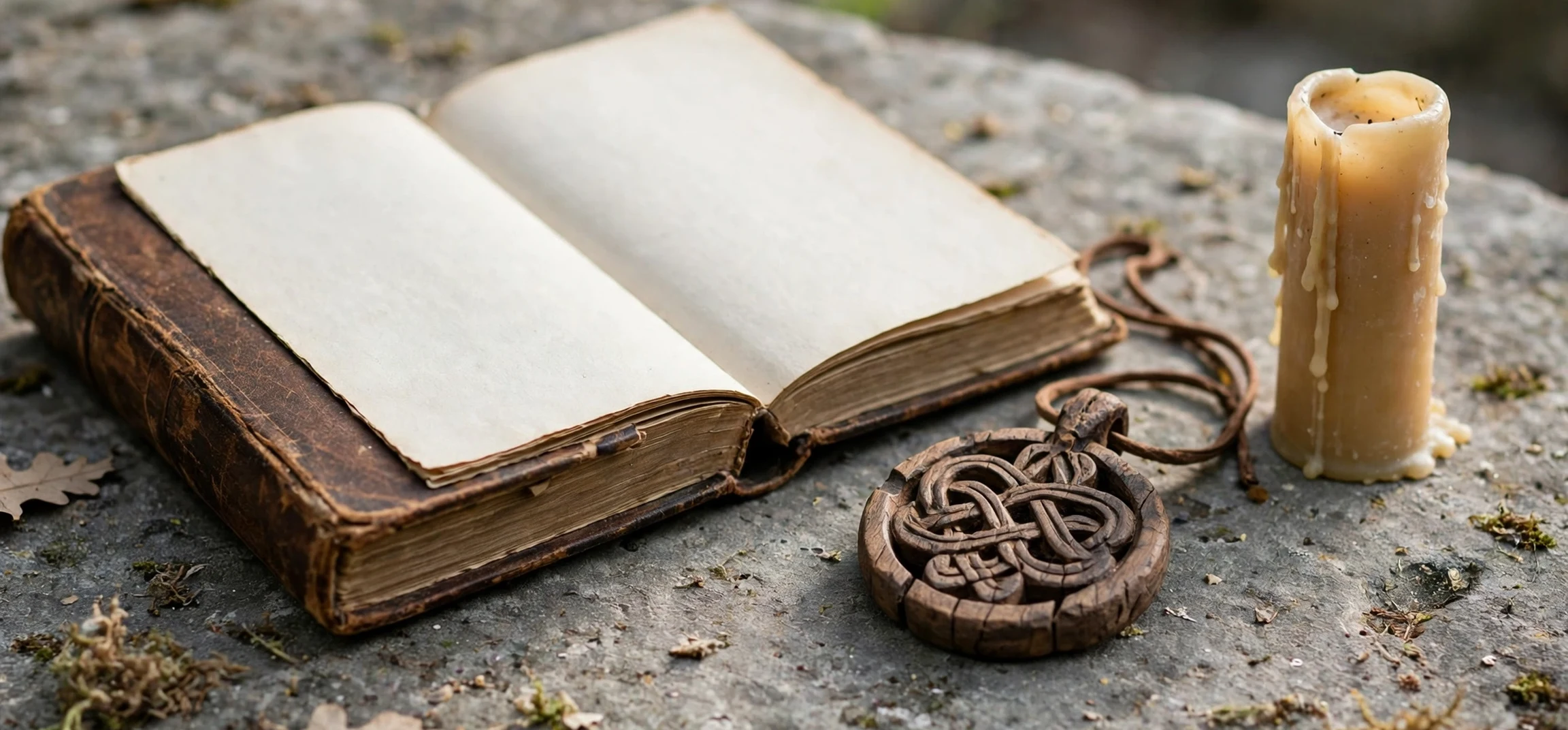
The valknut tattoo meaning draws on Norse history, archaeology, and modern symbolism, and it is best understood as a cultural explainer rather than a single fixed definition. The valknut is a geometric design made from three interlocked triangles, and it appears on stone carvings and other artefacts associated with the Viking Age in Scandinavia. People who search for the valknut tattoo meaning are usually asking what the symbol meant in its original context, why it is connected with the god Odin, and what it means to people who choose it as a tattoo today. This guide answers those questions in a neutral, historical way, explains what scholars do and do not know, and notes the important context that any modern wearer should consider before choosing the design.
It is important to start with honesty about the evidence. The word valknut itself is a modern scholarly label, combining Old Norse words for the slain and for knot, rather than a name that is proven to have been used by Viking Age people for this exact design. Archaeologists have found the three-triangle motif on picture stones, most famously on Gotland in Sweden, and on other objects linked to burial and ritual. Because those contexts are often connected with death, battle, and the afterlife, scholars associate the symbol with Odin, who in Norse mythology was linked to war, wisdom, poetry, and the dead. That association is plausible and widely discussed, but it is not a complete dictionary entry from the period. The valknut tattoo meaning today therefore blends historical interpretation, artistic tradition, and personal meaning, and a responsible guide should keep those layers separate.
The valknut tattoo meaning in Norse History
In the Viking Age, roughly from the late eighth century to the eleventh century, Scandinavian societies produced rich visual art on stone, wood, metal, and textiles. The three interlocked triangles appear in that art alongside other motifs, including animals, ships, warriors, and gods. On picture stones, the motif is sometimes shown near figures that appear to be fallen warriors or scenes connected with death and sacrifice. That placement is one reason scholars link the symbol to Odin and to the idea of warriors chosen for the afterlife hall Valhalla in myth. The connection is interpretive, built from context rather than from a surviving Viking Age text that says, in plain words, that this shape means this thing. Readers should therefore treat the historical valknut tattoo meaning as a well-supported interpretation, not as a certainty carved in stone.
The design itself is also worth describing carefully. A valknut can be drawn in two main forms: as three separate triangles interlocked so that they share a centre, or as a single continuous line that folds back on itself to form three triangles. Both forms create a sense of interconnection, and that visual quality has led modern commentators to associate the symbol with ideas such as the interweaving of past, present, and future, or the connection between different realms in Norse cosmology. Those readings are modern reflections on an old shape, and they are best understood as artistic interpretation rather than as proven Viking Age doctrine. When people choose the design today, they often do so because they like that sense of connection, or because they feel a cultural or family link to Scandinavia, or because they admire Norse mythology as literature and history.
Odin, Battle, and the Afterlife in Myth
Odin is a complex figure in Norse mythology. He is described as a god of war and wisdom, a seeker of knowledge, a patron of poetry, and a receiver of the slain. In the surviving poems and sagas, which were written down later than the Viking Age itself, Odin is connected with the valkyries, female figures who choose warriors for the afterlife, and with a hall where fallen warriors are honoured. Because the valknut appears in art connected with death, scholars have suggested that it may have functioned as a symbol of Odin, of the transition between life and death, or of the binding and releasing of warriors in battle. Again, the evidence is suggestive rather than conclusive, and different scholars emphasise different aspects. A tattoo guide that pretends otherwise would be misleading, and a good design decision should start from that uncertainty.
It is also useful to place the valknut alongside other Norse symbols, because no symbol existed in isolation. Viking Age art included runes, animal motifs, ship imagery, and geometric knots that expressed skill, status, and belief. The valknut is distinctive because of its clean geometry, which makes it well suited to tattooing, jewellery, and carving. Its simplicity is part of its modern appeal. A small, bold design can be placed on a forearm, chest, shoulder, or back, and it can be combined with other historical motifs such as runic inscriptions, ravens, or knotwork. For readers interested in how other symbols are explained on this site, the guide to tattoo symbolism and number meanings and the explainer on ancient symbols and their histories show how a single shape can carry different meanings in different cultures and periods.
The valknut tattoo meaning for Modern Wearers
Today, most people who choose a valknut tattoo do so for personal reasons that are not tied to any single doctrine. Common reasons include an interest in Norse history, a Scandinavian heritage, a love of mythology, a memorial for someone who has died, or an appreciation for the idea of courage, endurance, and interconnectedness. Some wearers choose the design as a reminder to face difficulty with steadiness, drawing on the mythological association with warriors and with Odin’s pursuit of wisdom even at great cost. Others choose it simply because they find the geometry beautiful and meaningful as art. All of these reasons are personal, and none of them requires the wearer to claim a religious belief or a historical identity they do not hold. A tattoo is, in the end, a personal choice about the body, and its meaning is partly what the wearer brings to it.
At the same time, modern wearers should be aware of a sensitive context. Like several other Norse and Germanic symbols, the valknut has been appropriated by some extremist groups in recent decades, who have used historical imagery to signal exclusionary ideologies that have nothing to do with the scholarship of the Viking Age. That appropriation does not erase the historical symbol, and it does not mean that every person with a valknut tattoo holds such views. It does mean, however, that the symbol can be misread by others, especially in certain settings, and that a wearer may be asked about it. This guide does not reproduce extremist content, praise any extremist use, or present the symbol as an endorsement of any ideology. It presents the valknut as a historical and cultural motif, and it encourages anyone considering the tattoo to think about context, placement, and how they will explain their own reasons if asked.
Choosing a Design, Size, and Placement
Practical design choices matter as much as symbolism. A valknut is a bold, geometric shape, so it tends to work best when it is large enough for the triangles to stay crisp as the tattoo ages. Very small, finely lined versions can blur over time, especially on skin that moves a lot. Many tattoo artists recommend a size that allows clean spacing between the lines, and a placement where the design will not distort heavily. The forearm, upper arm, shoulder blade, chest, and calf are common choices, and each has a different balance of visibility and privacy. A wearer who wants the tattoo mainly for personal reflection may prefer a less visible placement, while a wearer who wants it as a conversation piece may prefer a more visible one. Talking openly with a reputable artist about line weight, shading, and long-term ageing is the best way to get a result that still looks good in ten years.
Combining the valknut with other elements can also change how it is read. Pairing it with a runic inscription, a raven, a tree, or a knotwork border can place it more clearly in a historical or mythological context, while a standalone valknut is more minimal and open to interpretation. Some wearers add dates, names, or short phrases in a memorial design, which can make the personal meaning clear to anyone who asks. Others keep it entirely abstract. There is no correct combination, but it is worth thinking about how the final design will look to a stranger who does not know your story. A design that is clear about its personal or historical intent is less likely to be misunderstood than one that relies on the symbol alone to do all the talking.
History, Myth, and What We Cannot Prove
A recurring theme in valknut scholarship is the gap between archaeology and mythology. Archaeology gives us objects, stones, and contexts. Mythology gives us stories written down later, often by Christian authors in Iceland, centuries after the Viking Age. Bringing those two kinds of evidence together is valuable, but it also requires caution. A stone carving does not come with a caption, and a saga does not come with a photograph. Scholars therefore use words such as associated, possibly, and interpreted, and readers should be wary of any source that claims absolute certainty about the valknut. That caution is not a weakness. It is a sign of good historical thinking, and it protects the symbol from being reduced to a slogan.
For tattoo wearers, that caution is also liberating. If the historical meaning is not a single fixed rule, then the wearer has room to define a personal meaning that is honest about its sources. A person can say that they are drawn to the design because of its Viking Age art, its connection in scholarship to Odin and the afterlife, and its modern association with interconnectedness and courage, without claiming that Vikings themselves wrote a definition of it. That kind of explanation is accurate, respectful, and easy to share. It also avoids the trap of inventing a fake ancient meaning to justify a modern choice. The design is strong enough on its own history and art to stand without embellishment.
Frequently Asked Questions
Is the valknut a religious symbol?
It is associated in scholarship with Norse mythology and with Odin, and some modern Heathens and pagans use it as a religious or spiritual symbol. For many other wearers, it is a cultural or artistic choice rather than a statement of faith. The meaning depends on the wearer, and it should not be assumed from the design alone.
What do the three triangles represent?
Scholars do not agree on a single proven meaning for the three triangles. Modern interpretations often link them to ideas such as past, present, and future, or to interconnected realms, but those readings are modern reflections on the geometry rather than a documented Viking Age definition. The safest summary is that the design suggests interconnection and transition, especially in contexts linked to death and the afterlife.
Should I get a valknut tattoo?
That is a personal decision that should follow research, reflection, and a conversation with a reputable tattoo artist. Consider the historical context, the modern misreadings that can occur, the placement and size, and how you would explain your own reasons. If you are comfortable with those questions, the design can be a meaningful and historically grounded choice.
| Topic | Summary |
|---|---|
| Design | Three interlocked triangles, in two main drawing styles |
| Period | Viking Age Scandinavia, with picture-stone examples |
| Scholarly link | Associated with Odin, death, and the afterlife in context |
| Modern use | Heritage, mythology, memorial, courage, interconnection |
| Caution | Historical symbol with modern appropriation to be aware of |
A Recap of the valknut tattoo meaning for New Readers
When people search for the valknut tattoo meaning, they usually want a clear summary, and the clearest summary is that the valknut tattoo meaning blends history, interpretation, and personal choice. The valknut tattoo meaning begins with Viking Age art, where three interlocked triangles appear in contexts linked to death and the afterlife. The valknut tattoo meaning is therefore often connected in scholarship to Odin, although the valknut tattoo meaning is not a proven ancient dictionary definition. Anyone explaining the valknut tattoo meaning should keep that distinction, because the valknut tattoo meaning is strongest when it is honest about evidence.
A second layer of the valknut tattoo meaning is modern and personal. For many wearers, the valknut tattoo meaning is about heritage, mythology, memory, or courage. The valknut tattoo meaning can mark a connection to Scandinavian roots, a love of Norse stories, or a memorial for someone who has died. The valknut tattoo meaning can also express interconnection, since the triangles are woven together, and the valknut tattoo meaning can express endurance in difficult times. The valknut tattoo meaning does not require a single faith or identity, and the valknut tattoo meaning is best explained in the wearer’s own words when someone asks about it.
Finally, a responsible recap of the valknut tattoo meaning must include context. The valknut tattoo meaning has a historical core, but the valknut tattoo meaning has also been misused by extremist groups, and the valknut tattoo meaning can therefore be misread. That does not erase the valknut tattoo meaning, and it does not define every wearer. It does mean that the valknut tattoo meaning should be chosen thoughtfully, with attention to placement, design, and explanation. In short, the valknut tattoo meaning is a historical symbol with a modern personal life, and it deserves both respect and clarity.
Conclusion
The valknut tattoo meaning is best summarised as a historical design with a plausible link to Odin and the afterlife, a striking geometry that suggests interconnection, and a modern life as a personal symbol of heritage, memory, and courage. It is not a single ancient slogan, and it should not be treated as one. By understanding what scholars know, what they interpret, and what remains uncertain, a wearer can choose the design with confidence and explain it honestly. That honesty, more than any single definition, is what gives the valknut its lasting power as a tattoo.