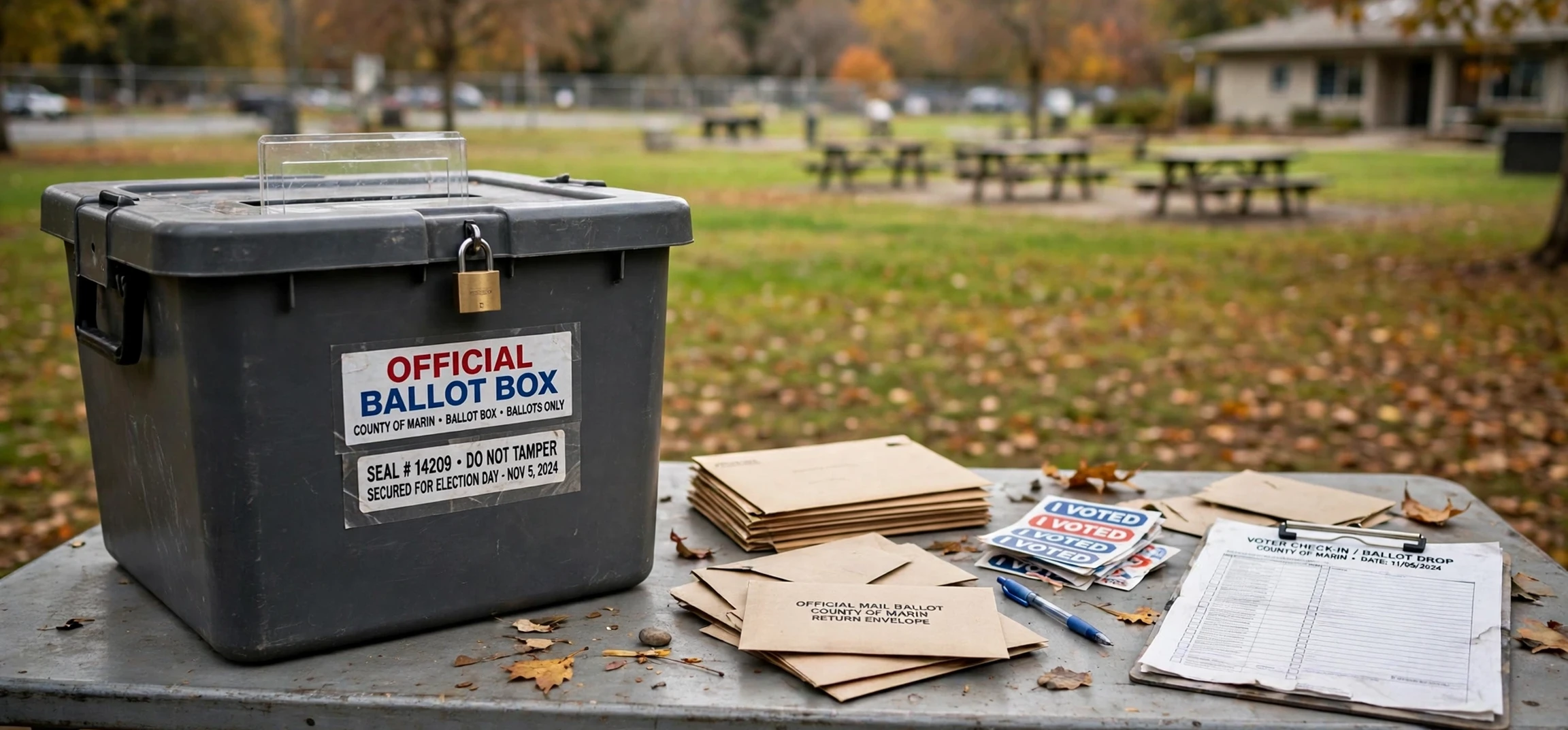
A vote definition for students can be stated simply: a vote is a formal choice, made by a person or a group, to decide something together. When people vote, each person expresses an opinion, usually by marking a ballot, raising a hand, or pressing a button, and the choices are counted to reach a decision that the group accepts. This student-friendly guide explains the vote definition for students in clear language, with examples from school, from everyday life, and from democratic elections. It is written for learners who want to understand what voting means, why it matters, and how it works, without any partisan content. Voting is a neutral civic process used by countries, schools, clubs, and communities all over the world, and understanding it is a basic part of citizenship education.
Vote Definition for Students: The Simple Version
Here is the vote definition for students in one sentence: voting is the process by which members of a group make a decision by expressing their individual choices and counting them together. The word “vote” can be a noun, meaning the choice itself, as in “my vote counted”, or a verb, meaning the act of choosing, as in “I will vote for the class trip destination”. In both cases, the idea is the same: instead of one person deciding for everyone, the group decides together, and each person’s choice contributes to the result. This is why voting is often described as a fair way to make decisions, because it gives everyone involved a voice.
A helpful classroom example makes the vote definition for students concrete. Imagine a class must choose between a science museum visit and a nature park visit. The teacher could simply pick one, but that would ignore what most students want. Instead, the class votes: each student chooses one option, the teacher counts the choices, and the option with the most votes wins. Every student had an equal say, the result is transparent, and even students whose choice did not win can see that the process was fair. This small example contains all the essential elements of voting: a question, a set of options, individual choices, a count, and a decision that the group respects.
Vote Definition for Students: Key Words to Know
Understanding voting is easier once you know its key words, and this vote definition for students uses them throughout. A ballot is the paper, form, or electronic screen on which a voter records a choice. A candidate is a person standing for election to a position, such as class president or a seat in a parliament. An electorate is the group of people entitled to vote in a particular election. A majority means more than half of the votes, while a plurality means the largest share of votes, even if it is less than half. A referendum is a vote on a single question or proposal, rather than a vote to choose a person. A secret ballot is a voting method in which nobody else can see how an individual voted, which protects voters from pressure. Turnout means the proportion of eligible voters who actually vote. Learning these words helps students follow news about elections and understand civics lessons with confidence.
Two more concepts matter for the vote definition for students. The first is eligibility: not everyone can vote in every election. Countries and organisations set rules about who may vote, often based on age, membership, or residence. In many countries, citizens can vote in national elections from the age of eighteen, while school councils may allow all students in a year group to vote. The second is the franchise, which is another word for the right to vote. The history of the franchise is the story of how voting rights were extended over time to groups that were once excluded, including women, younger adults, and people without property. That history is a central theme in civics education, because it shows that voting rights were not always universal and were often won through long campaigns.
Types of Votes Students Should Know
Votes come in many forms. In elections, and in the vote definition for students, voters choose people to represent them, such as members of a parliament, a council, or a school student body. In referendums, voters decide a question directly, such as whether a school should adopt a new uniform policy. In meetings, members may vote by a show of hands, by voice, or by secret ballot, depending on the rules of the group. Some votes are binding, meaning the result must be followed, while others are advisory, meaning they guide a decision without forcing it. Student councils often use a mix: elections to choose officers, and votes in meetings to decide activities, budgets, and proposals to present to teachers.
How Voting Works, Step by Step
Although voting systems differ around the world, most elections follow a similar sequence, and this vote definition for students follows that sequence, and the vote definition for students becomes clearer when the steps are laid out. First, the question or the positions to be filled are announced, along with the date of the vote. Second, candidates or options are presented, and voters have a chance to learn about them through debates, manifestos, or information sheets. Third, eligible voters register or are listed as entitled to vote. Fourth, on voting day, each voter casts a vote privately, following clear instructions. Fifth, the votes are counted, usually by independent officials or by a trusted committee, and the results are checked. Sixth, the winner or the winning option is announced, and the result is put into action.
Each step has safeguards designed to keep voting fair. Privacy protects voters from pressure. Clear rules about who may vote prevent confusion. Independent counting and checking help ensure the result is accurate. Public announcement of results allows everyone to see the outcome. In school elections, teachers often act as the independent officials, counting votes with student observers present, which models the same principles on a small scale. When students understand these steps, news stories about elections become much easier to follow, because the same pattern appears whether the election is for a class representative or for a national parliament.
Why Voting Matters
Voting matters for several reasons that are easy to explain in a classroom, and this vote definition for students highlights the main ones. First, it gives people a say in decisions that affect them. School rules, local services, and national laws all shape daily life, and voting is one way ordinary people influence those decisions. Second, it makes leaders accountable: if elected representatives know they must face voters again, they have a reason to listen and to explain their actions. Third, it provides a peaceful way to resolve disagreements. Instead of arguing without end or letting the loudest voice win, a group can vote and accept the result, even when individuals disagree with it. Fourth, it encourages participation and responsibility. When students vote in a school election, they learn that their voice counts and that taking part is part of belonging to a community.
It is also important to understand what voting does not do. A single vote rarely decides an election on its own, and voting does not end debate: after a decision, people may still discuss it, campaign for change, or prepare for the next vote. Voting works best alongside other civic activities, such as learning about issues, discussing them respectfully, volunteering, and following the news. The vote definition for students therefore includes both the act and the attitude behind it: voting is a practical tool for group decisions, and it works best when voters are informed, respectful of results, and willing to keep participating.
A Short History of Voting
Voting is an ancient practice, and this vote definition for students includes a brief look at its history. In ancient Athens, male citizens gathered to vote on laws and policies, though citizenship was narrowly defined and excluded women, enslaved people, and many residents. In Rome, assemblies of citizens voted on laws and elected officials, again with limited eligibility. Over the following centuries, voting took many forms, from town meetings to parliaments, but for most of history only a small proportion of the population could vote. The modern expansion of voting rights began in the nineteenth and twentieth centuries, as countries gradually extended the franchise to all adult men and then to women, lowered voting ages, and removed property and literacy requirements.
Landmark moments in this history are useful for students to know. New Zealand became the first country to grant women the vote in national elections in 1893. The United States extended voting rights to women in 1920 and removed remaining racial barriers to voting with legislation in the 1960s. The United Kingdom lowered the voting age from twenty-one to eighteen in 1969. India, on becoming independent, adopted universal adult suffrage, giving hundreds of millions of people the vote at once. Each of these moments shows that the vote definition for students is also a history lesson: the right to vote is something societies built over time, and it remains a subject of discussion today, for example in debates about voting ages, registration, and access to polling places.
Different Voting Systems Explained Simply
Not all votes are counted the same way, and students often find voting systems confusing at first, so this vote definition for students explains them simply. The simplest system is first past the post, used in many elections: the candidate with the most votes in an area wins, even without an overall majority. Another system is proportional representation, in which seats are shared out in proportion to the votes each party or group receives, so a group winning thirty percent of votes gains roughly thirty percent of seats. Some elections use ranked voting, where voters list candidates in order of preference, and lower-ranked candidates are eliminated until one candidate gains a majority. Each system has advantages and disadvantages, and different countries and organisations choose the system that fits their goals.
For school purposes, the simplest system is usually best: one person, one vote, and the option with the most votes wins. This is easy to explain, easy to count, and easy to trust. As students grow older, they can explore how other systems work and why the choice of system affects results. A useful classroom exercise is to run the same mock election under two different systems and compare the outcomes: students quickly see that rules matter, and that a fair process depends on rules everyone understands and accepts. This exercise brings the vote definition for students to life far better than a definition alone.
Vote Definition for Students at a Glance
| Term | Simple meaning |
|---|---|
| Vote | A formal choice made to help decide something as a group |
| Ballot | The paper, form, or screen used to record a vote |
| Candidate | A person standing for election to a position |
| Majority | More than half of the votes cast |
| Secret ballot | Voting in private so nobody sees your choice |
| Turnout | The share of eligible voters who actually vote |
| Referendum | A direct vote on a single question or proposal |
Keep this table handy during civics lessons, alongside this vote definition for students. Most news reports about elections use these words, and knowing them makes the news far easier to understand. For more plain-language explainers, see our guide to another word meaning explained simply and our list of famous name groups for a different kind of classroom reference.
Vote Definition for Students: Frequently Asked Questions
What is a vote in simple words?
A vote is a formal choice that helps a group make a decision. Each person chooses an option, the choices are counted, and the result decides what happens next.
Why do people vote?
People vote to have a say in decisions that affect them, to choose representatives, and to resolve disagreements fairly and peacefully, rather than leaving decisions to one person.
What is a secret ballot?
A secret ballot is a vote cast in private, so nobody else knows how an individual voted. This protects voters from pressure and helps keep elections fair.
Can students vote?
Students can vote in school elections, club elections, and student council votes, and many schools run mock elections to practise. National elections usually require voters to reach a minimum age, which is eighteen in many countries.
Classroom Activities for Learning About Voting
Teachers and students can make this guide practical with simple activities. Run a class vote on a real decision, such as the theme of a display or the choice of a class book, and follow all the steps: announce the question, present the options fairly, vote by secret ballot, count with observers, and announce the result. Hold a mock election with student candidates, short speeches, and a question session, so students experience campaigning and debating respectfully. Compare voting systems by running the same vote under different counting rules. Finally, discuss what makes a vote fair: privacy, equal say, clear rules, honest counting, and respect for the result. These activities turn a definition into an experience, and students who have voted in class understand elections far better than students who have only read about them.
Respectful discussion is part of the lesson too. In a good vote, people may disagree strongly about the options, yet still respect the process and each other. Classrooms can model this by setting ground rules: listen to other views, avoid personal attacks, and accept results gracefully while keeping the right to argue for change next time. These habits are the foundation of democratic life, and they matter just as much as the mechanics of ballots and counting.
Conclusion
The vote definition for students is simple at heart: voting is how a group makes a decision together, by giving each member a choice and counting those choices fairly. Behind that simple idea lie important concepts, including ballots, majorities, secret ballots, and turnout, and a long history of extending voting rights to more and more people. Whether the vote is for a class trip, a student council, or a national parliament, the principles are the same: clear options, equal say, private choice, honest counting, and respect for the result. Understanding voting is therefore not only a civics lesson but a life skill, one that helps students take part in their school, their community, and, when they are old enough, their country.



