If you have ever typed a question into a search engine and wondered what the answer really means, you are not alone. The definition for web depends on context, because the word web has several distinct meanings in everyday English, in technology, and in nature. Most often today, people use it as a short form of the World Wide Web, the system of linked pages, images, videos, and documents that we browse on the internet. In other settings, however, a web can be a spider’s silk structure, a woven fabric, or a network of connected things. Understanding which meaning is intended makes reading, writing, and searching much easier, and it helps you avoid confusion when the same word appears in very different sentences.
The word itself is old. Long before computers existed, web described something woven together, such as cloth on a loom or the delicate threads spun by a spider. That image of threads crossing and joining is still useful today. When we talk about a network of roads, a web of friendships, or a web of ideas, we are borrowing that same picture: separate strands meeting at many points to form a connected whole. Technology simply gave the word a new and famous job, and that new job is now the meaning most people think of first.
The Definition for Web in Technology
In technology, the web usually means the World Wide Web, often written as WWW. It is not the same thing as the internet, although the two words are often used as if they were interchangeable. The internet is the underlying global network of computers and cables that carries data around the world. The web is one service that runs on top of that network, built from documents and resources that are linked together and viewed through a browser. Email, video calls, and many apps also use the internet, but they are not the web itself, even when they open inside a browser window.
A web page is a single document in this system. It can contain text, pictures, audio, video, forms, and links to other pages. A website is a collection of related pages, usually grouped under one domain name and organised around a theme, a business, a person, or a topic. When you click a link, your browser asks a server for a page, the server sends the files back, and the browser displays them in a readable form. That simple request-and-response pattern, repeated billions of times a day, is the everyday experience of using the web, and it is the clearest illustration of the definition for web in a modern technical context.
Three building blocks make this possible. The first is the address system: every page has a unique web address, so a browser knows exactly where to look. The second is the linking system: links connect one page to another, letting readers move from topic to topic without needing to know every address in advance. The third is the display language: pages are written in a markup language that tells the browser how to arrange headings, paragraphs, images, and tables. Together, these ideas turn a collection of separate files into a navigable, interconnected space.
Web Versus Internet: A Simple Comparison
Think of the internet as the road network and the web as one kind of journey you can take on those roads. Other journeys, such as sending an email or making a video call, use the same roads but follow different rules. This distinction matters when you are troubleshooting a problem: if your internet connection is down, nothing online will work, but if one website is down, the rest of the internet may be working fine. It also matters when you are writing clearly, because saying internet when you mean web, or web when you mean internet, can change what a reader understands.
For a practical look at how websites are described and cited in formal writing, see this guide to citing a website correctly. It is a helpful reminder that the web is both a reading space and a source that people quote, reference, and study.
The Definition for Web in Everyday Language
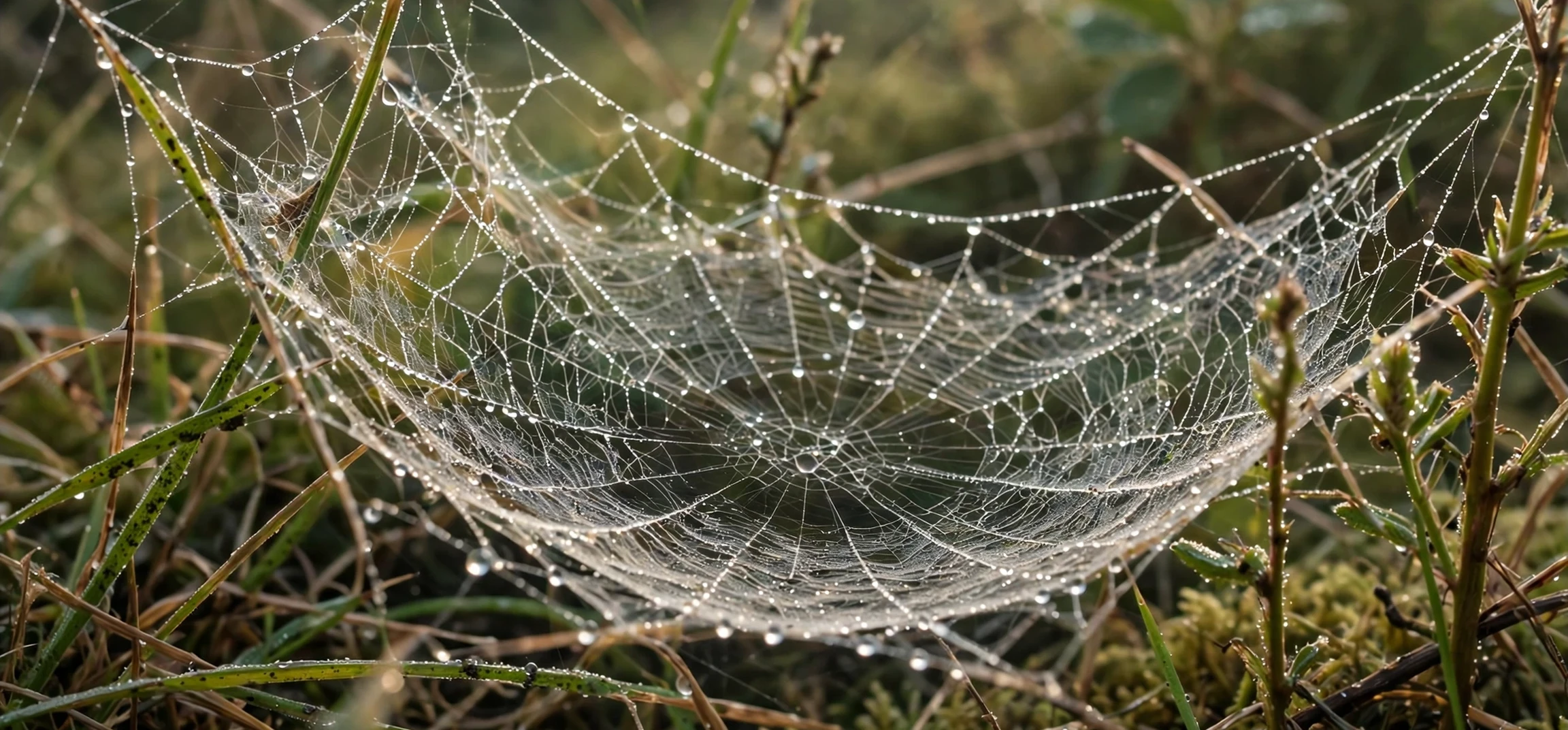
Outside technology, web keeps its older, broader sense: a network, a tangle, or something woven. A spider web is the best-known example. A spider spins silk threads into a pattern designed to catch insects, and the result is both strong and surprisingly light. In biology lessons, a food web describes how plants, animals, and other organisms are connected through what eats what. No single chain tells the whole story, because most creatures eat more than one thing and are eaten by more than one predator. The web picture captures that complexity better than a straight line.
In daily speech, people use web figuratively all the time. A detective may untangle a web of clues. A storyteller may weave a web of lies around a character. A manager may describe a web of suppliers, partners, and customers that keeps a business running. In each case, the point is connection: many parts linked together, where a change in one place can affect several others. Recognising this figurative use helps you read novels, news reports, and business articles with more confidence, because you can tell when web is literal and when it is a metaphor, and a good definition for web in a dictionary will list both the literal and figurative senses.
The word also appears in craft and manufacturing. Weaving produces a web of cloth. In printing and papermaking, a continuous roll of paper moving through a machine is sometimes called a web. In anatomy, the skin between the toes of ducks, frogs, and other swimming animals is called webbing, and it helps them push against water. These uses are less common in conversation, but they all trace back to the same core idea of threads or surfaces joined together.
Common Phrases That Use the Word Web
Several familiar phrases show how flexible the word is. To be caught in a web means to be trapped in a complicated situation. To spin a web means to create an elaborate plan or story, often a deceptive one. The phrase world wide web is a proper name for the global linked system described above, while a tangled web suggests confusion or difficulty. Learning these phrases in context, rather than memorising a single dictionary entry, is the fastest way to use the word naturally.
A Short History of the Word and the World Wide Web
The English word web comes from an old Germanic root related to weaving. For centuries it meant woven fabric or a spider’s net. The technological meaning arrived much later. In 1989, a British computer scientist named Tim Berners-Lee proposed a system for sharing information between researchers using linked documents. By the early 1990s, the first browsers and public websites appeared, and the system began to grow beyond universities and laboratories into homes, schools, and businesses.
Early web pages were mostly plain text with a few links. Over time, images, colour, layout, audio, and video arrived, followed by search engines, online shops, social platforms, and streaming services. Each step made the web more useful, but the core idea stayed the same: documents connected by links, reachable by address, and readable in a browser. That continuity is why a page written decades ago can still be opened today, even though the devices we use have changed completely, and it explains why the definition for web has stayed stable even as browsers and devices have changed.
The growth of the web also changed language itself. We now browse, surf, link, bookmark, and search as everyday verbs. We talk about web pages, web browsers, web designers, web addresses, and web applications without stopping to explain them. Newcomers sometimes find this vocabulary intimidating, but every term builds on the same simple picture of connected documents, and a few clear examples are usually enough to make the whole system click.
Types of Webs You May Meet
It helps to sort the main meanings into a quick reference. The table below gives the most common uses, a short description, and an example sentence for each. Keep it beside you when you are reading or writing, and check which row fits the sentence in front of you before you decide what web means in that case.
| Meaning | What it describes | Example |
|---|---|---|
| World Wide Web | Linked pages viewed in a browser | She found the recipe on the web in seconds. |
| Spider web | Silk structure built by a spider | A spider web stretched across the garden gate. |
| Food web | Feeding connections in an ecosystem | The pond food web links algae, insects, and fish. |
| Woven web | Cloth or material made by weaving | The loom produced a fine web of cotton fabric. |
| Figurative web | A complex network of people or ideas | The novel follows a web of family secrets. |
Notice how the table separates the technological meaning from the natural and figurative ones, which is exactly what a careful definition for web should do. In a science article, food web is almost certainly the intended sense. In a technology article, the World Wide Web is the likely sense. In a novel, the figurative sense is more probable. Context, especially the words around web, is your best clue, and the surrounding topic usually settles the question quickly.
How to Use the Word Web Correctly
When you write, choose the clearest form for your reader. If you mean the World Wide Web, writing web on its own is usually fine in casual writing, but in formal or technical writing, spelling out World Wide Web on first use and then shortening it to web is a safer habit. Capitalisation also helps: World Wide Web is a proper name and takes capitals, while a spider web or a web of connections is a common noun and stays lower case. Small choices like these signal to your reader that you know which meaning you intend.
Be careful with plurals and compounds as well. Webs is the plural for spider webs or networks, while websites, web pages, and web browsers are compound nouns with their own spellings. A website is not the same as a web page: the site is the whole collection, and the page is one document inside it. Getting that distinction right improves both your writing and your ability to follow technical instructions, because help guides often tell you to visit a website and then open a specific page within it.
If you are choosing a connection at home, you may also find it useful to compare internet and TV service providers in your area, since the quality of your connection shapes how smoothly the web works for streaming, studying, and working from home.
Mistakes to Avoid
The most common mistake is treating web and internet as exact synonyms. They are related but not identical, as explained above. Another common mistake is writing web site as two words in modern usage; the standard form today is website. A third mistake is assuming that everything online is part of the web: apps, games, and messaging services may use the internet without being web pages. Avoiding these three errors will make your writing sound more precise at once.
Frequently Asked Questions About Web
Is web short for World Wide Web?
Yes, in most modern technology contexts it is. People shorten World Wide Web to web in conversation, and they also use the abbreviation WWW in addresses. The short form is so common that many readers will understand it without explanation, although formal writing often spells it out on first use.
Is the web the same as the internet?
No. The internet is the global network infrastructure, and the web is a system of linked documents that runs on that infrastructure. Email and many apps use the internet but are not web pages, which is why the distinction is worth keeping.
What is a website?
A website is a collection of related web pages under a shared domain name, organised around a topic, organisation, or person. A single page inside that collection is a web page, and the home page is usually the first page visitors see.
Can web mean something in nature?
Yes. A spider web is a silk structure built by a spider, and a food web describes feeding relationships in an ecosystem. Both uses predate the technological meaning and remain common in science and everyday speech.
Conclusion
The word web is small, but its meanings reach across nature, craft, language, and technology. In daily life today, it most often points to the World Wide Web, the linked system of pages we browse every day. In science and storytelling, it still describes nets, food chains, and tangled networks of people and ideas. Once you learn to check the context and ask which kind of connection is being described, the word stops being confusing and becomes a useful shorthand for one of the most powerful ideas in language: separate strands, joined together, forming something larger than any single thread. If you want to explore how names and meanings are explained online, you may also enjoy this guide to a name meaning website, which shows the same explain-it-clearly approach applied to personal names.