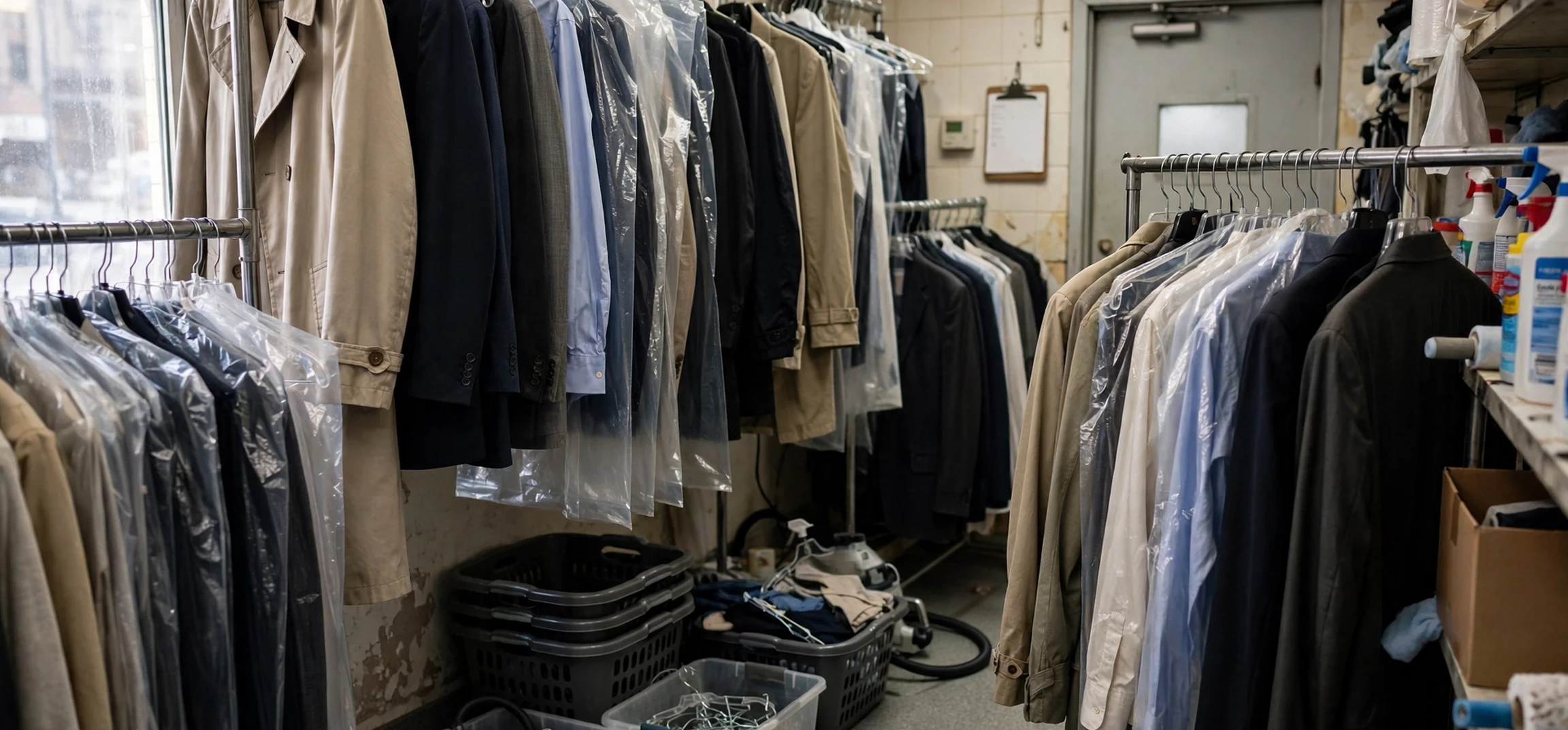
If you have ever wondered what does dry cleaning mean, the answer is simpler — and more interesting — than the name suggests. The question what does dry cleaning mean is about a method of cleaning clothes without water: garments are cleaned with a chemical solvent instead of being washed in water and detergent. This guide explains what dry cleaning means, how the process works, which clothes need it, and how to care for dry-cleaned garments.
The name “dry cleaning” is slightly misleading. Clothes do get wet during the process — but with solvent, not water. The term “dry” refers to the absence of water, which matters because water can damage certain fabrics, cause shrinkage, distort shape, or ruin dyes. Dry cleaning was developed precisely for garments that cannot survive a normal wash.
What Does Dry Cleaning Mean: The Process Step by Step
When you take a garment to a dry cleaner, it goes through several stages. First, the garment is inspected and tagged, and any stains are noted. Pre-treatment follows: the cleaner applies stain-removal agents to specific marks, since different stains respond to different treatments. The garment is then placed in a dry cleaning machine, which resembles a large washing machine but uses solvent instead of water. The solvent circulates through the clothes, dissolving grease and dirt, and is then drained, filtered, and reused.
After cleaning, the garment is dried in the same machine with warm air, which evaporates the remaining solvent. Finally, it is pressed, steamed, or finished by hand to restore its shape, and inspected before being returned to you. The whole process is designed to clean thoroughly while protecting fabric, structure, and colour.
What Solvents Are Used in Dry Cleaning?
Historically, the most common dry cleaning solvent was perchloroethylene, often called “perc”. In recent years, many cleaners have moved to alternatives, including hydrocarbon solvents, liquid silicone-based solvents, and professional wet cleaning — a controlled, gentle water-based process that is distinct from home washing. Regulations on solvents vary by region, and environmental and health concerns have driven the shift toward alternatives.
If you are sensitive to chemicals or concerned about environmental impact, ask your cleaner which solvent they use. Many cleaners advertise greener methods, and the difference matters more to some customers than to others. What matters most for your clothes is that the cleaner uses a method suited to the garment’s fabric and care label.
Which Clothes Need Dry Cleaning?
Care labels tell you whether a garment should be dry cleaned. Look for the circle symbol, which indicates dry cleaning, sometimes with a letter inside specifying the solvent type, and sometimes with a bar underneath meaning gentle processing. Garments that commonly require dry cleaning include:
- Structured items: suits, blazers, and tailored coats, whose shape depends on internal construction that water can damage.
- Delicate fabrics: silk, velvet, and some wools, which can shrink, lose texture, or bleed colour in water.
- Embellished garments: items with beading, sequins, or glued details that water or agitation could loosen.
- Leather and suede: which require specialist cleaning, not standard dry cleaning or washing.
Not everything labelled “dry clean only” truly needs it — some labels are cautious — but ignoring the label risks damage, and manufacturers use the label to define how the garment should be cared for. When in doubt, follow the label or ask a professional cleaner.
| Care symbol | Meaning |
|---|---|
| Empty circle | Dry clean |
| Circle with a letter | Dry clean with the specified solvent type |
| Circle with a bar below | Gentle dry cleaning |
| Circle with a cross | Do not dry clean |
Caring for Dry-Cleaned Clothes at Home
Between cleanings, a few habits extend the life of your garments. Air clothes after wearing before returning them to the wardrobe, which reduces the need for frequent cleaning. Brush suits and coats lightly to remove surface dust. Address stains promptly — tell your cleaner what the stain is, since that information helps them choose the right treatment. And do not over-clean: dry cleaning is gentler than washing for suitable garments, but every cleaning cycle still wears fabric slightly, so clean only when needed.
Store dry-cleaned clothes properly: remove the plastic bag, which traps moisture, and use sturdy hangers that support the garment’s shape. For seasonal storage, breathable garment bags protect against dust without trapping humidity.
Frequently Asked Questions
Is dry cleaning actually dry?
Not literally. Clothes are cleaned with liquid solvent instead of water, so they do get wet — just not with water.
Can I dry clean at home?
Home dry cleaning kits exist for refreshing lightly worn garments, but they are not a substitute for professional cleaning of stained, structured, or delicate items.
How often should I dry clean a suit?
Only when needed — after visible soiling, odour, or several wears — rather than after every wear. Airing and brushing between wears reduces cleaning frequency.
What Does Dry Cleaning Mean: A Brief History
What does dry cleaning mean historically? The process dates to the nineteenth century, when cleaners discovered that certain solvents could remove grease and dirt from fabric without water. Early solvents were highly flammable petroleum-based liquids, and early dry cleaning was a hazardous trade. The legend that the process was discovered when a maid accidentally spilled kerosene on a greasy tablecloth and noticed the stain lifting is probably apocryphal, but it captures the essential insight: solvents dissolve grease in ways water cannot.
Over the twentieth century, the industry professionalised: safer solvents were adopted, machines were enclosed to contain fumes and recover solvent, and the process became a standard service in towns and cities. Perchloroethylene, introduced mid-century, dominated for decades because it cleaned effectively and was non-flammable, though environmental and health concerns later drove the search for alternatives.
Today’s industry uses a mix of solvents and methods, and regulation varies by country and region. The history matters because it explains why dry cleaning looks the way it does: a specialised, machine-based process, distinct from washing, developed for fabrics and garments that water would damage.
What Does Dry Cleaning Mean Compared With Washing?
What does dry cleaning mean when compared with ordinary washing? The key difference is the cleaning medium: water and detergent versus chemical solvent. Water is excellent at dissolving water-soluble dirt — sweat, food stains, mud — but it swells natural fibres, which can cause shrinkage, distortion, and dye loss. Solvent dissolves grease and oil effectively while swelling fibres far less, which preserves shape and structure.
That difference determines which method suits which garment. Cotton shirts, bed linen, and everyday clothes are designed for washing: they tolerate water, and washing removes the water-soluble soils they accumulate. Suits, silk dresses, and structured coats are designed for dry cleaning: their construction, interlinings, and dyes tolerate solvent better than water. Using the wrong method risks the garment: washing a suit can distort its shape permanently, while dry cleaning a heavily soiled cotton shirt may leave water-soluble stains behind.
Professional wet cleaning bridges the gap: it uses water but under controlled conditions — gentle agitation, precise temperatures, and specialist detergents — that protect delicate garments better than home washing. It is a useful option to ask about, particularly for garments whose labels allow it.
What Does Dry Cleaning Mean for the Environment?
What does dry cleaning mean environmentally? Traditional solvents, particularly perchloroethylene, have raised environmental and health concerns, including groundwater contamination from improper disposal and exposure risks for workers. Regulations in many regions now require closed machines that recover solvent, proper waste disposal, and ventilation standards, which have reduced these risks substantially.
Newer solvents and methods — hydrocarbon solvents, liquid carbon dioxide, silicone-based solvents, and professional wet cleaning — are marketed as greener alternatives, though each has its own trade-offs in cost, cleaning power, and environmental profile. No method is impact-free: every cleaning process uses energy, chemicals, and water in some measure.
As a customer, you can reduce impact by cleaning less often — airing and spot-treating garments between cleanings — and by choosing cleaners that advertise modern, regulated methods. The most sustainable garment care is often simply less of it: wear clothes more times between cleanings, and clean only when genuinely needed.
What Does Dry Cleaning Mean for Stain Removal?
What does dry cleaning mean for a stained garment? The answer depends on the stain. Solvent cleaning excels at grease and oil-based stains — cooking oil, cosmetics, body oils — because solvents dissolve grease readily. It is less effective on water-soluble stains such as coffee, wine, or sweat marks, which is why professional cleaners pre-treat stains with water-based agents before solvent cleaning, combining both approaches for the best result.
Timing matters enormously. A fresh stain is far easier to remove than one that has set through heat — never put a stained garment in a hot dryer before treating it, since heat can set many stains permanently. Tell your cleaner what the stain is and how it happened: that information guides the choice of pre-treatment, and a stain treated with the wrong agent can become harder, not easier, to remove.
Some stains cannot be fully removed, particularly old, heat-set, or dye-altering stains, and an honest cleaner will say so rather than promise a perfect result. Knowing the limits of stain removal helps set realistic expectations and avoids disappointment when a beloved garment returns improved but not pristine.
Conclusion
So, what does dry cleaning mean? It means cleaning clothes with a chemical solvent instead of water, protecting fabrics, shapes, and colours that a normal wash would damage. Understanding the process, the care symbols, and the garments that need it helps you look after your wardrobe properly. For more everyday explainers, see our practical definitions and word guides, plus our general knowledge guides.



