If you searched for ‘estate home meaning‘, you are probably asking a deceptively simple question: when someone talks about an estate home, what kind of house do they actually mean, and how is it different from an ordinary house? The short answer is that estate home meaning usually refers to a large, high-quality house, often set in substantial grounds, and often part of a planned development or a historic estate, but the exact sense depends on country, context, and who is using the term. This guide explains estate home meaning in all its main senses, from property listings to legal language, so you can read a listing, a novel, or a legal document without confusion.
The word estate itself is broad. In property language, an estate can mean a large area of land with a principal house, a housing development built as a single project, or, in legal language, all the property and assets a person owns. When home is added, the phrase narrows toward the house itself, but it keeps some of that breadth. An estate home may be a grand house on a historic estate, a spacious detached house in a modern gated development called an estate, or simply a marketing term for a larger-than-average house. Context is the key that unlocks which meaning is intended.
Estate Home Meaning in Property Language
In property listings, estate home meaning most often points to size, setting, and quality. An estate home is typically a detached house with generous living space, multiple bedrooms and bathrooms, a large plot, and features that set it apart from standard suburban houses, such as a long driveway, mature gardens, outbuildings, or views. Estate agents use the term to signal prestige, and buyers read it as a promise of space and privacy. That marketing function matters: the same house might be described as a detached family home in one listing and as an estate home in another, depending on the agent and the market.
In the United States, estate home often appears in luxury listings, where it suggests a property comparable to those on historic estates, even if it was built recently. A new house in a wealthy suburb, set on an acre or more, with high-end finishes and a gated entrance, may be marketed as an estate home because it offers the experience of an estate: privacy, grounds, and grandeur. In the United Kingdom, the word estate has a different everyday ring, because housing estate usually means a planned development of many houses, not a single grand property. A British listing is therefore more likely to say country house, manor house, or estate property than estate home, and readers should watch for that regional difference.
In other countries, the term shifts again. In some places, an estate home means a house within a named estate development, where residents share roads, security, or amenities, and where the estate name forms part of the address. In others, it means a house that was once the main house of a farming or plantation estate, now sold separately from its land. The common thread across all these uses is scale and setting: an estate home is not a small, standard house on a small plot. It is a house whose land, size, or history gives it a presence beyond the ordinary.
Estate Home Meaning and Its History
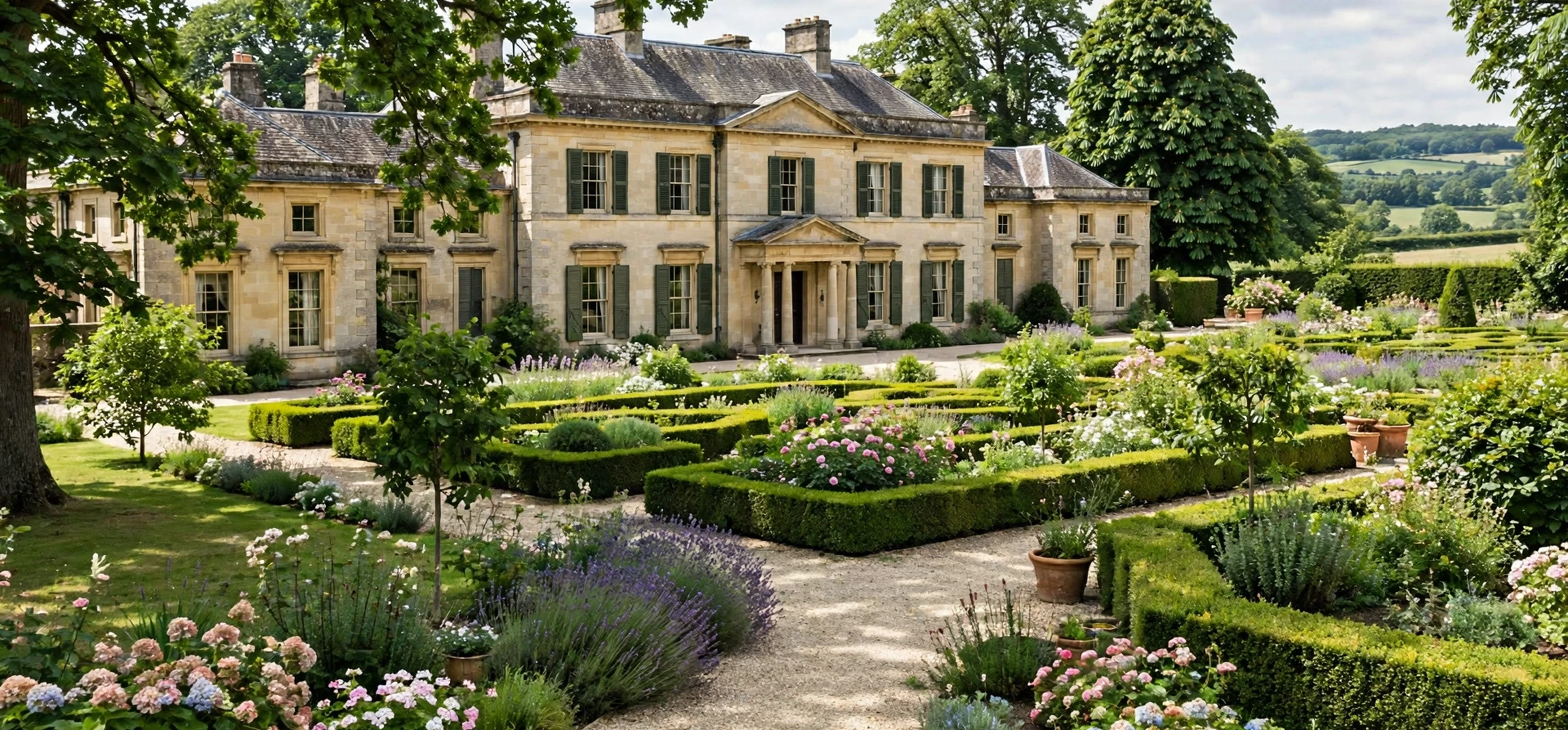
The history behind estate home meaning explains why the phrase carries a sense of grandeur. For centuries, an estate was a large landholding owned by a wealthy family or institution, with a principal house at its centre, surrounded by farms, woodland, gardens, and cottages for workers. The estate house was the visible symbol of that landholding, and its architecture, its parkland, and its approach drive were designed to impress. Many of those houses survive today as historic homes, hotels, wedding venues, or museums, and the word estate still carries echoes of that world.
Over time, the pattern changed. Large estates were divided, land was sold for housing, and new developments borrowed the old vocabulary to suggest continuity and prestige. A modern development called an estate may have no historic house at all, but its name, its gates, and its landscaping borrow from the older idea. That borrowing is not dishonest, but it is marketing, and buyers should look past the label to the facts: the size of the plot, the quality of construction, the services included, and the legal status of shared areas. A name can suggest a lifestyle, but only the details confirm it.
Literature keeps the older meaning alive. In novels, an estate home is often a place of family history, secrets, and social standing, from country houses in classic fiction to modern stories about inherited properties. When a character inherits an estate home, the plot usually turns on more than bricks and mortar: it turns on responsibility, maintenance costs, family expectations, and the weight of the past. Readers who meet the phrase in fiction should therefore expect it to carry emotional and social meaning, not just a floor plan.
What usually distinguishes an estate home
Several features commonly, though not always, mark an estate home. The plot is usually larger than average, often with gardens, trees, or open land around the house. The house itself is usually detached, with generous room sizes and a layout designed for entertaining as well as family life. There may be additional structures, such as a garage block, a guest house, a pool house, or stables, depending on the property’s history. Privacy is often a selling point, whether through gates, hedges, a long drive, or simply distance from neighbours. None of these features alone proves a house is an estate home, but together they form the picture the term usually paints.
Equally important is what an estate home is not. It is not defined by a single architectural style: estate homes can be Georgian, Victorian, modern, colonial, or contemporary, depending on country and era. It is not defined by age: a newly built luxury house can be marketed as an estate home, and a historic house can be modest in size. And it is not a legal category in most places: there is usually no official register that certifies a house as an estate home. The term is descriptive and commercial, not legal, which is why two agents can use it differently for similar properties.
Estate Home Meaning in Legal and Everyday Language
Legal language uses estate differently, and estate home meaning can cause confusion when the two worlds meet. In law, a person’s estate means everything they own at death, including property, money, and possessions, which is then distributed according to a will or the law. A home that forms part of someone’s estate in this sense is simply a house owned by that person, whatever its size or style. If you read about an estate home in a probate or inheritance context, this legal sense may be intended, not the luxury property sense. The surrounding words will usually make the meaning clear: a will, an executor, or a distribution points to the legal sense, while a listing, a viewing, or a price points to the property sense.
Another legal phrase worth knowing is estate in land, which refers to the nature of a person’s interest in land, such as freehold or leasehold, rather than to a house type. A freehold estate means outright ownership, while a leasehold estate means ownership for a fixed term. These terms appear in conveyancing documents and can affect what a buyer actually acquires. They are not about grandeur at all, but about rights and duration. If you are buying property, a solicitor or licensed conveyancer, not a general guide, should explain the estate in land for that specific property.
In everyday speech, estate home can also appear in phrases like “the old estate” or “the family estate,” where it means the whole property, land and house together, often with a sense of inheritance and continuity. A family may speak of keeping the estate home in the family, meaning they want to preserve both the house and its land and history, not just a building. That usage blends the property sense and the legal sense, and it is common in conversations about inheritance, rural life, and historic houses.
For readers researching property, our guide to property search by address in New York explains how public records work, the guide to Harris County property search by address covers a similar process elsewhere, and the house cleaning guide offers practical help once a home, estate or otherwise, needs looking after. Together, they move from finding a property to living in it, which is the journey behind most estate home searches.
| Sense of estate home | Where you meet it | What it usually means | Watch out for |
|---|---|---|---|
| Luxury listing | Property adverts | Large detached house, big plot | Marketing use varies by agent |
| Estate development house | Planned communities | House within a named estate | Shared areas and charges |
| Historic estate house | History, novels, tourism | Principal house of a large estate | May be divided or converted |
| Legal estate | Wills, probate, conveyancing | Property owned by a person | Not about size or luxury |
A quick recap helps keep estate home meaning clear. Remember that estate home meaning usually points to a large, high-quality house with substantial grounds or an estate setting, but that the phrase changes with country and context. When you meet estate home meaning in a listing, look past the label to plot size, floor area, and tenure; when you meet estate home meaning in a will or legal document, remember it may simply mean a house someone owned. Keeping those two senses apart is the key to estate home meaning, and once you do, the phrase becomes a useful guide rather than a confusing label.
Estate Home Meaning: Frequently Asked Questions
What is estate home meaning in a property listing?
In a property listing, estate home meaning usually points to a large, high-quality detached house on a substantial plot, often with privacy, grounds, and premium features. The term is descriptive and marketing-led, not a legal category.
Is an estate home the same as a mansion?
Not exactly. A mansion is defined mainly by very large size and grandeur, while an estate home is defined by size plus setting, grounds, or estate context. Many estate homes are mansions, but some are large houses in estate developments that would not be called mansions.
Does estate home mean the same thing in every country?
No. In the United States it often signals luxury, in the United Kingdom housing estate usually means a planned development, and in other countries it may mean a house within a named estate community. Always read the local context.
What does estate mean in a will?
In a will or probate context, estate means all the property and assets a person owns at death. A home in that estate is simply a house they owned, whatever its size.
Should I trust the label estate home when buying?
Use it as a starting point, not a guarantee. Check the plot size, floor area, construction quality, legal tenure, and any shared charges or restrictions before making a decision, and take professional advice for the purchase itself.
Conclusion: Estate Home Meaning Made Clear
To conclude, estate home meaning is best read as a flexible phrase with a core idea and several variations. At its core, it suggests a substantial house with grounds, privacy, and presence, whether that house stands on a historic estate, in a modern gated development, or simply in a luxury listing. In legal contexts, the same words can mean something plainer: a house that forms part of someone’s owned property. The skill is to notice the context, look past the label to the facts, and ask what the house, the land, and the legal position actually are. Do that, and estate home stops being a confusing marketing phrase and becomes a useful starting point for understanding a property, a story, or a document.