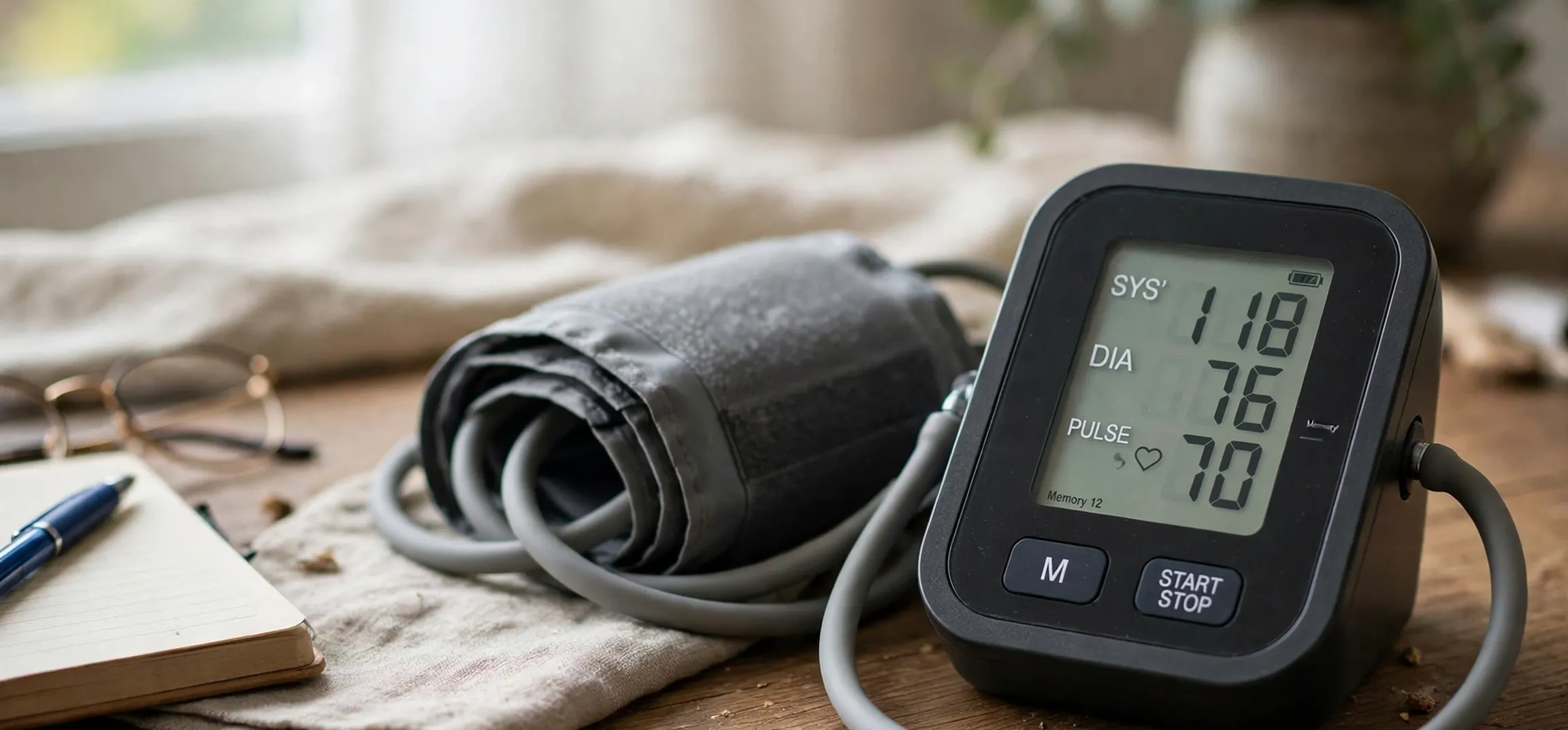
If you searched for “low distolic”, you have almost certainly come looking for information about low diastolic blood pressure, because “low distolic” is a common misspelling of that phrase. Search engines often show results for the intended term even when the spelling is slightly off, and this guide follows that honest framing throughout: whenever you see “low distolic” here, it means the search term for low diastolic pressure, while the medical explanation itself uses the correct spelling, diastolic. This article offers general health education only. It is not medical advice, it does not diagnose any condition, and anyone who is worried about a blood pressure reading should speak to a clinician promptly rather than relying on general information online.
Blood pressure is recorded as two numbers, and understanding both of them is the key to understanding what low diastolic pressure means. The first number, the systolic pressure, measures the force in the arteries when the heart contracts and pushes blood out. The second number, the diastolic pressure, measures the force in the arteries when the heart rests between beats. A reading is therefore written as systolic over diastolic, for example 120 over 80. When people talk about low diastolic pressure, they mean that the second number is lower than the range usually considered typical for that person. That distinction matters, because a low second number does not always mean the same thing as a low first number, and the two can move in different directions.
If You Searched for “low distolic”: What It Usually Means
If you searched for “low distolic”, the phrase you most likely intended is low diastolic blood pressure, meaning a diastolic reading that sits below the usual range. Health organisations generally describe a diastolic reading below 60 as low, although the exact threshold that matters depends on the individual, their age, their overall health, and their other readings. A single low reading on a home monitor is not, on its own, a diagnosis, and that caution applies whatever spelling led you here, including the search term “low distolic”. Readings vary through the day, they respond to rest, activity, food, drink, and stress, and a cuff that is the wrong size or a measurement taken incorrectly can produce a misleading number. That is why clinicians usually look at patterns over time rather than reacting to one isolated figure, a point worth remembering for anyone who searched for “low distolic” and found one surprising number.
It is also important to understand that low diastolic pressure can occur alongside a normal or even high systolic pressure. When the gap between the two numbers widens, clinicians sometimes describe a wide pulse pressure, and that pattern can have different implications from a reading in which both numbers are low. Age plays a role here: as arteries become less flexible with age, the systolic number may rise while the diastolic number falls, widening the gap. None of this can be interpreted safely from a single reading at home, and anyone noticing a new pattern, especially alongside symptoms, should seek professional advice rather than trying to interpret the numbers alone. That advice holds for every reader, including those who typed “low distolic” into a search engine.
The search term “low distolic” itself is a useful reminder of how people actually look for health information. Misspellings are common when a word is unfamiliar, and diastolic is an unfamiliar word for many people. Search engines are generally good at recognising the intended term, but the results can still be confusing if different pages use different thresholds or mix up systolic and diastolic explanations. A careful reader should check that any page they trust is clearly discussing the second number, the resting pressure between heartbeats, rather than blood pressure in general. This guide keeps that distinction explicit throughout, so that a reader who arrived via “low distolic” leaves with a clear picture of the diastolic number specifically.
If You Searched for “low distolic”: Common Causes Discussed in General Terms
General health education often groups the causes of low diastolic pressure into a few broad categories, and it helps to know them in outline without turning the list into a self-diagnosis tool. Dehydration is one commonly discussed factor, because a lower volume of fluid in the circulation can reduce pressure. Prolonged bed rest, certain heart conditions, and problems with the body’s hormone regulation are also discussed in medical literature as possible contributors. Some medicines, including certain blood pressure medicines and medicines that affect heart rhythm, can lower pressure as a side effect, which is why clinicians review medication lists when a reading changes unexpectedly.
Other factors are situational rather than medical. Standing up quickly can cause a brief fall in pressure, sometimes with light-headedness, and this is more common in older adults and in people who have been lying down for a long time. Eating a large meal, spending time in heat, and losing fluid through illness can also affect readings temporarily. These situational causes are usually short-lived, but a pattern of repeated episodes, or episodes that cause fainting, should always be raised with a clinician. The key point for a reader who searched for “low distolic” is that a cause cannot be identified from a number alone: the same reading can arise from very different situations, and only a clinician with a full history can narrow it down.
Age and individual variation matter a great deal. A diastolic reading that would concern a clinician in one person may be entirely normal for another, particularly for younger, physically active people whose resting pressures tend to run lower. Athletes, for example, often have lower resting heart rates and lower pressures, and that pattern is usually a sign of fitness rather than a problem. Conversely, an older adult with a new fall in diastolic pressure alongside other changes may need closer attention. Context, including symptoms, other health conditions, and the trend over time, is what turns a number into useful clinical information.
How to Read Your Own Numbers Carefully
If you measure blood pressure at home, a few habits make the readings more reliable. Sit quietly for several minutes before measuring, rest your arm at heart level, keep your feet flat on the floor, and avoid talking during the measurement. Use a cuff that fits your arm correctly, and take the reading at a similar time of day if you are tracking a pattern. Record the numbers with the date and time, and note anything relevant, such as whether you had just exercised or felt unwell. A reader who arrived through “low distolic” will find that written record just as useful at an appointment as any other reader. Bringing that record to a clinician appointment is far more useful than remembering a single figure. If a reading seems unexpectedly low or high, rest for a few minutes and repeat it, and seek urgent advice if you feel unwell.
When to Speak to a Clinician
Seek professional advice promptly if a low diastolic reading comes with symptoms such as dizziness, fainting, unusual tiredness, confusion, or blurred vision, or if you notice a new pattern of low readings. Seek urgent help if someone faints, cannot be woken, or has chest discomfort or difficulty breathing. These prompts are general safety guidance, not a substitute for clinical judgement, and they apply whether you arrived at this topic through the correct spelling or through the search term “low distolic”, a spelling that simply reflects how unfamiliar the word diastolic can be. Do not stop or change any prescribed medicine because of a home reading without speaking to the clinician who prescribed it, because abrupt changes can cause harm.
Low Diastolic Compared with Low Systolic Pressure
Readers often confuse low diastolic pressure with low blood pressure in general, so a direct comparison helps. Low systolic pressure means the first number is low, which can reduce the force pushing blood around the body. Low diastolic pressure means the second number is low, which relates to the resting pressure between heartbeats and to the pressure that helps fill the heart’s own blood vessels. Both patterns can occur together, producing a reading in which both numbers are low, and that combined pattern is often described simply as low blood pressure. When only the diastolic number is low, however, the picture is different, and clinicians interpret it alongside the systolic number, the pulse rate, and the person’s symptoms.
One concept that sometimes appears in explanations is pulse pressure, which is the difference between the systolic and diastolic numbers. A reading of 140 over 60 has a pulse pressure of 80, which is wider than the pulse pressure of a reading of 120 over 80. A wide pulse pressure is common in older adults and is one reason clinicians pay attention to the gap between the numbers, not just to each number on its own. Again, this is general education: a wide gap does not automatically signal a problem, and a narrow gap does not automatically signal safety. The trend, the symptoms, and the person’s overall health are what matter.
Home monitors display both numbers clearly, and most also show the pulse rate, which adds useful context. A low diastolic reading with a normal pulse and no symptoms is a very different situation from the same reading with a rapid pulse and dizziness, which is why a search for “low distolic” should lead to context, not to a single-number verdict. That is why recording all three figures, systolic, diastolic, and pulse, gives a clinician a fuller picture than any single number. If your monitor flags an irregular heartbeat or an error, repeat the measurement after resting, and mention the flag at your next appointment. Our guide to the meaning of blood pressure numbers explains the two figures in more detail, and readers interested in everyday health topics may also like our guides to what 20/30 vision means and common misspellings of health supplement product names.
| Term | What it measures | General note |
|---|---|---|
| Systolic pressure | Force when the heart contracts | The first, higher number in a reading |
| Diastolic pressure | Force when the heart rests between beats | The second, lower number in a reading |
| Low diastolic | Second number below the usual range | Often described as below 60, but context matters |
| Pulse pressure | Systolic minus diastolic | The gap between the two numbers |
If You Searched for “low distolic”: Myths and Misunderstandings
Several misunderstandings surround the search term “low distolic”, and clearing them up helps readers avoid unnecessary worry. The first misunderstanding, common among people who search for “low distolic”, is that a single low reading means a serious condition. In reality, readings fluctuate, and one low figure, especially after rest or in a young healthy person, may be entirely normal. The second misunderstanding is that low diastolic pressure always needs treatment. Many people with mildly low readings need no treatment at all, and clinicians often focus on symptoms and trends rather than treating a number in isolation. The third misunderstanding is that home remedies found online can safely raise or lower pressure: changing fluid intake, salt intake, or medication without clinical advice can be risky, particularly for people with heart, kidney, or other long-term conditions.
Another common misunderstanding is that low diastolic pressure and low blood pressure are always the same thing. As explained above, they overlap but are not identical, and the distinction affects how a clinician interprets the reading. A further misunderstanding involves the search term itself: some readers worry that searching with a misspelling means they have found unreliable information. That is not necessarily true, because reputable health pages are often surfaced for misspelled queries, but it is still wise to check that a page uses the correct term, diastolic, in its explanation, cites general health guidance, and encourages professional advice where appropriate. This guide has been written with those checks in mind.
Finally, some readers assume that feeling well means a reading can be ignored, while others assume that feeling anxious about a reading means something is wrong. Neither assumption is reliable on its own. Some conditions cause no symptoms at first, which is why routine checks matter, while anxiety itself can raise readings and make home measurement stressful. A calm, consistent measurement routine, a written record, and a conversation with a clinician are the practical steps that turn worry into useful information. If anxiety about readings is itself a problem, raising that with a clinician is also worthwhile, because measurement anxiety is common and manageable, and it affects readers who search for “low distolic” just as it affects everyone else.
Frequently Asked Questions
What does “low distolic” mean?
“Low distolic” is a common misspelling of low diastolic blood pressure, meaning the second number in a blood pressure reading is below the usual range. The diastolic number measures pressure in the arteries when the heart rests between beats.
What number counts as low diastolic?
A diastolic reading below 60 is generally described as low, but the threshold that matters depends on the individual, their age, their health, and their other readings. A clinician interprets the pattern, not a single figure.
Should I worry about a single low reading?
A single low reading without symptoms is often not a cause for alarm, but repeated low readings, or any reading accompanied by dizziness, fainting, or confusion, should be raised with a clinician promptly.
Should I change my medicine if my diastolic reading is low?
No. Do not stop or change prescribed medicine because of a home reading without speaking to the clinician who prescribed it. Abrupt changes can cause harm, and a clinician can review the dose safely.
Conclusion
If you searched for “low distolic”, you were most likely looking for low diastolic blood pressure, and the key idea is simple: the diastolic number is the resting pressure between heartbeats, and a low value means that second number sits below the usual range. A single reading is rarely enough to draw conclusions, context and trends matter more than any isolated figure, and symptoms or repeated patterns should prompt a conversation with a clinician. This guide is general education only, not medical advice, and the safest next step for anyone concerned about a reading is professional advice, supported by a careful written record of their measurements.