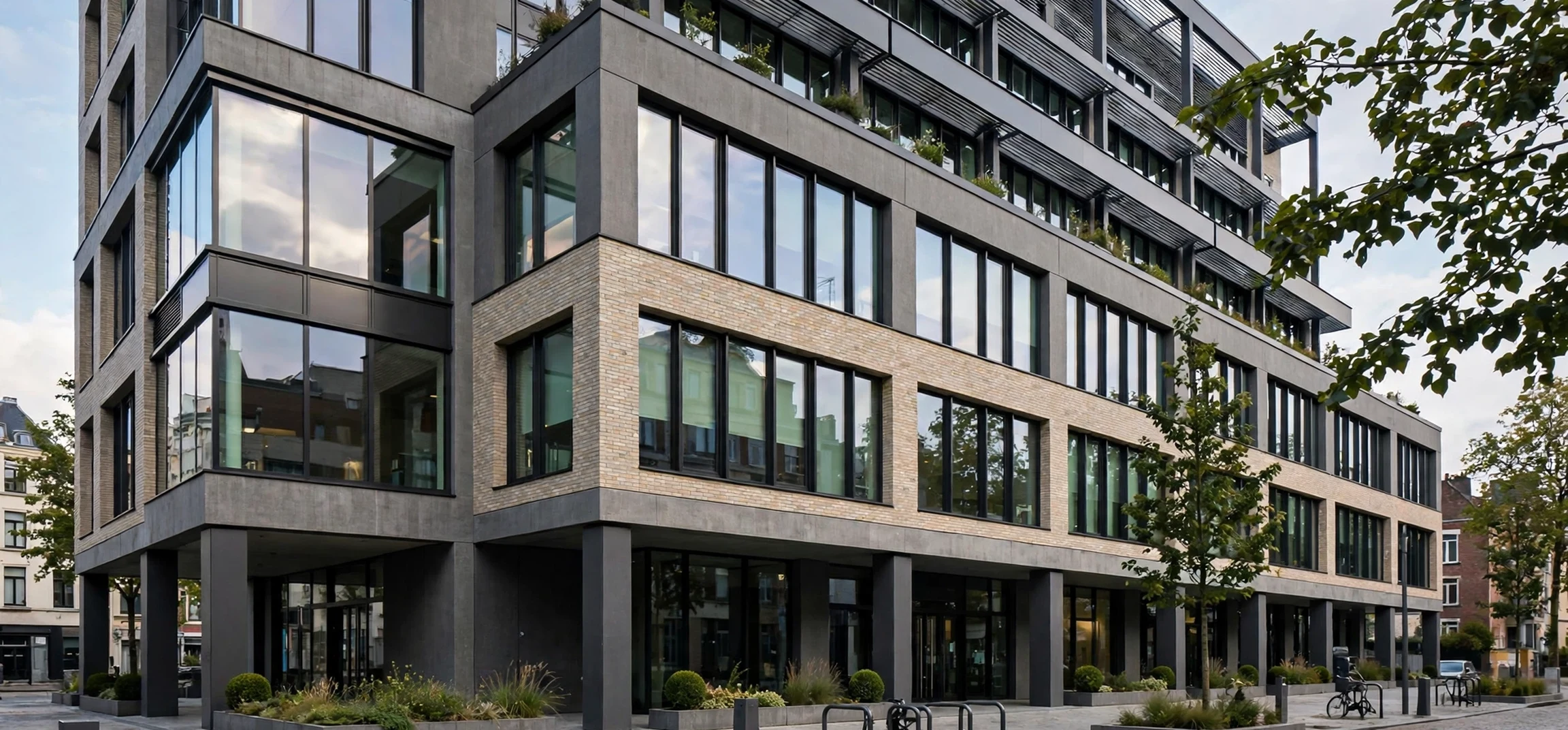
If you have searched for what is the company name for demeesternv be, you are probably trying to answer a simple question before you trust, contact, buy from, or work with a website. A domain name alone does not tell you who runs a site. A domain can be owned by a company, a sole trader, an organisation, or an individual, and the public name on the website is not always the same as the legal name behind it. That is why a careful lookup matters more than a quick guess.
This guide does not invent an answer. No specific legal company name, address, email address, or phone number for demeesternv.be is stated here, because that detail has not been verified from an official source in this article. Instead, this guide explains, step by step, how you can find the company behind a domain yourself, which official sources to trust, which clues are weak, and what to do when no company is clearly listed. The same method works for many other websites too. For example, readers who are checking unfamiliar domains often follow a similar process to the one described in Ploomes Org, where the first job is to separate the brand name from the legal entity behind it.
By the end of this article, you will know where to look first, what a Belgian business listing should show, how to read a site footer and legal pages, why domain registration records often hide the owner, and which warning signs should make you pause. You will also find a practical checklist, a comparison table, and answers to common questions.
What The Question Really Means
When people ask for a company name behind a domain, they usually mean one of several different things. They may want the legal name of the business that operates the website. They may want the trading name or brand name shown to visitors. They may want the name of the domain registrant. Or they may want a contact name for customer support, complaints, refunds, or business enquiries. These are not always the same, and confusing them can lead to the wrong conclusion.
A brand name is the public identity of a product, service, or website. A legal name is the name registered with a business authority. A website can use a short, friendly brand name while its legal owner is a longer, formal company name. A domain registrant is the person or organisation that registered the domain name, which may be the site owner, a web developer, a marketing agency, or a privacy service acting on the owner’s behalf. Keeping these ideas separate helps you avoid claiming that a brand is a company, or that a domain registrant is the business operator, when the evidence does not prove it.
Brand Name Versus Legal Name
Think of a shop sign and a business licence. The sign tells customers what to call the shop. The licence tells the authorities who is legally responsible. Both are useful, but only the licence-style record gives you the formal legal identity. On a website, the logo and homepage title are like the shop sign. The footer, terms of service, privacy policy, and business registration details are closer to the licence. If those formal details are missing, you should treat the brand name as unverified for legal or payment purposes, even if the site looks professional.
Why Smooth 60fps Appears In The Search
Search phrases sometimes combine a domain with a feature, a product claim, a video setting, or a phrase copied from a page title. Smooth 60fps sounds like a performance description, possibly linked to video playback, animation, streaming, or a tool that promises smoother motion. It does not, by itself, prove that a company with that exact phrase in its name exists. It may be a feature label, a page heading, a user query, or a marketing phrase rather than a legal business name. For that reason, this guide treats the phrase as part of the search question, not as evidence about ownership.
Start With The Website Itself
The most reliable first step is also the simplest: read the website carefully. A legitimate business usually tells visitors who it is, where it operates, and how to contact it. If that information is easy to find and consistent across pages, that is a good sign. If it is missing, vague, or contradictory, that is a reason to dig deeper before trusting the site.
Begin on the homepage, then check the footer at the bottom of every page. Many sites place company details, a copyright line, or a link to legal pages there. Next, open the About page, if one exists. Look for a description of the business, its history, its team, or its location. Then open the Contact page. Look for a business address, a contact form, or a support email address provided by the site itself. Do not rely on a contact detail copied from a third-party directory, because directories can be outdated or wrong.
About, Contact, And Footer Pages
On the About page, note whether the site names a company or only a brand. A company name is stronger evidence than a first name, a nickname, or a generic statement such as a team of enthusiasts. On the Contact page, note whether the site gives a full business address or only a form with no address at all. A form alone does not prove that a company exists, although many small online businesses do use forms for privacy and spam protection. In the footer, look for a copyright notice. A copyright line sometimes names the owner, but it can also name a brand rather than a legal company, so treat it as a clue, not proof.
Also check whether the same name appears in more than one place. Consistency matters. If the About page, footer, terms page, and privacy page all use the same company name, that is stronger than a single mention on one page. If different pages use different names, write down each version and look for an explanation, such as a parent company, a former brand name, or a service operated by another business. Inconsistent names do not automatically mean a site is dishonest, but they do mean you should verify the details through an official registry before relying on them.
Legal Pages And Terms
Terms of service, terms of use, and privacy policies often contain the most formal language on a website. These pages may state who provides the service, which laws apply, and how disputes are handled. Look for phrases such as operated by, provided by, or the company, followed by a name. Also look for a registered address, a company registration number, or a tax identification number, where applicable.
Privacy policies are especially useful because they often name the data controller, meaning the organisation responsible for personal data collected through the site. If a privacy policy names a company and gives contact details for data protection questions, that is a meaningful clue. Still, remember that a website can copy a generic privacy policy template without updating the company details. If the policy names a different business from the rest of the site, or leaves placeholder text in place, treat the whole document with caution.
For a sense of how domain guides usually separate a site name from its operator, readers may find the approach in Technewstop Org useful, because it shows why a domain label alone is not enough to identify the business behind it. The same caution applies here: a domain ending, a brand phrase, or a feature claim is not a company record.
Check The Official Belgian Business Registry
Because demeesternv.be uses a Belgian country-code domain ending, the next logical step is the official Belgian business register. In Belgium, businesses are recorded in the Crossroads Bank for Enterprises, often known by its Dutch abbreviation KBO and its French abbreviation BCE. This is the central register for Belgian enterprises. A genuine Belgian company should normally appear there with its legal name, enterprise number, legal form, and registered address.
Searching an official register is different from searching a random business directory. A directory may copy information from many sources, may show old data, or may create a listing from a domain name without verifying the owner. An official register, by contrast, is maintained for legal and administrative purposes. That does not make every register search easy, because you may need the correct spelling, the enterprise number, or the legal form to narrow the results. It does mean that a match in the official register carries much more weight than a match on a marketing site or a social media profile.
What To Search And What To Record
Start with any company name shown on the website itself. If the site gives an enterprise number, search by that number first, because numbers are more precise than names. If the site gives only a brand name, search that name and look for close matches, but do not assume the first similar result is the right business. Check the address, the business activity, and the status. An active company, a dissolved company, and a similarly named company in another region are very different findings.
Record exactly what you find, including the spelling of the legal name, the enterprise number, the legal form, and the registered address shown in the register. Also record the date you checked, because business records can change. If you cannot find a match, record that too. A failed search is useful information. It may mean the business is registered under a different name, registered in another country, operating as a sole trader under a personal name, or not registered at all. Do not fill the gap with a guess.
When The Business May Be Registered Elsewhere
A Belgian domain ending does not guarantee that the operator is a Belgian company. A business in another country can register a Belgian domain, a Belgian resident can operate a foreign company, and a website can be hosted in one country while its owner lives in another. The domain ending tells you about the domain, not necessarily about the legal home of the business. If the official Belgian register shows no match, consider whether the site itself names another country, another legal system, or a parent company abroad. Then check the equivalent official register for that country, if one is publicly available.
This point is important for payment and complaint purposes. If you need to resolve a dispute, the country of registration, the governing law in the terms, and the contact address all matter. A site that hides its location while selling services internationally deserves extra caution. A transparent site, by contrast, usually makes its legal home easy to confirm.
Check Domain Registration Clues Carefully
Many people turn to domain lookup tools, often called WHOIS lookups, to find a domain owner. These tools can show the registrar, the registration date, the expiry date, and the name servers. For many modern domains, however, the owner’s name, address, and contact details are hidden for privacy reasons. This is especially true in Europe, where privacy rules limit the publication of personal data. A redacted record does not mean the owner is hiding something illegal. It often means the registrar is following privacy law.
Domain clues can still be useful. The registrar name tells you which company sold or manages the domain. The creation date tells you how long the domain has existed, although an old domain can change owners. The name servers can hint at the hosting provider, but hosting is not ownership. A site can be hosted by a large provider while being owned by a small business. Use these clues to build context, not to name a company.
What A Redacted Record Means
If a domain lookup shows redacted, privacy-protected, or not disclosed for the registrant, do not treat that as a company name. Do not replace the missing name with the registrar name, the hosting provider name, or the name of a privacy service. Those are different roles. The registrar manages the domain registration. The hosting provider stores the website files. A privacy service shields contact details. None of them is automatically the business operating the site.
Similarly, do not treat a domain search result from an unofficial site as proof. Some lookup sites mix registrar data, hosting data, website text, and advertising. They may display a business name that came from an old page, a directory listing, or an automated guess. Always trace the claim back to its source. If the source is the website itself or an official register, it is stronger. If the source is unclear, treat the claim as unverified.
Use The Site’s Own Legal And Business Signals
Beyond the About page and the official register, a website often leaves other business signals. A checkout page, a pricing page, an invoice sample, a refund policy, or a business email address can reveal the operating company. For example, payment terms may name the seller, and a refund policy may explain who processes payments. Business social media profiles may also name the company, although social profiles can be created by anyone and should be checked against the website and the register.
Look for a VAT number, a company registration number, or a chamber of commerce number where the site operates in a country that uses them. These numbers are useful because they can be checked independently. If a site displays a number, search that number in the relevant official system. If the number matches a different business, or returns no result, that is a warning sign. If the site displays no number at all, that is not proof of wrongdoing for a small personal site, but it is a gap for a site that sells products, collects payments, or presents itself as a company.
Payment And Contact Signals
Before paying for anything, check who would receive the payment. A checkout page, a payment provider notice, or an order confirmation may name the merchant. That merchant name should match, or be clearly connected to, the company name on the website. If the payment name is completely different, with no explanation, pause and ask the seller for clarification in writing. Keep screenshots and order emails, because they are useful if you later need to contact a bank, a payment provider, or a consumer protection body.
Contact signals matter too. A business email address using the site domain is generally more credible than a free personal email address, although it is not proof of registration. A phone number, a physical address, and a named contact person add confidence when they match the register and the website. A site with no contact route except an anonymous form, no address, and no legal page is harder to trust for business dealings, even if its content looks polished.
Red Flags To Watch For
Not every missing detail means a site is unsafe. Small blogs, hobby projects, and personal sites often have limited business information. The risk rises when a site asks for money, personal data, or trust while hiding who is behind it. The following warning signs should prompt extra checks, especially before a purchase, a subscription, or sharing sensitive information.
First, be cautious if the site uses a company-sounding name but gives no registration number, no address, and no legal page. Second, be cautious if different pages name different companies without explanation. Third, be cautious if the site copies text, images, or legal pages from another business. Fourth, be cautious if contact details change frequently, or if support replies come from unrelated names. Fifth, be cautious if the site pressures you to pay quickly, uses only hard-to-reverse payment methods, or refuses to provide an invoice. None of these signs alone proves dishonesty, but together they justify a pause.
Claims That Should Not Be Trusted Alone
Do not trust a company name simply because it appears in a search result snippet, a forum post, an AI-generated answer, or a directory page. Search engines can mix information from different sites. Forums can repeat rumours. Directories can be outdated. Even a well-written article can repeat an unverified claim. The safest approach is to require at least two independent, credible sources that agree: ideally the website itself and an official register, or the website and a payment or legal document that names the same entity.
Also be careful with similar names. Many businesses share similar words, and a single letter can separate two different companies. A search for a brand phrase may return a company in another industry or another country that has nothing to do with the domain. Always compare the website address, the business activity, and the location before concluding that a register entry matches the site.
What To Do If No Company Is Listed
If you complete the checks above and still cannot find a company name, you have several sensible options. First, contact the site through its own contact form or email address and ask directly who operates the site and under what legal name. A legitimate business should be able to answer that question clearly. Keep a copy of your message and any reply. Second, if the site sells goods or services, check whether consumer protection rules in your country require the seller to display business details. In many jurisdictions, online sellers must identify themselves. If required details are missing, that is relevant to your decision.
Third, decide how much trust the situation requires. Reading a free article is low risk. Creating an account is medium risk. Paying money, sharing identity documents, or giving access to an account is high risk. Match your caution to the risk. For high-risk actions, do not proceed until the operator is clearly identified. Fourth, if you believe a site is impersonating a business, misusing a brand, or running a scam, report it through the appropriate channel in your country, such as a consumer protection authority, a fraud reporting service, or the domain registrar abuse contact. Do not publish accusations based on guesses, and do not share private personal details you may find during your research.
Finally, remember that a missing company name is not the same as a confirmed scam, and a present company name is not a guarantee of good service. Registration proves that an entity exists in a register. It does not prove quality, honesty, or financial strength. Use registration as one part of a broader judgement that also includes reviews, payment protections, clear terms, responsive support, and your own experience with the site.
Company Lookup Checklist
The table below summarises where to look, what each source can show, and how much weight to give it. Use it as a worksheet when checking demeesternv.be or any other domain.
| Source | What It May Show | How Reliable It Is |
|---|---|---|
| Website footer, About, and Contact pages | Brand name, operator name, address, and contact route | Useful, but self-published, so verify elsewhere |
| Terms of service and privacy policy | Legal operator, data controller, and governing terms | Stronger, especially if consistent across pages |
| Official Belgian business register | Legal name, enterprise number, legal form, and status | High, when the name or number matches the site |
| Domain registration record | Registrar, creation date, and hosting clues | Low for ownership, because details are often redacted |
| Payment or invoice details | Merchant name and seller identity | Useful, but must match the website and register |
| Third-party directories and search snippets | Possible names, old listings, or similar businesses | Low, unless traced back to an official source |
Work through the table from top to bottom. Start with the site itself, move to official records, and use domain and directory clues only as background. If two strong sources agree, you have a reasonable basis for naming the operator. If they disagree, or if only weak sources mention a name, keep the answer as unverified and say so plainly. That honesty protects you and your readers from spreading a false company identity.
Readers who enjoy this kind of careful domain checking may also like Chain Guide Comedy Fun, which is a reminder that a memorable domain phrase is not the same as a verified business record. A fun or catchy name can attract attention, but it does not replace a footer, a legal page, or a register entry.
Frequently Asked Questions
What is the company name for demeesternv.be?
Based on the safe, verified approach used in this guide, no specific legal company name for demeesternv.be is asserted here, because that detail has not been confirmed from the site’s own legal pages or an official business register. To find it, check the site footer, About page, Contact page, terms, and privacy policy, then search any name or enterprise number shown there in the official Belgian business register. If those sources do not name a company, the answer remains unverified.
Does a Belgian domain ending mean the company is Belgian?
No. A Belgian domain ending describes the domain, not necessarily the legal home of the operator. A business from another country can use a Belgian domain, and a Belgian operator can use a domain from another country. Always check the legal pages and the relevant official register rather than assuming a location from the domain ending alone.
Can a domain lookup reveal the owner?
Sometimes, but often not. Many domain records now hide personal and business contact details for privacy reasons. A lookup may still show the registrar and registration dates, but those details do not name the operating company. For ownership, the website’s legal pages and an official business register are usually more useful.
What should I do if no company is listed anywhere?
Contact the site directly and ask who operates it. For low-risk reading, a missing company name may be acceptable. For payments, accounts, or sensitive data, pause until the operator is clearly identified. If the site should legally display business details but does not, consider that a warning sign and use a safer alternative where possible.
Is the brand name the same as the company name?
Not always. A brand name is the public name customers see. A company name is the legal name recorded with a business authority. A website may use one brand while being operated by a company with a different legal name. That is why guides distinguish between the two and recommend checking formal sources before treating a brand as a legal entity.
Conclusion
Searching for what is the company name for demeesternv be is a sensible step before trusting a website, especially if you plan to contact it, buy from it, or share personal information. The domain name and a phrase such as smooth 60fps may help you find the site, but they do not identify the legal business behind it. A reliable answer comes from the website’s own About, Contact, footer, terms, and privacy pages, checked against an official business register such as the Belgian Crossroads Bank for Enterprises, with domain and directory clues used only as background.
If you cannot verify a company name through those sources, do not invent one, do not copy an unverified name from a directory, and do not assume that a registrar, host, or similar-sounding business is the operator. Ask the site directly, match your caution to the risk, and keep a record of what you checked. That careful method may feel slower than a one-line answer, but it is far more trustworthy, and it works for demeesternv.be and for any other domain you need to check in the future.